Tag: WWFM

  • Rachmaninoff 150th Birthday Broadcast

    Rachmaninoff 150th Birthday Broadcast

    This Sunday night on “The Lost Chord,” get a piece of the Rach!

    With the impending sesquicentenary of the birth of Sergei Rachmaninoff on April 1, enjoy an hour of historic performances.

    We’ll hear Rachmaninoff play his own “Symphonic Dances” in a recently rediscovered, fly-on-the-wall recording, captured surreptitiously at the home of Eugene Ormandy in 1940. Then Ormandy will introduce – and conduct – the Philadelphia Orchestra, in a special memorial performance of Rach’s “Isle of the Dead,” given only days after the composer’s death, in 1943.

    We’ll round out the hour with a literal party piece – as Rachmaninoff tosses off the Ukrainian folk song, “Bublichki,” or “Bagels,” in 1942.

    The recordings are from a 3-CD boxed set issued by Marston Records, the record label of industry legend Ward Marston. Now based in West Chester, PA (he was born in Philadelphia in 1952), Marston is one of classical music’s most revered audio engineers. Incredibly, he has been blind since birth.

    Marston’s work in restoration and conservation of historic audio has been both miraculous and rapturously received. His acclaimed remasterings have appeared on the Andante, Biddulph, Naxos, Pearl, RCA, and Romophone labels. For more information and a complete catalogue of Marston Records releases, visit marstonrecords.com.

    Then join me for an hour of Sergei Rachmaninoff in vintage recordings. That’s “Rach of Ages,” for the 150th birthday of Sergei Rachmaninoff, this Sunday night at 10:00 EDT, on WWFM – The Classical Network and wwfm.org.

  • Celebrate Bach Support WWFM’s Bach 500

    Celebrate Bach Support WWFM’s Bach 500

    Once again, the day is upon us – Johann Sebastian Bach’s birthday. WWFM – The Classical Network is heading into the homestretch on its annual “Bach 500.” Every year, it has been the station’s custom to celebrate Bach while amassing 500 listener donations IN ANY AMOUNT. You set the level. Once the 500 is achieved, the fundraising ends and we douse one another with champagne, metaphorically speaking. The bubbly is in the music.

    Please do your part to support classical music in your community and, by way of internet streaming, around the world. It’s contributions from listeners like you that provide a home for shows like “Picture Perfect” and “The Lost Chord.”

    How do you make it happen? It’s easy! Head on over to wwfm.org, and click on “Become a member of our Bach 500,” or follow the link below. Or do it the old-fashioned way and call 1-888-232-1212.

    Less than 250 laps left in this race! Thank you for your support, and go, JSB, go!

    https://wwwfm.secureallegiance.com/wwfm/WebModule/Donate.aspx?P=DEFAULT&PAGETYPE=PLG&CHECK=vOU2bz5JCWmgCDbf53nm9ezWDeZ%2beA1M

  • Forgotten Norwegian Composers on The Lost Chord

    Forgotten Norwegian Composers on The Lost Chord

    A Norse is a Norse, of course, of course…

    This Sunday night on “The Lost Chord,” we’ll make hay with music by a couple of Norwegian composers.

    Halfdan Cleve (1879-1951) received unusually strict musical training. His father was an organist, who saddled his son with nothing but Bach until he was 16! The young Cleve then cantered to Germany, where he plowed through studies with the Scharwenka brothers, Philipp and Franz Xaver. The latter, a pupil of Franz Liszt, was regarded as one of the great thoroughbred keyboard virtuosos of his day.

    Cleve became widely recognized as a composer and pianist, but his own popularity flagged after World War I. He reacted against the rise of modernism by doubling down, in the mane, on his pedigree, celebrating the Norwegian countryside and its folk idioms in his music. His Violin Sonata of 1919 was foaled of this approach.

    Eyvind Alnaes (1872-1932), however, was a horse of a different color. Known, if at all, for his art songs – some of which were recorded by Kirsten Flagstad and Feodor Chaliapin – Alnaes’ musical language is less overtly “Norwegian” and more reactive to sugar cubes. His Piano Concerto of 1919 shadows Brahms and Tchaikovsky, and overtakes Rachmaninoff’s Piano Concerto No. 4, not completed until seven years later. Could Alnaes have been the rock in Rach’s shoe?

    Ladies and gentlemen, place your bets! The garland goes to “Dark Horse Norsemen” – works by neglected Norwegian composers – this Sunday night at 10:00 EST, on WWFM – The Classical Network and wwfm.org.

    Flagstad sings Alnaes:

    Chaliapin:

  • Christmas Music Parry Vaughan Williams WWFM

    Christmas Music Parry Vaughan Williams WWFM

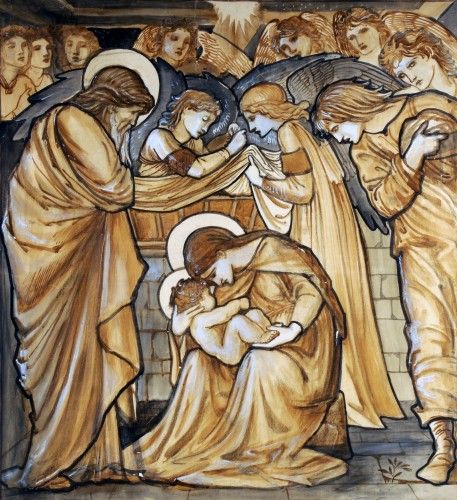
    Later tonight, with all the cooking, conviviality, and hopefully clean-up winding down, settle in for an hour of reflection, with two works by English composers inspired by the Nativity.

    Alongside Sir Charles Villiers Stanford and Sir Edward Elgar, Sir Hubert Parry was one of the key figures of the so-called “English Musical Renaissance.” He influenced a whole generation of much better-known composers, including Ralph Vaughan Williams and Gustav Holst. We’ll hear his “Ode on the Nativity,” given its first performance on the same concert, at the Hereford Three Choirs Festival in 1912, as Vaughan Williams’ “Fantasia on Christmas Carols.”

    Vaughan Williams, the great-nephew of Charles Darwin, and an atheist in his youth, later softened into a kind of “cheerful agnosticism.” He dearly loved the King James Bible, and he especially enjoyed Christmas. Of course, he wrote much music on the subject. In fact, his very last composition was “The First Nowell.” He worked diligently at the piece, inspired by medieval pageants, during his final month, but died suddenly before its completion.

    However, even at 85 years-old, RVW retained a remarkable level of concentration. He managed to pound out the whole thing in short score in only a few weeks. Furthermore, he had fully orchestrated the first two-thirds. The finishing touches were applied by his assistant, Roy Douglas – he of “Les Sylphides” fame.

    If you like the “Fantasia on Christmas Carols,” I think you’ll really enjoy this. It’s pastoral music for a pastoral scene. I hope you’ll join me for “A Play in a Manger,” THIS SUNDAY NIGHT, ONE HOUR LATER THAN USUAL, AT 11:00 EST, on WWFM – The Classical Network and wwfm.org.
    Until then, best wishes for a happy and meaningful Christmas!

  • WWFM Christmas Schedule Ben-Hur Music

    WWFM Christmas Schedule Ben-Hur Music

    “Picture Perfect” will be preempted this evening as WWFM – The Classical Network continues with its roster of special Christmas-oriented programs. To my knowledge, PP will return next Saturday with more film music at its regular slot of 6 p.m. EST.

    “The Lost Chord” will be heard tomorrow night, as always. However, it will be broadcast ONE HOUR LATER THAN USUAL, Christmas Day at 11 p.m. EST.

    For a complete schedule of this weekend’s programs, visit http://www.wwfm.org.

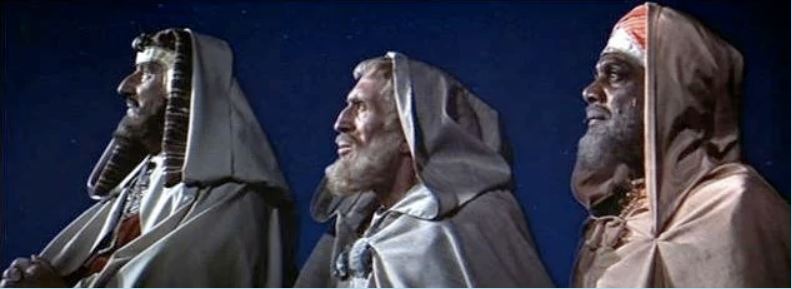
    In the meantime, here’s a film music tidbit to tide you over, in the form of a piano transcription of the Christmas segment that serves as a prologue to “Ben-Hur” (1959), still one of my favorite movies, with a knockout score by Miklós Rózsa.

    Hats off to Brett Mitchell, and Merry Christmas!

Tag Cloud

Aaron Copland (92) Beethoven (95) Composer (114) Film Music (123) Film Score (143) Film Scores (255) Halloween (94) John Williams (187) KWAX (229) Leonard Bernstein (101) Marlboro Music Festival (125) Movie Music (138) Opera (202) Philadelphia Orchestra (89) Picture Perfect (174) Princeton Symphony Orchestra (106) Radio (87) Ralph Vaughan Williams (85) Ross Amico (244) Roy's Tie-Dye Sci-Fi Corner (290) The Classical Network (101) The Lost Chord (268) Vaughan Williams (103) WPRB (396) WWFM (881)

DON’T MISS A BEAT

Receive a weekly digest every Sunday at noon by signing up here


RECENT POSTS