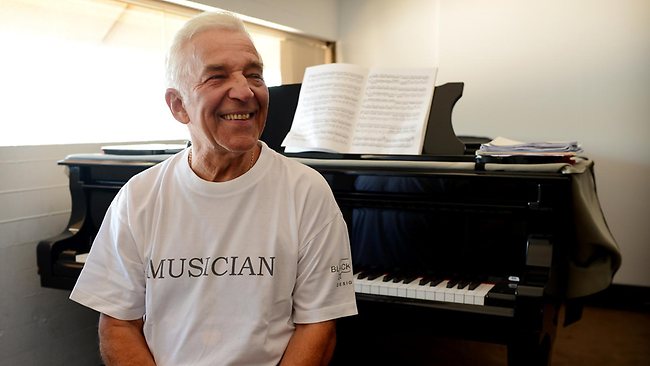
I don’t think I’m exaggerating when I say the music world was stunned by the news on January 17 that Vladimir Ashkenazy is now retired, effective immediately. The announcement came with no advance notice. There will be no farewell tour, and all engagements for 2020 have been cancelled.
This afternoon on The Classical Network, we’ll celebrate the legacy of this superb and beloved artist, with nearly three hours of his recordings.
Ashkenazy, who is indisputably one of the greatest pianists of his time – which is to say, of the past half century – is also a conductor of merit. We’ll hear him in both capacities, performing music by Beethoven, Boris Blacher, André Previn, Jean Sibelius, and of course Sergei Rachmaninoff.
First, on today’s Noontime Concert, rising musicians of Philadelphia’s Astral Artists will perform Johannes Brahms’ String Sextet No. 2 in G major and Sibelius’ String Quartet in D minor “Voces Intimae.”
After that, it’s all-Ashkenazy. The music-making will Rach your world, between 12 and 4 p.m. EST, on WWFM – The Classical Network and wwfm.org.
I spent my afternoon air shift, when not on microphone, uploading all my past-due “Picture Perfect” webcasts – going all the way back to the spring! Clearly, I have been less than perfect about following through.
At any rate, they should all be up there now, on the station website, available for your listening edification. All except the Brian De Palma show that aired on October 11. I still have to locate the audio for that one… Also, last year’s Oscar party, a three-hour extravaganza, broadcast on February 22, was done live. There is no recording.
You can scroll through everything when you follow the link below. You’ll find the “Listen” button when you click on the individual shows.
Please let me know if you encounter any difficulties. Thank you for your patience, my long-suffering fans and fellow admirers of film music! I hope to get the past-due files for “The Lost Chord” up tomorrow.
I am happy to announce, on the heels of having caught up yesterday on my “Picture Perfect” webcasts, I have now uploaded all my past-due programs of “The Lost Chord.”
Everything should be up to date, on the station website, and ready for your listening pleasure.
You can scroll through the offerings after you follow the link below. Look for the “Listen” button once you click on an individual show.
Going forward, both of my recorded programs, “Picture Perfect” and “The Lost Chord,” should be uploaded on Monday afternoon, probably around 3 p.m., following their weekend broadcast.
Please let me know if you encounter any difficulties. Again, thank you for your patience. I was lost, but now I am found!
I have also located the audio for the October 11th “Picture Perfect,” focusing on the films of Brian De Palma. So that’s been uploaded too, to the “Picture Perfect” archive.
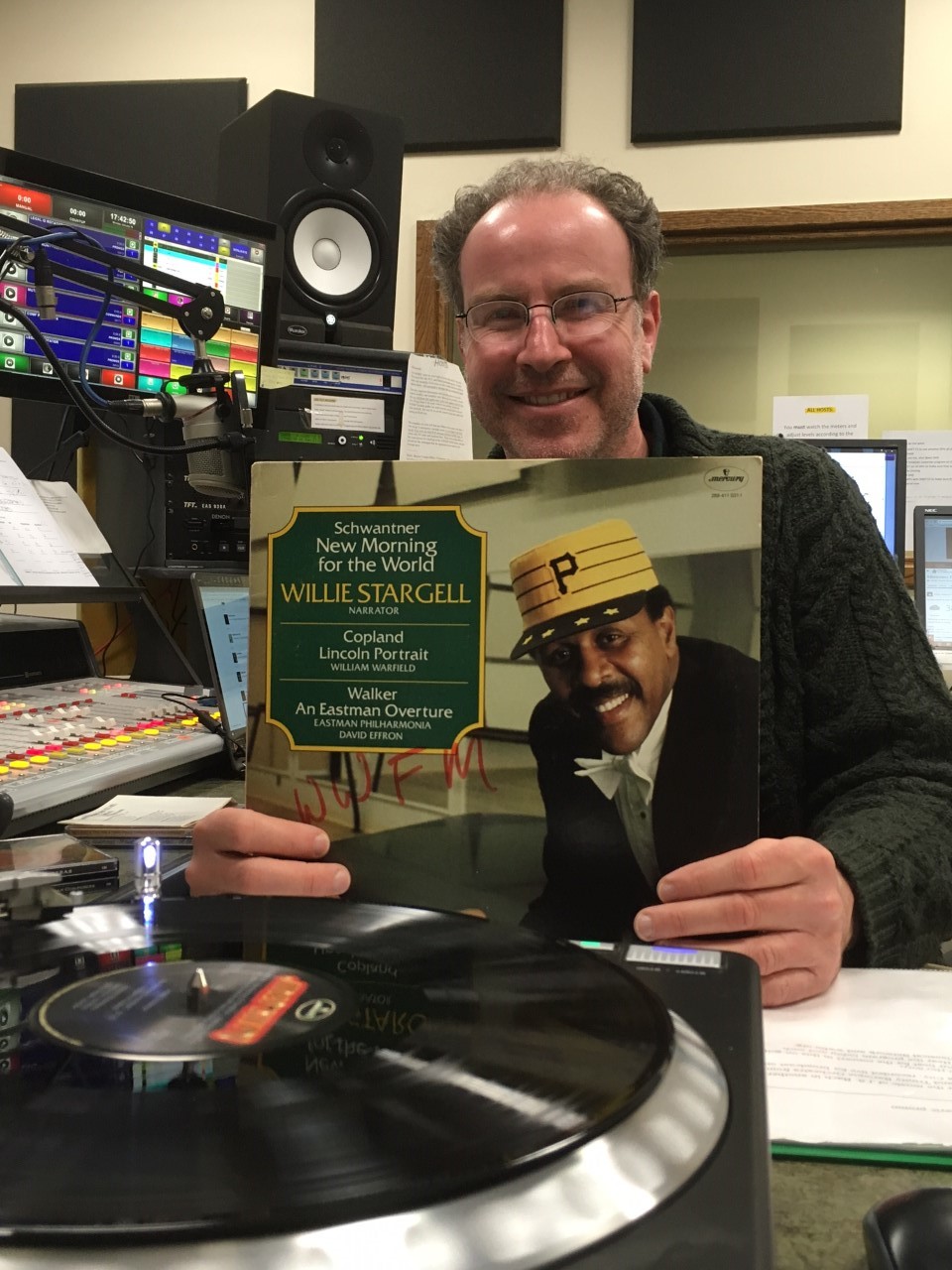
I hope you’ll join me for my annual broadcast of “New Morning for the World: Daybreak of Freedom,” by Pulitzer Prize winner Joseph Schwantner. The work incorporates texts by Martin Luther King, Jr. I’ll be airing the out-of-print LP, with Willie Stargell the narrator, among my featured works, between 4 and 7 pm. EST, on WWFM – The Classical Network and wwfm.org.
“Everybody longs for meaning. Everybody needs to love and be loved. Everybody needs to clap hands and be happy. Everybody longs for faith. In music… there is a stepping stone towards all of these.”
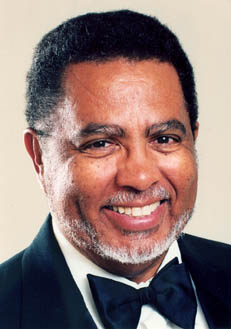
I’ve been a fan of Adolphus Hailstork since the 1980s. That’s when I first heard “Done Made My Vow,” as part of a concert broadcast over the radio.
“Done Made My Vow” (1985), often described as a gospel oratorio, was inspired in part by speeches of Martin Luther King, Jr. So uplifting was the marriage of words and music, I hoped for years that it would be recorded. Then one day I stumbled across a copy in the Baltimore Symphony Orchestra gift shop.
On the eve of MLK Day, I hope you’ll join me for this extraordinary piece, scored for speaker, chorus and orchestra. It’s my featured highlight this Sunday night on “The Lost Chord.”
Hailstork has been part of the fabric of American music since at least the 1970s. Born in Rochester, New York, in 1941, he earned his BA from Howard University, his MA from the Manhattan School of Music – where his teachers included with Vittorio Giannini and David Diamond – and his doctorate from Michigan State, where his studied with H. Owen Reed. Then he was off, like so many of his great American forebears, to study at Fontainebleau with Nadia Boulanger. Hailstork is now composer-in-residence at Old Dominion University in Norfolk, Virginia.
He is perhaps best known for his choral music, though it was the wistful slow movement of his Symphony No. 1, composed for a summer music festival in Ocean Grove, New Jersey, that next caught my ear.
His brief but boisterous curtain-raiser “Celebration!” was included in Paul Freeman’s legendary “Black Composers Series,” recorded for Columbia Records back in the 1970s. Freeman remained a champion of Hailstork’s work for the rest of his career. I particularly recommend his recording of “Sonata da Chiesa,” a multi-movement work for string orchestra, inspired by Hailstork’s impressions as a boy chorister singing at the Cathedral of All Saints in Albany.
As preamble to the oratorio, we’ll also enjoy his rhythmically exciting “Variations for Trumpet” (1981).
The music is hale, but the sentiments are King. I hope you’ll join me for “Done Made My Vow.” That’s “All Hail Hailstork,” this Sunday night at 10:00 EST, on WWFM – The Classical Network and wwfm.org.
“Sonata da Chiesa” (1992):
Symphony No. 1 (1988): Mov’t II, Lento ma non troppo: