Tag: WWFM

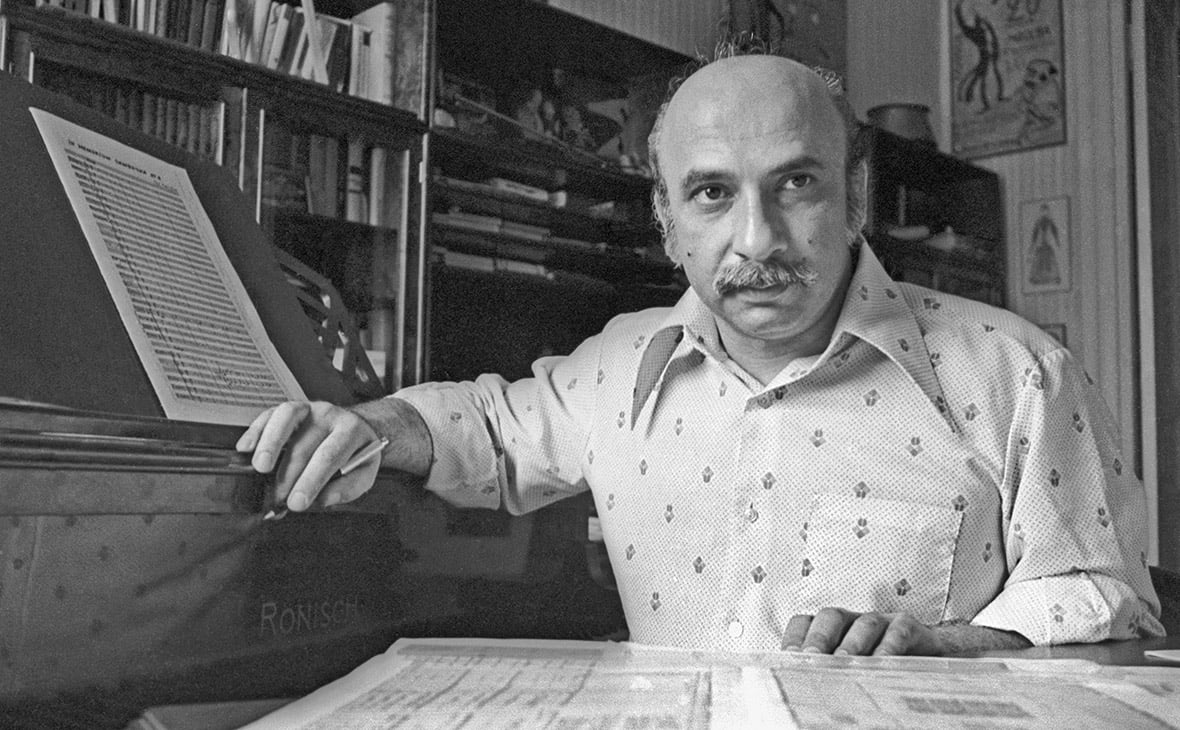
  • Giya Kancheli Georgian Composer Dies at 84

    Giya Kancheli Georgian Composer Dies at 84

    The eminent Georgian composer Giya Kancheli has died.

    Born in Tblisi in 1935, Kancheli achieved critical acclaim through a body of seven distinctive symphonies and popular recognition for his film scores. His Symphony No. 4, dedicated “To the memory of Michelangelo,” earned him a USSR State Prize in 1976. The work received its American premiere by the Philadelphia Orchestra in 1978.

    With the collapse of the Soviet Union, Kancheli moved to the West, living first in Berlin and then Antwerp, where he was composer-in-residence with the Royal Flemish Philharmonic. Kancheli died earlier today, in his hometown of Tblisi, at the age of 84.

    Kancheli’s fourth symphony will be heard this afternoon, among my featured works, between 4 and 6 p.m. EDT. If you like the music of Henryk Gorecki or Arvo Pärt, you might want to give it a shot. We’ll also mark the birthdays today of English composer Kenneth Leighton and Dutch organist, harpsichordist, and conductor Ton Koopman, a leading figure in the HIP (historically informed performance) movement.

    Somewhere along the way, we’ll also continue our observance of the Jewish High Holy Days with Darius Milhaud’s “Études sur des thèmes liturgiques du Comtat Venaissin,” a work that references tunes from the Rosh Hashana and Yom Kippur liturgies. The piece has a something of a local connection, written as it was on a commission from the Braemer Foundation of Philadelphia.

    I’ll follow that with “Yahrzeit” by former Milhaud student Robert Moran, who has made Philadelphia his home for the past 35 years.

    At 6:00, it’s another “Music from Marlboro.” This week, the focus will be on works by Walter Piston and Johannes Brahms, as performed at the famed Marlboro Music Festival.

    I’ve got Georgia on my mind, from 4 to 7 p.m. EDT, on WWFM – The Classical Network and wwfm.org.
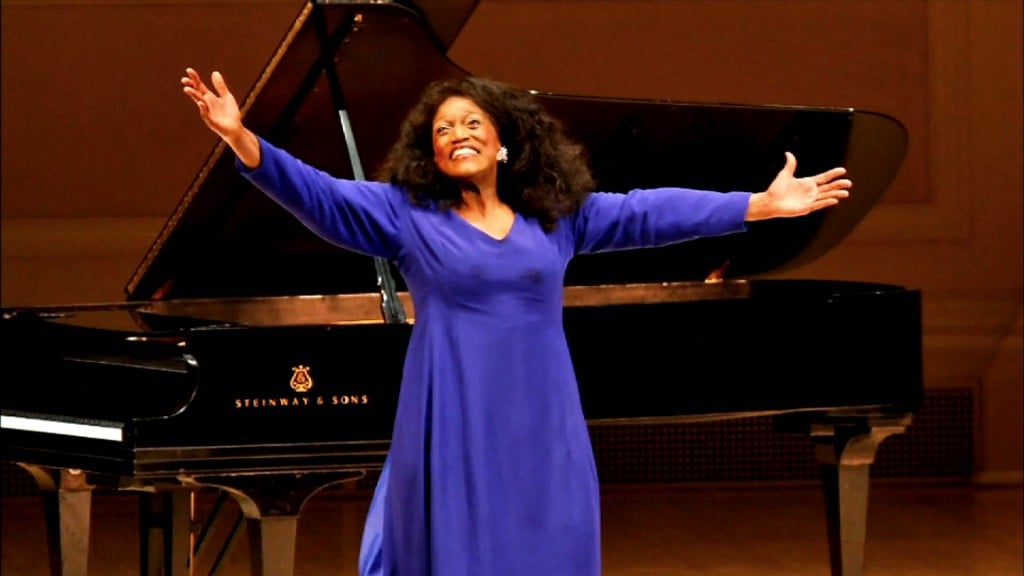
  • Remembering Jessye Norman Her Superpowers

    Remembering Jessye Norman Her Superpowers

    We all know that Jessye Norman had superpowers, but does anyone else remember her actually foiling a crime? It’s on the cusp of memory, something that happened within the past decade or so (unfortunately too recent to be within my wheelhouse), but I just can’t find anything right now, doing an internet search, beyond her countless obituaries. Norman, of course, died yesterday at the age of 74.

    This afternoon on The Classical Network, we’ll celebrate this great soprano’s artistry through a number of her recordings, including – to coincide with the Jewish High Holidays – Maurice Ravel’s “Deux mélodies hébraïques.”

    For variety’s sake, we’ll also enjoy performances by pianist Paul Badura-Skoda and hornist Myron Bloom, both of whom also died within the past several days.

    Norman’s voice was powerful yet creamy, at once opulent and seductive. She never made an ugly sound. I was lucky enough to hear her live a couple of times with the Philadelphia Orchestra, back in the 1980s. It seems as if I have the uncanny ability to remember everything from 30 years ago (that’s MY superpower), but I can’t remember what happened last week.

    In particular, her performance of Berlioz’s “Les nuits d’été” (“Summer Nights”), part of an all-Berlioz evening I attended at the height of my Berlioz mania, was exquisite. And boy, did she have presence.

    Her recordings are presents I can’t wait to share.

    First, on today’s Noontime Concert, we’ll have something completely different. We’ll travel the Silk Road from China to Spain with the Eurasia Consort in a program titled “On the Road through Dunhuang: Music from the Dunhuang Caves, the Ottoman Empire, and Medieval Spain.”

    The concert was recorded on January 3, 2018, at St. Bartholomew’s Church, 325 Park Avenue, in New York City. Free Midtown Concerts are held at St. Bart’s every Thursday at 1:15 p.m.

    Today’s broadcast is another made possible in part by Gotham Early Music Scene, or GEMS. GEMS is a non-profit corporation that supports and promotes artists and organizations in New York devoted to Early Music. For more information and a complete events calendar, visit gemsy.org.

    It’s all silk and velvet this afternoon. Prepare yourself for another Norman conquest, from 12 to 4 p.m. EDT (with more to follow with David Osenberg, from 4 to 7 p.m.), on WWFM – The Classical Network and wwfm.org.

  • Rosh Hashanah Concert Celebrating Women Composers

    Rosh Hashanah Concert Celebrating Women Composers

    For those of you who celebrate, I extend my best wishes for a good and sweet new year. The two-day observance of Rosh Hashana began last night at sunset.

    To mark the occasion, and with the shofar still fresh in our ears, this afternoon on The Classical Network, I’ll present Meira Warshauer’s “Tekeeya: Concerto for Shofar, Trombone and Orchestra.”

    Warshauer’s unusual concerto nicely dovetails with my month-long celebration of women composers, to coincide with the bicentennial of the birth of Clara Schumann.

    On this last day of September, I’ll have one more work by Schumann herself; also the “Psalm” for cello and orchestra by Irish composer Ina Boyle (a pupil of Ralph Vaughan Williams).

    As if all that weren’t enough, I’ll send out musical birthday greetings to Johan Svendsen, Sir Charles Villiers Stanford, David Oistrakh, and Valentin Silvestrov.

    The playlist will be as sweet as a mouth full of apples and honey, from 4 to 7 p.m. EDT, on WWFM – The Classical Network and wwfm.org.

  • Classical Birthdays & Women Composers

    Classical Birthdays & Women Composers

    The birthdays are thick on the ground today, like so many autumn leaves.

    I hope you’ll join me as I celebrate the artistry of composers Jean-Philippe Rameau, Dmitri Shostakovich, and Eugen Suchon, pianist Glenn Gould, conductor Sir Colin Davis, and flutist Eugenia Zukerman, among others.

    I’ll also highlight a few more works by women composers in this month in which we observe the Clara Schumann bicentennial. Tune in today to hear music by Amy Beach, Vítězslava Kaprálová, and Lera Auerbach.

    Then it’s more Shostakovich on “Music from Marlboro.” We’ll take in one of his string quartets, alongside a piano trio by Anton Arensky, at 6 p.m.

    Grab a rake and let’s get busy. I’ll be dispensing the hard cider from 4 to 7 p.m. EDT, on WWFM – The Classical Network and wwfm.org.

  • Shostakovich’s Birthday Marlboro Music

    Shostakovich’s Birthday Marlboro Music

    Hey, Dmitri! Happy birthday!

    Oh, okay. Act like you don’t know me then. I understand. In Stalinest Russia, one can never be too careful.

    We’ll divine what we can from your String Quartet No. 4 on this week’s “Music from Marlboro.”

    While Shostakovich had an on-again, off-again history with the Soviet authorities that made him justifiably cautious, his fourth quartet grew out of a newfound confidence, the result of Stalin having personally selected him as a cultural ambassador to the West.

    But these things had to be navigated very carefully. A sign of favoritism from Papa Joe often had the effect of setting a recipient up for a very big fall.

    Still, Shostakovich was determined to leverage his new-found currency. He took the opportunity to persuade Stalin that if he were going to be sent out into the decadent West, then perhaps it would be a good idea to lift the ban on performances of his music at home. Otherwise, the situation might appear a little peculiar to outsiders. Stalin recognized the logic in this, and Shostakovich was rehabilitated.

    He was not by any measure a stupid man. Yet the artistic impulse was not to be denied. Shostakovich wasted no time in embarking on a new string quartet, which he loaded up with inscrutable subtexts, Jewish folk songs, and all sorts of things that had a history of angering the “wise leader and teacher.” Fortunately for the composer, his friends convinced him not to allow the work to be performed publicly, and he put it in a drawer for another day.

    That other day is now. We’ll hear it played at the 1983 Marlboro Music Festival by violinists Sylvie Gazeau and Yuzuko Horigome, violist Philipp Naegele, and cellist Robie Brown Dan.

    Anton Arensky was a pupil of that icon of Russian nationalism, Nikolai Rimsky-Korsakov. However, in his music, he tended to gravitate more toward the cosmopolitan approach of Rimsky’s rival, Peter Ilych Tchaikovsky. Arensky’s Piano Trio in D minor is full of good tunes, by turns melancholy, turbulent, reflective, and good humored, but unfailingly charming. It’s the kind of piece that will have you humming for the rest of the day.

    We’ll hear it performed by pianist Frederick Moyer, violinist Isodore Cohen, and cellist John Sharp, at Marlboro in 1982.

    It’s a cryptic birthday cake for Shostakovich, with a strong cup of open-hearted Arensky. The composer is gifted in more ways than one, on the next “Music from Marlboro,” this Wednesday evening at 6:00 EDT, on WWFM – The Classical Network and wwfm.org.


    Marlboro School of Music and Festival: Official Page

Tag Cloud

Aaron Copland (92) Beethoven (95) Composer (114) Film Music (124) Film Score (143) Film Scores (255) Halloween (94) John Williams (188) KWAX (229) Leonard Bernstein (101) Marlboro Music Festival (125) Movie Music (139) Opera (202) Philadelphia Orchestra (89) Picture Perfect (174) Princeton Symphony Orchestra (106) Radio (87) Ralph Vaughan Williams (85) Ross Amico (244) Roy's Tie-Dye Sci-Fi Corner (290) The Classical Network (101) The Lost Chord (268) Vaughan Williams (103) WPRB (396) WWFM (881)

DON’T MISS A BEAT

Receive a weekly digest every Sunday at noon by signing up here


RECENT POSTS