Tag: WWFM

  • Doreen Carwithen Rediscovered Composer

    Doreen Carwithen Rediscovered Composer

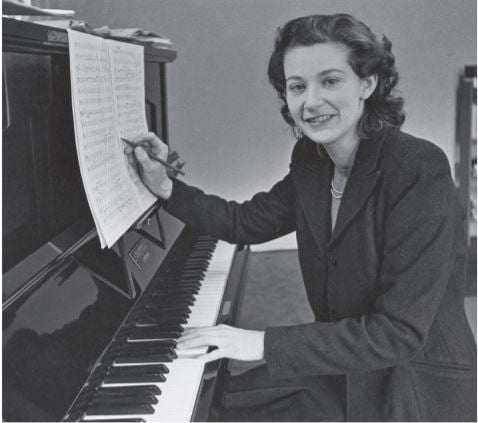
    In honor of the Clara Schumann bicentennial (she was born 200 years ago today), I am doing my best to honor the contributions of women composers all month long by finding ways to incorporate their music into my regular broadcasts. This week on “Picture Perfect,” I’ll shine a light on Doreen Carwithen.

    Carwithen was a pupil of William Alwyn, with whom she studied harmony and composition at the Royal College of Music in London. Alwyn, a contemporary of William Walton, enjoyed comparative success in the concert hall. Carwithen was the first to be selected by J. Arthur Rank to enter the college’s new film music program. For Carwithen and Alwyn, it was love at first sight. Their 30-year romance culminated in the couple’s marriage in 1975.

    The reason for the delay, unfortunately, was that Alwyn happened already to be married. This double life caused tremendous stress, taking a toll on both of their health and driving Alwyn, in particular, to alcoholism and ultimately a nervous breakdown. Finally, his doctor recommended that he get on with it already and live honestly.

    Combined, during their heyday in the 1940s and ‘50s, Alwyn and Carwithen wrote the music for over 100 films. Alwyn, in particular, scored such high-profile projects as “The Crimson Pirate,” “A Night to Remember,” and “The Swiss Family Robinson.” Although groomed for a career in film, Carwithen was not given the same opportunities. She scored only six dramatic features. The rest were documentaries and shorts.

    Her concert works, while well-received, were not met with enthusiasm or eagerness by either programmers or publishers. In 1961, she became Alwyn’s secretary and amanuensis, and following his death in 1985, devoted herself to the preservation of his legacy.

    At the time of her own death, in 2003, discovered among her papers were sketches for an unfinished string quartet (her third), a symphony, and a cello concerto. One can only imagine that, as an artist, her potential remained unfulfilled.

    I’ll do my best to level the playing field by dividing the hour between Alwyn and Carwithen, 50/50, on “Picture Perfect” – music for the movies – this Friday evening at 6:00 EDT, on WWFM – The Classical Network and wwfm.org.
  • Brahms’ “A German Requiem” on The Classical Network

    Brahms’ “A German Requiem” on The Classical Network

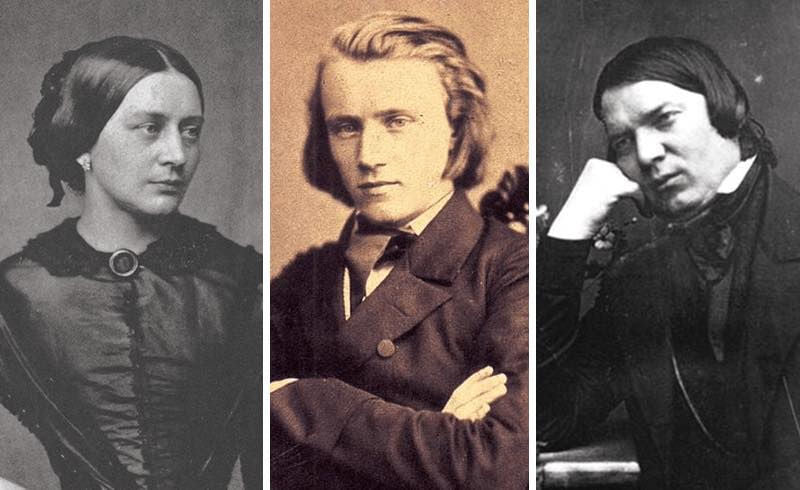
    Johannes Brahms had suffered a fair amount of loss at the time he embarked on his Requiem in 1865. His mother died in February of that year, and the death of his friend, Robert Schumann in 1856 also continued to resonate.

    On today’s Noontime Concert on The Classical Network, we’ll hear a performance of Brahms’ “Ein deutsches Requiem” by the New Jersey Master Chorale under the direction of William P. Gorton. Soprano Andrea Lauren Brown and baritone Timothy Renner will join organist Matt Smith and members of The Philadelphia Orchestra. The concert took place at Haddonfield United Methodist Church this past April.

    Brahms assembled the texts of the Requiem himself, eschewing the standardized Latin of the Roman Catholic Requiem Mass in favor of the vernacular German of the Luther Bible. He forgoes anything suggestive of terror, wrath, and hellfire, or even redemption through the sacrifice of Christ, to arrive at something more tender and humane. The modifications promote an atmosphere of solace and hope.

    Brahms may have titled his work “Ein deutsches Requiem” – “A German Requiem” – but there was nothing nationalistic intended by the designation. Rather he was suggesting something more direct and at the same time universal. In fact, he commented on one occasion that he would just as happily have called it “A Human Requiem.” The work is as much for the living, those who mourn, as it is for those who have passed.

    The second movement incorporates material composed as early as 1854, the year of Robert Schumann’s mental collapse and attempted suicide, when Brahms moved to Düsseldorf to be with Clara Schumann and her children. Brahms presented Clara with a four-hand piano version of the Requiem in 1866.

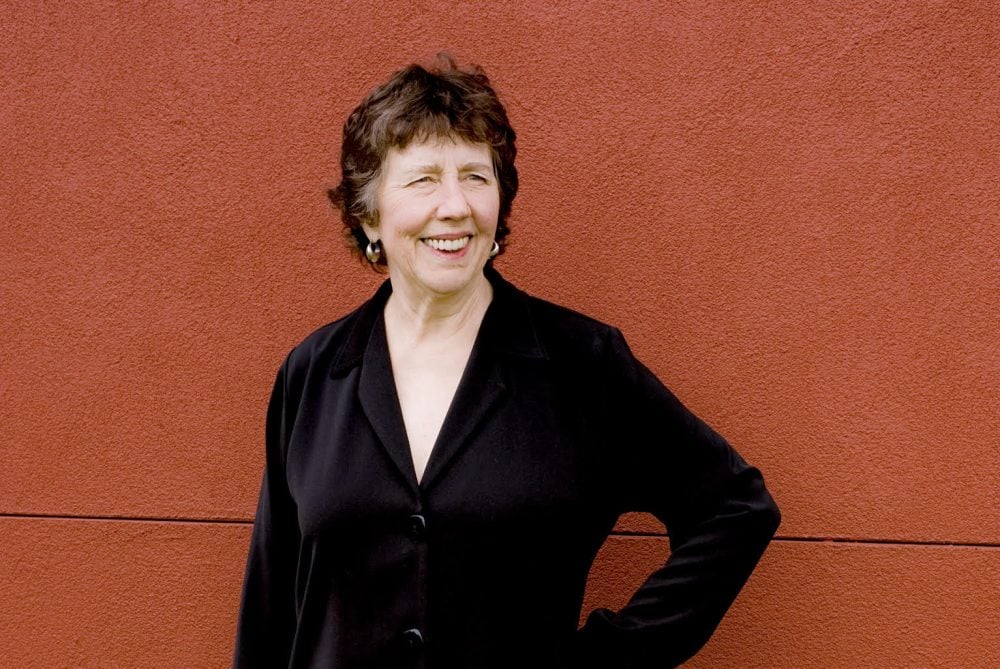
    Friday marks the 200th anniversary of Clara’s birth. We’ve been sampling some of her music during the course of my air shifts this month and celebrating the legacy of women composers in general. We’ll certainly continue in that vein this afternoon. Among today’s featured works will be the Piano Quintet No. 1 by Grazyna Bacewicz and the Violin Concerto of Margaret Brouwer.

    First, following close on the heels of the Requiem broadcast, we’ll enjoy a symphony dedicated to Brahms by his friend, Schumann student Albert Dietrich.

    I hope you’ll join me for “Ein deutsches Requiem” and more. In the end is our beginning, from 12 to 4 p.m. EDT, on WWFM – The Classical Network and wwfm.org.


    MÉNAGE À TRIPTYCH: Shoehorned between two Schumanns

  • Women Composers Leonarda Tower & More

    Women Composers Leonarda Tower & More

    With the Clara Schumann bicentennial only a week away, we’ll continue to celebrate the legacy of female composers. (This month, by the way, also sports the birthdays of Amy Beach and Nadia Boulanger!)

    Today, we salute Baroque composer Isabella Leonarda and Joan Tower, who turns 81, on the anniversary of their births. We’ll also hear a concerto by Australian composer Peggy Glanville-Hicks. Their music will be among my featured selections, from 4 to 6 p.m. EDT.

    Then descend into the man cave for scores from barbarian films inspired by the writings of pulp master Robert E. Howard on “Picture Perfect” at 6.

    Enjoyment of worthwhile music always transcends perceived gender differences, on WWFM – The Classical Network and wwfm.org.

    CLOCKWISE FROM TOP: Joan Tower, Isabella Leonarda, and Peggy Glanville-Hicks (moonlighting as a music critic at the New York Herald-Tribune)

  • Summer Road Trip Music Labor Day Special

    Summer Road Trip Music Labor Day Special

    It may be the First of September, but there’s still time for one last summer road trip.

    This Sunday night on “The Lost Chord,” it’s an hour of quintessentially American music about travel by car.

    Frederick Shepherd Converse’s “Flivver Ten Million” traces the Ford Motor Company’s affordable assembly line automobile, from its creation in a Detroit factory to the manifest destiny of America’s roadways.

    John Adams’ “Road Movies” has nothing at all to do with Bob Hope and Bing Crosby, alas. What it is, however, is a violin sonata written firmly within the American tradition, with a special affinity at its core with Aaron Copland’s Violin Sonata.

    Virgil Thomson’s “Filling Station,” written for Leon Kirstein’s Ballet Caravan, may have the distinction of being the only ballet set at a gas station. The work’s success gave Copland the confidence to follow through on another Caravan commission, which resulted in “Billy the Kid.”

    Finally, we’ll hear one of Michael Daughtery’s most performed works, the exuberant “Route 66,” inspired by the storied “Main Street of America.”

    Put the pedal to the metal. American composers hit the road for Labor Day, on “The Last Roads of Summer,” this Sunday night at 10:00 EDT, on WWFM – The Classical Network and wwfm.org.

  • Remembering Wolfgang Sawallisch & Philadelphia

    Remembering Wolfgang Sawallisch & Philadelphia

    I remember being told by a friend over coffee, back in the early ‘90s – still a few years away from the brushfire circulation of news on the internet – that Wolfgang Sawallisch was to be the next music director of the Philadelphia Orchestra.

    Sawallisch?!!

    It was a name I associated with Old World integrity and classic (mono) recordings of Richard Strauss. Also, a fabulous, underrated recording of “Ma Vlast” I had discovered while doing college radio, with the Suisse Romande Orchestra, of all things.

    Had he ever even been to the United States? How old was he? I guess at the time he must have been around 70. In the event, he died in 2013, only six months shy of his 90th birthday. Philadelphia would prove to be the high-profile capstone of a very respectable, indeed enviable, if not exactly glamorous career.

    Still, after the intensity and flash of Riccardo Muti, it would be a nice corrective. And I offer that as a Muti fan. This was Philadelphia, after all, where Ormandy roosted for 40 years.

    While Sawallisch was not the most thrilling music director (the word
    “kapellmeister” was bandied a lot), he provided solid leadership and proved on more than one occasion that on a good day he could still surprise.

    I remember a concert on which he programmed works by Kodály and Miklós Rózsa (the rarely-heard Viola Concerto), which were interspersed with performances by a traditional Hungarian band, complete with cimbalom. He may have to some degree drained Einojuhani Rautavaara’s Symphony No. 8 of some of its Finnishness, but at least he secured its premiere. When a severe snowstorm meant the orchestra couldn’t make it in for a scheduled concert of scenes from Wagner’s “Tannhäuser” and “Die Walküre” (including all of Act I), he made the impromptu decision to throw open the doors of the Academy of Music and play the accompaniment himself at the keyboard, with Deborah Voigt, Heikki Suikola, and chorus, for the enjoyment of anyone who cared to show up.

    He was generally all about Beethoven and Bruckner and, yes, Strauss – a concert performance of “Ariadne auf Naxos” was a highlight of his tenure (with Werner Klemperer, Colonel Klink, as the Majordomo!) – but he could also turn around and play the tar out of something like Bohuslav Martinu’s Symphony No. 4. All in all, not a bad legacy.

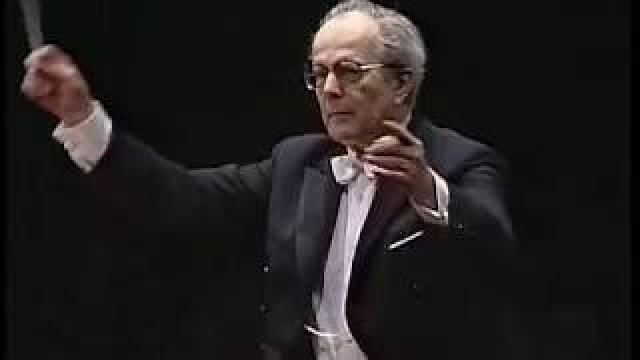
    I hope you’ll join me – once again over coffee – as I remember Wolfgang Sawallisch, with a selection of his recordings, as conductor and pianist. They’ll be among my featured highlights on this, his birthday, this afternoon from 4 to 7 p.m. EDT, on WWFM – The Classical Network and wwfm.org.

Tag Cloud

Aaron Copland (92) Beethoven (95) Composer (114) Film Music (124) Film Score (143) Film Scores (255) Halloween (94) John Williams (188) KWAX (229) Leonard Bernstein (101) Marlboro Music Festival (125) Movie Music (139) Opera (202) Philadelphia Orchestra (89) Picture Perfect (174) Princeton Symphony Orchestra (106) Radio (87) Ralph Vaughan Williams (85) Ross Amico (244) Roy's Tie-Dye Sci-Fi Corner (290) The Classical Network (101) The Lost Chord (268) Vaughan Williams (103) WPRB (396) WWFM (881)

DON’T MISS A BEAT

Receive a weekly digest every Sunday at noon by signing up here


RECENT POSTS