
Tag: WWFM

  • Artist Biopics Soundtracks Picture Perfect

    Artist Biopics Soundtracks Picture Perfect

    How to translate visual art to the big screen? Generally, by focusing on the drama in the artists’ lives, that’s how.

    And what drama!

    This week on “Picture Perfect,” expand your palette with music from movies about the great artists.

    “The Agony and the Ecstasy” (1965), based on the novel of Irving Stone, dramatizes the friction between Michelangelo (Charlton Heston) and his benefactor, Pope Julius II (Rex Harrison), over the painting of the ceiling of the Sistine Chapel. For his part, Michelangelo would have been perfectly content to stick to sculpture. Alex North’s score is an Early Music banquet, with allusions to – and sometimes outright quotations of – music of the Renaissance.

    Stone had another bestseller in “Lust for Life” (1956), about the tormented Vincent van Gogh. This time Kirk Douglas plays one of his most sympathetic roles – and looks remarkably like the artist. Anthony Quinn turns up as his “frenemy,” the painter Paul Gaugin, and earns an Academy Award for Best Supporting Actor. The great Miklós Rózsa wrote the music, softening up the edges of his brawny Hungarian sound with the softer palette of the French Impressionists.

    John Huston brought Pierre La Mure’s novel about Henri de Toulouse-Lautrec to the big screen as “Moulin Rouge” (1952) – not to be confused with the more recent Baz Luhrmann spectacle starring Nicole Kidman and Ewan McGregor, which relegated the artist to a supporting role. José Ferrer dominates the earlier version, spending most of the film walking through off-camera trenches and shuffling along on his knees. Georges Auric, one of the composers of Les Six (which also included Francis Poulenc and Darius Milhaud), captures the spirit of the titular cabaret. The score became one of Auric’s best-known, thanks to the waltz becoming a popular hit, “Where is Your Heart.”

    “The Picasso Summer” (1969) is a departure from the usual formula of focusing on the artist himself. Instead, a young couple (Albert Finney and Yvette Mimieux), admirers of Picasso’s work, take off on a European adventure in an attempt to track him down. Originally Picasso himself had agreed to appear, but some off-screen drama involving a matador friend and Yul Brynner’s wife drove him off. The film was based on a short story by Ray Bradbury. Bradbury hated the adaptation, as did the studio, and “The Picasso Summer,” after being heavily cut and patched with new footage, was never released theatrically in the United States. The film is striking for its extended animation sequences inspired by Picasso’s paintings, and for its score by Michel Legrand.

    Join me for a brush with greatness – music from movies about the great artists – on “Picture Perfect,” this Friday evening at 6:00 EDT, on WWFM – The Classical Network and wwfm.org.

  • William Henry Fry’s Fry Day Surprise

    William Henry Fry’s Fry Day Surprise

    Raising the false hopes of workers everywhere, Monday is “Fry Day” this week – as today happens to coincide with the birthday of William Henry Fry. Maybe.*

    Fry was born in Philadelphia in 1813. A pioneering figure in American music, he was the first native-born composer to write on a large scale. He composed orchestral works and the first opera by an American to be performed publicly in his lifetime (“Leonora,” in 1845). He was an outspoken advocate of American music – that is, music composed by Americans – at a time when German imports ruled the roost. It would be decades before American music would gain a toehold in the concert halls, which makes Fry an even more remarkable figure.

    Fry studied music with a former bandleader in Napoleon Bonaparte’s army, who went on to become the head of Philadelphia’s Musical Fund Society. Fry himself would become the society’s secretary.

    He was also a journalist, a writer on music, and the first music critic to write for a major American newspaper. He was a foreign correspondent for the Philadelphia Public Ledger and acted as music critic for the New York Herald Tribune.

    He composed seven symphonies, all of them of a descriptive nature. His “Santa Claus Symphony,” after Clement Moore, is more of a Straussian tone poem. My personal favorite, though, is the “Niagara Symphony.” Written for P.T. Barnum, the work is conceived for enormous forces augmented by a mind-blowing eleven timpani.

    Hear this sublime work this afternoon on The Classical Network in a recording on the Naxos label. The album features liner notes by my friend and colleague Kile Smith. For 18 years, Kile was curator of the Fleisher Collection of Orchestral Music at the Free Library of Philadelphia, the world’s largest lending library of orchestral performance materials, where Fry’s scores are housed.

    Kile, of course, is also an entertaining writer, a personable radio presence, and a terrific composer. His latest album, “The Arc in the Sky,” was released last month on Navona Records, a subsidiary of Parma Recordings. The hour-long work was commissioned by the Grammy Award winning choir, The Crossing. It is one of five CDs of Kile’s music to be issued over the past year.

    I’ll further exploit the Fry connection to share some of Kile’s music this afternoon, following on the heels of the “Niagara Symphony.” Out of the Fry and into the Kile, so to speak.

    It will be more fun than going over the falls in a barrel, from 4 to 7 p.m. EDT, on WWFM – The Classical Network and wwfm.org.

    • There is some discrepancy regarding the date of Fry’s birth, with some sources giving August 10, and others August 19. So maybe it is just Monday, after all.

    More about Kile Smith here: kilesmith.com

  • Suk’s Summer’s Tale Healing After Tragedy

    Suk’s Summer’s Tale Healing After Tragedy

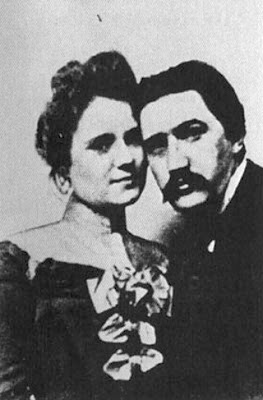
    Josef Suk’s 30th year was a tragic one, marked by the deaths of both his young wife, Otilie, and his former teacher, her father, Antonín Dvořák. Not surprisingly, a sense of morbidity colors much of his mature output. The double-loss directly inspired Suk’s “Asrael Symphony” (named for the Angel of Death).

    This Sunday night on “The Lost Chord,” we’ll take a look at “A Summer’s Tale,” the next step in Suk’s emotional rehabilitation. The work is a five-movement symphonic poem, the second of a four-part cycle, that contemplates death and the meaning of life. More affirmative than the grim “Asrael,” which is full of pain, loss and grief, “A Summer’s Tale” explores the healing powers of nature, in a score that at times reflects the epic romanticism of Gustav Mahler and at others the impressionism of Claude Debussy. It was composed over the course of just six weeks in the summer of 1907. Further tinkering took place over the next year-and-a-half. The work received its premiere in January of 1909.

    Suk later described the theme of the piece as “finding a soothing balm in nature.” I hope you’ll join me as I clear a path to “Healing by Nature” – Josef Suk’s “A Summer’s Tale” – this Sunday night at 10:00 EDT, on WWFM – The Classical Network and wwfm.org.
  • Hindemith’s Octet: An Endurance Test

    Hindemith’s Octet: An Endurance Test

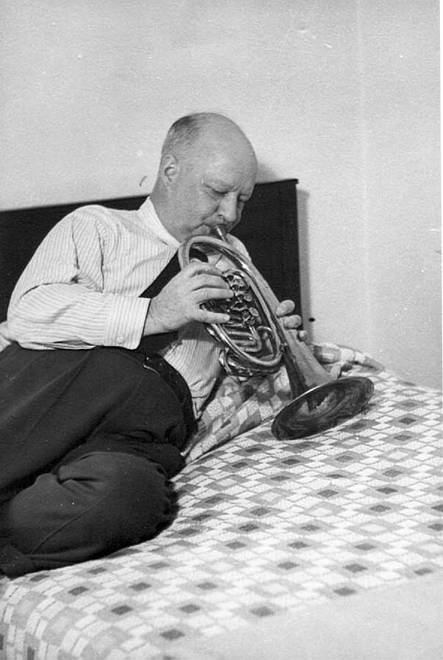
    There’s Hindemith on a good day. Then there’s the Hindemith of the Octet for Winds and Strings.

    At 27 minutes, Hindemith’s Octet is something of an endurance test for performers, and perhaps even more so for listeners. The piece is ugly, grey, cranky, and noodly – gebrauchsmusik at its worst. And I say this as a Hindemith fan. There are times when Hindemith’s music can be glorious, thrilling, or transcendent, even. And then there are those when he just makes you feel like you’ve been reading a newspaper in the back seat on a too-long car trip.

    This is not a piece I would attempt to share under the glare of a sunny summer’s day. But there are thunderstorms in the forecast, so let the good times roll.

    Eight talented musicians make of it what they can, on this week’s “Music from Marlboro.” We’ll hear as fine a performance of the piece as you’re ever likely to encounter, from the 1983 Marlboro Music Festival.

    Then, by way of apology, I’ll do the best that I can to repair our friendship with Beethoven’s wholly delightful Serenade in D major, Op. 25. Beethoven’s Serenade is a late entry in the 18th century divertimento craze. Its date of composition is uncertain, but recent scholarship places it around the time Beethoven wrote his popular Septet. We’ll hear a performance from Marlboro in 1980, with flutist Christine Nield, violinist Young Uck Kim, and violist Michael Tree (of the legendary Guarneri Quartet).

    Hindemith may have had Beethoven and Schubert in mind when he embarked on his Octet. But beyond that, I have no idea what he was thinking. Form is no substitute for content, on this week’s “Music from Marlboro,” this Wednesday evening at 6:00 EDT, on WWFM – The Classical Network and wwfm.org.

    Marlboro School of Music and Festival: Official Page


    HINDEMITH: Whatever pops into my head is gold

  • Korngold’s Symphony on The Classical Network

    Korngold’s Symphony on The Classical Network

    The Tuesday noon concert is on hiatus for the remainder of the summer. So I’ll have a blank slate this afternoon, on The Classical Network.

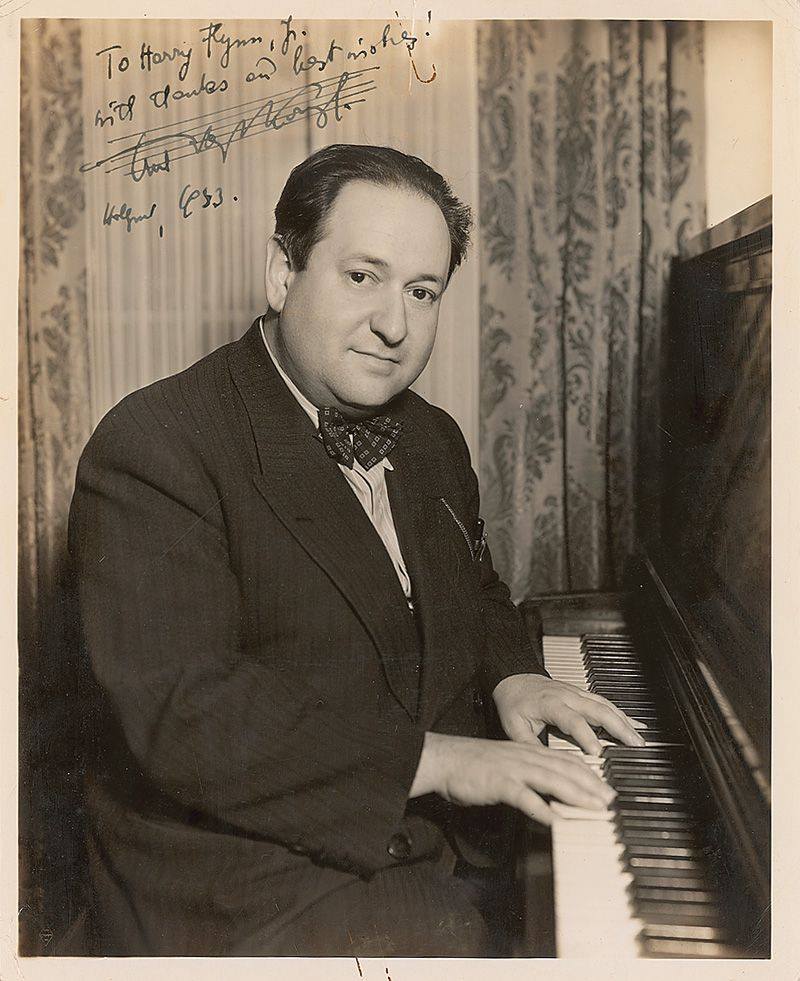
    With another stormpocalypse bearing down on the Trenton-Princeton area (maybe), I’ll present, among my featured highlights, Erich Wolfgang Korngold’s Symphony in F-sharp, the composer’s emotional and artistic reaction to war-torn Vienna.

    As a Jew, Korngold lived as an exile in Hollywood following the Anschluss, earning fame and fortune through his film scores for Errol Flynn. In fact, he once quipped that Robin Hood had saved his life. Korngold may have survived the war, but by 1945 the world he had known was gone forever. When he attempted to reestablish his career back home, he found himself regarded as an uncomfortable reminder of shame, guilt, and destruction, and the late Romantic syntax of his music had come to seem like the product of a bygone era. To lend perspective, John Cage unveiled his 4’33” in 1952, the same year that Korngold completed his symphony.

    The Symphony in F-sharp is not by any means “film music,” though it does allude to some of the scores he wrote for Warner Brothers – “Juarez,” “The Private Lives of Elizabeth and Essex,” “Captain Blood,” and “Kings Row.” The work includes an obligatory Korngoldian happy ending, but the overall mood is one of loss and ruination. It was performed only thrice during the composer’s lifetime. The first performance was so under-rehearsed that the composer tried (unsuccessfully) to put a halt to it.

    Over a decade after Korngold’s death, the score was rediscovered by conductor Rudolf Kempe in the library of the Munich Philharmonic. Kempe set down the world-premiere recording for RCA in 1972. Alongside RCA’s Classic Film Scores Series and a new recording of “Die Tote Stadt,” it set the ball rolling, slowly but inexorably, toward a reassessment of Korngold’s music, which gradually picked up pace in the 1990s, as musicians and record companies began to look further afield with the realization that everyone had already replaced their LPs of the standard repertoire on compact disc.

    The conductor Dmitri Mitropoulos once wrote of Korngold’s symphony, “All my life I have searched for the perfect modern work. In this symphony I have found it.” Unfortunately, Mitropoulos died before he could realize his plan to perform it.

    Korngold was a good man – he shared the wealth of his success in Hollywood to help family and displaced friends in need – but he was not a religious man. Nor was he very much tied up in his heritage. He commented that he and his family had always thought of themselves as Viennese; it was Hitler who made them Jewish. Korngold dedicated his symphony to the memory of Franklin Delano Roosevelt, president of the country that had become his second home. Korngold died in Los Angeles in 1957.

    Tune in this afternoon to hear Korngold’s Symphony in F-sharp, among my featured works, between 12 and 4 p.m. EDT, on WWFM – The Classical Network and wwfm.org.


    NOTE: The symphony will be performed on Saturday night at the Fisher Center at Bard, as part of the second weekend of this year’s Bard Music Festival, held at Bard College, “Korngold and His World.” More information is available at fishercenter.bard.edu.

Tag Cloud

Aaron Copland (93) Beethoven (95) Composer (114) Film Music (124) Film Score (143) Film Scores (255) Halloween (94) John Williams (188) KWAX (229) Leonard Bernstein (101) Marlboro Music Festival (125) Movie Music (139) Opera (202) Philadelphia Orchestra (89) Picture Perfect (174) Princeton Symphony Orchestra (106) Radio (87) Ralph Vaughan Williams (85) Ross Amico (244) Roy's Tie-Dye Sci-Fi Corner (290) The Classical Network (101) The Lost Chord (268) Vaughan Williams (103) WPRB (396) WWFM (881)

DON’T MISS A BEAT

Receive a weekly digest every Sunday at noon by signing up here


RECENT POSTS