Going on the air with the Princeton University Chapel Choir and Orchestra performing Brahms’ “Ein Deutsches Requiem” at noon. It’s all Brahms and Tchaikovsky through 7:00 EDT, as we celebrate both composers’ birthdays by raising funds to ensure a future of great classical music on the radio. Call us now at 1-888-232-1212, or donate online at wwfm.org. Thank you for your support of WWFM – The Classical Network!
Tag: WWFM
-
Brahms vs. Tchaikovsky: A Classical Clash of Titans
This is a contest not just between two titanic composers, but a veritable struggle between the gods.
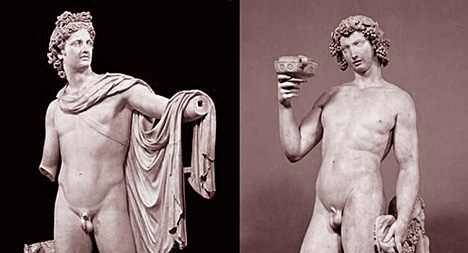
Of the two mighty artists who were born on this date, Johannes Brahms (b. 1833), the great classicist among Romantics, was wreathed by the laurels of Apollo’s ordered rationality, and Peter Ilych Tchaikovsky (b. 1840), ever heart-on-the-sleeve, was fueled by the wine of Dionysus’ emotional truth.
We pit these musical champions against one another in the arena of public opinion today on The Classical Network, as we humbly submit to the stern judgment of our listeners. And of course, we’re hoping to raise a little money in the process.
Which of these composer rates higher in your estimation?
So as to maintain balance and not to incur the wrath of any higher powers (since, historically, the gods have been poor losers), we are looking to divide the spoils. In our quest to attain a single-day goal of $7000, for this May 7, we are asking you to contribute, in whatever amount, toward $3500 for EITHER composer.
Subjectivity is akin to voting with the heart, which should appeal very much to Dionysus, yet balance will be achieved, which, as day follows night, would surely earn the approval of Apollo. After all, both composers have earned a place in the pantheon.
A highlight of today’s broadcast will be a special Noontime Concert, in which Brahms’ “Ein Deutsches Requiem” will be presented in its entirety, in a performance by the Princeton University Chapel Choir and Orchestra, under the direction of Penna Rose.
The concert, which took place last month, was dedicated to the memory of Professor Henry Stainken Horn, Princeton Professor of Ecology and Evolutionary Biology from 1966 to 2019. Professor Horn was a member of the Chapel Choir from 1990 until his passing.
In line with our Classical argument, the performance will be prefaced by a reading from Tennyson’s “Ulysses,” by Christopher Parton, a graduate student from Princeton’s music department. Professor Horn himself read the poem to introduce last year’s Milbank Memorial Concert.
Apollonian Brahms or Dionysian Tchaikovsky? If you simply cannot decide, why not hedge your bets and leave a little offering for both? Call us at 1-888-232-1212, or contribute online at wwfm.org (click on “donate”). Then join us for TEN HOURS of Brahms and Tchaikovsky, today from 9 a.m. to 7 p.m. EDT. Thank you for your support of WWFM – The Classical Network!
PHOTOS: Apollo and Dionysus and Brahms and Tchaikovsky – game on!
-
Pfitzner, Horenstein: A Musical Birthday Celebration
Some wag once described Hans Pfitzner’s opera “Palestrina” as “’Parsifal’ without the jokes.”
That may be so, but I’m not kidding when I say that yesterday marked the 150th anniversary of the Pfitzner’s birth. Allegedly he was so unpleasant a person to be around that he alienated even Hitler, but he wrote some lovely stuff, and I’m hoping to play a sampling of it this afternoon.
It’s also the birthday today of conductor Jascha Horenstein. Horenstein emerged from a rabbinical family in what is now Ukraine to study at the Vienna Academy of Music with Joseph Marx and Franz Shrecker. From there, he moved to Berlin, where he became an assistant to Wilhelm Furtwängler. While Pfitzner was hoping his career would benefit from the rise of the Nazis (it didn’t), Horenstein fled for his life to the United States. His only post as music director would be a brief stint at the Düsseldorf Opera.
Like Furtwängler, he developed a passionate cult following, revered for his interpretations of Mahler and Bruckner. He also championed Carl Nielsen and Andrzej Panufnik before it became cool to do so. Late in life, he led an acclaimed series of performances of “Parsifal” at the Royal Opera House, Covent Garden. Sorry about that, Pfitzner. Horenstein, it seems, enjoyed the last laugh.
I hope you’ll join me for Pfitzner, Horenstein, and a little bouquet for spring to start, from 4 to 7 p.m. EDT, on WWFM – The Classical Network and wwfm.org.
PHOTOS: Horenstein conducts; Pfitzner has another bad day
-
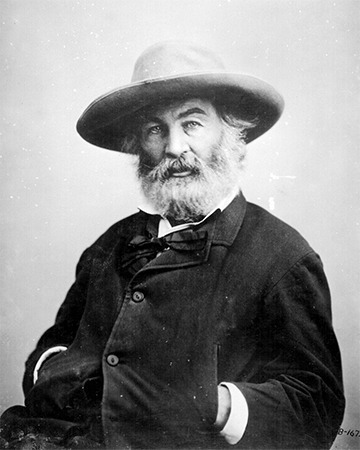
Walt Whitman’s Musical Legacy on WWFM
Walt Whitman was born in Huntingdon, NY, on Long Island, on May 31, 1819. He died in Camden, NJ, on March 26, 1892.
We’ll celebrate the 200th anniversary of the birth of this most influential of American poets all month long, Sunday nights on “The Lost Chord,” with music inspired by his verse, including choral works, orchestral pieces, and songs, from an array of international composers.
Tune in this week for an all-American program, featuring selections by Roy Harris, Frederick Shepherd Converse, and Pulitzer Prize-winner George Walker.
Harris, who lived from 1898 to 1979, was one of our great symphonists. His Symphony No. 3 enjoyed particular acclaim. He certainly had the makings of a Man of Destiny – born in log cabin on Lincoln’s birthday, in Lincoln County, Oklahoma.
We’ll enjoy his 1959 setting of “Give Me the Splendid Silent Sun,” for baritone and orchestra. The poem first appeared in Whitman’s “Drum-Taps,” in 1865. Whitman had returned to Brooklyn, on the verge of mental collapse, following his experiences working in army hospitals in the field for three years during the Civil War.
Then we’ll turn to a work by George Walker, who lived from 1922 to 2018. Walker was the first African-American recipient of the Pulitzer Prize for Music – as recently as 1996 – for his work, “Lilacs,” for soprano and orchestra.
“Lilacs” falls into four sections, utilizing the first three and 13th stanzas from Walt Whitman’s “When Lilacs Last in the Dooryard Bloom’d,” a poignant meditation on the assassination of Abraham Lincoln.
Finally, we’ll bask in a romantic effusion of Frederick Shepherd Converse. Converse lived from 1871 to 1940, the only composer tonight whose life actually overlapped with that of Whitman.
Converse was born in Newton, Massachusetts. He studied composition with George Whitefield Chadwick, and in Munich with Josef Rheinberger. His opera, “The Pipe of Desire,” was the first by an American to be performed at New York’s Metropolitan Opera, in 1905.
From 1904, we’ll hear his orchestral fantasy, “The Mystic Trumpeter.” The literary program, taken from “Leaves of Grass,” was manipulated by the composer to suit his own structural needs. The work’s five sections – “Mystery and Peace;” “Love;” “War and Struggle;” “Humiliation;” and “Joy” – are played without pause.
Sing the body electric, as we honor Walt Whitman, Sunday nights in May at 10:00 EDT. That’s “Songs of Democracy,” on WWFM – The Classical Network and wwfm.org.
PHOTOS: Uncle Walt with (top to bottom) Roy Harris, George Walker, and Frederick Shepherd Converse
-

Earth Day Garbage Concerto on The Classical Network
This afternoon on The Classical Network, I’ll be playing a lot of garbage. No, really. One of my featured works will be the “Garbage Concerto,” by Canadian composer Jan Järvlepp. The piece incorporates percussion instruments fashioned out of recyclable material. I thought it only appropriate, since today is Earth Day.
I hope you’ll join me, as I enter nature’s realm with Antonin Dvořák. Take a walk in the woods with Robert Schumann and Mikalojus Čiurlionis. View the earth from the International Space Station with a cello concerto by Osvaldo Golijov.
We’ll hear a wistful piano work that grew out of a review written in protest of uranium mining, of all things, by Sir Peter Maxwell Davies, and a symphony commissioned in part by a wildlife conservancy, from Alan Hovhaness.
It’s in my nature to share great music. Celebrate Earth Day, from 4 to 7 p.m. EDT, on WWFM – The Classical Network and wwfm.org.
Tag Cloud
Aaron Copland (94) Beethoven (95) Composer (114) Film Music (149) Film Score (143) Film Scores (255) Halloween (99) John Williams (197) KWAX (232) Leonard Bernstein (105) Marlboro Music Festival (125) Movie Music (164) Mozart (91) Opera (215) Philadelphia Orchestra (90) Picture Perfect (174) Princeton Symphony Orchestra (110) Radio (90) Ross Amico (244) Roy's Tie-Dye Sci-Fi Corner (290) The Classical Network (101) The Lost Chord (269) Vaughan Williams (107) WPRB (397) WWFM (881)