Tag: WWFM

  • Easter Evening Ryelandt Symphony on WWFM

    Easter Evening Ryelandt Symphony on WWFM

    Soon all the guests will have left, and all the dishes will be cleaned. Time to pop a couple of malted eggs, or to pour yourself a malt scotch, and to wrap up your Easter in inspiring fashion with the Symphony No. 4 by the devout Belgian composer Joseph Ryelandt.

    Ryelandt’s symphony, completed on the very eve of World War I, concludes with a triumphant statement of the Credo from the Catholic Mass. Then stick around for a Credo setting by the Franco-Flemish composer, of some four centuries earlier, Josquin des Prez.

    Enjoy these two spiritual discoveries rooted in the Mass, this Sunday evening at 10:00 EDT, on WWFM – The Classical Network and wwfm.org.

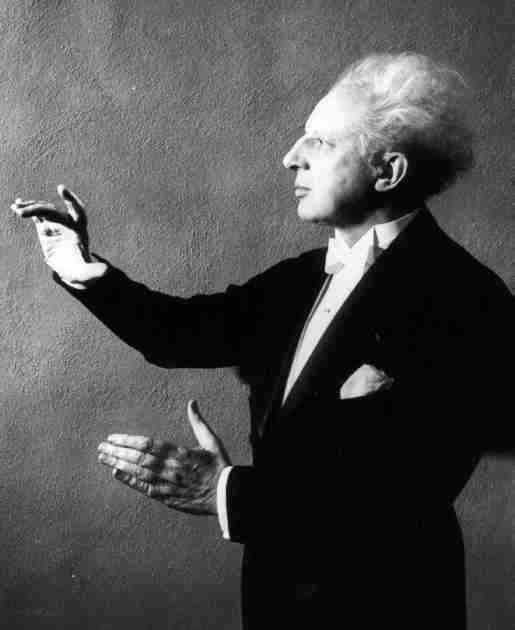
  • Leopold Stokowski Birthday Wagner Parsifal

    Leopold Stokowski Birthday Wagner Parsifal

    LEOPOLD!

    Raise a stein to Stoky on his birthday, and then join me tomorrow for a transcendent recording of the “Good Friday Spell” and “Act III Synthesis” from Wagner’s “Parsifal.” It will be a Good Friday make-good, sometime between 4 and 6 p.m. EDT, on WWFM – The Classical Network and wwfm.org.

    Happy birthday, Leopold Stokowski!

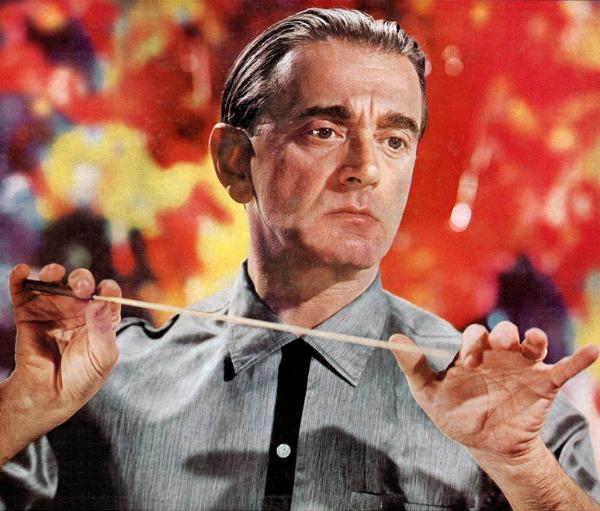
  • Miklós Rózsa Ben-Hur Composer Birthday

    Miklós Rózsa Ben-Hur Composer Birthday

    “Who the hell wants foxtrots? I want serious music!”

    So says Miklós Rózsa, in this 30-minute documentary.

    Enjoy it, and then join me this Friday evening at 6:00 EDT, as I present Rózsa’s magnum opus, “Ben-Hur,” among my featured selections, on “Picture Perfect” – music for the movies – on WWFM – The Classical Network and wwfm.org.

    Happy birthday, Miklós Rózsa!

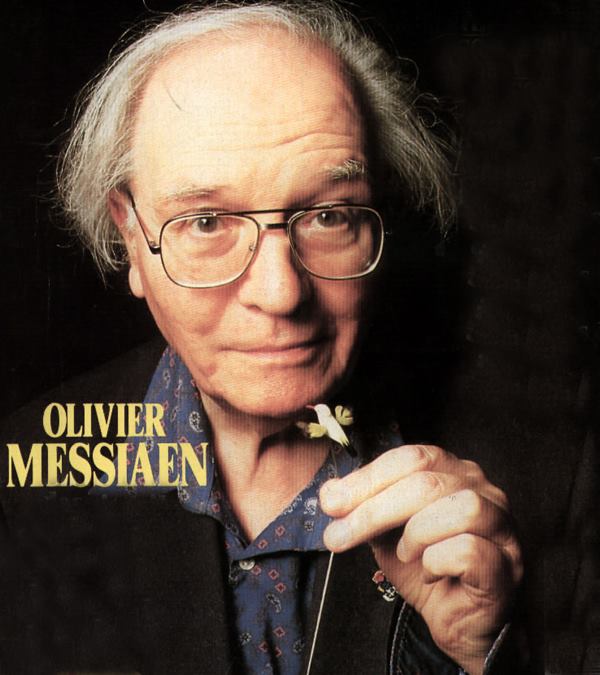
  • Messiaen’s Quartet: Music from the End of Time

    Messiaen’s Quartet: Music from the End of Time

    As someone who definitely has a problem with managing his time, I am relieved to find it coming to an end, at least musically speaking. I hope you’ll join me for the next “Music from Marlboro,” as we listen to Olivier Messiaen’s “Quartet for the End of Time.”

    Messiaen famously wrote his piece, one of his most frequently performed, in a prisoner of war camp, using the only instruments at his disposal (clarinet, violin, cello, and piano). A sympathetic guard, Karl-Albert Brüll, saw to it that he had pencils, music paper, and plenty of quiet. He also helped to acquire the instruments.

    The piece was first performed in an unheated space, on January 15, 1941, before an audience made up of the camp’s prisoners and guards. Messiaen recollected, “Never was I listened to with such rapt attention and comprehension.” Shortly after the performance, Brüll forged papers, using a potato stamp, and liberated the musicians.

    Many years later, Brüll showed up on Messiaen’s doorstep, but was told the composer would not see him. Perhaps Messiaen didn’t wish to relive the war. But Brüll was no Nazi. In civilian life, he was a lawyer, a cultivated man who spoke fluent French. In the service, he treated his prisoners humanely. Messiaen eventually had a change of heart and sent a message to the man who had helped make his masterpiece possible. But it was too late. Brüll had been hit by a car.

    A devout Catholic, Messiaen drew inspiration for the quartet from the Book of Revelation. The score is prefaced by the following quote:

    “And I saw another mighty angel come down from heaven, clothed with a cloud: and a rainbow was upon his head, and his face was as it were the sun, and his feet as pillars of fire … and he set his right foot upon the sea, and his left foot on the earth…. And the angel which I saw stand upon the sea and upon the earth lifted up his hand to heaven, and sware by him that liveth for ever and ever… that there should be time no longer: But in the days of the voice of the seventh angel, when he shall begin to sound, the mystery of God should be finished…”

    The work falls into eight movements (here in English translation): “Crystal liturgy;” “Vocalise, for the Angel who announces the end of time,” “Abyss of birds;” “Interlude;” “Praise to the eternity of Jesus;” “Dance of fury, for the seven trumpets;” “Tangle of rainbows, for the Angel who announces the end of time;” and “Praise for the Immortality of Jesus.”

    Messiaen being Messiaen, the composer manages to include ample bird calls. Syncopated passages punctuate a kind of mystic yearning so intense that it borders on the erotic.

    During this holiest week on the Christian calendar, and in the wake of the tragedy at Notre Dame, which, thankfully, could have been a lot worse, I thought it only appropriate to revisit Messiaen’s luminous, ecstatic meditations.

    We’ll hear it performed at the 2005 Marlboro Music Festival, by pianist Ieva Jokubaviciute, clarinetist Charles Neidich, violinist Karina Canellakis, and cellist Soo Bae.

    The music will fill the entire hour. But there’s no need for an encore when time is at an end. I hope you’ll join me for the next “Music from Marlboro,” this Wednesday evening at 6:00 EDT, on WWFM – The Classical Network and wwfm.org.

    Marlboro School of Music and Festival: Official Page
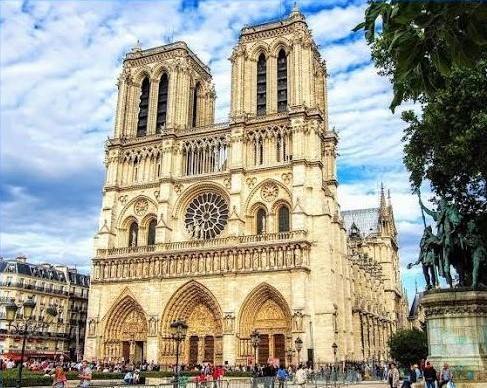
  • Notre Dame Tributes on The Classical Network

    Notre Dame Tributes on The Classical Network

    Join me this afternoon on The Classical Network, as we commemorate Notre Dame Cathedral and celebrate its legacy as a center of sacred, cultural, historical, patriotic and – not least – musical significance.

    Miraculously, reports are coming in that the cathedral’s Grand Organ has survived the fire – though in what condition it is in is anyone’s guess. This is the instrument on which Louis Vierne and Maurice Duruflé regularly improvised. Vierne even died at the console!

    The organ will be represented in recordings this afternoon, following today’s Noontime Concert.

    First, we’ll hear two selections for Holy Week, courtesy of Gotham Early Music Scene (GEMS). The ensemble Artek will perform “Lamentations of Jeremiah” by Johann Rosenmüller and Bourbon Baroque, Inc. will perform the “Stabat Mater” of Luigi Boccherini.

    These works were presented as part of the Midtown Concerts series, held at the chapel of St. Bartholomew’s Church, 325 Park Avenue, in New York City. Free concerts take place at St. Bart’s on Thursdays at 1:15 p.m. For more information, visit GEMS’ website, gemsny.org, and click on the events calendar.

    Following today’s Noontime Concert broadcast, I’ll share an hour of sonic impressions of Notre Dame de Paris, featuring the Grand Organ, the cathedral choir, and the tolling of its magnificent bells. The remainder of the afternoon will be a celebration of France and its iconic centerpiece.

    “Our Lady” will rise again, from 12 to 4 pm. EDT, on WWFM – The Classical Network and wwfm.org.

Tag Cloud

Aaron Copland (93) Beethoven (95) Composer (114) Film Music (124) Film Score (143) Film Scores (255) Halloween (94) John Williams (188) KWAX (229) Leonard Bernstein (101) Marlboro Music Festival (125) Movie Music (139) Opera (202) Philadelphia Orchestra (89) Picture Perfect (174) Princeton Symphony Orchestra (106) Radio (87) Ralph Vaughan Williams (85) Ross Amico (244) Roy's Tie-Dye Sci-Fi Corner (290) The Classical Network (101) The Lost Chord (268) Vaughan Williams (103) WPRB (396) WWFM (881)

DON’T MISS A BEAT

Receive a weekly digest every Sunday at noon by signing up here


RECENT POSTS