Category: The Lost Chord

  • Musical Wonder Cabinets on “The Lost Chord”

    Musical Wonder Cabinets on “The Lost Chord”

    Cabinets of curiosities, also sometimes referred to as “wonder rooms,” were small collections of extraordinary objects, strange and often fanciful precursors of today’s museums, which attempted to categorize and explain oddities of the natural world. This week on “The Lost Chord,” we’ll have three musical equivalents.

    Princeton University professor Dmitri Tymoczko’s “Typecase Treasury” recalls a small table his parents acquired, made from a typecase subdivided into a hundred little compartments. “Each had been filled with a tiny mineralogical curiosity,” he writes, “a strange crystal, a piece of iron pyrite, a shark’s tooth, or a fossilized tribolyte.” He found it a useful metaphor for a multi-movement collection of short pieces, in which he attempts to produce “a sense of form through juxtaposition.”

    Grammy Award-winner Michael Colina is perhaps best known for his jazz and Latin projects. However, Colina was classically trained, having studied at the North Carolina School of the Arts, and then abroad, at the Chigiana Academy, in Sienna, Italy. We’ll hear his Violin Concerto, subtitled “Three Cabinets of Wonder,” a work inspired by Fanny Mendelssohn, the Buddha, and an Amazonian nature spirit.

    Finally, we’ll sample just a bit from “Cabinet of Curiosities” by Philadelphia-based composer Robert Moran, who’s something of a wonder himself. “The Hapsburg Kunstkammer” employs graphic notation and is scored for marimba, hairbrush, aluminum foil, bells played with fingers, finger cymbals, telephone bell, vibraphone, rubber ball, celesta and harpsichord.

    I hope you’ll join me for “Curiouser and Curiouser,” a tour of musical wonder cabinets, on “The Lost Chord,” now in syndication on KWAX Classical Oregon!

    https://en.wikipedia.org/wiki/Cabinet_of_curiosities

    ——–

    Clip and save the start times for all three of my recorded shows:

    PICTURE PERFECT, the movie music show – Friday at 8:00 PM EST/5:00 PM PST

    SWEETNESS AND LIGHT, the light music program – Saturday at 11:00 AM EST/8:00 AM PST

    THE LOST CHORD, unusual and neglected rep – Saturday at 7:00 PM EST/4:00 PM PST

    Stream them, wherever you are, at the link!

    https://kwax.uoregon.edu

  • Dark Horse Norsemen on “The Lost Chord”

    Dark Horse Norsemen on “The Lost Chord”

    A Norse is a Norse, of course, of course…

    This week on “The Lost Chord,” we’ll make hay with music by a couple of Norwegian composers.

    Halfdan Cleve (1879-1951) received unusually strict musical training. His father was an organist, who saddled his son with nothing but Bach until he was 16! The young Cleve then cantered to Germany, where he plowed through studies with the Scharwenka brothers, Philipp and Franz Xaver. The latter, a pupil of Franz Liszt, was regarded as one of the great thoroughbred keyboard virtuosos of his day.

    Cleve became widely recognized as a composer and pianist, but his own popularity flagged after World War I. He reacted against the rise of modernism by doubling down, in the mane, on his pedigree, celebrating the Norwegian countryside and its folk idioms in his music. His Violin Sonata of 1919 was foaled of this approach.

    Eyvind Alnaes (1872-1932), however, was a horse of a different color. Known, if at all, for his art songs – some of which were recorded by Kirsten Flagstad and Feodor Chaliapin – Alnaes’ musical language is less overtly “Norwegian” and more reactive to sugar cubes. His Piano Concerto of 1919 shadows Brahms and Tchaikovsky, and overtakes Rachmaninoff’s Piano Concerto No. 4, not completed until seven years later. Could Alnaes have been the rock in Rach’s shoe?

    Ladies and gentlemen, place your bets! The garland goes to “Dark Horse Norsemen” – works by neglected Norwegian composers – on “The Lost Chord,” now in syndication on KWAX Classical Oregon!

    ——–

    Clip and save the start times for all three of my recorded shows:

    PICTURE PERFECT, the movie music show – Friday at 8:00 PM EST/5:00 PM PST

    SWEETNESS AND LIGHT, the light music program – Saturday at 11:00 AM EST/8:00 AM PST

    THE LOST CHORD, unusual and neglected rep – Saturday at 7:00 PM EST/4:00 PM PST

    Stream them, wherever you are, at the link!

    https://kwax.uoregon.edu

    ——–

    Flagstad sings Alnaes


    Chaliapin


  • Everything Old is New Again on “The Lost Chord”

    Everything Old is New Again on “The Lost Chord”

    This week on “The Lost Chord,” what’s old is new again, as we enjoy a program of 20th century music by French composers who look back to their illustrious forebears.

    In the 1870s, following France’s defeat in the Franco-Prussian war, there was a rise in musical nostalgia, with composers doing their part to mend the wounded national dignity by looking back to the galant style of the Ancien Régime – an idealized Golden Age which stood outside of Gallic history, full of shepherds and shepherdesses, panpipes and periwigs. The movement gave rise to such works as Camille Saint-Saëns’ Septet and the “Suite dans le style ancien” by Vincent d’Indy.

    50 years later, a renewed fascination with music of the 18th century took root in the 1920s, in no small part because of Stravinsky’s sudden shift to neo-classicism. This was concurrent with the rise of Les Six, a loose collective of composers who had begun to flourish in Paris. We’ll hear three of their works that sprang from a shared affection for music of the Baroque.

    One of the group’s more prominent members, Darius Milhaud, composed his “Suite d’après Corrette,” a piece for winds after 18th century composer Michel Corrette (with tell-tale “cuckoo” finale), in 1937. Eleven years later, he followed it with “L’Apothéose de Molière,” the title evocative of the spirit of Jean-Baptiste Lully. However, in this instance, the source material was culled from works by the lesser-known Baroque violinist and composer Baptiste Anet, a pupil Corelli and an elite musician in the service of Louis XIV. We’ll hear both Milhaud pieces, presented back-to-back.

    Then we’ll have a work by one of his colleagues, the only female member of Les Six, Germaine Tailleferre. In 1964, Tailleferre paid tribute to the Baroque keyboard master Jean-Philippe Rameau, on the occasion of the bicentennial of his death. “Hommage à Rameau” falls into three movements and is scored for two pianos and percussion.

    Finally, we’ll turn to Jean Françaix, who was NOT a member of Les Six, although his musical aesthetic would have fit right in. Had he been born twenty years earlier, we might be talking about Les Sept! Françaix’s “Duo Baroque,” composed in 1980, is scored for the unusual combination of double bass and harp. It pays tribute to no specific composer – in fact, for the most part, it doesn’t even sound particularly Baroque – though it does share a certain charm, wit, and elegance characteristic of music of the 18th century.

    I hope you’ll join me for “Everything Old Is New Again,” on “The Lost Chord,” now in syndication on KWAX Classical Oregon!

    ——–

    Clip and save the start times for all three of my recorded shows:

    PICTURE PERFECT, the movie music show – Friday at 8:00 PM EST/5:00 PM PST

    SWEETNESS AND LIGHT, the light music program – Saturday at 11:00 AM EST/8:00 AM PST

    THE LOST CHORD, unusual and neglected rep – Saturday at 7:00 PM EST/4:00 PM PST

    Stream them, wherever you are, at the link!

    https://kwax.uoregon.edu

  • Laugh in the New Year with Gerard Hoffnung

    Laugh in the New Year with Gerard Hoffnung


    It’s been quite a year, hasn’t it? Well, 2026 can only be better. Right? RIGHT?

    In any case, it’s been said that laughter is the best medicine. Therefore, this week on “The Lost Chord,” we’ll do our best to laugh in the New Year with highlights from the notorious and uproarious Hoffnung Music Festival concerts.

    Gerard Hoffnung was a boy when his family arrived in London, refugees from Nazi Germany. In his new home, he cultivated the persona of an English gentleman, though one with a decidedly impish bent. He attained celebrity through his work as a cartoonist, a sparkling panelist, and a public speaker. He was lauded as a brilliant improviser with a dry wit and a masterly sense of timing. He also played the tuba well enough that he was able to tackle the Vaughan Williams concerto.

    Following a successful April Fool’s concert in 1956, Hoffnung embarked on the enterprise which, alongside his cartooning, ensured a kind of immortality – the first of the Hoffnung Music Festival concerts. The concerts brought together representatives of England’s finest musical talent to lampoon what, especially at the time, might have been perceived as a rather stodgy art form.

    There would be three Hoffnung concerts in all. Alas, the third was presented posthumously. Hoffnung collapsed at his home in 1959, and died of a cerebral hemorrhage three days later, at the age of only 34. An untimely finish for a character who seemed his entire life to be a brilliant, fully-developed, middle-aged man, always at the peak of his form.

    I hope you’ll join me as we celebrate Hoffnung’s whimsical legacy. We’ll hear Sir Malcolm Arnold’s “A Grand, Grand Overture,” for orchestra, organ, electric floor polisher, and three vacuum cleaners – the work was dedicated to President HOOVER – and Franz Reizenstein’s “Concerto populare,” billed as “a piano concerto to end all piano concertos,” among others.

    It’s a lighthearted playlist calculated to put a smile on your face and lend a boost to your spirits – to say nothing of your immune system. He who laughs last laughs best. So “Have a Ball,” on “The Lost Chord,” now in syndication on KWAX Classical Oregon!

    ——–

    Clip and save the start times for all three of my recorded shows:

    PICTURE PERFECT, the movie music show – Friday at 8:00 PM EST/5:00 PM PST

    SWEETNESS AND LIGHT, the light music program – Saturday at 11:00 AM EST/8:00 AM PST

    THE LOST CHORD, unusual and neglected rep – Saturday at 7:00 PM EST/4:00 PM PST

    Stream them, wherever you are, at the link!
    https://kwax.uoregon.edu
  • English Nativity Plays on “The Lost Chord”

    English Nativity Plays on “The Lost Chord”

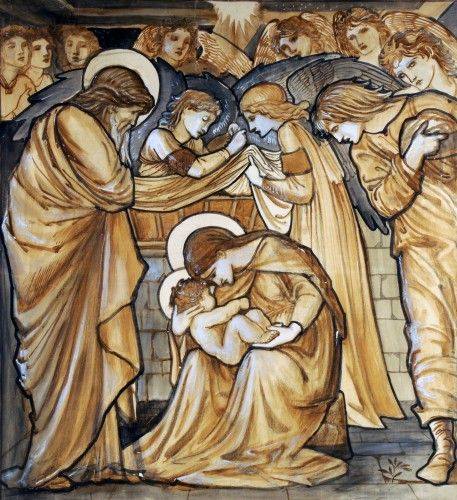
    With Christmas only days away, there’s still much to be done. Even so, this week on “The Lost Chord,” we pause to remember the story of the first Christmas, with music by a couple of English composers inspired by the Nativity.

    Alongside Sir Charles Villiers Stanford and Sir Edward Elgar, Sir Hubert Parry was one of the key figures of the so-called “English Musical Renaissance.” He influenced a whole generation of much better-known composers, including Ralph Vaughan Williams and Gustav Holst. We’ll hear his “Ode on the Nativity,” given its first performance on the same concert, at the Hereford Three Choirs Festival in 1912, as Vaughan Williams’ “Fantasia on Christmas Carols.”

    Vaughan Williams, the great-nephew of Charles Darwin, and an atheist in his youth, later softened into a kind of “cheerful agnosticism.” He dearly loved the King James Bible, and he especially enjoyed Christmas. Of course, he wrote much music on the subject. In fact, his very last composition was “The First Nowell.” He worked diligently at the piece, inspired by medieval pageants, during his final month, but died suddenly before its completion.

    However, even at 85 years-old, RVW retained a remarkable concentration. He managed to pound out the whole thing in short score in only a few weeks. Furthermore, he had fully orchestrated the first two-thirds. The finishing touches were applied by his assistant, Roy Douglas – he of “Les Sylphides” fame.

    If you like the “Fantasia on Christmas Carols,” I think you’ll really enjoy this. It’s pastoral music for a pastoral scene. Join me for “A Play in a Manger,” on “The Lost Chord,” now in syndication on KWAX Classical Oregon!

    ——–

    Clip and save the start times for all three of my recorded shows:

    PICTURE PERFECT, the movie music show – Friday at 8:00 PM EST/5:00 PM PST

    SWEETNESS AND LIGHT, the light music program – Saturday at 11:00 AM EST/8:00 AM PST

    THE LOST CHORD, unusual and neglected rep – Saturday at 7:00 PM EST/4:00 PM PST

    Stream them, wherever you are, at the link!

    https://kwax.uoregon.edu

Tag Cloud

Aaron Copland (92) Beethoven (94) Composer (114) Film Music (116) Film Score (143) Film Scores (255) Halloween (94) John Williams (185) KWAX (228) Leonard Bernstein (99) Marlboro Music Festival (125) Movie Music (131) Opera (197) Philadelphia Orchestra (86) Picture Perfect (174) Princeton Symphony Orchestra (106) Radio (86) Ralph Vaughan Williams (85) Ross Amico (244) Roy's Tie-Dye Sci-Fi Corner (290) The Classical Network (101) The Lost Chord (268) Vaughan Williams (99) WPRB (396) WWFM (881)

DON’T MISS A BEAT

Receive a weekly digest every Sunday at noon by signing up here


RECENT POSTS