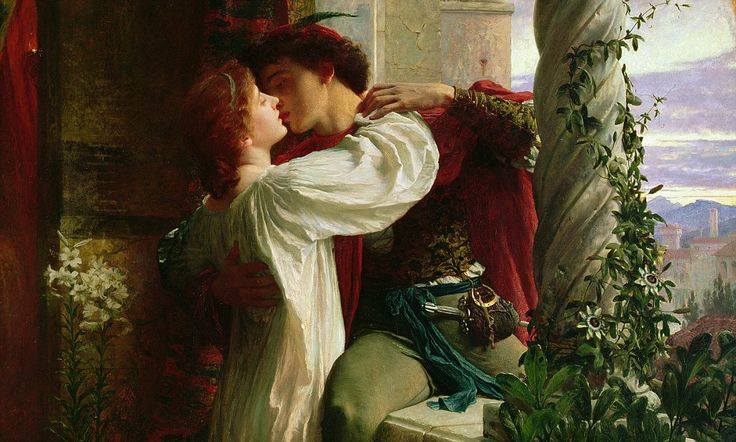
As I said yesterday, we don’t really know when Shakespeare was born (he was baptized on April 26, 1564). Traditionally his birthday is celebrated on April 23, since that also happens to mark the anniversary of his death, in 1616, and by nature man is a compulsive creature, seeking order in all things.
Though we’ve manufactured a birthday for the Bard it is quite possible he could have been born at any time between now and Thursday. So why not take advantage of the broad blank canvas provided me on a Tuesday afternoon to present Hector Berlioz’s mad, ramshackle symphony, “Romeo and Juliet?”
Berlioz adored Shakespeare. His “Symphonie Fantastique,” remember, was inspired by his passion for the actress Harriet Smithson, whom he had seen in Paris as Ophelia and fell instantly under her spell. He would woo and win her with his macabre, at times hysterical “symphonie.” At least, for as wild as his opium-induced vision of rejection, dejection, and, ultimately, damnation, would become, the work somehow clung to a semblance of “symphonic,” its romanticism bubbling out over the top of its somewhat classical structure.
“Romeo and Juliet,” on the other hand, is neither fish nor fowl – a veritable Frankenstein’s monster assembled from the components of symphony, symphonic poem, opera, and oratorio. Unwieldy and flamboyant, Berlioz’s “symphony” unfolds as a collage of the play’s emotional high points – plus a scherzo inspired by Mercutio’s Queen Mab exposition, which is the symphony’s best known movement. In fact, it is rare to hear anything else, except perhaps the love music. Listen for a complete performance of this perplexing masterpiece, this afternoon at 2 p.m. EDT.
First, on today’s Noontime Concert, it’s a program of new music with the American Modern Ensemble. The group’s founder, composer Robert Paterson, will be represented by two works – a collection of arias from the opera “Three Way” (2017), which explores the present and future of sex and love, and “In Real Life” (2015-16) for soprano and chamber orchestra, which examines the humor and heartbreak of what it means to join a dating website. In between, we’ll hear Robert Maggio’s “Forgetfulness” (2015), a setting for baritone and chamber ensemble of Billy Collins’ poem about Alzheimer’s Disease and dementia. The concert took place at Merkin Concert Hall at Kaufman Music Center in New York City.
The course of true love never did run smooth. Being caught between warring houses in old Verona seems almost attractive, by comparison. It’s an afternoon of romance, androids, and BDSM (I’m not kidding), from 12 to 4 p.m. EDT, on WWFM – The Classical Network and wwfm.org.
Leave a Reply to สล็อตเว็บตรงCancel reply