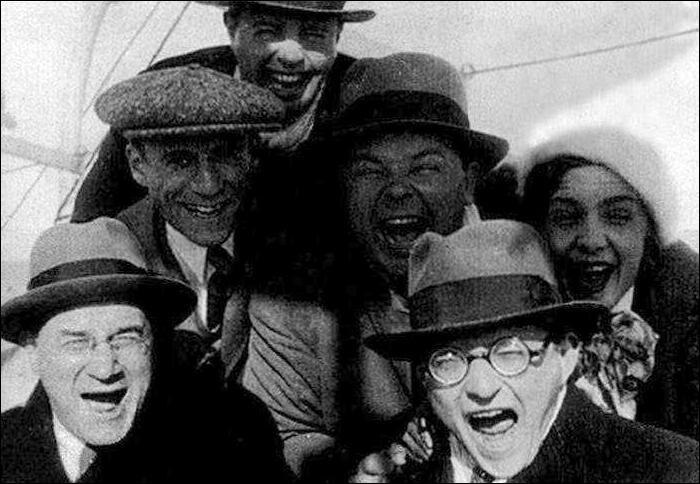
Of the great composers, none enjoyed football more than Dmitri Shostakovich. Russian football, that is. On one occasion he even invited the entire Leningrad Dynamo over to his apartment for dinner.
This Sunday night on “The Lost Chord,” coinciding with the NFL playoffs, we’ll hear selections from a 5-CD boxed set, on the Melodiya label, of Russian state recordings of Shostakovich performing his own music.
Admittedly, emphasizing Shostakovich’s rabid enthusiasm for football is something of a bait-and-switch. The show has nothing at all to do with the sport. However, Shostakovich really did love football (i.e. soccer) and all kinds of sports and games of chance.
Concerning the show itself, Shostakovich was a fabulous pianist, who, early on, eked out a living with his improvisations at a local cinema. He began serious studies at the age of 9, and continued, formally, at the Petrograd Conservatory, upon his acceptance there, at the age of 13. Once he began to receive international attention for his original compositions, for works such as his Symphony No. 1, written when he was only 19, his principal focus began to shift. He did, however, continue to perform and record his own music.
The documents in this Melodiya set, “Shostakovich Plays Shostakovich,” are riveting, not only for the musicianship they enshrine, but also on account of their biographical fascination and their sense of history.
Perhaps no Shostakovich recording is imbued with a greater sense of time and place than a 1954 performance of his Symphony No. 10. An arrangement, for piano four-hands, was played by the composer at his apartment with his close friend and neighbor Mieczyslaw Weinberg.
Weinberg found himself in a very precarious situation only the year before. He was arrested on a charge of “Jewish bourgeois nationalism,” in connection with the so-called Doctor’s Plot, at the command of Stalin himself, on the pretense that Jewish doctors were planning to assassinate Soviet officials. Weinberg’s father-in-law had been implicated, and killed. Shostakovich attempted to intercede on his friend’s behalf, but it was only with the sudden and fortuitous death of Stalin in 1953 that Weinberg was officially rehabilitated, and released.
In a piece of living history, these two artists sit down to perform on Shostakovich’s home piano. This is music that was claimed, in Solomon Volkov’s “Testimony,” Shostakovich’s alleged memoir, to be about Stalin and the Stalin years.
The pianos used in some of these recordings may be a little rough around the edges, but they only lend to the neurotic intensity of the music-making. It’s also a kind of window into what it must have been like to have been a musician in Soviet Russia, between 1946 and 1958, commandeering whatever means of expression you could lay your hands on.
I hope you’ll join me for “Black and White and Red All Over.” Shostakovich tickles the keys, this Sunday night at 10:00 EST, on WWFM – The Classical Network and wwfm.org.
PHOTO: Shostakovich (lower right), with fellow Soviet football fans
Leave a Reply to ThermageCancel reply