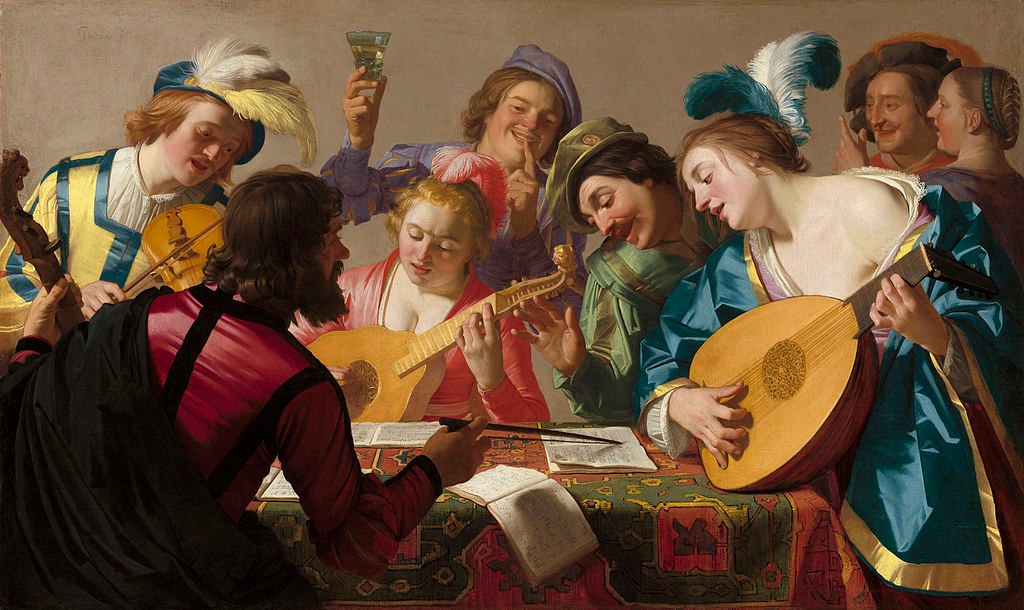
Yea, we changed the clocks last night, so we lost an hour’s sleep. But odd’s bodkins, man! It’s never too late to be Early!
This Sunday night on “The Lost Chord,” for Early Music Month, we hearken to works by 20th and 21st century composers who found inspiration in music of the Renaissance.
William Kraft (1923-2022), long associated with the Los Angeles Philharmonic, wrote “Vintage Renaissance” on a commission from the Boston Pops. The work incorporates two 15th century melodies: “Danza,” by Francesco de la Torre, and an anonymous “bransle.”
George Frederick McKay (1899-1970), the so-called “Dean of Northwest Composers,” founded the composition department at the University of Washington, where he taught for over 40 years. His “Suite on Sixteenth Century Hymn Tunes” is based on works by Louis Bourgeois (c. 1510-1559), compiler of Calvinist hymn tunes and composer of the Protestant doxology known as the “Old 100th.”
Lukas Foss (1922-2009), the German-born musical prodigy who settled in the United States in 1937, composed his “Renaissance Concerto” in 1986. The work, for flute and orchestra, falls into four movements: “Intrada;” “Baroque Interlude” (on a theme of Rameau); “Recitative” (after Monteverdi); and “Jouissance” (after a 1612 madrigal by a composer of the name David Melville).
If the Academy Awards can exhibit scant regard in scheduling its broadcast at a time when it’s guaranteed to lose a sizable portion of its audience to Morpheus, so can I. I hope you’ll join me – if not tonight, then later on the webcast – as American composers cast an affectionate look back. “It’s Never Too Late to Be Early,” this Sunday night at 10:00 EDT, on WWFM – The Classical Network and wwfm.org.
Leave a Reply