International Trombone Week meets Yom HaShoah, a day of Holocaust remembrance.
At first glance, it may seem wildly incongruous to present music by Erwin Schulhoff – a composer whose life ended in a concentration camp at the age of 48 – with whimsical images of Buster Keaton and Fatty Arbuckle. But in remembering composers who perished in the Holocaust, we risk a tendency to think of them, reductively, as victims, which can inadvertently have the effect of diminishing their overall achievements. These were not artists who created and lived their lives with the expectation of being memorialized for their senseless deaths. I mean no disrespect with this observation. Schulhoff was one of the great musical losses of the Holocaust. But a broader appreciation of his work, if anything, deepens our understanding of what was taken from this world too soon – a vital, creative being, snuffed out, because of a “solution” formulated by a monstrous ideology.
http://orelfoundation.org/composers/article/erwin_schulhoff
“The Syncopater’s Peter” (1934) for trombone, with Buster Keaton footage
Schulhoff’s String Quartet No. 1 (1924)
The Dada ballet “Die Mondsüchtige,” or “Moonstruck” (1925). The scenario describes a somnambulist dancing across the roofs of Prague with a figure identified as “The Moon Dandy.”
Concertino for Flute, Viola and Double Bass (1925):
“Symphonia Germanica” (1919)
Symphony No. 2 (1932)
Symphony No. 6 (1940-41)
https://www.youtube.com/watch?v=88ivh1Lfqe0
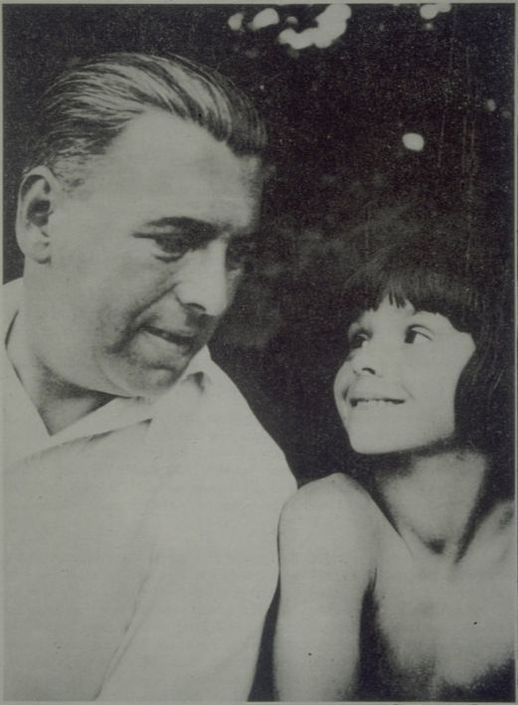
PHOTO: Schulhoff and son
Leave a Reply