“Persian polyphonic music” refers to music written for ensembles of western instruments by Persian (or Iranian) composers, based upon Persian folk and classical melodies. For whatever reason, we don’t hear very much of it in the West. We’ll try to remedy that, in our own small way, this Sunday night on “The Lost Chord.”
What inspired this program was an album of works by Behzad Ranjbaran, issued in 1994, on the Delos label. I had heard Ranjbaran’s lyrical Piano Concerto at a concert of the Philadelphia Orchestra sometime ago, but it did not prepare me for the beauty and opulence of his “Persian Trilogy.”
Ranjbaran, born in Tehran in 1955, is currently on the faculty of the Juilliard School. Many of his works are influenced by Persian culture and literature. His orchestral cycle, “The Persian Trilogy,” was inspired by the “Shahnameh,” the national epic of 11th century poet Ferdowski.
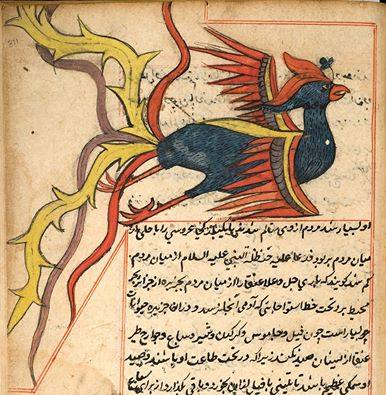
We’ll hear two-thirds of the trilogy, including “Seven Passages” – about the hero Rostam, who undergoes seven trials along the path to rescue the Persian king, Kavus – and “Seemorgh” – about the mythical bird which raises the abandoned hero Zaal, who is able to summon her in times of crisis.
Ranjbaran proves himself a master orchestrator. If you enjoy the music of Rimsky-Korsakov, Debussy, Paul Dukas or Ottorino Respighi, I think you’ll really enjoy his “Persian Trilogy.”
We’ll also hear music by Reza Vali, born in Ghazvin in 1952. Vali, currently on the faculty of Carnegie Mellon University, has been called the “Iranian Bela Bartok” for his ability to successfully meld native folk elements with established western classical forms. His “Folk Song (Set No. 9)” is composed for the combination of flute and cello. The flutist switches between various instruments of the flute family, and the cellist plays tuned crystal glass and tom-toms. As you’ll hear, the musicians are also required at various points to sing and whistle.
I hope you’ll join me for “Roses of Persia,” a bouquet of Persian polyphonic music, this Sunday night at 10:00 EDT, on WWFM – The Classical Network and wwfm.org.
Leave a Reply