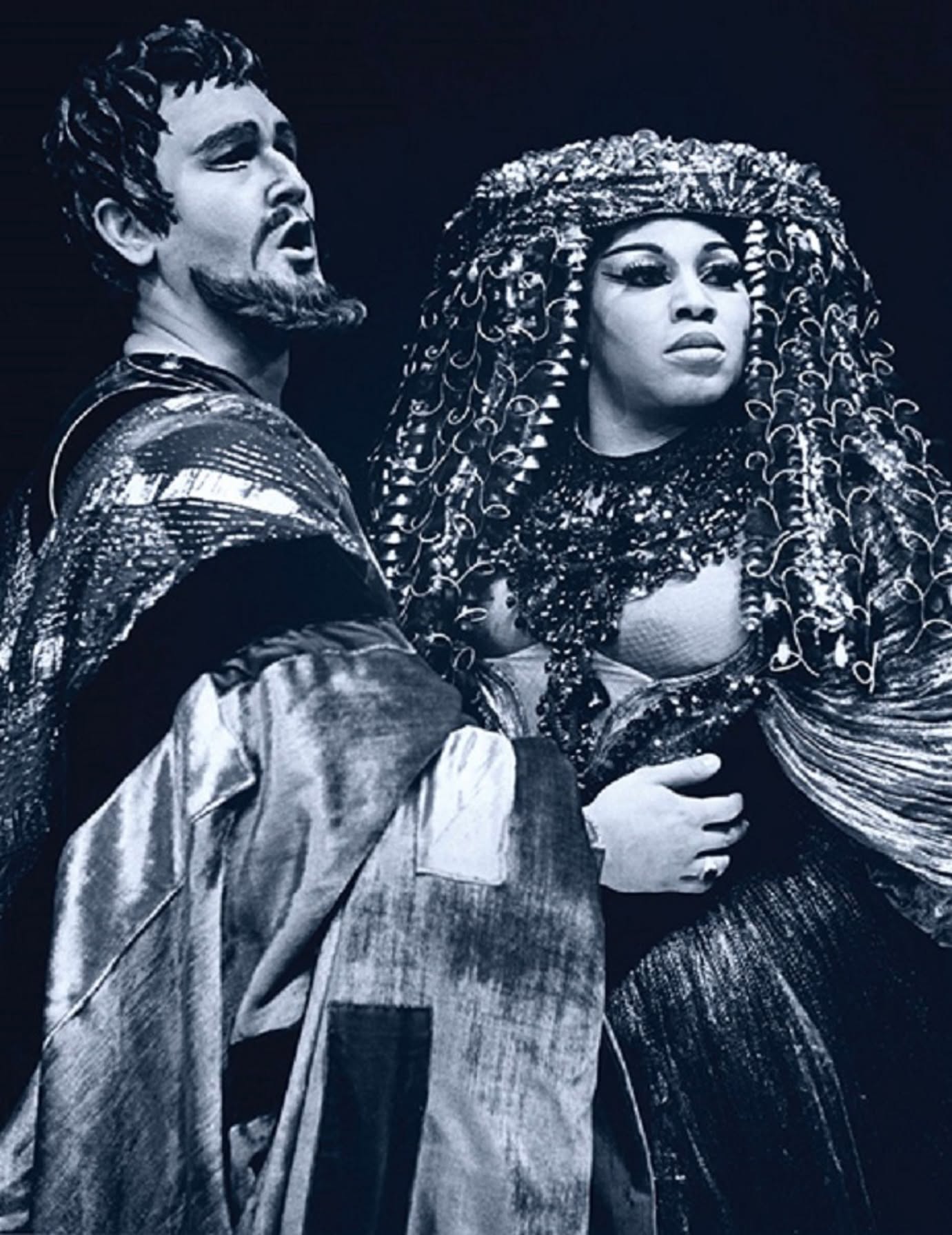
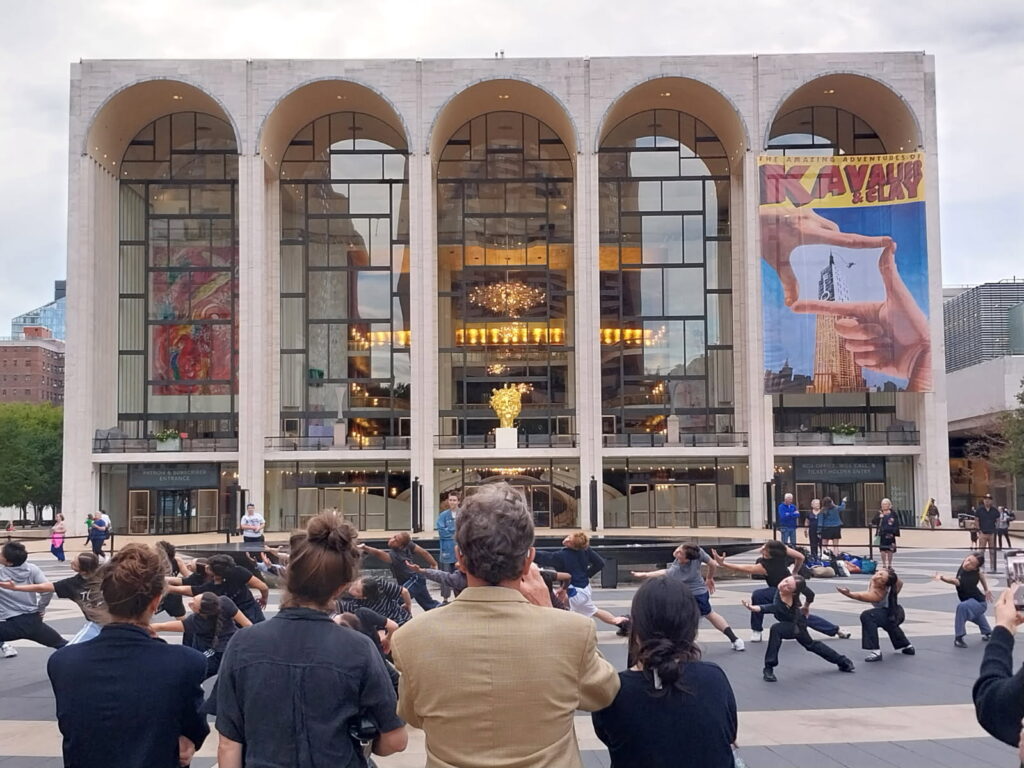
60 years ago today, the Metropolitan Opera consecrated its new house at New York’s Lincoln Center with the world premiere of Samuel Barber’s “Antony and Cleopatra.” Adapted from Shakespeare’s play, the libretto was fashioned by Franco Zeffirelli.
Zeffirelli could be a fine director, but in the opera house his lust for opulence and grandeur threatened to obscure the human drama. Here, his vision of “Cabiria”-style excess – with 22 principal singers, chorus, dancers (choreographed by Alvin Ailey), extras, and live camels – swelled the cast to 400 players. Many years later, I worked with Justino Diaz, who sang Antony, and he described the opulence of the production as being like Zeffirelli’s “Turandot” times 20.
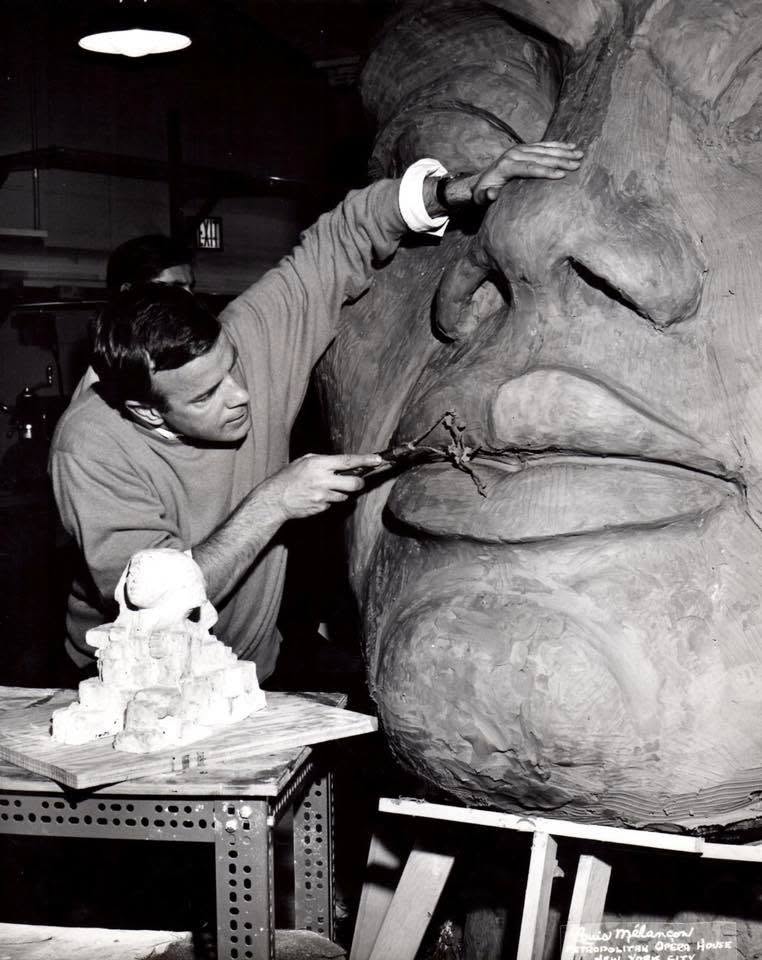
There was only so much of this that Barber, or even Shakespeare, could take. The excess of steel, brass, and aluminum sets pushed the house’s state-of-the-art technology to the literal breaking point. The weight proved too much for the newly installed revolving stage, and Leontyne Price, who sang Cleopatra, was trapped inside a hydraulically-operated pyramid. Fortunately, that was during rehearsals, but the costumes continued to prove cumbersome, the technical workarounds awkward, and the spectacle soul-numbingly vulgar. Audience response to the overinflated production made for a cool night in the desert. As for the critics… you think Julius Caesar had it bad?
You can imagine how Barber, elegant and reserved two-time Pulitzer Prize winner (one for an earlier opera, “Vanessa,” introduced at the Old Met) and composer of the ubiquitous “Adagio for Strings,” would have taken it. In the years following the work’s brutal reception, he struggled with depression and alcoholism.
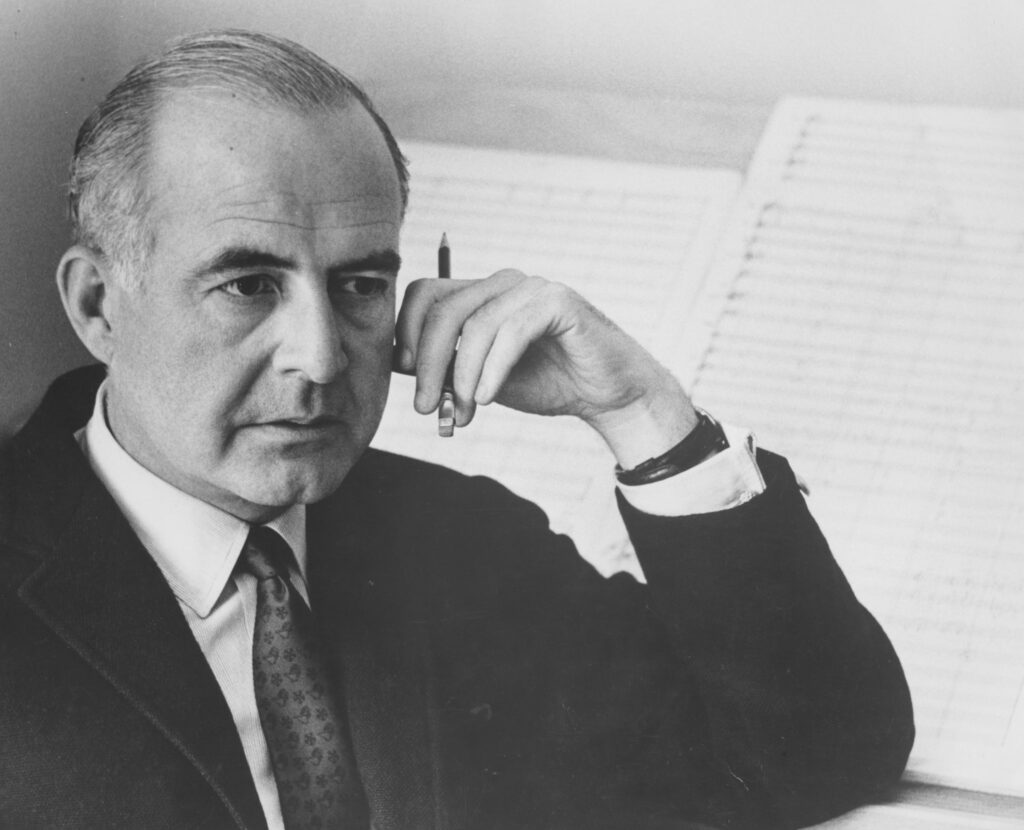
“Antony and Cleopatra” was extensively revised by Barber and Gian Carlo Menotti in an edition first performed in 1975. Barber also prepared a concert suite, “Two Scenes from ‘Antony and Cleopatra,’” for Price.
Barber provided two other works for the opening of Lincoln Center: the Piano Concerto, which earned him his second Pulitzer, and a piece for soprano and orchestra, “Andromache’s Farewell.” The former was performed by John Browning and the Boston Symphony Orchestra conducted by Erich Leinsdorf. The latter was performed by Martina Arroyo and the New York Philharmonic conducted by Thomas Schippers.
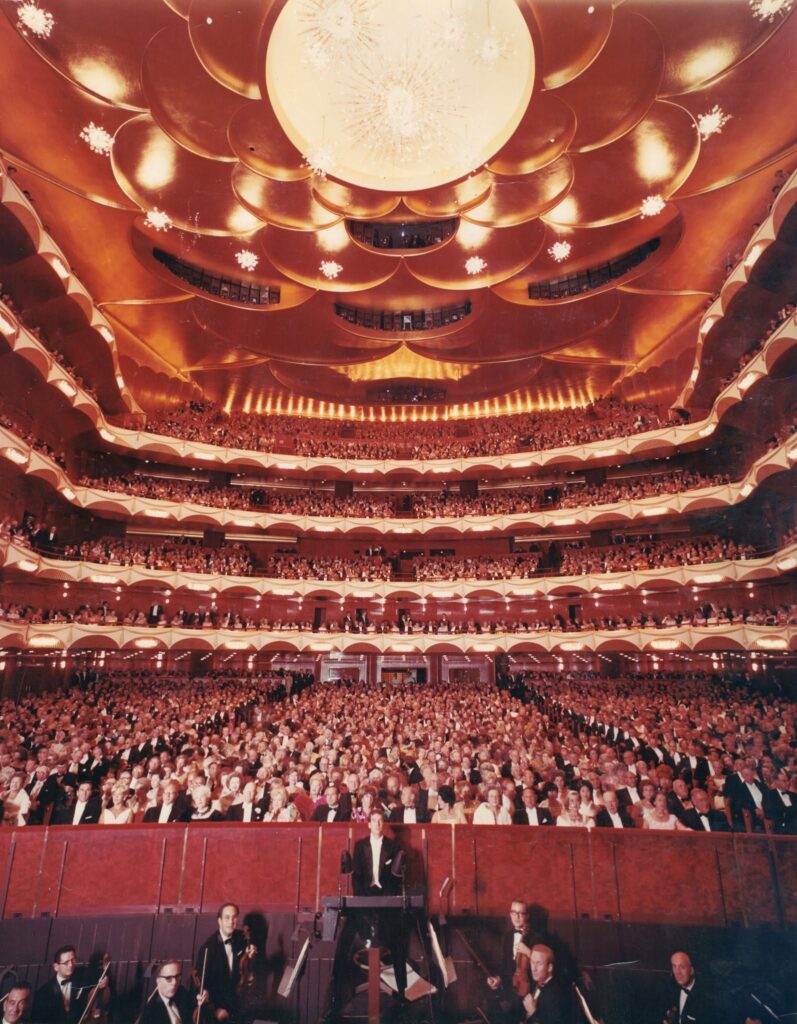
Thankfully, the Met transcended the failure of its opening run. The cavernous, 3800-seat opera house – the largest in the world – has seen some magnificent performances over the decades, featuring many of the world’s – and history’s – greatest singers.
As you can imagine, you need stellar voices, compelling music, and solid productions to fill such a venue night after night, and in recent years, the Met has struggled. There are plenty of performances that sell out – a lot of the new operas make for good theater, even if the composers can’t compete with Puccini – but new productions of the classics that go dark and contemporary, in a bid for “relevance,” often misfire. Most crucially, voices and personalities that can whip audiences into the kinds of frenzies that greeted the greatest singers of the past are always rare.
Not all the challenges facing the Met are of the house’s creation. The industry and culture have shifted enormously since the ‘90s. The collapse of the record industry, the selling off or dumbing down of classical music radio stations, the lack of television, magazine, and newspaper exposure, cuts to music education, a shift in the priorities of the donor class, changes in the approaches to vocal training, and lack of interest in opera or classical music within the home have marginalized opera, as an art form, as an entertainment, and as an aspirational, inspirational pursuit with the power to lift us outside ourselves.
Still, there’s plenty of magic left in the Met. This season, I’m curious to see – and hear – what Missy Mazzoli makes of “Lincoln in the Bardo.”
———-
Documentary teasing “Antony and Cleopatra,” with Barber, Zeffirelli, Price, Thomas Schippers, Rudolf Bing, and Marc Chagall, who painted the Met’s iconic dual murals – which the organization has been trying to sell, with the provision that they continue to be displayed in the Met lobby.
Leave a Reply