Category: Daily Dispatch

  • Bruch’s Odysseus Rediscovered

    Bruch’s Odysseus Rediscovered

    It says something about how highly regarded was Max Bruch’s “Odysseus” that none other than Johannes Brahms selected it for his farewell performance in 1875 as Director of the Society of the Friends of Music in Vienna. Bruch’s oratorio racked up an impressive number of performances. Within two years of its premiere in 1873, it was given no less than 45 times. In fact, in Bruch’s heyday, the work was considered second in excellence only to his imperishable Violin Concerto No. 1 in G minor.

    Yet by the time of the composer’s death, in 1920, he was considered an artifact of a bygone era. “Odysseus” was a relic of the 19th century, and in the 19th century it would remain, until liberated by musicologist and conductor Leon Botstein in the late 1990s. Thanks to Botstein, we’ll get to enjoy the complete oratorio today on WPRB, as we listen to a full morning of music inspired by Homer.

    Bruch’s oratorio perhaps unforgivably omits the cathartic bloodletting at the tale’s climax, when Odysseus slays his wife’s unwanted suitors, who have overrun his home in his absence. But Benjamin Britten was not so squeamish. Britten embraced all the inherent drama and adventure of epic vengeance in his music for radio, “The Rescue of Penelope.” We’ll cap the morning with this full-blooded work, which will be narrated by Dame Janet Baker.

    Along the way, we’ll also have music by Gabriel Fauré, Marc-Antoine Charpentier, Ernst Boehe, Jean-Philippe Rameau, Jacques Offenbach, John Harbison, Hector Berlioz, and Jerome Moross, among others.

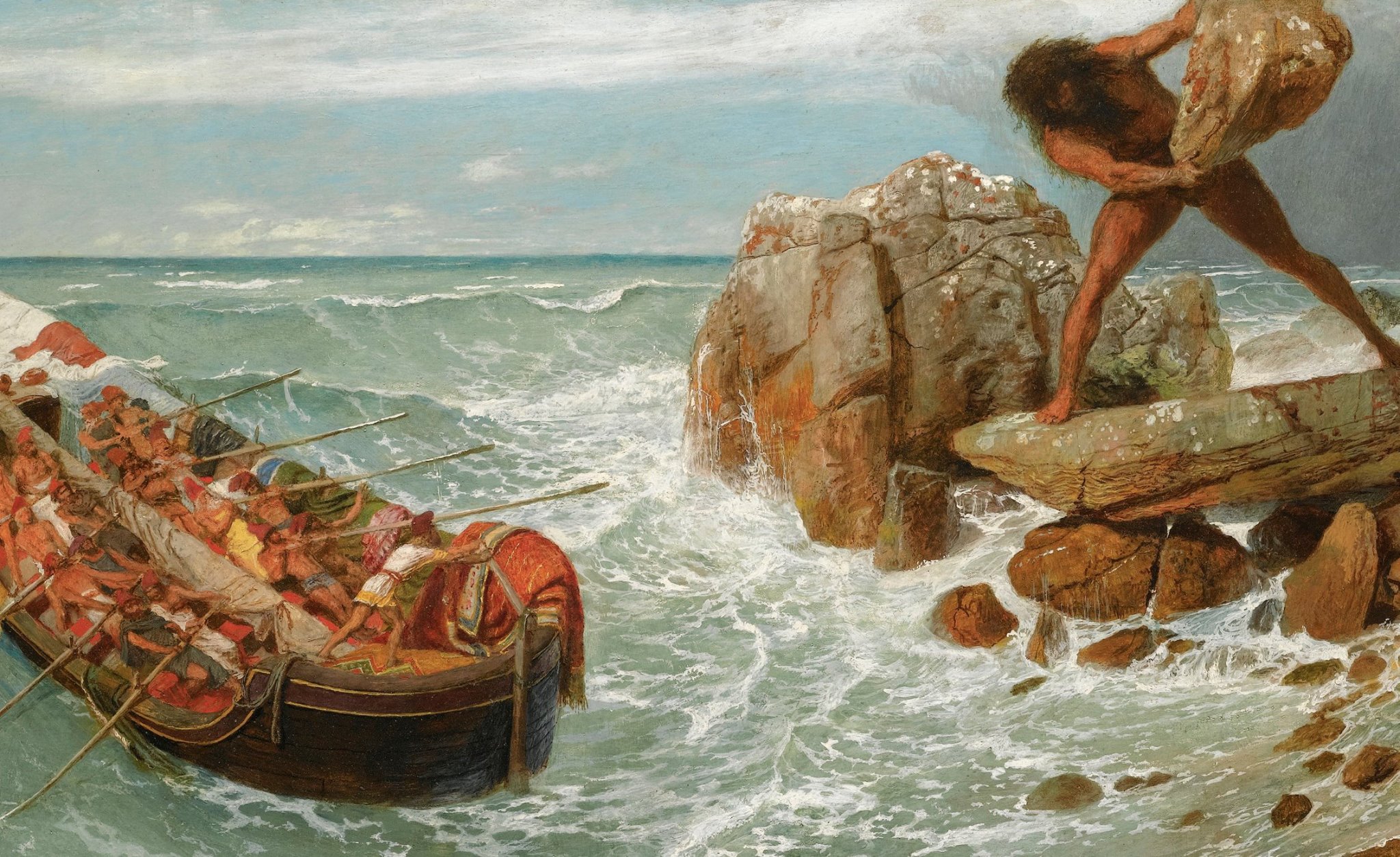
    There will be more wine for Polyphemus, from 6 to 11 EDT, on WPRB 103.3 FM and at wprb.com. We’re always trying hard to rock your world, on Classic Ross Amico.
  • Yardumian Centennial Philadelphia Composer

    Yardumian Centennial Philadelphia Composer

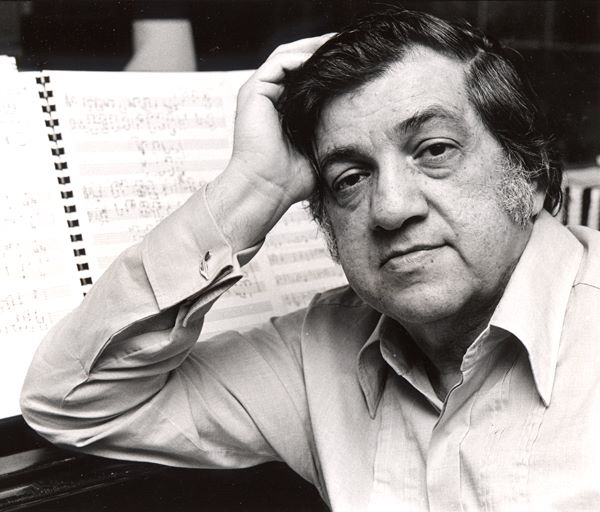
    Today is the 100th anniversary of the birth of Philadelphia composer Richard Yardumian. Yardumian served as The Philadelphia Orchestra’s composer-in-residence from 1949 to 1964. The orchestra gave first performances of no less than ten of his pieces, beginning with “Desolate City” in 1945. Eugene Ormandy recorded six of them. I remember well playing these during my apprentice years in community radio. The music is attractive, well-made, and often deeply felt, with insights into the composer’s spiritual convictions and Armenian heritage. Why, why, why, Sony, have you never reissued these recordings?

    In the 1990s, Albany Records briefly revived some of the lesser-known American classics that had been championed by Ormandy – among them, works by the equally neglected Louis Gesensway and John Vincent – so my hopes were high to finally acquire those Yardumian recordings on CD. But it was not to be. The series petered out after only three volumes.

    Yardumian, who was largely self-taught as a composer, was 19 when he wrote his most popular piece, the “Armenian Suite.” We’ll hear it this afternoon, alongside “Veni Sancte Spiritus” (“Come, Creator Spirit”), another orchestral work, from 1959. In addition, we’ll mark the birthday anniversaries of composers Louis Spohr and Albert Roussel and conductor Herbert von Karajan.

    At 4:00, I will be joined by Lyn Ransom, founder and music director of VOICES Chorale, now in its 30th season. Ransom will be directing Brahms’ “Ein Deutsches Requiem” in its rarely-heard London edition, performed on four-hand piano, this Saturday at 7:30 p.m., at The College of New Jersey’s TCNJ-Mayo Concert Hall in Ewing Township; and then again, with orchestra, in collaboration with Riverside Symphonia, at Princeton University’s Richardson Auditorium, on June 16th at 8 p.m. Tune in this afternoon to learn more, or check the organization’s website, at http://www.voiceschorale.org.

    I’ll be sharing the music, from 4 to 7 p.m. EDT, on WWFM – The Classical Network and at wwfm.org.

  • The Odyssey on the Radio Classical Music Adventure

    The Odyssey on the Radio Classical Music Adventure

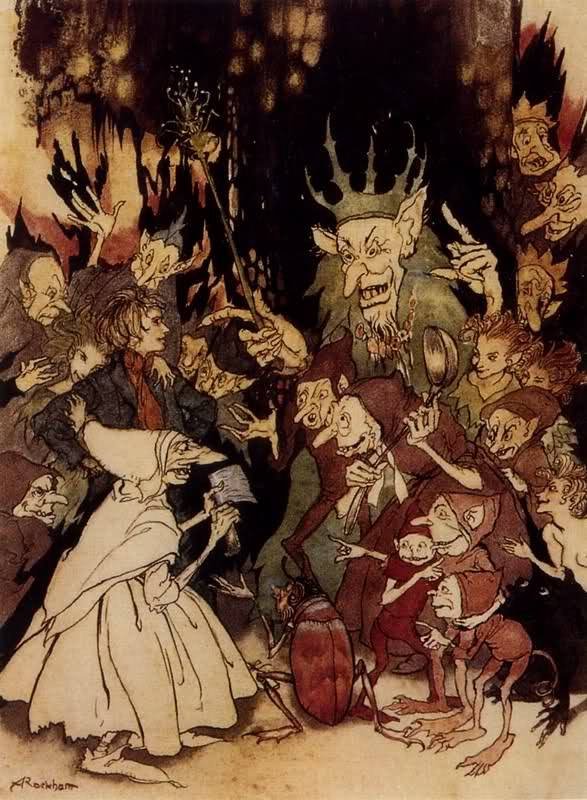
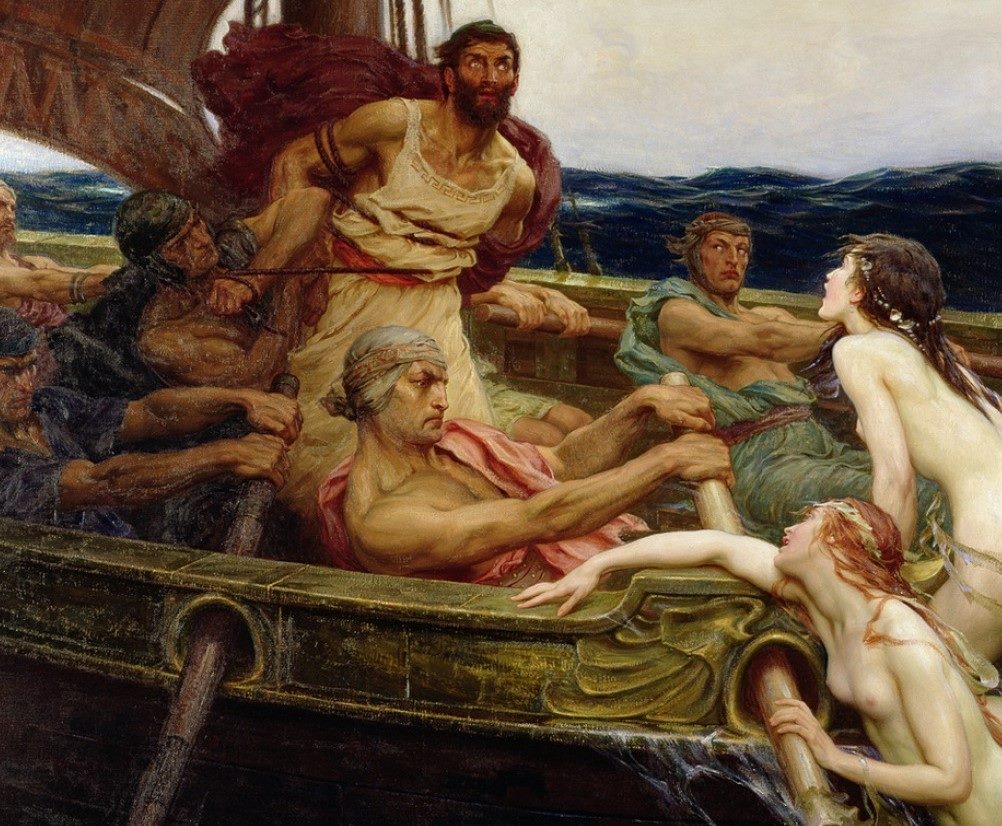
    There are times when curiosity drives us to have our crew lash us to the mast and then stuff their ears with wax. Tomorrow morning on WPRB may very well be one of those, as we follow in the steps of Odysseus, both at the Trojan War and on his long journey back to Ithaca.

    We’ll have music inspired by Circe, the Cyclops, the Golden Apple, Helen of Troy, the Lotus Eaters, the Sirens, Ulysses’ bow, and the rescue of Penelope, from composers such as Hector Berlioz, Ernst Boehe, Benjamin Britten, Max Bruch, Gabriel Fauré, John Harbison, and Jerome Moross.

    I’ll be tied up from 6 to 11 EDT, on WPRB 103.3 FM and at wprb.com. We’ll find the odd in “The Odyssey” (and “The Iliad,” for that matter), on Classic Ross Amico.

  • Grieg’s Peer Gynt Plus Norwegian Gems on WWFM

    Grieg’s Peer Gynt Plus Norwegian Gems on WWFM

    This Tuesday morning at 10:00, Alice Weiss will host “The Classical Network in Concert,” featuring cellist Gabriel Cabezas, winner of the 2014 Astral Artists National Auditions. On the program will be major works for the instrument by Britten and Shostakovich, as well as transcriptions performed in association with other Astral Artists.

    On account of the earlier broadcast, there will be no noontime concert today, leaving me with a blank canvas on which to paint for the succeeding four hours. Since I’m on earlier in the afternoon on Tuesday, I like to play at least one piece that you generally wouldn’t hear during the day, due to its extraordinary length. Today, I will be dusting off a recording of the complete incidental music composed for the premiere production in 1876 of Henrik Ibsen’s “Peer Gynt,” by Edvard Grieg. I think you’ll be surprised by just how much beauty, mystery, and menace never made it into the popular suites. You’ll also have a chance to brush up on your Norwegian!

    Astonishingly, Grieg found work on the music to be a frustrating experience. He thought it a “terribly unmanageable subject,” and labored against the limitations imposed on him by the management of the theater, which gave him specifications for the duration of each number. “I was thus compelled to do patchwork,” he complained, “hence the brevity of the pieces.”

    Of course, the music was a triumphant success and includes some of Grieg’s best known melodies. However, the original score was not published until after the composer’s death, and is still rarely heard in its entirety.

    As an added bonus this afternoon, we’ll also hear one of the Hardanger fiddle concerts of Norwegian composer Geirr Tveitt. Tveitt, a late proponent of Norwegian nationalism, suffered a terrible loss from which he never emotionally recovered. In 1970, his farmhouse burned to the ground, reducing approximately 300 of his manuscripts – fully four-fifths of his compositional output – to ash. Tveitt, a broken man, drank himself to death, little realizing that, through private recordings, radio archives, and surviving orchestral parts, a sizable portion of these works would eventually be reconstructed.

    Join me today, from noon to 4 p.m. EDT, for music from Norway and more, on WWFM – The Classical Network and at wwfm.org.

  • Fascism, Film Scores & “Lucia” Highlights

    Fascism, Film Scores & “Lucia” Highlights

    An Italian Jewish composer who fled fascism in Europe. A conductor who refused to apologize for his “robust leadership style,” and instead opted to resign from the Swedish Royal Opera. Both wound up in the United States.

    Mario Castelnuovo-Tedesco settled in Hollywood, where he continued to compose concert music for Andres Segovia and Jascha Heiftez and embarked on a side career of writing scores for films like “And Then There Were None” (1945) and “The Loves of Carmen” (1948).

    Sixten Ehrling took over the reins of the Detroit Symphony Orchestra from departing principal conductor Paul Paray. He also taught at the Juilliard School, where his pupils included Myung-Whun Chung, JoAnn Falletta, and Andrew Litton.

    I hope you’ll join me this afternoon, as we celebrate the birthdays of Castelnuovo-Tedesco and Ehrling, alongside that of American pianist Garrick Ohlsson.

    At 5:00, I’ll be joined by Jerry Kalstein and Dora Schnur of Boheme Opera NJ, who will tell us a bit about the company’s upcoming production of “Lucia di Lammermoor.” “Lucia” will be performed at The College of New Jersey’s TCNJ-Kendall Hall on Friday at 8 p.m. and Sunday at 3 p.m. To bookend our conversation, we’ll enjoy a couple selections from Donizetti’s opera, including the famous Act II sextet.

    Round out your workday and enliven your afternoon commute with great music from a variety of sources, from 4 to 7 p.m. EDT on WWFM – The Classical Network and wwfm.org.


    Act I “Lucia” finale: Chi mi fren-etic

Tag Cloud

Aaron Copland (93) Beethoven (95) Composer (114) Film Music (139) Film Score (143) Film Scores (255) Halloween (94) John Williams (195) KWAX (229) Leonard Bernstein (103) Marlboro Music Festival (125) Movie Music (154) Mozart (88) Opera (210) Philadelphia Orchestra (89) Picture Perfect (174) Princeton Symphony Orchestra (108) Radio (88) Ross Amico (244) Roy's Tie-Dye Sci-Fi Corner (290) The Classical Network (101) The Lost Chord (268) Vaughan Williams (103) WPRB (396) WWFM (881)

DON’T MISS A BEAT

Receive a weekly digest every Sunday at noon by signing up here


RECENT POSTS