Category: Daily Dispatch

  • Odysseus’s Journey Home A Spring Adventure

    Odysseus’s Journey Home A Spring Adventure

    Ah! Enchanted April…

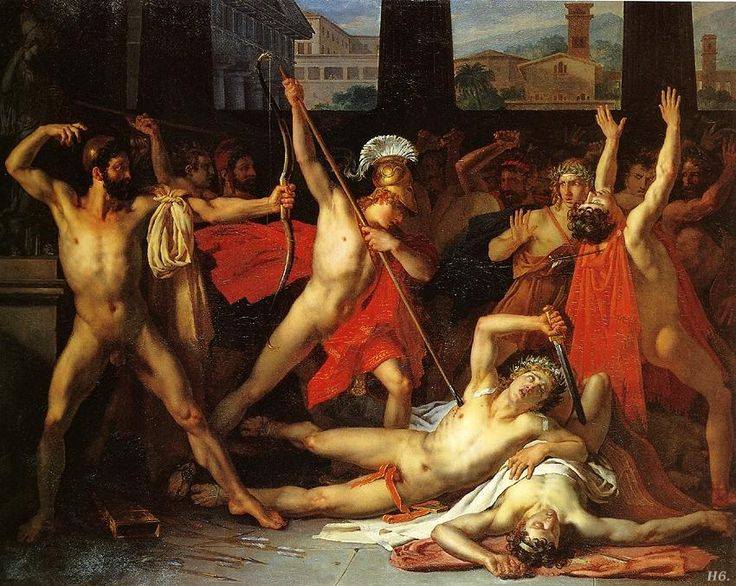
    What is it about spring that puts me in the mind of angry gods, shipwreck, cannibalism, gratuitous nudity, riotous drunkenness, blinded Cyclopes, and the wholesale slaughter of one’s rivals? Actually, I just felt like doing a rerun.

    From “The Lost Chord” archive, it’s an hour of high adventure and satisfied bloodlust, as we listen to musical evocations of Odysseus’ homeward journey.

    Odysseus, of course, is one of the heroes of the Trojan War, waylaid time and again upon his return by Poseidon and the frailties of his own men. It takes him ten years to find his way back to Ithaca. When he gets there, he finds his wife beset by boorish suitors all vying for her hand and his throne.

    What happens next pushes all the same buttons that are still pushed whenever Sylvester Stallone or Arnold Schwarzenegger apply the camouflage and begin strapping on their bandoliers and sheathing their big knives. In the process, there’s also some meaningful father-son bonding. Leave it to Homer, who always knew how to lend class to the classics.

    Just in time for baseball season, I hope you’ll join me for “Home Sweet Homer” (the greatest stretch this side of the seventh inning), this Sunday night at 10:00 EDT, on WWFM – The Classical Network and at wwfm.org.

  • April Fool’s Day Piano Greats & a Hilarious Hoax

    April Fool’s Day Piano Greats & a Hilarious Hoax

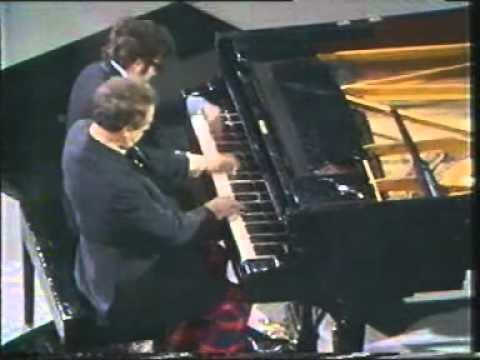
    April Fool’s Day. A great day for pianists: born of this date were Ferruccio Busoni (1866), Sergei Rachmaninoff (1873), and Dinu Lipatti (1917). But would any of them have played this?

  • Liszt vs Thalberg Epic Piano Duel in Paris

    Liszt vs Thalberg Epic Piano Duel in Paris

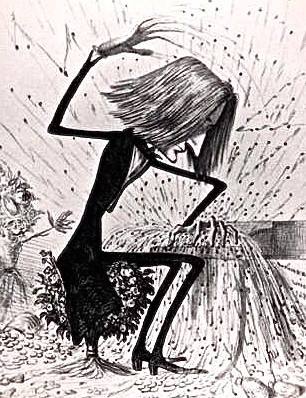
    Paris of the 1830s was teeming with superstar pianists, who drifted from recital to salon with the mystique and grace of cinematic gunslingers. On this date in 1837, the two most mythologized virtuosi of the day, Franz Liszt and Sigismond Thalberg, were brought together at the home of Princess Cristina Belgiojoso-Trivulzio, an Italian patriot living in exile, to prove once and for all who was the King of the Keys.

    The duel would prove to be a clash of styles and temperaments. In contrast to Liszt’s humble beginnings and acquired polish, Thalberg was an aristocrat by association, having been taking under the wing of a wealthy patroness very early on. A large part of his allure was in his unruffled appearance. He was handsome, educated, genteel. At the piano, he remained absolutely placid, sitting as still as possible while performing the most incredible, acrobatic feats. One of his much remarked upon, crowd-pleasing techniques was his ability to simulate three hands, which he was able to accomplish by picking out a melody with his thumbs and using the rest of his digits to ornament with brilliant arpeggios and arabesques. Matters of showmanship aside, his legato was of such beauty that even Liszt commented, “Thalberg is the only artist who can play the violin on the piano.”

    Liszt, by contrast, was a fire-eater, who would literally destroy pianos on the stage of the Paris Opera before an audience of 3000. His playing had ladies clawing at one another to retrieve a glove or a cigar “carelessly” left behind after a concert.

    Partisans and newspaper critics long speculated on who was the greater pianist. The flame of animosity was fanned by rival journalists, as Hector Berlioz (who embraced Liszt) and critic and musicologist Francois-Joseph Fetis (who championed Thalberg) played out their most recent grudge match, polarizing music-lovers into two camps.

    As the debate grew in intensity, it seemed whenever one was in town, the other was on tour or vacationing. It all finally came to a head on the morning of March 31, 1837, at Belgiojoso-Trivulzio’s salon, in a war of the gargantuas engineered for charity. March definitely went out like a lion that year, as two titans of the keyboard faced off in the ultimate piano showdown.

    The verdict was diplomatic: Thalberg was proclaimed the finest pianist in the world; Liszt, the ONLY pianist.

    Popular tradition holds that Liszt mopped the floor with Thalberg, but apparently this wasn’t entirely the case. Nor was there any apparent animosity between the two men, who were cordial and even dined together several times after their legendary face-off. The two would collaborate, along with Chopin and three others, on one of Belgiojoso’s other schemes, the keyboard crazy quilt “Hexameron,” which Liszt titled, orchestrated, and toured with. Proceeds generated from both the duel and the “Hexameron” project went to the benefit of Italian refugees.

    An ironic epilogue to this story is that Thalberg’s final resting place, in Naples, was desecrated earlier this month, with his mummified corpse tossed callously into the corner of a vault. You can wade through a dizzying array of fonts and italics to learn more here:

    http://unravelingmusicalmyths.blogspot.com/2017/03/a-neapolitan-nightmare-virtuoso-pianist.html
  • Tudor Music From the Movies

    Tudor Music From the Movies

    This week on “Picture Perfect,” we’ll conclude Early Music Month with a cinematic tour of the Tudors.

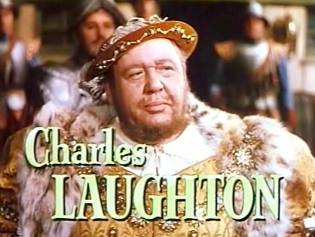
    We’ll hear selections from “Young Bess” (1953), which stars Jean Simmons as the future Elizabeth I. The colorful and entertaining cast includes Stewart Granger, Deborah Kerr and most notably Charles Laughton, who reprises his memorable turn as Henry VIII. Laughton was honored with an Academy Award for Best Actor for playing Henry in the 1933 film, “The Private Lives of Henry VIII.” Miklós Rózsa’s score conjures the era of the great MGM Technicolor spectacles.

    By the time of the events portrayed in “Mary, Queen of Scots” (1971), Elizabeth already wears the crown, though uneasy with the existence of her first cousin once removed, who had previously claimed Elizabeth’s throne as her own. Vanessa Redgrave is Mary and Glenda Jackson is Elizabeth, with a supporting cast that includes Timothy Dalton, Nigel Davenport, Patrick McGoohan, Trevor Howard and Ian Holm. As seems to be the custom in dramatic interpretations of the historical events, the film features several fictional meetings between the queens, even though in reality the two never met. The poignant score is by John Barry.

    “Anne of the Thousand Days” (1969) tells the story of Henry’s doomed second wife, Anne Boleyn. This time Richard Burton plays the king. Anne is played by Genevieve Bujold. Despite mixed reviews, the film was nominated for ten Academy Awards and recognized for its exceptional costumes. Among the other nominees was Georges Delerue for his period-flavored music.

    Finally, in a lighthearted change of pace from all the intrigue and execution, we turn to a big screen adaptation of Mark Twain’s “The Prince and the Pauper” (1937). Set in the time of Prince Edward (later Edward VI), Twain’s novel plays on the conceit that the heir apparent at some point had become mixed up with a commoner who bore a remarkable resemblance to him.

    Top-billed Errol Flynn is really a supporting player as the devil-may-care Miles Hendon, who throws himself in with the scraggly-looking prince, though he hardly believes his claims. Though it would still be a year until the release of “The Adventures of Robin Hood,” Flynn was already well on his way to becoming the screen’s quintessential swashbuckler, thanks to his turn in “Captain Blood” (1935). He easily dominates the film, and it’s a treat to see him duel with his old pal Alan Hale.

    Montagu Love plays Henry VIII, though he’s upstaged by the scheming Claude Rains as Edward Seymour, the Earl of Hertford. Composer Erich Wolfgang Korngold follows Flynn all the way, his music full of swagger and fun.

    I hope you’ll join me for music from movies about the Tudors, on “Picture Perfect,” this Friday evening at 6:00 EDT, on WWFM – The Classical Network WWFM and wwfm.org.

  • Papa Haydn: Beyond the Familiar Composer

    Papa Haydn: Beyond the Familiar Composer

    Come to Papa – Papa Haydn, that is.

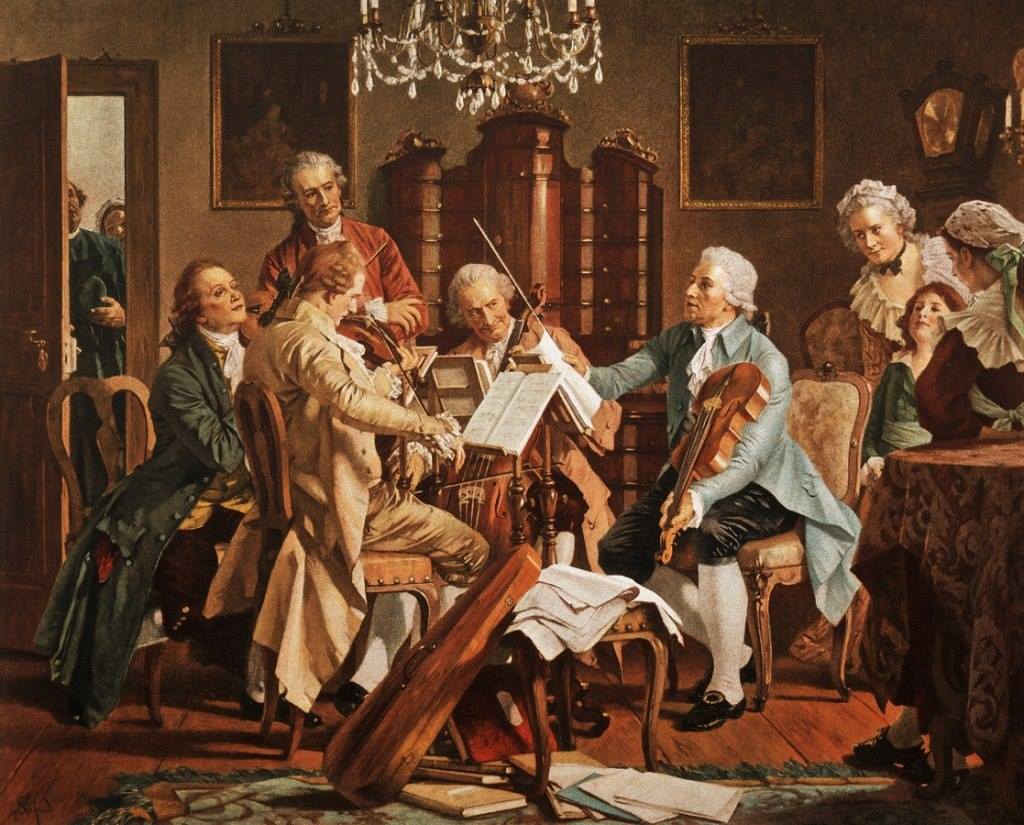
    Franz Joseph Haydn, affectionately known as “Papa,” was the father of the modern symphony and the modern string quartet, but how much do we really know about the master? As is the case with so many composers, we tend to hear the same pieces over and over again.

    Today, on the eve of Haydn’s 285th birthday, we look past the ordinary to get a peripheral view of Papa, with music inspired by Haydn, music by Haydn’s colleagues, and rarely-heard works by Haydn himself.

    Other composers we may encounter along the way will include Johannes Brahms, Norman Dello Joio, Marcel Grandjany, Johann Michael Haydn (the composer’s brother), Roman Hoffstetter, Anton Kraft, Andre Previn, Maurice Ravel, Johann Peter Salomon, Alfred Schnittke, Ananda Sukarlan, and Joseph Weigl (Haydn’s godson). We’ll even have a piano concerto by Haydn Wood, who was named for Haydn by his music-mad parents, though they pronounced it “Hayden.”

    At 10:00, I’ll be joined by representatives of Boheme Opera NJ, who will talk a little bit about the company’s upcoming production of “Lucia di Lammermoor,” which will be performed at The College of New Jersey’s TCNJ-Kendall Hall on April 7 at 8 p.m. and April 9 at 3 p.m., so we might just hear a selection or two by Donizetti, as well.

    It’s a little early for Father’s Day, this morning from 6 to 11 EDT, on WPRB 103.3 FM and wprb.com. All the same, we celebrate Papa Haydn, on Classic Ross Amico.


    IMAGE: Franz Joseph Haydn demonstrates that Papa knows best

Tag Cloud

Aaron Copland (93) Beethoven (95) Composer (114) Film Music (139) Film Score (143) Film Scores (255) Halloween (94) John Williams (195) KWAX (229) Leonard Bernstein (103) Marlboro Music Festival (125) Movie Music (154) Mozart (88) Opera (210) Philadelphia Orchestra (89) Picture Perfect (174) Princeton Symphony Orchestra (108) Radio (88) Ross Amico (244) Roy's Tie-Dye Sci-Fi Corner (290) The Classical Network (101) The Lost Chord (268) Vaughan Williams (103) WPRB (396) WWFM (881)

DON’T MISS A BEAT

Receive a weekly digest every Sunday at noon by signing up here


RECENT POSTS