Category: Daily Dispatch

  • Pierre Boulez Provocations in Sound

    Pierre Boulez Provocations in Sound

    Think of Pierre Boulez as a corrective.

    Whether or not you are crazy about Boulez as a composer or a conductor, he certainly had a knack for casting music in a fresh light. No romantic indulgence or fuzzy thinking to be found in his interpretations of Debussy and Ravel. Instead, a kind of neoclassical elegance prevails.

    A similar sense of discipline informs his recordings of the Mahler symphonies (of all things). He transforms what under Leonard Bernstein, for instance, became the ne plus ultra of Romantic excess, into presentiments of the Modern Age – which to some extent actually makes sense. After all, didn’t Mahler himself once declare, “My time will come!”

    As concerns his own music, he actually thought Arnold Schoenberg didn’t take his 12-tone experiments far enough. Boulez was a radical who out-radicaled the radicals. He redrew the boundaries of integral serialism, controlled chance, and electronic music. An aggressive push to the avant-garde earned him a reputation as an enfant terrible.

    Ironically, by the time Boulez died on January 5, 2016, at the age of 90, his brand of dogma had long come to seem old-fashioned, as pluralism and a new acceptance of tonality have come to dominate the contemporary music scene.

    And now, here we are, already poised to mark the centenary of his birth on March 26…

    This week on “The Lost Chord,” we’ll remember Boulez with two of his recordings for voice and somewhat intimate ensembles, imaginatively employed.

    We’ll begin with his keystone composition, “Le Marteau sans maître” (“The Hammer without a Master”), composed between 1953 and 1957. The piece consists of three cycles, instrumental and vocal, after poems by René Char – one surreal and fantastical; another somber and existentialist; and a third romantic and utopian. The individual movements of the cycles are shuffled and integrated. The titles of the poems: “The Furious Craftsman,” “Stately Building and Presentiments,” and “Hangmen of Solitude.”

    There is a further fascination to be found in the work’s instrumentation, which includes a colorful assortment of percussion, and the use of the instruments, which suggests Southeast Asian and African influences.

    The piece was lauded by Igor Stravinsky as “the only significant work of this new age,” and by György Ligeti as “the chief work of the 1950s.” Furthermore, it is surprisingly listenable, with a kind of hypnotic allure.

    We’ll round out the hour with Maurice Ravel’s evocations of a distant land, his “Chansons madécasses” (“Madegascan Songs”), of 1925/1926, on texts of Evariste-Desiréa de Parny.

    Again, there are three of them: “Nahandove,” the name of the narrator’s beloved, the arrival of whom he anticipates on a sticky, languorous night; “Aoua!,” a violent outcry against white imperialism; and “Il est doux” (“How pleasant to lie”), a portrait of a lazy day, passed beneath a palm tree, waiting for the cool of night.

    If anything, Ravel’s songs are even more sparsely scored than Boulez’s, for voice, flute, cello, and piano. Yet the composer manages to convey a certain lushness, or at any rate sensuousness, that boils over into violence as the music skirts atonality.

    I thought it an ideal complement to “Le Marteau sans maître,” with Boulez conducting, of course.

    If there’s one thing Boulez did well it was to force everyone to think – about music, about progress and about the reasons we value the things we hold sacred.

    He once proclaimed, “A civilization that conserves is one that will decay!” Even so, we are very lucky to have his recordings, and music is the healthier for his provocations.

    I hope you’ll join me for “Modern Romance” – Pierre Boulez in poetry and song – on “The Lost Chord,” now in syndication on KWAX, the radio station of the University of Oregon!


    Clip and save the start times for all three of my recorded shows:

    PICTURE PERFECT, the movie music show – Friday at 8:00 PM EDT/5:00 PM PDT

    SWEETNESS AND LIGHT, the light music program – Saturday at 11:00 AM EDT/8:00 AM PDT

    THE LOST CHORD, unusual and neglected rep – Saturday at 7:00 PM EDT/4:00 PM PDT

    Stream them, wherever you are, at the link!

    https://kwax.uoregon.edu/


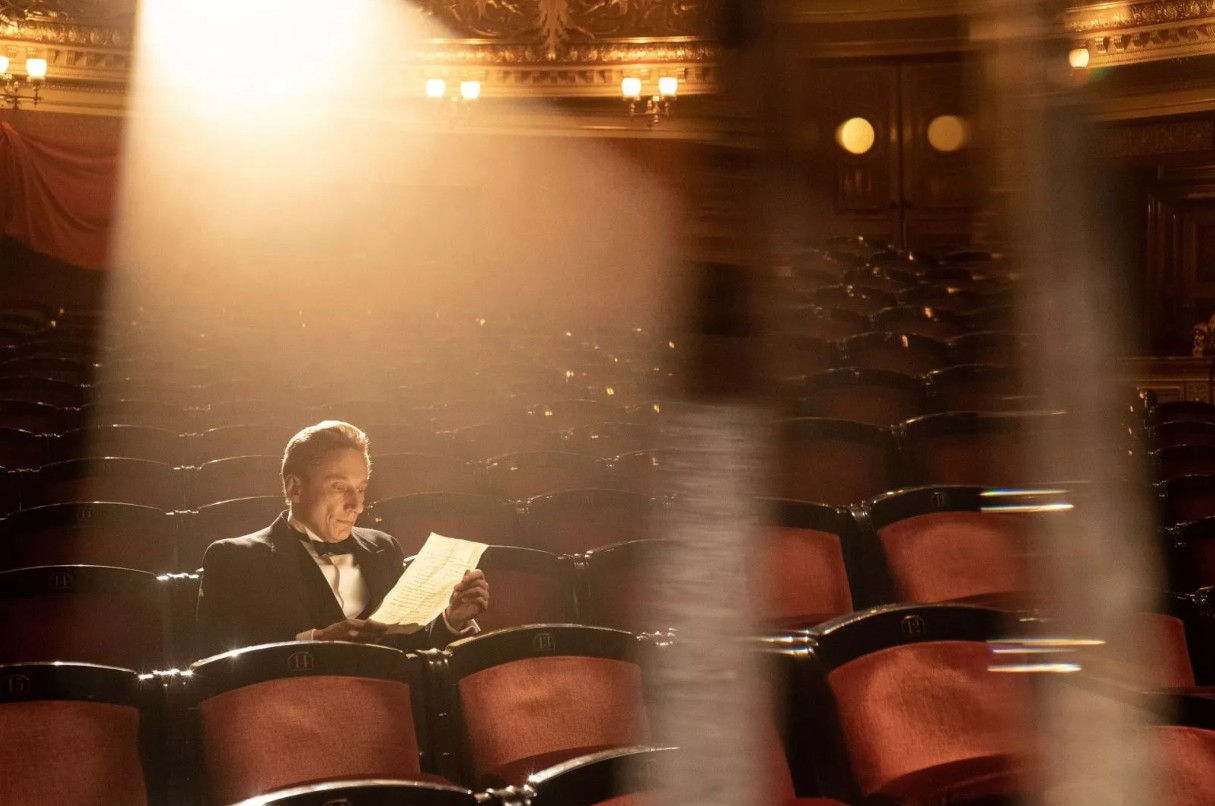
    PHOTO: The Hammer has found a Master

  • March Madness on Sweetness and Light KWAX

    March Madness on Sweetness and Light KWAX

    One could argue there’s enough madness in the world already. All the same, this week on “Sweetness and Light,” it’s our annual embrace of “march” madness.

    Well hear 12 marches by nine composers – including a coronation march, an “Italian grand march” (by a Czech composer), marches for wind band, a march for brass, marches for piano, a march for chorus, a march from the movies, a march for women, and a march for… satyrs? Well, it is after all, Satyrday.

    In a mad world, only the mad are sane!

    Anyway, a little exercise will do you good. Embrace “March Madness” on “Sweetness and Light,” this Saturday morning at 11:00 EDT/8:00 EDT, exclusively on KWAX, the radio station of the University of Oregon!

    Stream it, wherever you are, at the link:

    https://kwax.uoregon.edu/

  • March Madness Marches on KWAX Radio

    March Madness Marches on KWAX Radio

    Yesterday was so busy, I didn’t get around to submitting my annual “March Madness” show until this morning. The program includes 12 marches by nine composers. (And yes, John Williams is one of them.) Enjoy it on “Sweetness and Light,” this Saturday morning at 11:00 EDT/8:00 PDT, exclusively on KWAX, the radio station of the University of Oregon. Stream it wherever you are at the link.

    https://kwax.uoregon.edu/

  • Spring Hope & Movie Music New Beginnings

    Spring Hope & Movie Music New Beginnings

    Has the world got you down? Spring is a time of hope and renewal. This week on “Picture Perfect,” enjoy music from movies about fresh growth, new beginnings, and second chances.

    You can’t get much more spring-like than “The Secret Garden,” after the novel of Frances Hodgson Burnett. A spoiled orphan raised in India returns to England and her aloof uncle’s gloomy mansion on the Yorkshire moors. Gradually, she is drawn outside of herself by a cantankerous gardener, a saucy robin, and a fey lad named Dickon, who has a particular affinity with wild creatures. Her transformation, signified by the titular garden, the maintenance of which teaches her to nurture, improves the lives of all around her.

    The story has been adapted numerous times, including a classic version with Margaret O’Brien, in 1949. In 1993, Francis Ford Coppola’s American Zoetrope backed a lovely adaptation directed by Agnieszka Holland. The music was by Zbigniew Preisner.

    “The Best Years of Our Lives,” from 1946, is one of the most beautiful films to treat the subject of American soldiers readjusting to civilian life following World War II. A trio of veterans returns from overseas to find their lives irrevocably changed. It isn’t easy, but they rise to meet all challenges with the help of family and friends. The film is all the more moving and inspirational for its characters’ integrity and tenacity.

    The cast includes Frederic March, Dana Andrews, and real-life veteran Harold Russell. Russell was awarded a special Academy Award for “bringing hope and courage to his fellow veterans through his appearance.” Russell had lost both his hands in an explosion. Honored also with an award for Best Supporting Actor, he is the only figure ever to win two Oscars for the same performance.

    The film won nine Oscars in all, among them Best Picture, Best Director (William Wyler), Best Actor (March), Best Screenplay (Robert E. Sherwood), and Best Music (Hugo Friedhofer).

    Based on a novel of Anne Tyler, “The Accidental Tourist,” from 1988, stars William Hurt as a travel writer, the loss of whose son leads to emotional sterility and estrangement from his wife, played by Kathleen Turner. He is eventually brought around by a quirky dog-trainer (Geena Davis, in an Academy Award-winning performance). It’s a movie about letting go, and having the courage to move forward. The understated score is by John Williams.

    Finally, sports movies have always been a popular genre through which to tell stories of resurrection and redemption. “The Natural,” Barry Levinson’s 1984 adaptation of the novel of Bernard Malamud, tells the tale of a baseball player (played by Robert Redford), who is struck down in his prime, only to be reborn in mythic triumph. The inspiring music is by Randy Newman.

    Put some “spring” back into your step, with music from movies about new beginnings and second chances, on “Picture Perfect,” now in syndication on KWAX, the radio station of the University of Oregon!


    Clip and save the start times for all three of my recorded shows:

    PICTURE PERFECT, the movie music show – Friday at 8:00 PM EDT/5:00 PM PDT

    SWEETNESS AND LIGHT, the light music program – Saturday at 11:00 AM EDT/8:00 AM PDT

    THE LOST CHORD, unusual and neglected rep – Saturday at 7:00 PM EDT/4:00 PM PDT

    Stream them, wherever you are, at the link!

    https://kwax.uoregon.edu/

  • Stravinsky’s Rite vs Delius’ Cuckoo for Spring

    Stravinsky’s Rite vs Delius’ Cuckoo for Spring

    March 20.

    Delius’ “On Hearing the First Cuckoo in Spring” is all well and good, but in this month notorious for its whiplash caprice, Leonard Bernstein conducting Stravinsky’s “Le sacre du printemps” is perhaps a better, if not safer, bet.

    Then again, from that photo, perhaps the cuckoo is not to be undersold…

    Here’s Bernstein, captured in his prime, conducting Stravinsky’s primal masterpiece without a score.

    Happy spring?

    Perhaps you prefer to decompress with Delius’ romanticized cuckoo.

    Both works were first performed in 1913!

Tag Cloud

Aaron Copland (93) Beethoven (95) Composer (114) Film Music (124) Film Score (143) Film Scores (255) Halloween (94) John Williams (188) KWAX (229) Leonard Bernstein (101) Marlboro Music Festival (125) Movie Music (139) Opera (202) Philadelphia Orchestra (89) Picture Perfect (174) Princeton Symphony Orchestra (106) Radio (87) Ralph Vaughan Williams (85) Ross Amico (244) Roy's Tie-Dye Sci-Fi Corner (290) The Classical Network (101) The Lost Chord (268) Vaughan Williams (103) WPRB (396) WWFM (881)

DON’T MISS A BEAT

Receive a weekly digest every Sunday at noon by signing up here


RECENT POSTS