Category: Daily Dispatch

  • Independence Day Movie Music

    Independence Day Movie Music

    Tomorrow is Independence Day, so it seems appropriate this week on “Picture Perfect” to treat the subject of music from movies related to the birth of our nation.

    We’ll hear selections from the 2000 Mel Gibson film, “The Patriot,” in which slow-burning pacifist Mel is pushed too far by ruthless British officer Jason Isaacs and reverts to his bloody French and Indian War ways. By the end of the film, he is literally waving the flag to John Williams’ triumphant score.

    Then we’ll hear a suite from the 1942 Jack Benny-Ann Sheridan fixer-up comedy, “George Washington Slept Here,” based on the play by Moss Hart and George S. Kaufman – not really about the Revolution, beyond the fact that the ramshackle Pennsylvania farm house purchased by a transplanted New York couple is alleged to have been the resting place of the Revolution’s most famous general. The music is by Adolph Deutsch.

    The 1985 film, “Revolution,” seemed to have everything going for it. The director was Hugh Hudson, whose “Chariots of Fire” was the big winner at the 1981 Academy Awards; its star was Al Pacino; and its composer was John Corigliano, who went on to win the Pulitzer Prize for Music for his Symphony No. 2 and an Academy Award for “The Red Violin.” Yet “Revolution” bombed horribly – so horribly that Pacino gave up making movies for the next four years. James Galway plays the flute and pennywhistle on the film’s soundtrack.

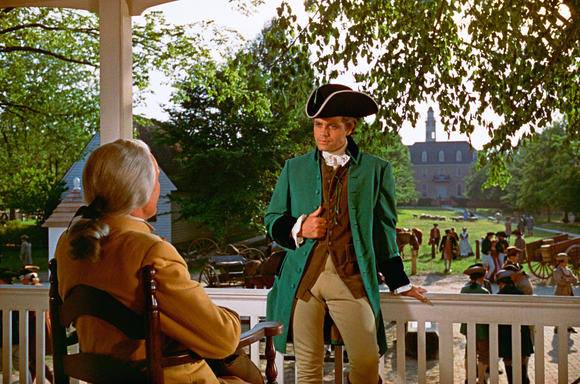
    Finally, we’ll hear music from the longest continuously-shown film in cinematic history, “Williamsburg: The Story of a Patriot,” created exclusively for the tourist attraction of Colonial Williamsburg. The film features future “Hawaii Five-O” star Jack Lord, and the score is by none other than Bernard Herrmann.

    Here’s a clip from “Williamsburg,” with some of Herrmann’s music:

    https://www.youtube.com/watch?v=A0VXfVhenXQ

    We celebrate Independence Day this week, on “Picture Perfect,” music for the movies. You can hear it this Friday evening at 6 ET, or enjoy it later as a webcast at http://www.wwfm.org.
  • Gluck’s 300th Why You Should Know His Opera

    Gluck’s 300th Why You Should Know His Opera

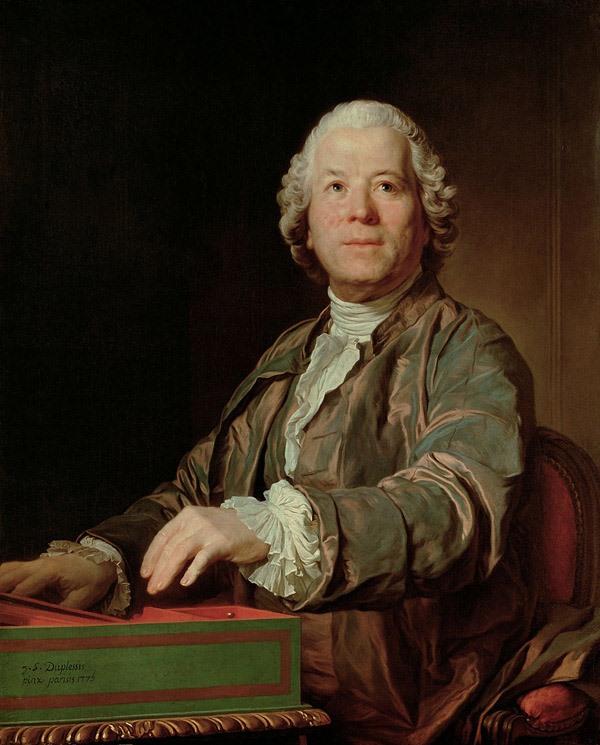
    Today is the 300th birthday of Christoph Willibald Gluck, a composer concert promoters and marketers seem to have a hard time getting their heads around. Give them Verdi, Wagner or even Britten, and they’ll run with it. But Gluck? Who he?

    Oh yeah. Isn’t he the guy who wrote the “Dance of the Blessed Spirits?”

    We always hear about Gluck being a reformer, and in truth his influence on the future of opera was incalculable. He shunned floridity for its own sake. He was not a sensualist. He rebelled against the superficial effects of “opera seria,” with its showy arias ornamented beyond recognition by star castrati, to arrive at something closer to naturalism.

    With Gluck, words and music bore equal weight. Drama was of the foremost importance. He tossed out the dry recitative to create a more continuous flow in the action. Performers took a back seat to emotional truth. The effect was kind of a chaste grandeur, simplicity at the service of theatrical power. Works like “Orfeo ed Euridice” and “Alceste” were radical for their time.

    Gluck’s influence runs through Mozart to Weber, Berlioz and Wagner. Yet today his works are less frequently performed than those of any of his followers.

    Be that as it may, the Friends of Christoph Willibald Gluck, situated in Bavaria near the composer’s birthplace, aren’t about to let the anniversary pass unnoticed.

    http://www.gluckstadt-berching.de/

    Find out more about Gluck in “Gluck the Reformer” (featuring John Eliot Gardiner, William Christie and others):

    Happy 300th, C.W. Gluck!

  • July Heatwave Yearning for October Music

    July Heatwave Yearning for October Music

    Holy cats, it’s July 1st already. With three days of 90 degree weather in the forecast (95 tomorrow), I’m still pulling for October. But I’ll try not to think about it.

    Here’s a nice cool saxophone quartet, Michael Torke’s “July.”

  • Rafael Kubelik A Centennial Remembrance

    Rafael Kubelik A Centennial Remembrance

    Yesterday would have been the 100th birthday of the Czech conductor, Rafael Kubelik, a fact I overlooked in yet another self-serving post about one of my shows.

    Over the course of his career, Kubelik held positions as principal conductor of the Czech Philharmonic, music director of the Chicago and Bavarian Radio Symphony Orchestras, and musical director of the Royal Opera, Covent Garden.

    He weathered the Nazi occupation, although his standing was often a precarious one. When the Communists took over, he packed his bags and headed for Britain. He had been engaged to conduct “Don Giovanni” at the Edinburgh Festival in 1948. His wife learned of his decision to defect only when they were already on the plane. In 1953, the couple was convicted in absentia of “taking illicit leave.”

    In 1956, Kubelik was invited back with a promise of freedom to do whatever he liked, but he declined in an open letter to The Times, stating he would only consider returning once all political prisoners were freed and all émigrés were granted the same rights he was promised. Likewise, he declined further invitations.

    In 1946, he had helped found the Prague Spring Festival and conducted its opening concert. He returned only in 1990, after the fall of Communism, and well after he had formally retired from the podium. The emotional reunion, in which he conducted the Czech Philharmonic in Smetana’s “Ma Vlast,” was preserved on Supraphon Records. It was Kubelik’s fifth recording of the piece.

    I remember when Rafael Kubelik died. I was vacationing with my family at the Jersey shore in 1996. It was the one week a year when I did heavy newspaper reading, and I remember when coming across the coverage in the New York Times, remarking to my mother what a big deal his death was. Now my mother is gone, as well.

    Here’s Rafael Kubelik with the complete “Ma Vlast” from the 1990 Prague Spring Festival:

    Also from 1990, an outdoor “Vltava” (a.k.a. “The Moldau”):

  • Vintage Gershwin Historic Recordings on The Lost Chord

    Vintage Gershwin Historic Recordings on The Lost Chord

    In keeping with The Classical Network’s Americana-themed, end-of-the-fiscal-year fundraiser, “The Lost Chord” this week will focus on historic recordings of the music of George Gershwin.

    Gershwin occupied a unique place in American music, rising from Tin Pan Alley scrapper to Broadway royalty. From there, he conquered the concert hall and even the opera house, with his blend of popular song, jazz, blues, spirituals and European classical forms.

    Like Franz Schubert a hundred years before, Gershwin managed to churn out an astonishing amount of music over a comparatively brief span. His songs, in particular, have been of enduring interest. His gift of lyricism and invention defied early critics as he bestrode the worlds of popular and classical music like an American colossus.

    Sadly, at the peak of his success, he died of a brain tumor at the age of 38.

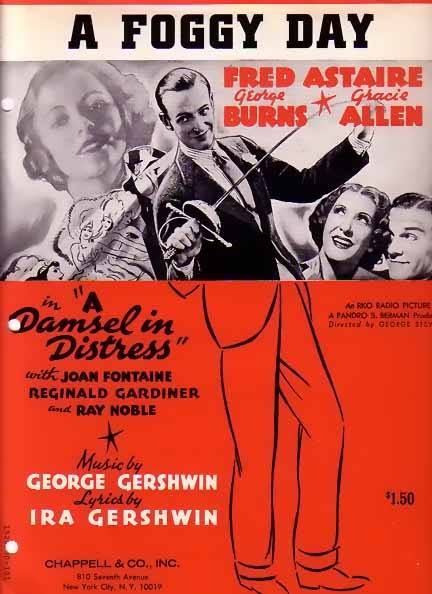
    We’ll sample Gershwin’s artistry in recordings of the era, including several songs performed by Al Jolson, Fred Astaire and Ella Logan. (So many excellent recordings to choose from!)

    We’ll also have the world premiere recording of “An American in Paris” – performed by the Victor Symphony Orchestra (really members of the Philadelphia Orchestra), with the composer himself on the celesta – and the Concerto in F, performed as part of a memorial concert at the Hollywood Bowl, with the composer’s friend, Oscar Levant, as soloist.

    Three of these recordings date from 1937, the year of the composer’s death. All are from his era.

    That’s “Vintage Gershwin.” Enjoy it tonight on “The Lost Chord,” at 10 ET. As of July 4, the rebroadcast will move to 3 a.m. If that’s a bit late for you, feel free to listen to it as a webcast once it’s been archived at http://www.wwfm.org.

    I hope you will continue to support the station. Thank you!

    Here’s Fred Astaire singing “A Foggy Day (In London Town),” from “A Damsel in Distress”:

Tag Cloud

Aaron Copland (93) Beethoven (95) Composer (114) Film Music (140) Film Score (143) Film Scores (255) Halloween (94) John Williams (195) KWAX (229) Leonard Bernstein (103) Marlboro Music Festival (125) Movie Music (155) Mozart (89) Opera (210) Philadelphia Orchestra (89) Picture Perfect (174) Princeton Symphony Orchestra (108) Radio (88) Ross Amico (244) Roy's Tie-Dye Sci-Fi Corner (290) The Classical Network (101) The Lost Chord (268) Vaughan Williams (103) WPRB (396) WWFM (881)

DON’T MISS A BEAT

Receive a weekly digest every Sunday at noon by signing up here


RECENT POSTS