Category: Daily Dispatch

  • Bastille Day Eiffel Tower Ballet Surreal Les Six

    Bastille Day Eiffel Tower Ballet Surreal Les Six

    Vive la France! It’s Bastille Day.

    In 1921, Jean Cocteau brought together five of his composer protégés, all members of Les Six, to provide music for a ballet set atop the Eiffel Tower on July 14 – Bastille Day. (The sixth, Louis Durey, pleaded illness.)

    The scenario involves a wedding breakfast on one of the platforms of the famed Parisian landmark. A series of surreal and vaguely satiric incidents involve a pompous speech made by one of the guests, a hunchbacked photographer asking the assembled guests to “watch the birdie,” the sudden appearance of a telegraph office, a lion devouring one of the guests, and the arrival of “a child of the future” who commits mass murder. The ballet concludes with the end of the wedding.

    Cocteau encapsulated the ballet’s themes as “Sunday vacuity; human beastliness, ready-made expressions, disassociation of ideas from flesh and bone, ferocity of childhood, the miraculous poetry of everyday life.” Quel illumination!

    Francis Poulenc, who provided the music for some of the numbers, alongside that of Georges Auric, Arthur Honegger, Darius Milhaud and Germaine Tailleferre, referred to the piece as “toujours de la merde.”

    Here is “Les mariés de la tour Eiffel” (“The Wedding Party on the Eiffel Tower”):

    Happy Bastille Day!

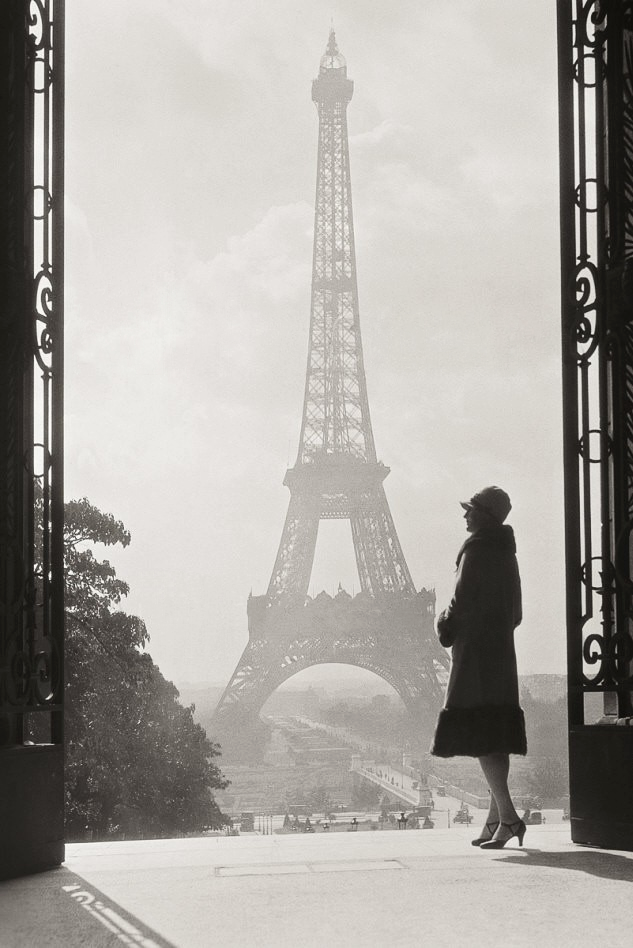
    PHOTO: The Eiffel Tower in a contemporaneous photo
  • Mediterranean Music Escape This Weekend

    Mediterranean Music Escape This Weekend

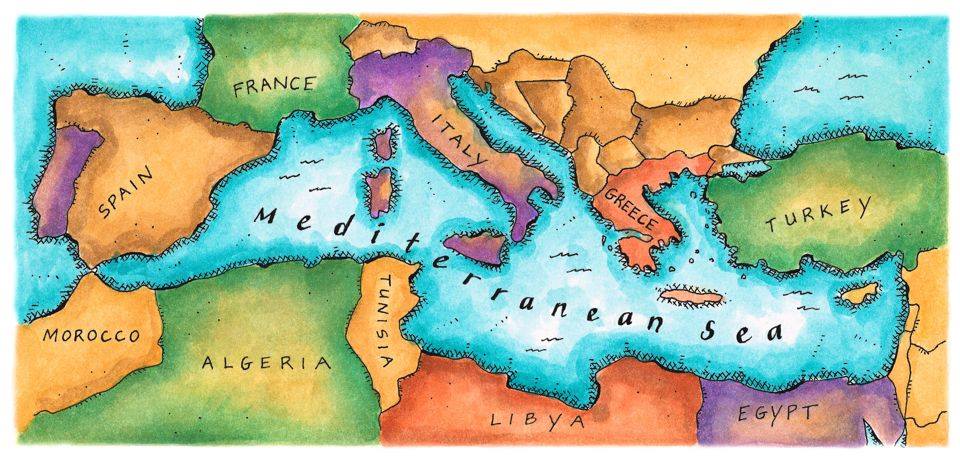
    I thought it might be refreshing to take a musical vacation to the Mediterranean this week. To this end, this Sunday night on “The Lost Chord,” we’ll have two works inspired by the Mediterranean and its cultures. The first is by Charles Camilleri, Malta’s national composer. We’ll hear his “Mediterranean Dances.”

    We’ll also have a guitar concerto by John McLaughlin, a figure better known as a jazz or jazz fusion artist. We’ll hear his infectious “Mediterranean Concerto,” a work of ambitious scope, about twice the length of your average guitar concerto.

    McLaughlin made his home along the Mediterranean at the time of the work’s composition. We all should be so lucky. Thankfully, we can live vicariously through the music!

    Join me for “Mediterranean Muse” – musical souvenirs of the Mediterranean basin – tonight at 10 ET, with a repeat Friday morning at 3. Or you can catch the show later as a webcast at http://www.wwfm.org.

  • Mark Reizen Tsar of Russian Basses

    Mark Reizen Tsar of Russian Basses

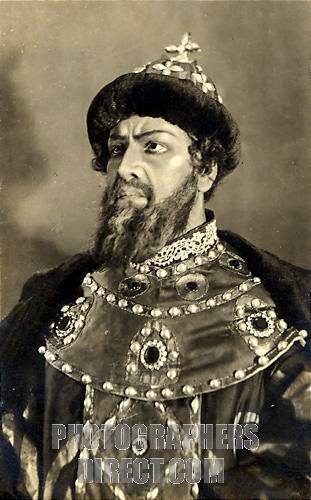
    I’d been wanting to honor the amazing Mark Reizen for some time. For me, Reizen is the greatest of the Russian basses. Chaliapin gets all the press, and from all accounts he was a presence to be reckoned with onstage, but on recordings Reizen is the Tsar of Russian basses. Yet, for obvious reasons (he lived in Russia from 1895 to 1992, with the peak of his career at the height of Stalin’s rule), he is little known in the West.

    Reizen would have seemed to have been a Soviet dream, a great artist of humble origins (he came from a family of miners), yet his Jewish background could have been a major hindrance. But Stalin was totally enamored of his voice. In fact, when he was called to Stalin’s box (dressed as the devil, no less) during a tour with the Mariinsky, Stalin was full of compliments and asked why he didn’t sing in Moscow more often. Reizen explained that because of his position, he lived in Leningrad. He had a contract and an apartment. Stalin mused, “Perhaps we can do something and find you an apartment here.” The next day he was taken around in an official car to look at apartments. This is the story Reizen loved to tell about how he came to join the Bolshoi. He was 35 years old.

    Reizen remained as principal bass at the Bolshoi until his retirement in 1954. During his tenure, he received the Stalin Prize three times.

    Always an imposing figure, Reizen stood six foot three. He had a strong stage presence. In what is essentially a cameo role as the Viking Guest in the fourth tableau of Rimsky-Korsakov’s “Sadko,” Reizen could overwhelm his listeners. This is from a complete recording of the work, made in 1952, much prized by collectors, with Nikolai Golovanov (another neglected Soviet master) conducting.

    Reizen’s final appearance was at a gala held at the Bolshoi for the occasion of his 90th birthday, at which he sang Gremin’s aria from “Eugene Onegin.” As you’ll hear, he sang with control and even elegance until the very end. His was an amazing instrument.

    PHOTO: Is Reizen the most awesome Boris on record? It’s quite possible he is.

  • Planet of the Apes Music Jerry Goldsmith

    Planet of the Apes Music Jerry Goldsmith

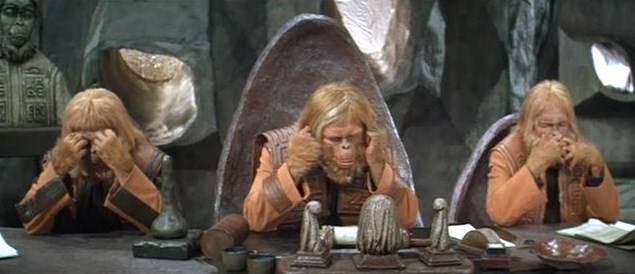
    With the publicity machine going full-throttle for the new “Planet of the Apes” movie, I thought we’d take the opportunity this week on “Picture Perfect” to look back to Jerry Goldsmith’s music for the original 1968 classic.

    Goldsmith incorporated all sorts of unusual effects into his groundbreaking score. He employed such instruments as tuned mixing bowls, a bass slide-whistle, and the cuika, a Brazilian wind instrument used to mimic the hooting of excited apes. He instructed his hornists to play without mouthpieces, and he manipulated percussion through the use of an Echoplex.

    Barbaric and unnerving, with little in the way of lyricism, I can’t imagine anything like it being used in a major Hollywood film today. Well, from my description, I guess I can, but Goldsmith was the real deal – a talented composer with real tools (not just a laptop) at his disposal.

    While my initial impulse had been to fill out the hour with music from some of the other films in the “Apes” franchise, after listening for a while, the grimness and brutality became a bit too unremitting, so instead we’ll swing with the gorilla theme.

    Among the other selections will be an extended passage from the Dian Fossey biopic, “Gorillas in the Mist,” which starred Sigourney Weaver and featured music by Maurice Jarre, of “Lawrence of Arabia” and “Doctor Zhivago” fame, though from his later, lamentable “electronic” period.

    We’ll also hear a bit from the “Mighty Joe Young” remake (since I couldn’t get a hold of Roy Webb’s score for the original). The music is pretty much standard James Horner (eg. “Titanic”), though he does incorporate a Swahili choir.

    Finally, we’ll sample from Max Steiner’s landmark score to the 800-pound gorilla of all monkey movies, 1933’s “King Kong.”

    I hope you’ll join me this week as we go ape, on “Picture Perfect,” music for the movies, tomorrow evening at 6 ET. Remember, you can always listen to the show later as a webcast at http://www.wwfm.org.

    “Take your stinkin’ paws off me…!” (with Goldsmith’s music, including cuika effects):

    https://www.youtube.com/watch?v=pBMvR_RnKu4

  • Respighi & Diamond Neoclassical Masters

    Respighi & Diamond Neoclassical Masters

    Neoclassicism is the name of the game today, as we celebrate two composers who made their biggest splash appropriating styles and themes of the past.

    Ottorini Respighi composed not only his “Ancient Airs and Dances” suites, but works – while not strictly speaking Neoclassical (in fact, more orgiastic) – evocative of Rome’s illustrious and/or notorious past. He also composed music redolent of the Catholic Church, with works influenced by Gregorian modes. Even his ballet, “Belkis, Queen of Sheba,” is set 3000 years ago.

    The American composer David Diamond was asked by the conductor Dimitri Mitropoulos in 1944 for a new work. The only stipulation was that the piece be of a happy disposition, in defiance of the unsettling events unfolding in the world at large and in music in particular. (Mitropoulos was depressed from conducting too much 12-tone music.)

    The result was the clear, cool “Rounds for String Orchestra,” which went on to become Diamond’s best-known music, a bona fide American classic.

    Happy birthday, Ottorino Respighi (b. 1879) and David Diamond (b. 1915)!

    Here’s violinist Uto Ughi in Respighi’s “Concerto Gregoriano”: https://www.youtube.com/watch?v=wWSKB8aZ884

    And Diamond’s “Rounds for String Orchestra” (well worth it, if you can ignore the images): https://www.youtube.com/watch?v=D6iF70Sn-4E

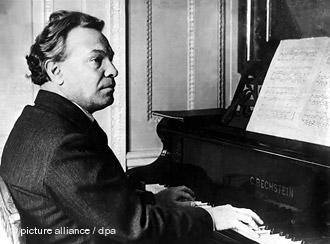
    PHOTOS: Duo pianists Respighi (top) and Diamond

Tag Cloud

Aaron Copland (93) Beethoven (95) Composer (114) Film Music (140) Film Score (143) Film Scores (255) Halloween (94) John Williams (195) KWAX (229) Leonard Bernstein (103) Marlboro Music Festival (125) Movie Music (155) Mozart (89) Opera (210) Philadelphia Orchestra (89) Picture Perfect (174) Princeton Symphony Orchestra (108) Radio (88) Ross Amico (244) Roy's Tie-Dye Sci-Fi Corner (290) The Classical Network (101) The Lost Chord (268) Vaughan Williams (103) WPRB (396) WWFM (881)

DON’T MISS A BEAT

Receive a weekly digest every Sunday at noon by signing up here


RECENT POSTS