Category: Daily Dispatch

  • Lorin Maazel A Musical Farewell

    Lorin Maazel A Musical Farewell

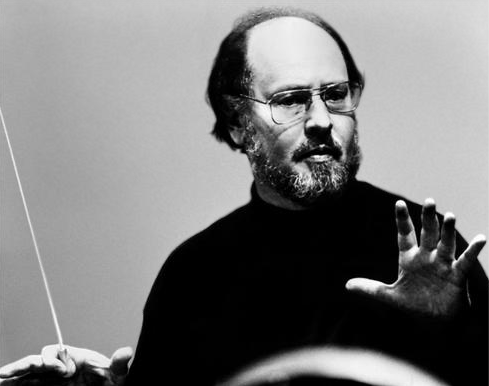
    Lorin Maazel, one of the outstanding conductors of his generation, died last week at the age of 84. A musical prodigy, Maazel made his conducting debut at the age of 8. Between 9 and 15, he conducted most of the major American orchestras, including the NBC Symphony, at the invitation of Arturo Toscanini.

    Over the course of his career, he held posts with many prominent musical organizations, including the Deutsche Oper Berlin, the Berlin Radio Symphony Orchestra, the Cleveland Orchestra, L’Orchestre National de France, the Pittsburgh Symphony Orchestra, the Bavarian Radio Symphony Orchestra and the New York Philharmonic. In addition, he was briefly general manager and artistic director of the Vienna State Opera.

    We honor Maazel tonight on “The Lost Chord” with two of his over 300 recordings. The main feature will be Alexander Zemlinsky’s “Lyric Symphony,” representative of his fruitful collaboration with the Berlin Philharmonic, an orchestra with which he had marvelous chemistry. However, after the death of Herbert von Karajan, the heir apparent was passed over as music director in favor of Claudio Abbado, Maazel abruptly terminated the relationship, stating essentially that he wanted Abbado to be able to do his thing.

    Thankfully the Maazel-Berlin partnership yielded some fine recordings. The Zemlinsky, rarely heard, was written between 1922 and 1923, a song-symphony based on poems by Rabindranath Tagore, who, in 1913, was awarded the Nobel Prize for Literature. This 1982 performance features soprano Julia Varady and her husband, baritone Dietrich Fischer-Dieskau.

    Maazel was also a composer and a talented violinist. He studied the violin from the age of 5. It was the sale of his 1783 Guadagnini that helped fund the Castleton Festival, held every summer at Maazel’s Virginia farm. He died there as a result pneumonia, no doubt the result of his self-imposed, unrelenting work schedule.

    As an encore, we’ll have an example of Maazel’s artistry as a violinist, taken from one of his “New Year’s Concert in Vienna” recordings. Maazel was a regular conductor of the New Year’s concerts following the death of Willi Boskovski. After seven appearances in a row, the practice was implemented of using a different conductor each year, likely to make telecasts and recordings more marketable. Maazel returned four additional times. The last was in 2005. From 1996, Maazel will lead the Vienna Philharmonic as well as play the melting violin solo in Josef Strauss’ “The Girl from Nasswald.”

    That’s “Maazel, Farewell.” You can hear it tonight at 10 ET, or, if you can’t sleep, tune in for the repeat Friday morning at 3. Of course, you can always listen to it later as a webcast, at http://www.wwfm.org.

    Here’s a clip of Maazel playing Mozart with the Vienna Philharmonic, the slow movement of the Violin Concerto No. 3 in G Major, K. 216 (the first and third movements are also posted, if you have a desire to hear more):
    https://www.youtube.com/watch?v=Y9BdRCfQ4Cg

  • John Williams Night on TCM

    John Williams Night on TCM

    The always masterful programmers over at Turner Classic Movies: TCM are devoting prime time tonight to the artistry of John Williams. Williams, of course, is the world’s most famous (and most successful) film composer, having written music for “Jaws,” “Star Wars,” “Close Encounters of the Third Kind,” “Superman,” “Raiders of the Lost Ark,” “E.T. The Extra-Terrestrial,” “Jurassic Park,” “Schindler’s List,” the first three “Harry Potter” films, and well, I’m sure you could name a half dozen others.

    His longest collaboration has been with director Steven Spielberg, with 26 features (most recently, “Lincoln”) and counting. TCM will be kicking off what should be an exceedingly interesting evening for Williams aficionados with Spielberg’s theatrical debut, the undershown “The Sugarland Express” (1974), at 8 p.m. ET. Goldie Hawn and William Atherton play a Texas couple – Atherton an escaped convict – who lead the police on a wild chase as they attempt to prevent the adoption of their son. Along the way, they become unlikely folk heroes. That’s harmonica legend Toots Thielemans on the soundtrack.

    That’s followed at 10 p.m. with a rebroadcast of “AFI Master Class – The Art of Collaboration: Spielberg-Williams,” in which the two screen titans discuss their 40 year association before an audience of aspiring filmmakers at the AFI Conservatory.

    Then at 11 p.m. comes the rare opportunity to see “The Man Who Loved Cat Dancing” (1973), with Burt Reynolds as the head of a band of train-robbers in the old west, again on the run, forced by circumstance to ride with the wife (Sarah Miles) of the Wells Fargo agent who pursues them. The music (actually replacing a rejected score by Michel Legrand) melds a pop-tinged main title with the Williams sound we all know and love.

    Experience John Williams before “Jaws” (1975) and “Star Wars” (1977) made him a household name, tonight on TCM.

    Music from “The Sugarland Express”:

    And from “The Man Who Loved Cat Dancing”:

    PHOTO: Williams in the ‘70s

  • Australian Outback Film Scores Picture Perfect

    Australian Outback Film Scores Picture Perfect

    G’day! This week on “Picture Perfect,” we’re off to the antipodes for an hour of music from films set in the Australian bush.

    Ealing Studios shot several movies there – three independently, and then two in collaboration with MGM. The first was “The Overlanders” (1946), told in semi-documentary style, about a wartime push to evacuate Australia’s Northern Territory, with its 5000 settlers and a million head of cattle, before an anticipated Japanese invasion. The music was by John Ireland. Despite its excellence, it would prove to be his only film score.

    Ealing’s final independent Australian venture was “Bitter Springs” (1950). The film tells the tale of an Australian pioneer family, which encounters problems with the local Aboriginal people when its headstrong patriarch denies access to a watering hole.

    The thematic material was by Ralph Vaughan Williams, who left it to composer and conductor Ernest Irving to arrange and orchestrate what he felt needed for the various cues. Vaughan Williams wrote his friend and colleague to express his pleasure with the finished product. Irving would soon receive the dedication of Vaughan Williams’ Symphony No. 7, the “Sinfonia Antarctica” (itself derived from RVW’s film score to Ealing’s “Scott of the Antarctic”).

    Both of these films, “The Overlanders” and “Bitter Springs,” are essentially westerns set in the Australian outback. From a little closer to our own time, we’ll hear music from another film which was unapologetic in its use of American western motifs, “Quigley Down Under” (1990).

    The film starred Tom Selleck as an American cowboy, hired by an Australian rancher, played by Alan Rickman, allegedly to shoot dingoes; however, he soon finds that the rancher’s real purpose is to rid the land of Aborigines – a proposition Quigley naturally rejects, setting up the film’s conflict.

    The score is by Basil Poledouris, a composer who has achieved cult status for his work on films like “Robocop” and especially “Conan the Barbarian,” though he never really seemed to receive the recognition the deserved. He did, however, win an Emmy for his score to “Lonesome Dove.”

    (HOT TIP: We’ll be listening to Poledouris’ “Conan” scores next week!)

    Finally, we’ll have just a bit from John Barry’s haunting score to Nicholas Roeg’s “Walkabout” (1971), in which two British children find themselves stranded in the bush and survive only through the aid of a young Aborigine.

    We’re heading down under and out back this week, for “Picture Perfect” – music for the movies – this Friday evening at 6 ET. Listen to it then, or catch it later as a webcast at http://www.wwfm.org.

  • Chimps Prefer African Music Silence Best

    Chimps Prefer African Music Silence Best

    Yet another “Planet of the Apes” tie-in? For chimps, African and Indian music is preferable to Western and Japanese, but silence is golden.

    http://www.apa.org/news/press/releases/2014/06/chimps-music.aspx

  • Birtwistle at 80 A Hesitant Appreciation

    Birtwistle at 80 A Hesitant Appreciation

    Today is the 80th birthday of Sir Harrison Birtwistle, a composer whose music I can’t say I’ve ever really warmed to. Despite sharing his fascination with Gawain, Punch, the Minotaur, Anubis, Orpheus, King Kong(!) and any other number of subjects which form the bases for his operas and concert works, I have a hard time finding anything on which to get a toehold. I’m not really sure quite what it is, since I don’t really need music to be “easy” or even tonal.

    At least his most famous contemporary and former fellow enfant terrible of the so-called Manchester School, Sir Peter Maxwell Davies (now Master of the Queen’s Music and therefore part of “the establishment”), was not afraid to allow some wit to show through his music from time to time. Perhaps it is my own shortcoming for not taking the trouble to immerse myself totally in Birtwistle’s work.

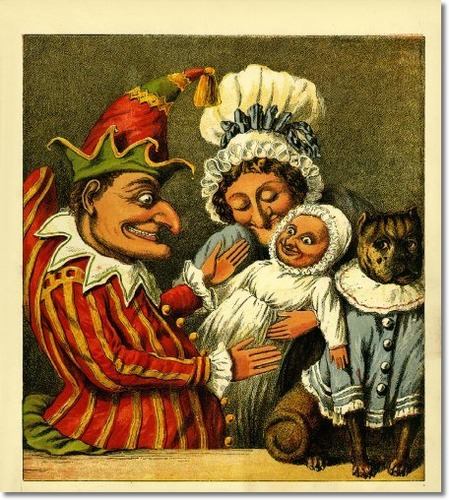
    Birtwistle has a local connection, by the way. He attended Princeton University on a Harkness Fellowship, starting in 1965. There, he completed his opera “Punch and Judy,” which begins with Punch tossing his baby into the fire, then commencing a murder spree, beginning with the stabbing of his wife, Judy. All this is enacted in human form, inevitably making it much more disturbing than when played out by puppets.

    Perhaps you will find something to like in one of these pieces recommended in The Guardian.

    http://www.theguardian.com/music/tomserviceblog/2014/jul/15/harrison-birtwistle-80th-birthday-five-introductory-pieces

    If I had to recommend one with which to start, it would be “Earth Dances” from 1986. I confess, listening to it now, it is not as impenetrable as I remember it being. In fact, it actually kind of makes sense. Good Lord, I may actually be warming to it!

    In general, I sense a primordial connection in Birtwistle’s work, though it’s not someplace I choose to live. At least the music seems to have integrity, which can’t always be claimed of many pieces of an easier disposition.

    See what you think. Here’s “Earth Dances” again, on YouTube. The poster certainly had a field day with the imagery:

    Stark, uncompromising, often brutal, always provocative – enjoy your special day, Harry!

Tag Cloud

Aaron Copland (93) Beethoven (95) Composer (114) Film Music (140) Film Score (143) Film Scores (255) Halloween (94) John Williams (195) KWAX (229) Leonard Bernstein (103) Marlboro Music Festival (125) Movie Music (155) Mozart (89) Opera (210) Philadelphia Orchestra (89) Picture Perfect (174) Princeton Symphony Orchestra (108) Radio (88) Ross Amico (244) Roy's Tie-Dye Sci-Fi Corner (290) The Classical Network (101) The Lost Chord (268) Vaughan Williams (103) WPRB (396) WWFM (881)

DON’T MISS A BEAT

Receive a weekly digest every Sunday at noon by signing up here


RECENT POSTS