Category: Daily Dispatch

  • Franz Liszt’s Merry Liszt-mas on WPRB

    Franz Liszt’s Merry Liszt-mas on WPRB

    Merry Liszt-mas!

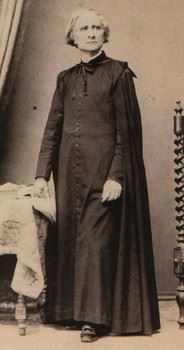
    When you tune in to WPRB this morning, don’t be surprised to find the bulk of the programming devoted to the music of Franz Liszt. Liszt, who had a diabolical reputation both as a pianist and as a ladies’ man, was also quite devout. In fact, he eventually took minor orders and lived in a monastic cell in Rome, where he was known as the Abbé Liszt.

    We’ll be listening to his three-hour oratorio/symphonic poem, “Christus,” celebrating the life and legacy of Christ. However, Liszt being Liszt, there are times when he wholly dispenses with the frankincense and myrrh and piles on the tragic heroism. The “March of the Three Holy Kings” which concludes Part I sounds like it could have been lifted by Richard Wagner (and it may have been) for use in his “Ring” cycle. The music was written contemporaneously with Wagner’s “Das Rheingold.”

    As time allows, we’ll also enjoy Liszt’s “Christmas Tree Suite.” Liszt dedicated the work to his granddaughter, Daniela von Bülow, the daughter of Cosima Liszt and conductor Hans von Bülow. Some of the early movements are reflections on familiar carols, but as the suite progresses, the movements become dreamier and more introspective. The work was first performed on Christmas Day in 1881, the day Daniela’s birthday was always observed, though she was actually born on Christmas Eve.

    “Christus” begins at 7:00 EST. With luck, the “Christmas Tree Suite” will begin at 10:25. Join me at 6:00 for a bit of musical tailgating and some more selections for Christmas.

    Liszt-en all morning, in fact, from 6 to 11:00 on WPRB 103.3 FM and at wprb.com. They call me the Abbé Normal, on Classic Ross Amico.


  • Yule Revelry on WWFM Celebrate Winter Solstice

    Yule Revelry on WWFM Celebrate Winter Solstice

    Welcome, Yule!

    It’s December 21. Skate on over to WWFM this afternoon, as I mark the year’s shortest day and longest night with abundant revelry, courtesy of Sir Arthur Sullivan’s “Victoria and Merrie England” and John Langstaff’s “The Christmas Revels.” We’ll also make festive with Christopher Rouse’s makeshift midwinter celebration, “Karolju.” Of course, we’ll have music inspired by wintry sights, sounds, and activities. And we’ll follow Arthur Honegger on his musical journey from dark-to-light, “Une cantate de Noël,” or “A Christmas Cantata.”

    Join me, as we drive the cold winter away, this afternoon from 4 to 7:00 EST, on WWFM – The Classical Network and at wwfm.org.

  • Casals’ Christmas Oratorio El Pesebre

    Casals’ Christmas Oratorio El Pesebre

    Pablo Casals is remembered primarily as one of the great cellists. But did you know he was also a composer? Casals’ most ambitious piece must be his Christmas oratorio “El Pesebre,” or “The Crib” (once commonly translated as “The Manger”).

    The text, by Catalan poet Joan Alavedra, was conceived in response to questions posed by his five year-old daughter. She asked him, as he was setting up his crèche, what each of the figures at the Nativity – including the animals – said.

    The project provided something of an escape for both artists. The work was begun while they were under house arrest in 1943. The folk-like simplicity of the oratorio is disturbed only occasionally by intimations of a troubled world. Casals added a prayer for peace to the concluding “Gloria” and refused to allow the work to be performed in Franco’s Spain. Instead, it was given its premiere in Acapulco, Mexico, in 1960.

    As long as you don’t go into it expecting Christmas music of the caliber of that written by Casals’ idol, Johann Sebastian Bach, the oratorio makes for a charming and disarming musical experience. Said Casals, “The figures in a crèche are folk figures; why, they can’t sing twelve-tone music!” You can hear “El Pesebre” this afternoon around 2:00, following today’s noontime concert.

    At 12:00, we offer a rebroadcast of an event which took place at Nassau Presbyterian Church in Princeton on December 5. The American Boychoir and its music director, Fernando Malvar-Ruiz, join host Rob Kapilow for a special “What Makes It Great?” Performers and presenter parse out Benjamin Britten’s beloved “A Ceremony of Carols,” followed by a complete performance of the piece. The absorbing analysis-with-concert is emceed by WWFM’s David Osenberg.

    Christmas is for the young this afternoon, from noon to 4 p.m. EST, on WWFM – The Classical Network and at wwfm.org.

  • Festive Holiday Music on WWFM This Week

    Festive Holiday Music on WWFM This Week

    Season’s greetings!

    The elves have nearly finished piling high my sleigh with unique and festive Christmas packages for all you deserving girls and boys. Join me during my air shifts this week – Monday, Wednesday and Friday, from 4 to 7 p.m., and Tuesday from noon to 4 p.m. – for plentiful music of the season.

    We’ll have selections for the solstice, music evocative of midwinter sport, and plenty of garland and tinsel to go around. Highlights this afternoon will include Ariel Ramirez’s “Navidad Nuestra” and Camille Saint-Saens’ “Christmas Oratorio.”

    My heart grows three sizes this day. It all begins at 4:00 EST, on WWFM – The Classical Network and at wwfm.org.

  • Herzogenberg Brahms’ Confidant Rediscovered

    Herzogenberg Brahms’ Confidant Rediscovered

    The composer Heinrich von Herzogenberg (1843-1900), born in Graz, studied in Vienna, where he became a lifelong friend of Johannes Brahms. Of course, being friends with Brahms was a complicated matter. In particular, the older composer was not very diplomatic in his assessment of Herzogenberg’s music. However, toward the end of his life, he grudgingly offered, “Herzogenberg is able to do more than any of the others.”

    This Sunday night on “The Lost Chord,” we’ll have music by Brahms’ faintly-praised confidant.

    In 1874, Herzogenberg co-founded the Leipzig Bach-Verein, which dedicated itself to the revival of all the Bach cantatas. He served as its music director for ten years. Following the death of his wife in 1892, he turned increasingly to the writing of sacred music. In particular, he composed music for services of a Lutheran church in Strasbourg, though he himself remained a Roman Catholic. His models for these pieces were, naturally, the oratorios and passions of Bach.

    Three large-scale works of the period call for members of the congregation to participate in the singing of the chorales.

    “Die Geburt Christi,” or “The Birth of Christ,” written in 1894, betrays the influence of composers admired by Herzogenberg. However, the work is not always as “Brahmsian” as one might expect. A prominent role is given to church hymns, with the inclusion of folk material and some familiar Christmas melodies.

    We’ll hear selections from Parts One and Two – “The Promise” and “The Fulfillment” – and then, after a break, the whole of Part Three, “The Adoration.”

    I hope you’ll join me for “German Shepherds,” Herzogenberg’s musical telling of the Nativity story, this Sunday night at 10:00 EST, on WWFM – The Classical Network and at wwfm.org.

Tag Cloud

Aaron Copland (93) Beethoven (95) Composer (114) Film Music (139) Film Score (143) Film Scores (255) Halloween (94) John Williams (195) KWAX (229) Leonard Bernstein (103) Marlboro Music Festival (125) Movie Music (154) Mozart (89) Opera (210) Philadelphia Orchestra (89) Picture Perfect (174) Princeton Symphony Orchestra (108) Radio (88) Ross Amico (244) Roy's Tie-Dye Sci-Fi Corner (290) The Classical Network (101) The Lost Chord (268) Vaughan Williams (103) WPRB (396) WWFM (881)

DON’T MISS A BEAT

Receive a weekly digest every Sunday at noon by signing up here


RECENT POSTS