Category: Daily Dispatch

  • Beethoven Novel Signing at Randy Now’s Man Cave

    Beethoven Novel Signing at Randy Now’s Man Cave

    Linda Holt, whose writings on music can be read in The Princeton Packet and at classicalrave.blogspot.com, will talk about her new Beethoven novel, “The Black Spaniard,” as part of a book signing to be held at Randy Now’s Man Cave, located at 134 Farnsworth Ave., in Bordentown, NJ, tomorrow, from 2 to 4:30 p.m. “The Black Spaniard” is published by Unsolicited Press.

    Randy Now’s Man Cave:

    http://www.mancavenj.com/

    More about “The Black Spaniard,” also available on amazon.com, here:

    http://www.unsolicitedpress.com/store/p103/The_Black_Spaniard_by_L.L._Holt.html

  • Goodyear’s Nutcracker a Solo Piano Treat

    Goodyear’s Nutcracker a Solo Piano Treat

    Capturing the essence of one of Tchaikovsky’s most colorful scores on a single instrument might seem like a tough nut to crack. But it was a prerequisite for pianist Stewart Goodyear if he was going to undertake something as ambitious as “The Nutcracker.”

    “I first transcribed the march for the CBC in Toronto, and I was delighted by the experience,” he says. “And then I looked at the entire full score to see if it would be just as pianistic, and to my happiness it was. It took me two years just going through the score, because I wanted to be very faithful to everything that Tchaikovsky wrote.”

    His 2015 recording of “The Nutcracker,” issued by Steinway & Sons, was selected by the New York Times as one of the best classical music recordings of the year. Now, like a Herr Drosselmeyer of the keyboard, Goodyear will unpack his portmanteau of musical enchantments at McCarter Theatre Center tonight at 8 p.m.

    As luck would have it, McCarter will also be collaborating with the New Jersey Symphony Orchestra tonight at 7:30 p.m. George Manahan will conduct members of the orchestra and the Montclair State University Singers in Handel’s holiday juggernaut, “Messiah,” across town at Richardson Auditorium. Soloists will include Patricia Schuman, soprano; Mary Phillips, mezzo-soprano; Ryan MacPherson, tenor; David Pittsinger, bass-baritone.

    Music-lovers will have the option of enjoying Handel’s monumental rendering of the life of Christ, deployed by chorus and orchestra, or the more secular pleasures of Tchaikovsky’s confectionary ballet expressed intimately on a single instrument.

    Read more about it in my article in today’s Trenton Times:

    http://www.nj.com/times-entertainment/index.ssf/2016/12/classical_music_stewart_goodye.html

  • Beethoven Birthday Bash on WWFM!

    Beethoven Birthday Bash on WWFM!

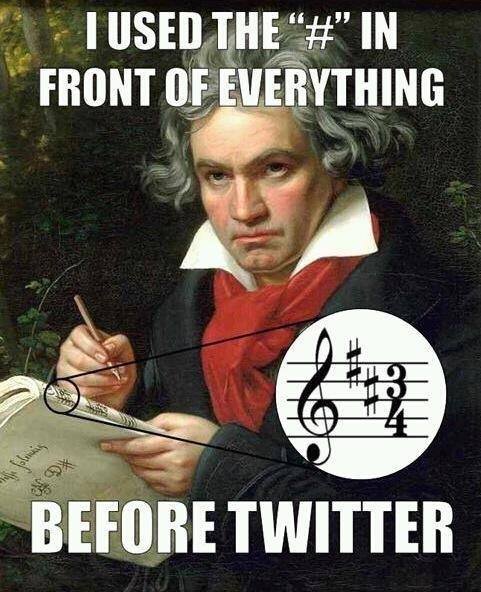
    With nine days to go until Christmas, Beethoven’s birthday is the only day on which you reliably won’t be slammed with ho ho ho. Tune in to WWFM – The Classical Network to celebrate “Ludwig van” with nine hours of his music, from 9 a.m. to 6 p.m. EST.

    While you’re there, consider supporting the station and, in the process, pick up a nice boxed set of Beethoven’s complete works on 86 CDs. Details available on the station’s home page, at wwfm.org, or by calling 1-800-232-1212.

  • Fantastic 18th Century Adventures

    Fantastic 18th Century Adventures

    The Enlightenment isn’t exactly remembered for its flights of fancy. If the odd novel embraced a fantastic tone, it was frequently in the service of satire, an entertaining means to send-up contemporary mores and pursuits or to poke fun at authority figures and good old reliable human frailty. This week on “Picture Perfect,” we’ll explore a few of these fantastic adventures of the 18th century.

    “The Surprising Adventures of Baron Munchausen” (1785) pokes fun at a real-life German nobleman and veteran of the Russo-Turkish War, one Hieronymus Karl Friedrich, Freiherr von Münchhausen, whose reputation for telling outrageous tall tales was lampooned by Rudolf Erich Raspe. Raspe, fearing a libel suit, published the work anonymously, with the result that it was commonly believed that the Baron had actually dictated the tales himself. Naturally, Munchausen was upset by the unwanted attention. The name “Munchausen” has come down through the centuries to describe feigned illness and pathological lying.

    The book has been adapted to film several times, beginning with a silent version by Georges Méliès, all the way back in 1911. We’ll be hearing music from two subsequent adaptations. The first, titled simply “Münchhausen” (1943), is undeniably entertaining and exceptionally well-made. However, underlying a sense of enjoyment is a kind of unease in the knowledge that the film was a pet project of Joseph Goebbels, who wanted to celebrate the 25th anniversary of the UFA film studio by producing a lavish spectacle worthy to stand toe-to-toe with foreign efforts like “The Wizard of Oz” and “The Thief of Bagdad.”

    Considering the source, one would have to look awfully hard to come up with anything resembling Nazi propaganda. The entire exercise comes across as a pastoral escape from the horrors of totalitarianism, total war and the Final Solution. The elegant music, by Georg Haentzschel, would not be out of place in the concert hall. Haentzschel is regarded as perhaps the last representative of a generation of Middle European light music composers.

    More than 40 years later, director Terry Gilliam undertook another production design-driven adaptation that resembled a series of Doré illustrations brought to life. Contrary to received wisdom, “The Adventures of Baron Munchausen” (1988) managed to pull in a respectable amount of per-screen capital. Ultimately, the film was a casualty of a management turnover at Columbia Pictures, with the new regime eager to bury the projects of the old. Therefore, it was never seen theatrically beyond a very limited release. The score, by Michael Kamen, while in a romantic heroic style, wittily contains abundant allusions to music of the 18th century.

    “The Manuscript Found in Saragossa” (1805) is a transitional work, with its ecstatically lurid opening chapter – replete with gypsy storytellers, highwaymen, dueling skeletons, lesbian vampires and a couple of corpses dangling in a gibbet – dragging the Enlightenment kicking and screaming into the Romantic age. It starts out as a masterpiece of surrealism by way of Gothic convention, with the spell eventually broken, sadly, by a large cold bucket of Enlightenment water in the form of a perfectly rational explanation at the end. But until then, the author, Jan Potocki, gets an A for effort. The interlocking structure, with stories inside stories inside stories looks ahead to postmodern experiments by writers like Italo Calvino and John Barth, to say nothing of Jorge Luis Borges.

    The book was made into an acclaimed Polish film, “The Saragossa Manuscript,” in 1965. Its cult status led to a restoration financed by Jerry Garcia, Martin Scorsese and Francis Ford Coppola that was released on VHS and DVD in 2001.

    Who else could provide the perfect soundtrack to such a hallucinogenic experience but Krzysztof Penderecki? Penderecki intersperses spooky passages with neo-classical and baroque interludes.

    Finally, we’ll have music from one of the many adaptations of Jonathan Swift’s “Gulliver’s Travels” (1726). “The Three Worlds of Gulliver” (1960) simplifies the book’s narrative and dispenses with a great deal of the misanthropic humor in favor of children’s fantasy. You won’t catch Gulliver extinguishing a fire in the Lilliputian Emperor’s palace with his urine in this version. What you will find is a good deal of technical wizardry and a delightful score by Bernard Herrmann.

    I hope you’ll join me for music from fantastic 18th century adventures this week, on “Picture Perfect” – music from the movies – this Friday evening at 6 EST, on WWFM – The Classical Network and at wwfm.org.


    PHOTO: Munchausen hitches a ride on a cannonball

  • Gifts for Music Lovers: WPRB Radio’s 2016 Picks

    Gifts for Music Lovers: WPRB Radio’s 2016 Picks

    Still looking for the perfect gift for the music-lover that has everything? We’ll do our best to give you a few ideas tomorrow morning on WPRB, as we sample from a number of compact discs that were released over the course of 2016.

    Hopefully, we’ll have a little something for everyone, from the Renaissance to the present day, with perhaps a selection or two from the silver screen. We’ll fill in around the edges with some brief selections for Christmas, lest we happen to forget what season this is. (Yeah, right!)

    That’s a full morning of potential stocking stuffers, from 6 to 11 EST, on WPRB 103.3 FM and wprb.com. We’re always full of suggestions, on Classic Ross Amico.

Tag Cloud

Aaron Copland (93) Beethoven (95) Composer (114) Film Music (139) Film Score (143) Film Scores (255) Halloween (94) John Williams (195) KWAX (229) Leonard Bernstein (103) Marlboro Music Festival (125) Movie Music (154) Mozart (89) Opera (210) Philadelphia Orchestra (89) Picture Perfect (174) Princeton Symphony Orchestra (108) Radio (88) Ross Amico (244) Roy's Tie-Dye Sci-Fi Corner (290) The Classical Network (101) The Lost Chord (268) Vaughan Williams (103) WPRB (396) WWFM (881)

DON’T MISS A BEAT

Receive a weekly digest every Sunday at noon by signing up here


RECENT POSTS