Category: Daily Dispatch

  • Christmas Music Guilt When Is Too Early

    Christmas Music Guilt When Is Too Early

    So how soon is too soon to unleash the pent-up forces of Christmas? It’s less than two weeks away. I’ve got enough in my library, probably, to program the entire month, without repeating – and yet I’ve felt sheepish about already letting slip the fairly secular “Tuttifäntchen” by Paul Hindemith and Constant Lambert’s “Les Patineurs” (“The Skaters”) after Meyerbeer.

    Where do I start? How much do I play? These are but some of the decisions that weigh on the conscience of the classical music programmer. In the full knowledge that I can’t please everyone, I will rouse my slumbering inner elf and gradually crank up the volume of egg nog and mistletoe.

    It won’t be all glitter and ho ho ho. There may be a few more cantatas and oratorios than some would like. Then again, how many brass arrangements of “The Twelve Days of Christmas” can one take?

    Wish me luck. We’ll also have music by Swedish composer Kurt Atterberg on the anniversary of his birth, this afternoon from 4 to 7 EST, on WWFM – The Classical Network and at wwfm.org.


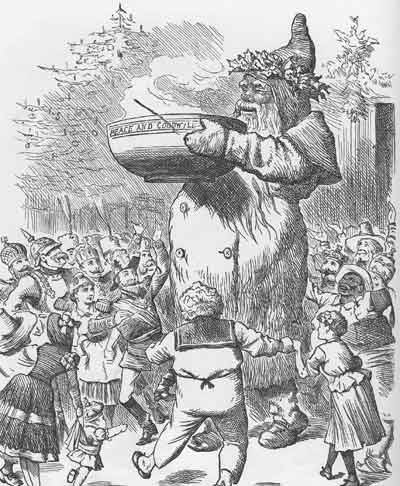
    IMAGE: Peace and goodwill – or else!

  • The Tcherepnin Musical Dynasty

    The Tcherepnin Musical Dynasty

    The classical music world has had its share of dynasties. There are the Bachs. There are the Bendas. There are the Strausses.

    This Sunday night on “The Lost Chord,” we’ll have examples of music from a comparatively recent line of musicians, that can be traced to the 1870s and the birth of Nikolai Tcherepnin. Tcherepnin, whose father was a strict disciplinarian who demanded he study law, became a pupil of Rimsky-Korsakov. He himself became a teacher, took a position at the St. Petersburg Conservatory (later becoming its principal), conducted at the Russian Musical Society, the Moscow Philharmonic, and the Mariinsky Theatre, and led the debut performance of Serge Diaghilev’s famed Ballets Russes, beginning a five year association with the company.

    In 1918, he took up over the directorship of the National Conservatory of Tbilisi, the capitol of the Democratic Republic of Georgia. With the Bolshevik takeover of Georgia in 1921, Tcherepnin moved to Paris, where he lived the remainder of his life. There, he conducted, performed as pianist, and founded the Russian Conservatory. He became president of the Belyayev publishing house, a position he maintained until his death in 1945.

    In 1909, he wrote a symphonic poem, “The Enchanted Kingdom,” a work based upon the same fairy tale that inspired the ballet “The Firebird.” (Tcherepnin is said to have been an early contender to write the music for “The Firebird,” after Anatoly Liadov bowed out and before Igor Stravinsky was granted the commission.)

    On top of his artistic achievements, Tcherepnin was the progenitor of a line of musicians that extends down to the present day.

    We’ll hear the Symphony No. 3 by his son, Alexander Tcherepnin, whose own path led him from Russia to Paris to China (his wife was the Chinese pianist Lee Hsien Ming) to DePaul University in Chicago.

    Alexander’s sons, Serge and Ivan, became fascinated with electronics. Ivan studied with Leon Kirchner, Karlheinz Stockhausen, and Pierre Boulez. In 1972, he became director of the Harvard University Electronic Music Studio, where he remained until his death in 1998.

    Ivan’s early music was experimental in nature. He gradually developed a tendency toward modernism and postmodernism. We’ll listen to his “Concerto for Two Continents” – the continents in question being North America and Asia, lands with which Ivan, born to Russian and Chinese parents and raised in the United States, felt a deeply personal connection. The concerto alludes to a number of familiar Russian and American folk and popular melodies. It also employs a judicious amount of electronics, making for some otherworldly effects.

    In case you’re curious, the Tcherepnin dynasty continues to flourish with its fourth generation of composers – Nikolai’s great grandsons, Sergei and Stefan – but tonight we only have time for three! Join me for “Tcherepnin Troika,” this Sunday night at 10:00 EST, on WWFM – The Classical Network and at wwfm.org.


    PHOTOS: (top) Alexander Tcherepnin and Lee Hsien Ming with their sons, Ivan and Serge; (bottom left) paterfamilias Nikolai Tcherepnin; and Ivan and Alexander at the piano

  • Jewish Songwriters Christmas Music’s Unsung Heroes

    Jewish Songwriters Christmas Music’s Unsung Heroes

    It’s been said that the best Christmas music was written by Jews. The statement is in reference, I’m sure, to the many outstanding Jewish composers and lyricists of the mid-20th century.

    Think about it: “The Christmas Song (Chestnuts Roasting),” “Silver Bells,” “I’ll Be Home for Christmas,” “Winter Wonderland,” “Let It Snow! Let It Snow! Let It Snow!,” “Do You Hear What I Hear?,” “Home for the Holidays,” “Rudolph the Red-Nosed Reindeer,” and that heavyweight champ among Christmas songs, “White Christmas.” All were written or co-written by Jews.

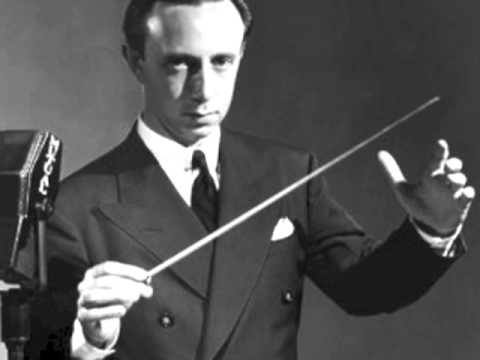
    I think of this in reference to the birthday today of Morton Gould (1913-1996). Gould put together some delightful suites of traditional carols, which he recorded at least twice. Above and beyond his contributions to the Christmas season, Gould did so much to make classical music “popular.” Listeners who enjoyed Gould weren’t made to feel as if they were listening to something that was good for them. They were listening to music they enjoyed. Gould was most always accessible, tuneful, brightly orchestrated, and rhythmically exciting.

    Sure, he wrote for the concert hall, but he also wrote for Broadway. He wrote for film, he wrote for radio, he wrote for television. His arrangements were always highly professional, and his original music polished to a sheen. Unfortunately, this very professionalism often led to his being underrated as a serious a composer. No one was more surprised than he when he was belatedly recognized with a Pulitzer Prize for Music, for his “Stringmusic,” in 1995. He was 81 years-old.

    His music could hang on a gimmick, as in his “West Point Symphony,” which employs a marching machine, his “Tap Dance Concerto,” for dancing soloist, or his late children’s piece, “The Jogger and the Dinosaur,” which incorporates a rapper. But he could also, on occasion, engage in genuine experimentation. Take his “Jekyll and Hyde Variations,” in which he employs serial techniques, bending them to his own distinctively Gouldian ends.

    And lest you chalk up the Jewish Christmas song to cold, commercial calculation (a harsh way of looking at the fact that a composer has to eat), consider Irving Berlin. Berlin was born into a religious family in Russian, where Christmas brought with it the justified fear of drunken pogroms. Though admittedly more secular in his maturity, Berlin came to regard Christmas in America as a warm domestic tradition.

    Beautiful music is beautiful music. These artists are hardly defined by their contributions to Christmas, of course, but American Gentiles would do well to think on them with a special degree of gratitude. What would the season be without “White Christmas?” God bless America, God bless Irving Berlin, and happy birthday, Morton Gould.


    Gould’s “Serenade of Carols”

    https://www.youtube.com/watch?v=k0E_PG0obqw

    Berlin’s “White Christmas”

    https://www.youtube.com/watch?v=w9QLn7gM-hY

    An article on this very topic:

    http://jewishworldreview.com/1214/jewz_xmas.php3


    PHOTOS: Gould conducts; Berlin scrawls

  • Kirk Douglas at 100: A Musical Tribute

    Kirk Douglas at 100: A Musical Tribute

    Now that he’s 100, he may no longer be able to knock your block off, but many of films still can.

    This week on “Picture Perfect,” we will honor Kirk Douglas, who was born on December 9, 1916. We’ll hear music from four of his most memorable movies.

    We’ll begin with “Spartacus” (1960). Douglas plays the 1st century leader of a slave revolt. His co-stars include Laurence Olivier, Jean Simmons, and Tony Curtis. The music was by Alex North (born in Chester, PA, outside of Philadelphia). The love theme, one of North’s best-known melodies, lends a sense of human connection amidst the martial fanfares and gladiatorial violence.

    Douglas is often credited with having broken the back of the “Hollywood blacklist” by openly acknowledging Dalton Trumbo as the screenwriter on “Spartacus.” Trumbo had been forced underground as a ghostwriter for refusing to testify before the House Un-American Activities Committee. The film became the biggest money-maker in the history of Universal Studios, up to that time.

    Vincente Minnelli’s cynical exposé of behind-the-scenes Hollywood, “The Bad and the Beautiful” (1952), stars Douglas as a ruthless mogul, who uses and abuses everyone around him. It’s one of his great “bad boy” characterizations. The film, which also featured Lana Turner, Walter Pigeon, Dick Powell, and Gloria Graham, won a whole slew of Oscars. Graham was recognized as Best Supporting Actress.

    The music is by Philadelphia-born David Raksin, who is best-remembered for his theme to the all-time noir classic “Laura.” It doesn’t seem possible, but here he really surpasses himself. If you love the sound of Golden Age Hollywood, complete with haunting saxophone, then this one’s for you!

    Minnelli directed Douglas in another one of his standout roles, a much more sympathetic portrayal of the tortured artist Vincent Van Gogh, in “Lust for Life” (1956). Douglas turns in one of the great performances of his career. Furthermore, his physical resemblance to the painter is uncanny.

    Anthony Quinn won an Oscar for Best Supporting Actor as Van Gogh’s sometimes friend, the artist Paul Gaugin. The powerful score was by one of the all-time great film composers, Miklós Rózsa, who here marries his Hungarian-inflected signature sound to an evocative sort of French impressionism.

    Finally, when Kirk isn’t fighting giant squid, he’s singing “A Whale of Tale,” as Ned Land, in Walt Disney’s “20,000 Leagues Under the Sea” (1954). The otherwise moody score is a real showcase for Paul J. Smith, who had earlier provided incidental music for Disney’s animated features “Snow White and the Seven Dwarfs,” “Bambi,” and “Pinocchio.”

    As actor, director, producer, and author Douglas is a whale of a talent. He himself has included these four titles among the top ten of his films.

    Join me for a musical salute to Kirk Douglas, for his 100th birthday, on “Picture Perfect” – music for the movies – this Friday evening at 6 EST, on WWFM – The Classical Network and at wwfm.org.


    PHOTOS: Douglas in “Spartacus,” “The Bad and the Beautiful,” “Lust for Life,” and “20,000 Leagues”

  • Stravinsky at Princeton A 50 Year Remembrance

    Stravinsky at Princeton A 50 Year Remembrance

    When an artist like Igor Stravinsky comes to town, you’re not likely to forget – even 50 years later.

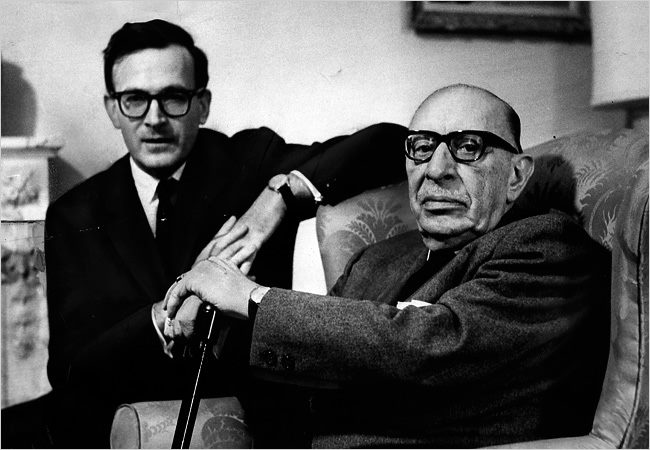
    Stravinsky was 84 years-old in 1966, and regarded as perhaps the greatest composer of his day, when he was commissioned by Princeton University and Stanley Seeger to write his “Requiem Canticles.” The work was written to the memory of Seeger’s mother, Helen Buchanan Seeger, a benefactor of the university and especially the university’s music department.

    Stravinsky described the piece as his “pocket requiem,” six movements spanning roughly 15 minutes. The work is sung in Latin and rendered in the composer’s later, twelve-tone idiom. It was given its debut at McCarter Theatre Center on October 8 of that year. It would be Stravinsky’s last major work. It was played at his own funeral in Venice in 1971.

    To mark the 50th anniversary of Stravinsky’s visit, the composer will be remembered, musically, on two programs to be performed at the university this weekend. Michael Pratt will conduct the Princeton University Orchestra in a suite from the composer’s ballet “The Firebird” on Friday at 7:30 p.m., and Gabriel Crouch will lead the Princeton University Glee Club in the choral masterpiece “Les Noces” on Sunday at 3 p.m. Both works will be presented at Richardson Auditorium.

    Find out more, and read first-hand accounts of the composer’s visit from Maida Pollock, then manager of the university’s concerts, and Bill Lockwood, then, as now, McCarter’s programming director, in my article in today’s Trenton Times:

    http://www.nj.com/times-entertainment/index.ssf/2016/12/classical_music_puo_pugc_so_pe.html


    PHOTO: Stravinsky (right) with his assistant, Robert Craft, in 1964

Tag Cloud

Aaron Copland (93) Beethoven (95) Composer (114) Film Music (139) Film Score (143) Film Scores (255) Halloween (94) John Williams (195) KWAX (229) Leonard Bernstein (103) Marlboro Music Festival (125) Movie Music (154) Mozart (89) Opera (210) Philadelphia Orchestra (89) Picture Perfect (174) Princeton Symphony Orchestra (108) Radio (88) Ross Amico (244) Roy's Tie-Dye Sci-Fi Corner (290) The Classical Network (101) The Lost Chord (268) Vaughan Williams (103) WPRB (396) WWFM (881)

DON’T MISS A BEAT

Receive a weekly digest every Sunday at noon by signing up here


RECENT POSTS