Category: Daily Dispatch

  • Riisager’s “Fool’s Paradise” on WWFM

    Riisager’s “Fool’s Paradise” on WWFM

    This Sunday night on “The Lost Chord,” we wrap up the long, gluttonous holiday weekend with Knudage Riisager’s ballet “Slaraffenland” (usually translated as “Fool’s Paradise”).

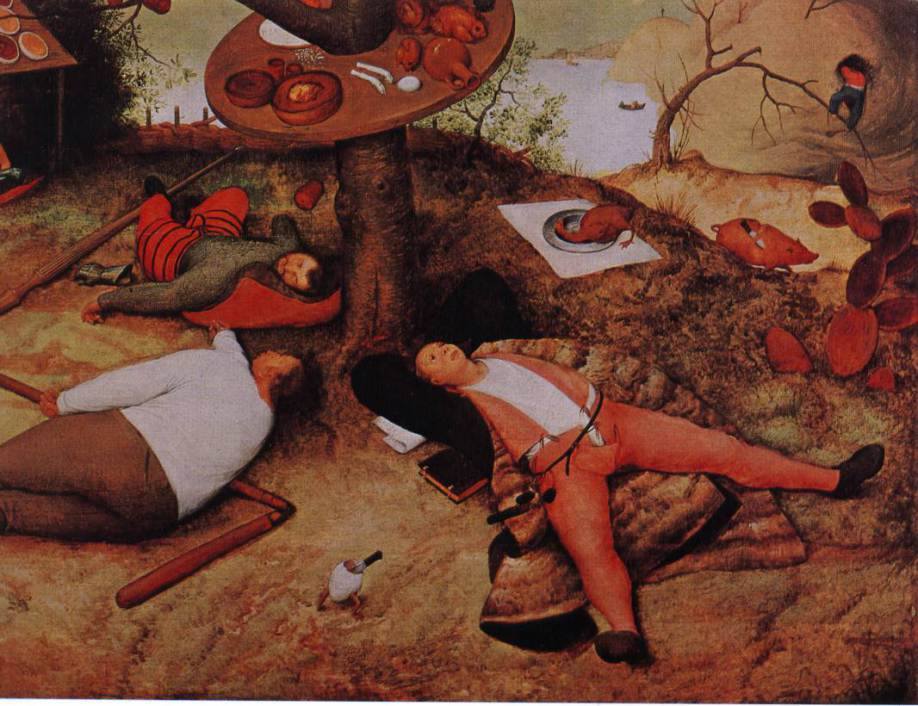
    Inspired by Bruegel’s painting “The Land of Cockaigne,” the scenario imagines a Promised Land “where roasted pigeons fly around in the air with knives and forks in their backs, and the streets are paved with marzipan and chocolate.” The plot concerns a silly boy who wanders into the country of King Sauce and becomes ill from overindulgence. Along the way, he encounters Robin Hood, the Three Musketeers, Captain Fear, Fountains of Liqueur, Cigarettes, and the Candy Princess.

    Riisager was born in 1897 to Danish parents living in Estonia. He studied music at Copenhagen University and then in Paris with Albert Roussel. Though he was a prolific composer, with some 400 works to his name, including symphonies, concertos, chamber music and songs, he is probably best known, if at all, for his ballet works.

    I hope you’ll join me, even as you’re zoning under the influence of tryptophan, for “Fool’s Paradise” – Knudage Riisager’s “Slaraffenland” – this Sunday night at 10 EST, on WWFM – The Classical Network and at wwfm.org.


    IMAGE: A very Bruegel Thanksgiving

  • Hanson’s Merry Mount: Puritanism & Opera

    Hanson’s Merry Mount: Puritanism & Opera

    Now that the feasting and the parades are past, it’s time to look beneath the quaint images of idealized Pilgrims to the dark underbelly of Puritan intolerance, fanaticism and repression. But that doesn’t mean the lesson has to be a bitter pill.

    Join me tomorrow for Sunday Morning Opera with Sandy, as once again I sit in for host Sandy Steiglitz to present Howard Hanson’s “Merry Mount.” Hanson cloaks his libretto – by Richard Stokes, loosely based upon Nathaniel Hawthorne’s short story, “The May-Pole of Merry Mount” – in the romantic idiom so characteristic of this composer of the “Romantic Symphony” (Hanson’s Symphony No. 2). No expense was spared for the work’s lavish premiere, at New York’s Metropolitan Opera, despite its having been mounted at the height of the Great Depression. No doubt Wrestling Bradford, the Puritan minister originally portrayed by Lawrence Tibbett, would not have approved.

    Coverage of the rehearsals in the New York Times questioned whether the candor and blunt Anglo-Saxonisms of the English libretto would slip past the censors. The plot seethes with sexual obsession and demonology. In fact, a good portion of Act II is set in Hell. Even so, there are stirring melodies and catchy tunes in abundance. The “Maypole Dances” are downright Polovtsian in their colorful excess.

    If the press is anything to go by, the opera was a smash. At its premiere in 1934, “Merry Mount” received no less than 50 curtain calls, with a headline in the Times proclaiming, “Reception of Hanson-Stokes Opera Most Enthusiastic of 10 Years at Metropolitan.” Yet, despite its initial success, the work is never done. It was dropped from the Met repertoire following the 1933-34 season and has rarely been heard since.

    Tastes changed. “Merry Mount” is never going to compete with “Carmen,” but I believe the pendulum has swung far enough that its voluptuous romanticism can again be enjoyed without a trace of Hawthornian guilt. We’ll be listening to a recording made from performances mounted in 1996, with soprano Lauren Flanigan (Lady Marigold Sandys), tenor Walter MacNeil (Sir Gower Lackland), baritone Richard Zeller (Wrestling Bradford), and bass Charles Robert Austin (Praise-God Tewke). The Seattle Symphony & Chorale are conducted by Gerard Schwarz.

    Before the morning is out, we’ll also have a chance to sample from Tibbett’s original characterization.

    Tune in tomorrow to see what all the fuss was about, with “Merry Mount,” on “Sunday Morning Opera,” from 7 to 10:00 EST, on WPRB 103.3 FM and at wprb.com.


    Learn about the historical Merrymount here:

    The Maypole That Infuriated the Puritans

  • NJ Holiday Concerts Guide 2024

    NJ Holiday Concerts Guide 2024

    Once again, it’s time to deck the halls – the concert halls, that is. The area’s performing arts groups are ready to dish up a veritable banquet of holiday fare. Unfortunately, I’m told a glitch at nj.com has kept my whirlwind overview of some of the season’s highlights from posting online.

    I encourage you to explore the schedules of The American Boychoir, the Bravura Philharmonic Orchestra, the Capital Philharmonic of New Jersey, Capital Singers of Trenton, Central Jersey Choral Society, 1867 Sanctuary at Ewing, Hopewell Valley Chorus, McCarter Theatre Center, New Jersey Gay Men’s Chorus – NJGMC, the New Jersey Symphony Orchestra, Princeton University Chapel Choir, Princeton Girlchoir Princeton Pro Musica, The Princeton-Rider Brass Band, The Princeton Singers, Princeton Society of Musical Amateurs – PSMA, Princeton Symphony Orchestra, Riverside Symphonia, the State Theatre New Jersey in New Brunswick, the Trenton Children’s Chorus, VOICES Chorale, Westminster Concert Bell Choir, Westminster Choir College, Westminster Community Choir, and Westminster Community Orchestra.

    It remains to be seen how many of these made it past the editors into today’s print edition of the Trenton Times.


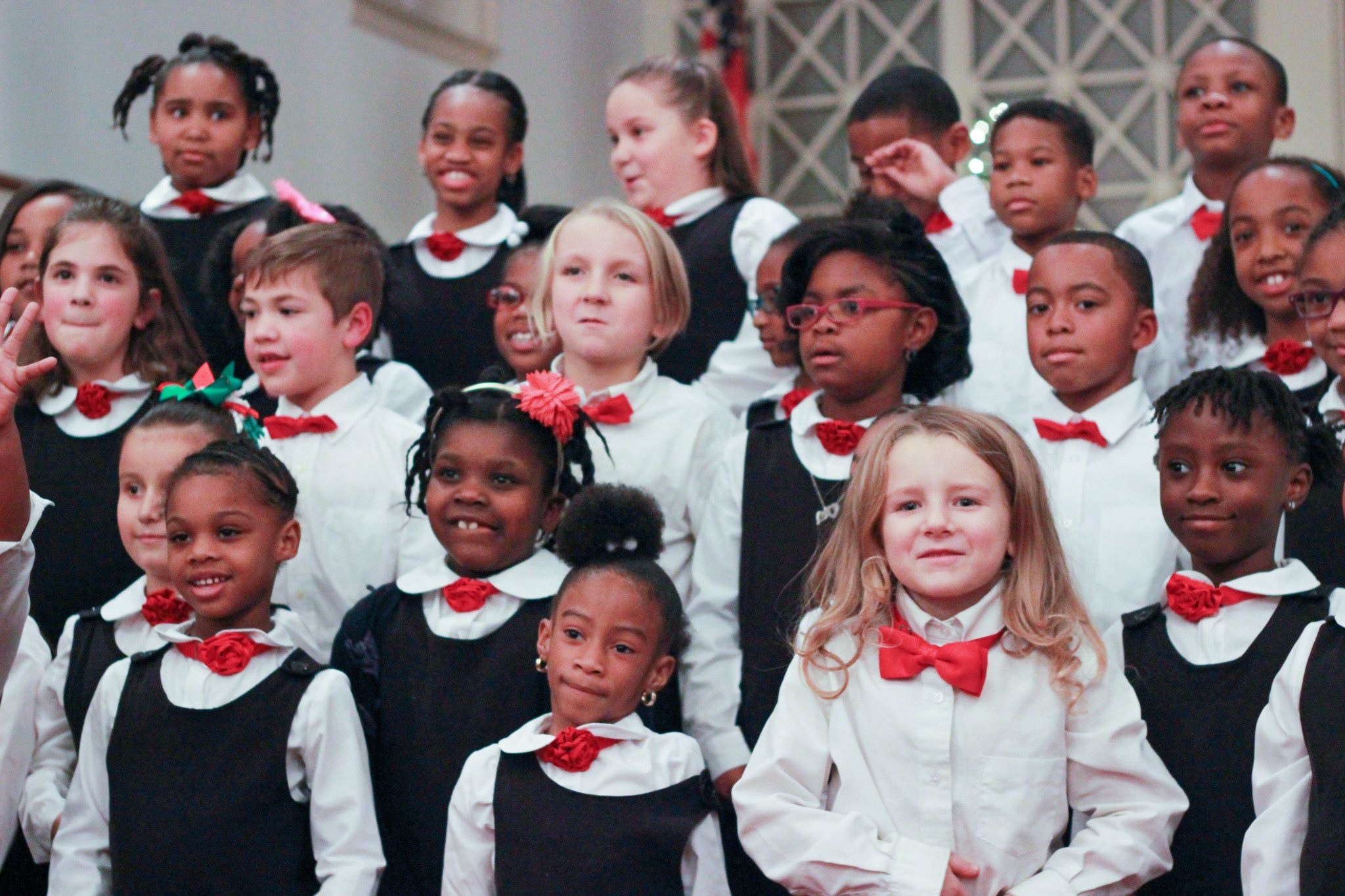
    PHOTO: Trenton Children’s Chorus will be here, there and everywhere this holiday season, appearing with Princeton Pro Musica (Dec. 11) and VOICES Chorale (Dec. 11, 17 & 18), on their own Winter Concert (Dec. 9), and at the Mayor’s Holiday Concert at the Trenton War Memorial (Dec. 17)

  • Fairy Tale Films Music Picture Perfect

    Fairy Tale Films Music Picture Perfect

    To lend magic to the holidays, we delve into the world of fairy tales this week on “Picture Perfect.”

    George Pal’s “The Wonderful World of the Brothers Grimm” (1962) was filmed in Cinerama and features the producer-director’s trademark stop motion effects. Its all-star cast includes Laurence Harvey, Claire Bloom, Barbara Eden, Russ Tamblyn, and Buddy Hackett. The narrative incorporates a number of familiar Grimm tales, while dealing with the brothers’ real-life struggles.

    The music is by Leigh Harline. Harline was an integral part of the Disney team that scored an earlier fairy tale adaptation, “Snow White and the Seven Dwarfs.” He would win two Academy Awards for his work on “Pinocchio,” including one for Best Original Song, for “When You Wish Upon a Star.”

    “The Company of Wolves” (1984), one of Neil Jordan’s earlier films, explores the psychological underpinnings of the tale of “Little Red Riding Hood,” which is presented as an allegory of adolescence and the loss of innocence. Angela Carter co-wrote the screenplay, based upon a selection of her original short stories. The film features Angela Lansbury, any number of werewolves, and Terence Stamp as the Devil. The music is by George Fenton.

    With the advent of computer animation, a snarkier, post-modern take on the fairy tale predominates, most notably with the “Shrek” series, beginning in 2001. The “Shrek” films were so successful, they led to a spin-off, centered on the character of “Puss in Boots” (2011).

    Voiced by Antonio Banderas, Puss provides ample opportunity to vamp on the actor’s swashbuckler image, especially as depicted in “The Mask of Zorro.” Likewise, the composer, Henry Jackman, chooses to rib James Horners’ “Zorro” score.

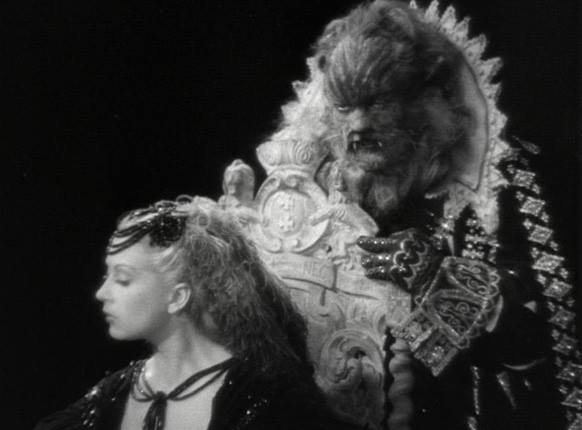
    Finally, we’ll hear selections from perhaps the finest fairy tale ever committed to film, Jean Cocteau’s “La Belle et la Bête” (“Beauty and the Beast”), from 1946. Moody, atmospheric, dreamy, clever, hypnotic, funny and romantic, sporting production design that looks like something Gustav Doré might have conceived while smoking Dutch Masters cigars, Cocteau’s masterpiece stars Jean Marais and Josette Day.

    The alternately mysterious and majestic score is by Georges Auric. Cocteau, you’ll recall, was the one-man publicity machine that propelled Auric and his composer-colleagues, Francis Poulenc, Darius Milhaud, Arthur Honegger, Germaine Tailleferre, and Louis Durey, to fame in Paris circa 1920, dubbing them “Les Six.”

    I hope you’ll join me for an hour of once-upon-a-time and happily-ever-after, on “Picture Perfect,” music for the movies, this Friday evening at 6:00 EST, on WWFM – The Classical Network and at wwfm.org.
  • Thanksgiving & The Promise of Living

    Thanksgiving & The Promise of Living

    Happy Thanksgiving. We’ve much to be thankful for, including “The Promise of Living.” Thank you, Aaron Copland!

Tag Cloud

Aaron Copland (93) Beethoven (95) Composer (114) Film Music (139) Film Score (143) Film Scores (255) Halloween (94) John Williams (195) KWAX (229) Leonard Bernstein (103) Marlboro Music Festival (125) Movie Music (154) Mozart (89) Opera (210) Philadelphia Orchestra (89) Picture Perfect (174) Princeton Symphony Orchestra (108) Radio (88) Ross Amico (244) Roy's Tie-Dye Sci-Fi Corner (290) The Classical Network (101) The Lost Chord (268) Vaughan Williams (103) WPRB (396) WWFM (881)

DON’T MISS A BEAT

Receive a weekly digest every Sunday at noon by signing up here


RECENT POSTS