Category: Daily Dispatch

  • Dvořák’s Hiawatha Melodrama Premiere

    Dvořák’s Hiawatha Melodrama Premiere

    If, like me, you’re of the opinion that Dvořák never wrote a bad note, or if you are a particular fan of the “New World” Symphony, you might be interested to tune in tonight to hear the “Hiawatha Melodrama.”

    Dvořák composed what is now commonly numbered his Symphony No. 9 (for decades it was known as the Symphony No. 5) in 1893, while he was director of the National Conservatory of Music in New York City. The work was influenced by Native American music and African American spirituals. The composer intimated that certain sections were inspired by his reading of “The Song of Hiawatha.” In fact, he intended the famous Largo as a sketch for a later opera or cantata on the theme, and the third movement scherzo was suggested by a dance at Hiawatha’s wedding feast.

    Beginning in the early 1990s, cultural historian Joseph Horowitz and Dvořák scholar Michael Beckerman began experimenting with presentations involving portions of Longfellow’s text with music from Dvořák’s symphony. These developed into a 35-minute work, which achieved its final form in 2013. (In musical terms, a melodrama is the marriage of music with spoken word.) The arrangers also lifted passages from Native American-influenced music from Dvořák’s Sonatina, Op. 100 (the composer sketched the theme for the Larghetto on his starched cuff during a visit to Minnehaha Falls in Minnesota), and his “American Suite.”

    We’ll hear the world premiere recording, on the Naxos label, featuring as the narrator bass-baritone Kevin Deas.

    To round out the hour, I’ve programmed selections from “Hiawatha’s Wedding Feast,” one of three cantatas that comprise “Scenes from the Song of Hiawatha,” by the English composer of African descent, Samuel Coleridge-Taylor. Coleridge-Taylor composed the work five years after Dvořák completed his “New World” Symphony.

    “Hiawatha’s Wedding Feast,” became a cultural phenomenon. By the time it was taken up by Sir Malcolm Sargent, it was given annually, from 1928 to 1939, in a costumed, semi-ballet version, featuring close to a thousand performers. Unfortunately, this was among the works the composer had sold outright, his heirs thereby missing out on the royalties. By the time of Sargent’s advocacy, the short-lived Coleridge-Taylor had already been dead for 16 years.

    The recording, released on the Argo label back in 1991, is one of the earliest of rising star Bryn Terfel.

    I hope you’ll join me for “Indian Summer” – works inspired by Longfellow’s “The Song of Hiawatha” – this Sunday night at 10:00 EST, on WWFM – The Classical Network and at wwfm.org.


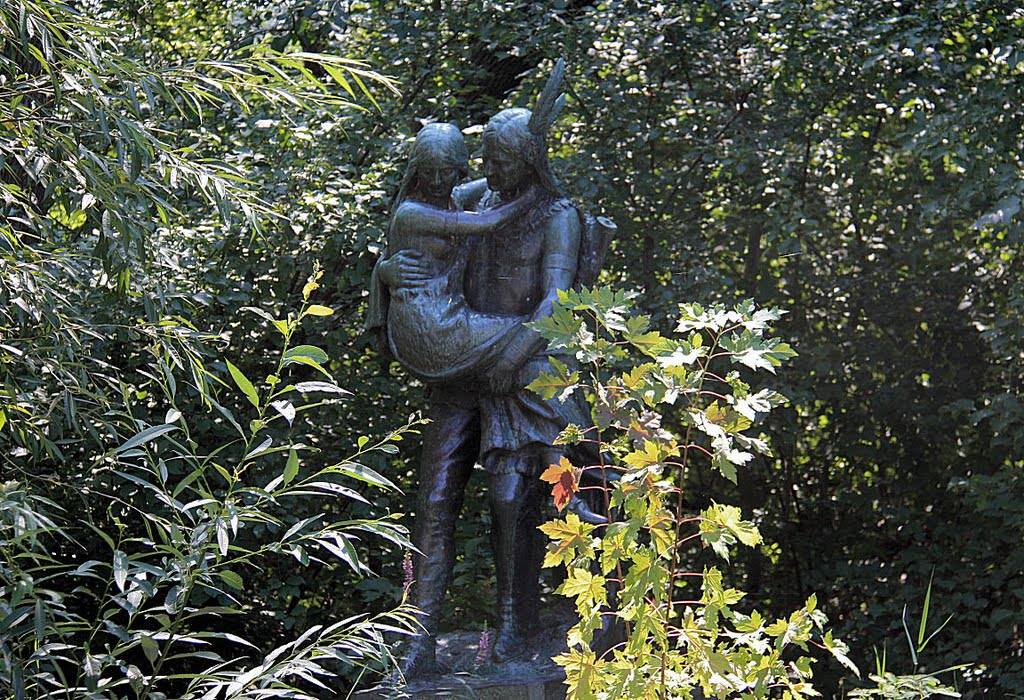
    PHOTO: “Hiawatha and Minnehaha” by Jacob Fjelde, Minnehaha Park, Minneapolis

    More about it here: http://www.mnopedia.org/thing/hiawatha-and-minnehaha-jacob-fjelde

  • William Penn Opera on WPRB Sunday

    William Penn Opera on WPRB Sunday

    William Penn envisioned Philadelphia, the city he established in 1682, as a “greene Country Towne” along the Delaware River. Equally verdant was composer Romeo Cascarino’s vision of “William Penn,” the opera, which he crafted over a quarter century, from 1950 to 1975. The completed work was first heard at Philadelphia’s Academy of Music in 1982, to coincide with the 300th anniversary of the city’s founding.

    I’ll be presenting Cascarino’s magnum opus tomorrow morning on WPRB, as I sit in for Sandy Steiglitz on “Sunday Morning Opera.” Metropolitan Opera singer bass-baritone John Cheek will sing the title role, and Christopher Macatsoris will conduct the Philadelphia Singers and the Chamber Orchestra of Philadelphia.

    I will be joined in the studio by a very special guest: Dolores Cascarino, the composer’s widow, who created the role of Gulielma (as Dolores Ferraro), Penn’s first wife. She will offer insights into the opera and its creator, and share her memories of that premiere run of performances. The program will also include private recordings of some of the composer’s other works, with a special focus on his writing for voice.

    I hope you’ll join me for this one-of-a-kind broadcast of a first-rate, virtually unknown American opera, in a recording which is not commercially available, with valuable insights from the composer’s closest confidante, who sang in the work’s first performance.

    It all comes your way tomorrow, on “Sunday Morning Opera,” from 7 to 10 a.m. EST, on WPRB 103.3 FM and at wprb.com.


    Tune in early to enjoy a pre-show treat, the world premiere broadcast of collaborations with pianist Richard Rome, a producer in the field of commercial music, in arrangements made by Cascarino, who will conduct the orchestra in a program of works on celestial themes. The album, recorded at Cinecittà studios, outside Rome, was never released. Musicians for the sessions were assembled from performers who were heard on the soundtracks of Italian films of the era, who recorded for RCA Italia, and who played at La Scala Milan. The airing of this music, great background for your morning coffee, will begin around 6:30 a.m.


    PHOTO: John Cheek as William Penn, with my guest, soprano Dolores Cascarino (née Ferraro), as Gulielma

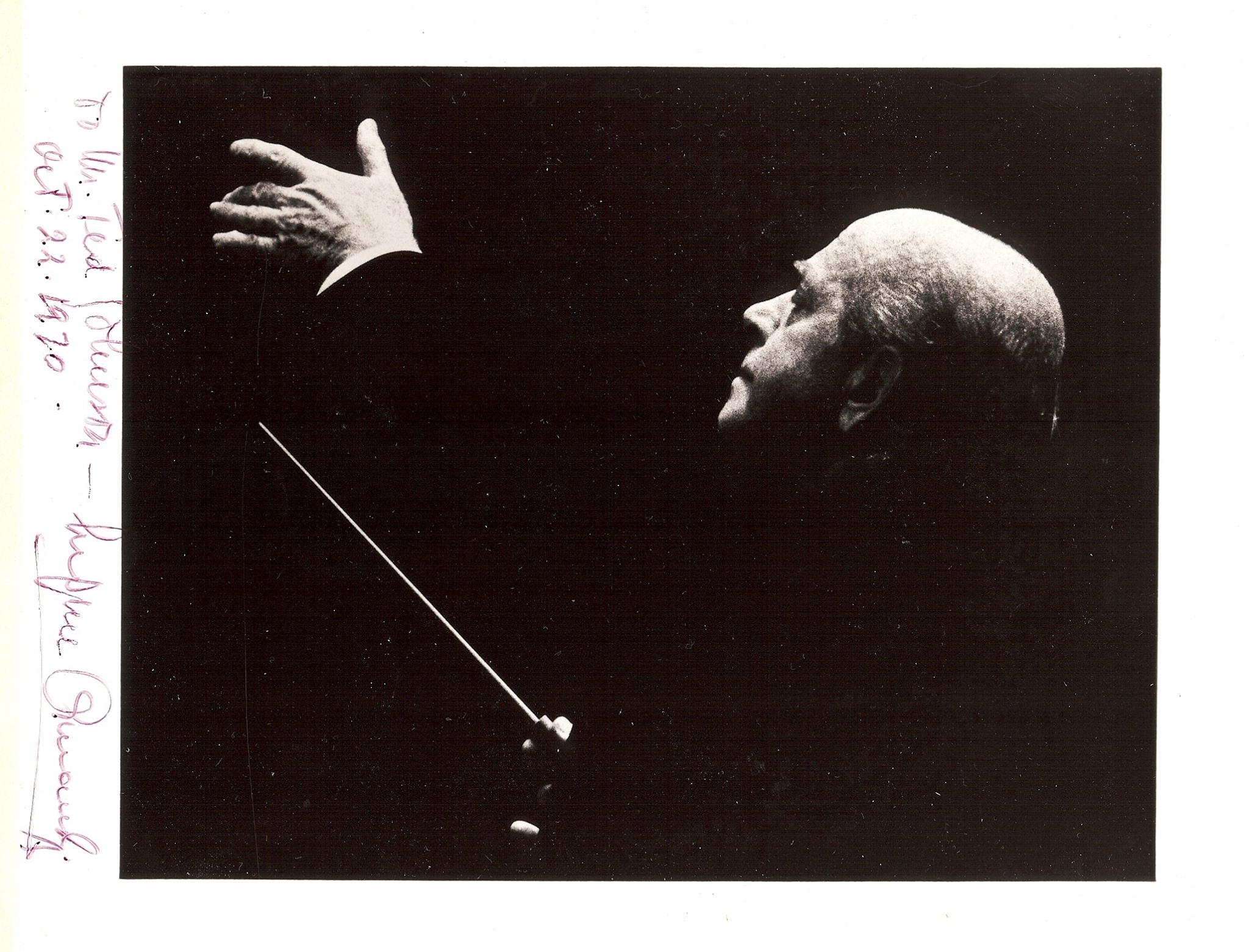
  • Eugene Ormandy Underrated Maestro

    Eugene Ormandy Underrated Maestro

    What’s the big deal about this guy, Jenő Blau? Well, you probably know him better by his adopted name, Eugene Ormandy.

    Ormandy, a Hungarian-born violinist, who had studied with Jenő Hubay (for whom he was named), became a naturalized American citizen in 1927. He ultimately wound up directing the Philadelphia Orchestra for 44 years. In that capacity, he became one of the world’s most-recorded conductors.

    However, in some respects, he remains a vastly underrated one. Sure, he was a superb interpreter of 19th century and post-romantic classics, but he also championed much contemporary music and new works written by his adopted countrymen. Also, if there was a more sensitive accompanist in the concerto repertoire, I don’t know of him.

    Join me this afternoon, from 4 to 6 EST, as we honor Eugene Ormandy on the anniversary of his birth (in 1899), on WWFM – The Classical Network and at wwfm.org.

  • Thanksgiving Movies Family Community Country

    Thanksgiving Movies Family Community Country

    This week on “Picture Perfect,” with Thanksgiving right around the corner, the focus is on movies that celebrate family, community and country.

    In 1945, Aaron Copland scored a short semi-documentary for the Office of War Information. “The Cummington Story” relates the gradual acceptance of European war refugees into a cautious but fundamentally decent New England community. The score is pure Americana, with some of the material later finding its way into Copland’s Clarinet Concerto and “Down a Country Lane.”

    Thank you, amazing YouTube, for making the complete film available online!

    “Field of Dreams,” from 1989, is one of those rare films that has the ability to reduce manly men – even those without father issues – to a pool of tears. Phil Alden Robinson’s superior adaptation of W.P. Kinsella’s novel, “Shoeless Joe,” is a male wish-fulfillment fantasy, in which a man finds redemption, and a new understanding of his father, in the enchanted cornfields of America’s heartland. And it’s all brought about courtesy of America’s pastime, baseball. The evocative score is by James Horner.

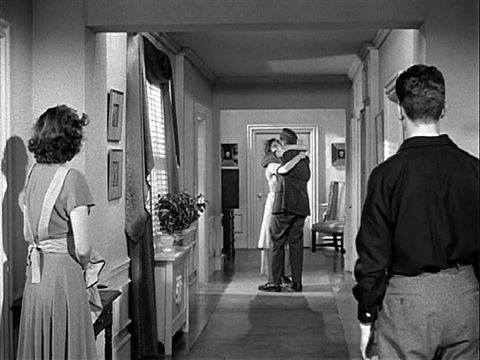
    “The Best Years of Our Lives,” from 1946, is one of the great American classics. This touching film tells the tale of the three WWII veterans struggling to readjust to civilian life. It isn’t easy, but with the support of family and friends, there’s plenty of hope for the future. Hugo Friedhofer wrote the Academy Award-winning score, earning the film one of its seven Oscars. The orchestrations were by Copland protégé (and composer of “The Big Country”) Jerome Moross.

    Finally, from 2012, Daniel Day-Lewis elevated Steven Spielberg’s “Lincoln” to greatness with one of the most amazing performances ever captured on film. Day-Lewis’ gentle but shrewd Man of Destiny would go to any lengths to hold the country together. John Williams tapped into America’s proud musical heritage, clearly influenced by Copland and Ives, to create a score of stirring nobility.

    I hope you’ll join me as we give thanks for family, community and country on “Picture Perfect,” music for the movies, this Friday evening at 6 EST, on WWFM – The Classical Network and at wwfm.org.

  • Thanksgiving Radio WPRB Americana Music

    Thanksgiving Radio WPRB Americana Music

    It’s never too early to be thankful. Therefore, I hope you’ll join me early tomorrow morning on WPRB, as we look ahead to Thanksgiving.

    We’ll enjoy Matthew Brown’s setting of “Table Grace” (on a text by Garrison Keillor) and Eric Whitacre’s “I thank you God for most this amazing day,” alongside Quincy Porter’s “New England Episodes” (evocative of the region’s Puritan past), John Adams’ “Shaker Loops,” and one of Alan Hovhaness’ most fascinating symphonies, the Symphony No. 60 “To the Appalachian Mountains,” informed by the composer’s study of shape notes, mountain music and folk poetry.

    It’s a cornucopia of Americana for Thanksgiving, tomorrow morning from 6 to 11 EST, on WPRB 103.3 FM and at wprb.com. To the tables and stuff yourselves, on Classic Ross Amico.


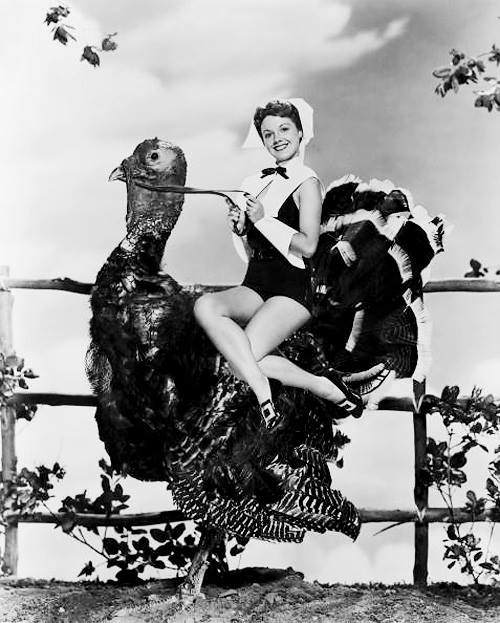
    PHOTO: Seldom has cheesecake sat so well atop turkey

Tag Cloud

Aaron Copland (93) Beethoven (95) Composer (114) Film Music (139) Film Score (143) Film Scores (255) Halloween (94) John Williams (195) KWAX (229) Leonard Bernstein (103) Marlboro Music Festival (125) Movie Music (154) Mozart (89) Opera (210) Philadelphia Orchestra (89) Picture Perfect (174) Princeton Symphony Orchestra (108) Radio (88) Ross Amico (244) Roy's Tie-Dye Sci-Fi Corner (290) The Classical Network (101) The Lost Chord (268) Vaughan Williams (103) WPRB (396) WWFM (881)

DON’T MISS A BEAT

Receive a weekly digest every Sunday at noon by signing up here


RECENT POSTS