Category: Daily Dispatch

  • Princeton Symphony Concert Tonight

    Princeton Symphony Concert Tonight

    In just a few minutes, I’ll be joined by Marc Uys, executive director of the Princeton Symphony Orchestra, who will drop by the studio around 9:00 to tell us about a special concert that will take place at Princeton University’s Richardson Auditorium tonight at 8 p.m.

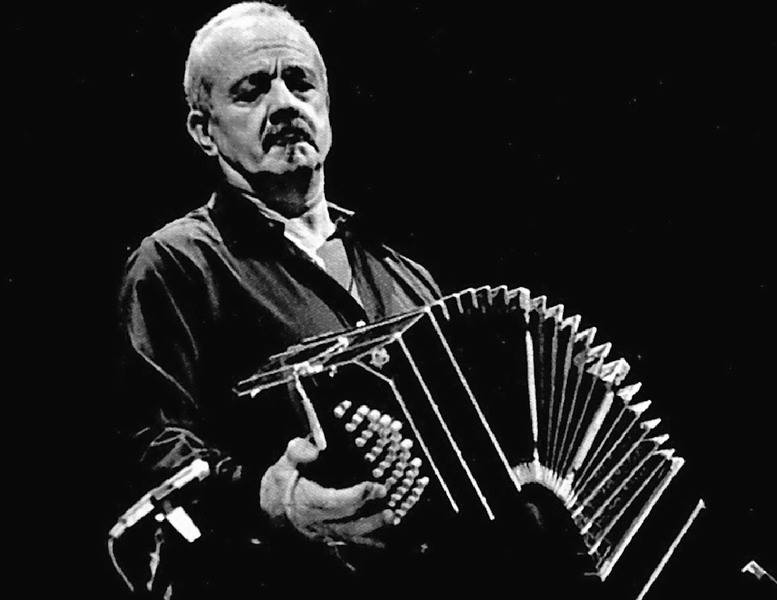
    Violinist Daniel Rowland will be soloist in and conductor of Astor Piazzolla’s “The Four Seasons of Buenos Aires,” which will be interleaved with the concertos of Vivaldi’s “The Four Seasons.” Rowland has performed the program many times and has even made a very fine recording of it (from which we will sample). Then we’ll hear Piazzolla himself performing some of his own music on the bandoneon.

    Also yet to come this morning, Benny Goodman plays Bartok and Keith Jarrett plays Barber, with an early work by famed film composer John Williams written for Stan Kenton, “Prelude and Fugue,” coming up in just a few minutes.

    It’s classical music played by jazz artists, with perhaps just a hint of “Third Stream,” until 11 EDT, on WPRB 103.3 FM at wprb.com.

  • Michael Haydn: Beyond Joseph’s Shadow

    Michael Haydn: Beyond Joseph’s Shadow

    He ain’t heavy; he’s Haydn’s brother.

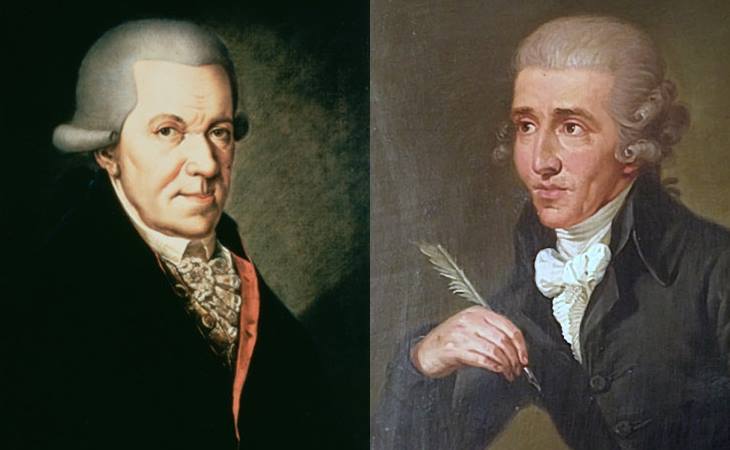
    Though Johann Michael Haydn’s entrance into a musical career was eased by his yet-to-be-famous older brother, he very much earned a reputation on his own merits. Michael started out as an organist and chorister (gone to Vienna at age 8; employed as an organist there by age 12). It’s said that Michael was the brighter student of the two and that his singing was more admired.

    In 1762, Michael arrived in Salzburg, where he rose through the ranks to become concertmaster and organist to Archbishop Sigismund Schrattenbach. In Schrattenbach’s service, he churned out over 360 compositions. The Haydns met Wolfgang Amadeus Mozart in Salzburg. Naturally, his music made a great impression. What’s surprising, perhaps, is that their music made a great impression on him, as well.

    For years, Michael’s Symphony No. 26 was misidentified as Mozart’s Symphony No. 37. Mozart had borrowed the work to perform in Linz. On another occasion, Mozart stepped up to fulfill one of Michael’s commissions (anonymously) when Michael was too ill to do so himself. When he came to write his Requiem in 1791, Mozart clearly remembered the requiem mass Michael had composed some 20 years earlier on the death of his employer.

    For his part, Mozart’s father, Leopold, disapproved of Michael’s heavy drinking. Perhaps that only made him all the more appealing to his son.

    Joseph Haydn also thought very highly of his brother’s music. He found his sacred works to be particularly effective, bearing an intimate and devotional stamp in contrast to his own more secular, monumental approach. At a point, Michael received a job offer from Joseph’s former boss, Prince Nikolaus Esterházy, but he opted to remain in Salzburg. He would die there at the age of 68.

    Join me this afternoon, as we honor the Haydn brothers, on this, Michael’s birthday (born in 1737). We’ll also have music of Luigi Cherubini on the anniversary of his birth (in 1760). In addition, there will be selections by Franz Liszt, William Mathias, Roberto Sierra, and others, between 4 and 7 EDT on WWFM – The Classical Network and at wwfm.org.


    FUN FACT: Franz Joseph and Johann Michael had a still younger brother named Johann Evangelist. He was a tenor, whom the family nicknamed Hansl (without the “e”).

    IMAGES: Those talented Haydn boys, Michael (left) and Joseph
  • Jazz Meets Classical on WPRB

    Jazz Meets Classical on WPRB

    Do classical musicians sound too literal when playing jazz? Do jazz musicians sound stiff when interpreting classical? It is my hope that when you tune in tomorrow morning to WPRB you’ll put all such concerns aside. This will be no ordinary crossover program. Let’s face it; there are a lot of really awful crossover albums.

    Rather, the playlist will be made up almost exclusively of straight classical music (with perhaps one or two examples of “Third Stream”), interpreted by the great jazz masters, including Paquito D’Rivera, Benny Goodman, Woody Herman, Keith Jarrett, Branford Marsalis, Wynton Marsalis, and Arturo Sandoval.

    We’ll also hear from genre-defying performers who kept at least one foot in jazz, such as Paco de Lucia, John McLaughlin, and Astor Piazzolla.

    Speaking of Piazzolla, the Princeton Symphony Orchestra will present a special concert of “The Four Seasons of Buenos Aires,” interleaved with Vivaldi’s “The Four Seasons,” tomorrow night at 8 p.m. at Princeton University’s Richardson Auditorium. The violinist and conductor will be Daniel Rowland, who has performed the program many times and has even made a very fine recording of it.

    The PSO’s executive director, Marc Uys, will drop by the studio tomorrow morning around 9:00 to tell us about the journey of Piazzolla’s work from bandoneon to violin. He’ll also tell us about some of the other highlights of the PSO season.

    The remainder of the show will be as described. The beatniks meet the longhairs, tomorrow morning from 6 to 11 EDT, on WPRB 103.3 FM and at wprb.com. We’ll be dixie fried and slated for crashville, daddy-o. Focus your audio, on Classic Ross Amico.

  • Schoenberg Innovator at WWFM

    Schoenberg Innovator at WWFM

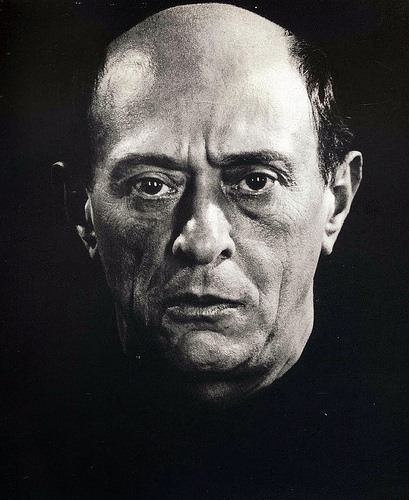
    He was a painter, a lover of tennis, and a composer of light-hearted cabaret songs. Oh yes! And he also developed the twelve tone technique, which has intrigued musicians and alienated listeners ever since. We’ll peck around his diverse output this afternoon, between noon and 4 p.m. EDT, and try not to frighten the horses too much, on this, Arnold Schoenberg’s birthday, on WWFM – The Classical Network and at wwfm.org.

  • Respighi’s Queen of Sheba & More

    Respighi’s Queen of Sheba & More

    It’s music that’s so over-the-top, Cecil B. DeMille would have blushed.

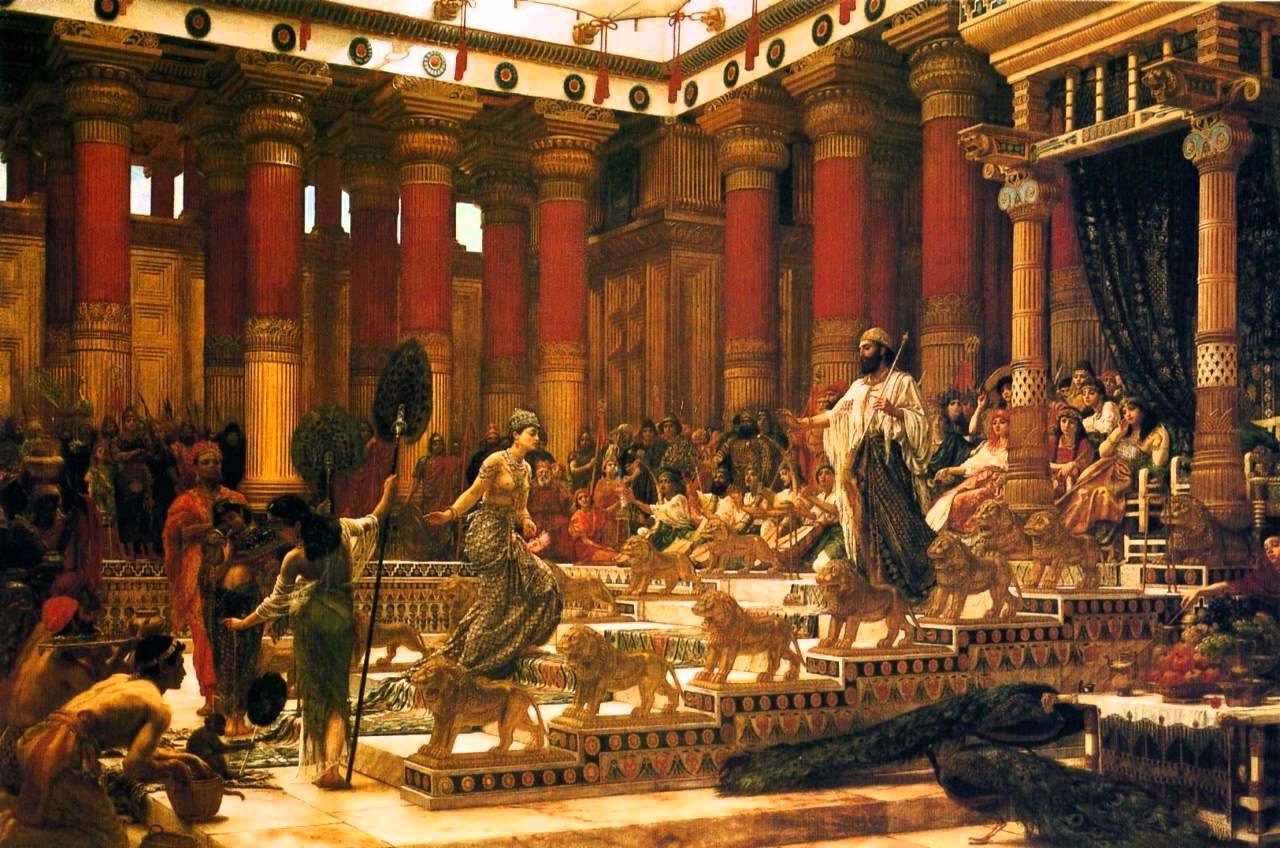
    Join me this afternoon as we get all quasi-biblical, with a suite from Ottorino Respighi’s ballet “Belkis, Queen of Sheba.” The spectacle, set at the court of King Solomon, was given its first performance at La Scala in 1932. The finale featured over a thousand performers, which likely accounts for the work’s subsequent neglect. Grandiose even by Respighi’s standards, the concluding orgiastic dance whipped the opening night audience into a frenzy.

    We’ll also hear a Concerto for Winds, Harp and Orchestra by Paul Hindemith, one of his more attractive inventions, which we’ll complement with music by his great Baroque counterpart Georg Philipp Telemann.

    The last hour will likely feature at least some English music – because I’m just in that kind of mood.

    Listen in, if you’re a little moody yourself, from 4 to 7 p.m. EDT, on WWFM – The Classical Network or at wwfm.org.

Tag Cloud

Aaron Copland (93) Beethoven (95) Composer (114) Film Music (139) Film Score (143) Film Scores (255) Halloween (94) John Williams (195) KWAX (229) Leonard Bernstein (103) Marlboro Music Festival (125) Movie Music (154) Mozart (89) Opera (210) Philadelphia Orchestra (89) Picture Perfect (174) Princeton Symphony Orchestra (108) Radio (88) Ross Amico (244) Roy's Tie-Dye Sci-Fi Corner (290) The Classical Network (101) The Lost Chord (268) Vaughan Williams (103) WPRB (396) WWFM (881)

DON’T MISS A BEAT

Receive a weekly digest every Sunday at noon by signing up here


RECENT POSTS