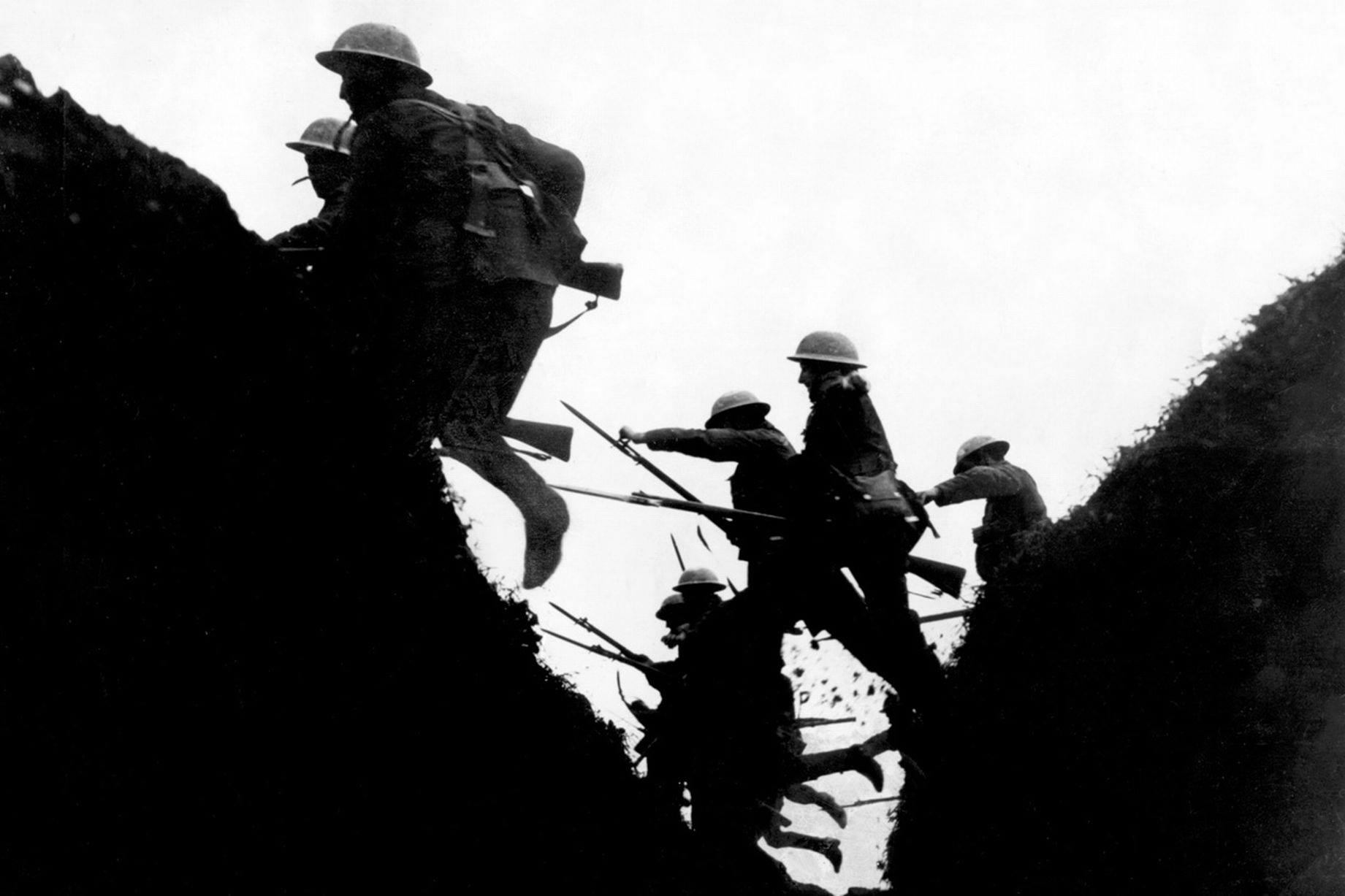
The bravery and sacrifice of the soldier at war is unfathomable. I think especially of those souls who were called up in the days of the draft or who volunteered. What horrors were thrust upon them, and how well they acquitted themselves. I am thankful to those, like my grandfather, who did the heavy lifting so that the rest of us wouldn’t have to.
In Flanders fields the poppies blow
Between the crosses, row on row,
That mark our place; and in the sky
The larks, still bravely singing, fly
Scarce heard amid the guns below.
We are the Dead. Short days ago
We lived, felt dawn, saw sunset glow,
Loved and were loved, and now we lie
In Flanders fields.
Take up our quarrel with the foe:
To you from failing hands we throw
The torch; be yours to hold it high.
If ye break faith with us who die
We shall not sleep, though poppies grow
In Flanders fields.
Bob and Helen Kull have created a sanctuary for the arts in Ewing.
The 1867 Sanctuary, a one-time Presbyterian Church, was scheduled from demolition in 2008 when the Kulls stepped up not only to preserve the now 149 year-old structure, but also to envision a platform for the performing arts in Mercer County. The hall was repurposed and reopened in February to regularly host musical events and theatrical productions.
It was during a rehearsal of the Capital Philharmonic of New Jersey there that the orchestra’s concertmaster, Vladimir Dyo, realized its potential as a venue for chamber music performances. He will be bringing together some of his friends and colleagues for a varied program to be presented at the venue on Monday night at 8:00.
On the concert will be a sonata for violin and guitar by Allen Krantz; three tangos for violin and guitar by Astor Piazzolla; a suite for solo cello by Gaspar Cassado; Frederic Chopin’s “Andante Spianato and Grand Polonaise Brillante” in E-flat major, Op. 22; Mauro Giuliani’s Serenade for Guitar, Violin and Cello, Op. 19; and Beethoven’s Piano Trio in B-flat major, Op. 11. Dyo will be joined by Krantz on guitar, Ovidiu Marinescu on cello, and Clipper Erickson on piano.
1867 Sanctuary at Ewing hosts not only classical music concerts. Upcoming events will also include jazz artists and theatrical productions, with the venue’s next open mic night scheduled for Nov. 25. This weekend, there’s cabaret and a one-man show. For a more complete schedule, visit http://www.1867sanctuary.org.
This week on “Picture Perfect,” as the shadows lengthen, we revisit the world of film noir, a genre notoriously slippery to define, but easy to know when you see it – with its long shadows and moral ambiguities; cock-eyed camera angles and snappy repartee; isolation and innuendo. It’s a genre where a pair of gams is an invitation to the gallows; where a man’s best friend – and sometimes his worst enemy – is his Colt .38; where only cigarettes and bourbon can ease the pain.
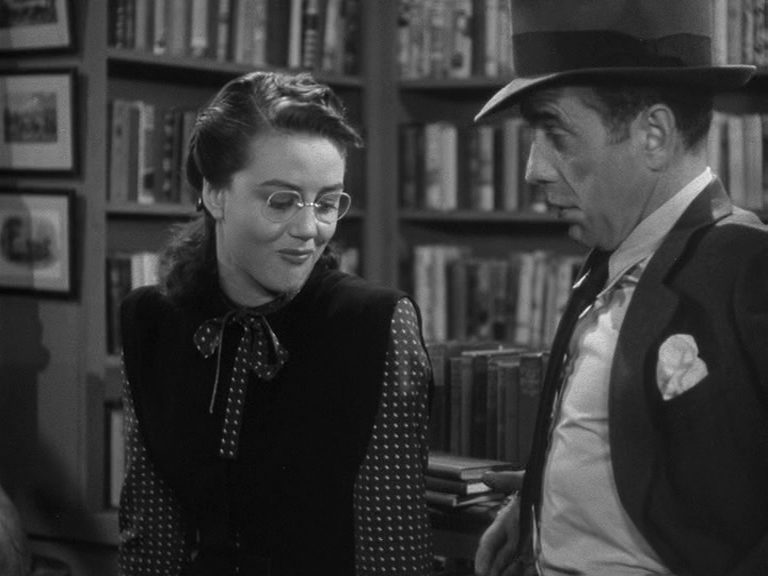
The labyrinthine mystery at the heart of “The Big Sleep” (1946) is so disorienting, even the book’s author, Raymond Chandler, couldn’t tell whodunit. Who cares? Humphrey Bogart and Lauren Bacall get some more steamy dialogue to satisfy fans of “To Have and Have Not,” and there’s plenty of Bogey pounding the pavement and tossing off tart one-liners in pursuit of the truth. But my favorite scene involves Dorothy Malone, who runs the hottest bookstore in town.
Whenever there are gallows to be built or gangsters to be beaten, Warner Brothers could be counted on to assign Max Steiner.
“Chinatown” (1974) is one of the best of the neo-noirs of the 1970s. This time, Jack Nicholson plays private dick J.J. Gittes, who takes on a seemingly routine case that begins to spiral out of control. When producer Robert Evans rejected Philip Lambro’s original score, Jerry Goldsmith stepped in as a last-minute replacement. The composer was hired with the understanding that he had only ten days to write and record new music. For his effort, Goldsmith received an Academy Award nomination.
The Coen Brothers clearly love noir, from their first feature, “Blood Simple,” to their Academy Award winners, “Fargo” and “No Country for Old Men,” to their absurdly entertaining reimagining of “The Big Sleep,” “The Big Lebowski.” “Miller’s Crossing” (1990) was one of the more underappreciated of these. The film follows the well-worn device of an anti-hero playing two sides off of one another, until he is the last one standing – shades of Dashiell Hammett’s “Red Harvest,” with a healthy dose of “The Glass Key” thrown in, for good measure. The Irish-inflected score is by Coen regular Carter Burwell.
Before he became stereotyped as a composer for epic films like “Ben-Hur,” “King of Kings” and “El Cid,” Miklos Rozsa was the king of noir, providing scores for genre classics such as “Double Indemnity” and “The Strange Love of Martha Ivers.” We’ll hear a suite assembled from three such projects: “Brute Force” (1947), a hard-hitting prison drama, starring Burt Lancaster as a desperate inmate and a contemptible Hume Cronyn as a sadistic guard; “The Killers” (1946), also starring Lancaster as a marked boxer; and “The Naked City” (1948), with Barry Fitzgerald leading a police investigation into the murder of a young model. The suite is titled “Background to Violence.”
Put on your rumpled linen suit, draw the Venetian blinds, and play the sap for nobody this week. It’s film noir in the gritty city, on “Picture Perfect,” music for the movies, this Friday evening at 6:00 EST, on WWFM – The Classical Network and at wwfm.org.
The theatrical trailer for “Brute Force”:
PHOTO: Bogart discusses literature with Dorothy Malone
Between the weather and the election, November is off to a very strange start. I am sure I am not alone in feeling rather subdued this week. It seems only appropriate, then, that tomorrow morning on WPRB, the focus will be on intimacy, introspection and solace. We’ll enjoy music for various chamber combinations – string quartets, woodwind quintets, that sort of thing – so as not to agitate or jangle too many nerves.
It will be a morning of genuine concord, from 6 to 11 EST, at WPRB 103.3 FM and wprb.com. You’ll find me relaxing with a scotch in the bath, on Classic Ross Amico.
Chamber music. Intimate conversation between friends.
Join me for a morning of civilized discourse, as we enjoy a string quartet by Niels Wilhelm Gade, a clarinet sonata by Max Reger, a quintet for flute, violin, viola, cello and harp by Jean Cras, a piano quintet by Ermanno Wolf-Ferrari, a quartet for clarinet, violin, cello and piano by Peter Schickele, a duet for two cellos by Friedrich August Kummer, a double sextet by Steve Reich, and more.
Violinist Vladimir Dyo and Clipper Erickson, piano, will join me in the 10:00 hour. They’ll tell us a little bit about a chamber concert they’ll be performing at 1867 Sanctuary at Ewing this Monday at 8 p.m, with colleagues Allen Krantz, guitar, and Ovidiu Marinescu, cello. The program will include works by Krantz, Astor Piazzolla, Gaspar Cassado, Frederic Chopin, Mauro Giuliani, and Ludwig van Beethoven.
The election is over. Time to conduct ourselves with dignity, if only for a few hours, from 6 to 11 EST, on WPRB 103.3 FM and at wprb.com. Let’s make beautiful music together, on Classic Ross Amico.