Category: Daily Dispatch

  • Enescu Schwarz & Dvořák on WWFM

    Enescu Schwarz & Dvořák on WWFM

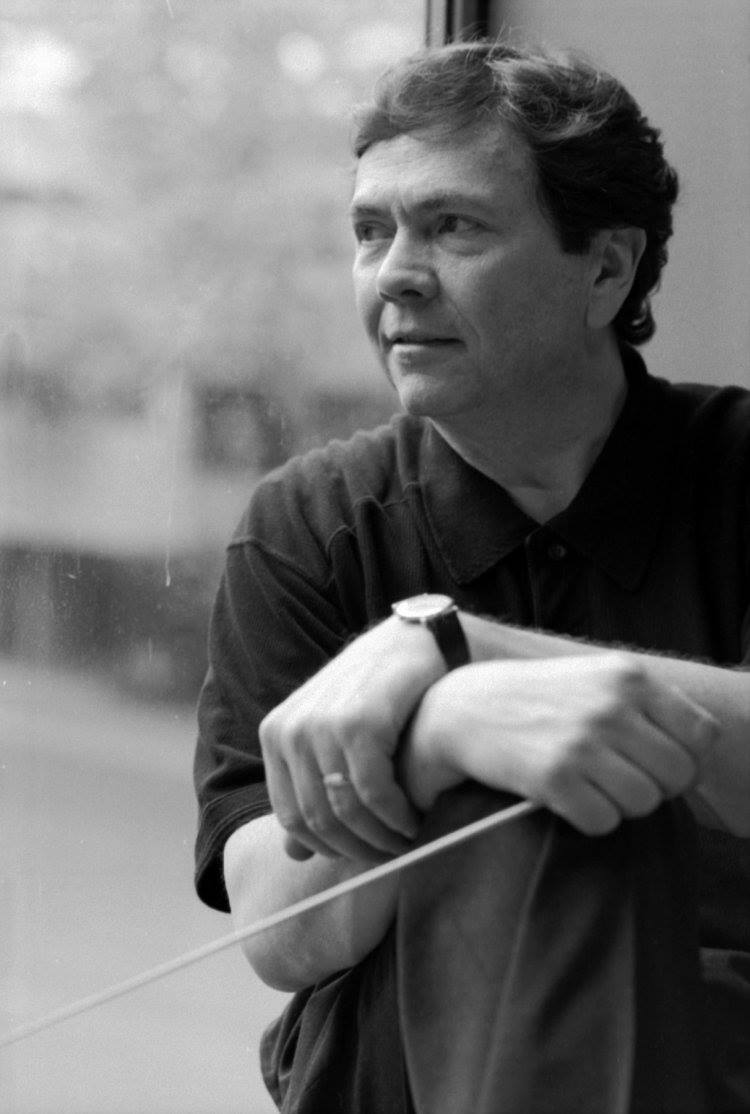
    Kick off your weekend with Romanian music, as we mark the anniversary of the birth of composer George Enescu. You can also expect a fair amount of American music, as we celebrate the birthday today of conductor Gerard Schwarz. Tune in also to hear Antonin Dvořák’s “Czech Suite.” You can Czech it out from 4 to 7 p.m. EDT, on WWFM – The Classical Network and at wwfm.org.


    PHOTOS: Conductor Gerard Schwarz and Romanian master George Enescu

  • Shape Note Singing Returns to Hopewell

    Shape Note Singing Returns to Hopewell

    It was interesting for me to learn about Hopewell’s contribution to the tradition of shape note singing. Hopewell, of course, is but a stone’s throw away from Princeton (if you have a good arm). “The Easy Instructor,” the very first book on the subject to appear in the United States, was distributed out of Hopewell by William Smith in 1801.

    Smith and his co-compiler, William Little, employed a system that positioned musical notes on a traditional staff, using shapes in place of the standard oval heads. The shapes helped singers to determine relative pitches without having to wrangle with key signatures. Little and Smith did not claim credit for the invention of their system, which they attributed to John Connelly of Philadelphia, who is said to have developed it in the 1790s.

    Though shape note singing disappeared from cities prior to the Civil War and from Northeastern and Midwestern communities in the decades following, the tradition was kept alive in rural areas of the American South. Modern interest was renewed with the folksong revival of the 1960s. The current culture is particularly robust, with passionate Sacred Harp singers known to travel great distances.

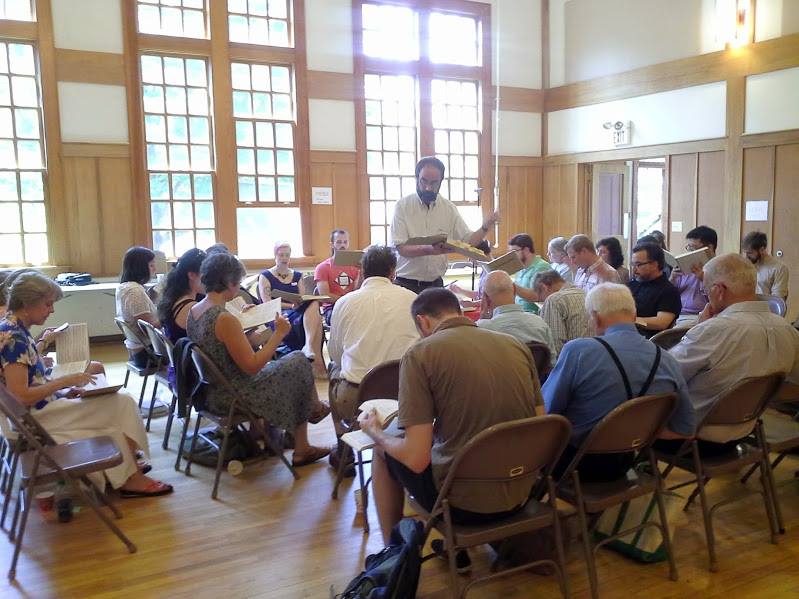
    Shape note singing will return to Hopewell on Saturday, when a far-flung group of musical amateurs will gather at Hopewell Presbyterian Church to engage in the centuries-old tradition, with readings from “The Sacred Harp” and “The Shenandoah Harmony.” No prior knowledge of shape note singing is required, and everyone is welcome to attend.

    The 4th Annual Central New Jersey All-Day Singing will include readings from “The Sacred Harp,” from 10 a.m. to 12:30 p.m., and “The Shenandoah Harmony,” from 1:30 to 3:30 p.m. In between, there will be a potluck dinner.

    “Everybody is welcome to grab a book and join in,” says Rachel Speer, a medical writer who has been shape note singing since 2001. “It’s a very participatory thing… People of all levels of musical ability, or lack thereof, are welcome. It’s just a place to have fun singing, not a place where we care about ‘getting it right.’ It’s not at all like a choir audition or rehearsal. There’s no performance. We just sing and eat.”

    You can find out more about it in my article in today’s Trenton Times.

    http://www.nj.com/times-entertainment/index.ssf/2016/08/classical_music_central_nj_all.html

  • Arctic Adventure Radio Journey

    Arctic Adventure Radio Journey

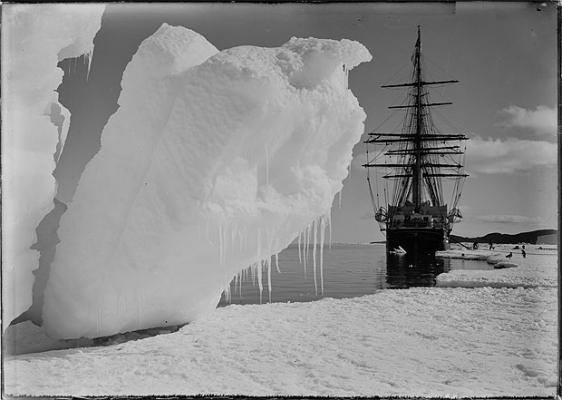
    Once upon a time, a trip to the Pole required dog sleds, pack animals, and an unimaginable surplus of grit. Now all you need is a radio.

    I hope you’ll join me this morning on WPRB as we armchair travel to the Arctic, subarctic, and Antarctic, with musical evocations by John Luther Adams, Wilhelm Peterson-Berger, Paul Moravec, Einar Englund, Nigel Westlake, George Lloyd, Ralph Vaughan Williams, Uuno Klami, Geirr Tveitt, and perhaps even Billy Mayerl. Our itinerary includes stops in Alaska, Lapland, Antarctica, Siberia, and the Arctic Ocean.

    We strike camp at dawn. Grab a thermos and some mukluks, and tune in from 6 to 11 EDT on WPRB 103.3 FM and at wprb.com. Expect a chilly reception, on Classic Ross Amico.

  • Lloyd & Vaughan Williams Symphonies on WPRB

    Lloyd & Vaughan Williams Symphonies on WPRB

    Right now on WPRB, we’re listening to the Symphony No. 4 by the underrated English composer George Lloyd, a work which grew out his experiences serving in the Royal Marines during WWII.

    Lloyd’s vessel was struck by a torpedo while he was manning the transmitting station deep within the ship’s hold. He nearly drowned, as many of his shipmates and close comrades actually did, in fuel oil. Though he survived the ordeal, he suffered from shell shock and could not speak for nearly a year.

    As he recovered, he began to compose again, hoping to exorcise his demons. The result was his Symphony No. 4, subtitled the “Arctic,” a surprisingly optimistic work, considering its genesis. But, as the composer points out, he also experienced much beauty during his service in the North Sea, including a memorable trip up the Norwegian coast.

    Of the infectious marches that characterize the work’s final movement, the composer remarked wryly, “… perhaps I was trying to end the symphony by reaffirming the old convention that when the funeral is over the band plays quick, cheerful tunes to go home.”

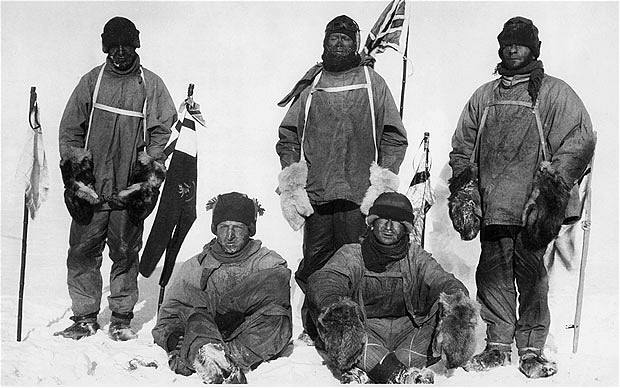
    Coming up in the 9:00 hour, we’ll have another English symphony, suggestive of the opposite pole, the Symphony No. 7 by Ralph Vaughan Williams, subtitled “Sinfonia Antarctica.” Vaughan Williams’ opus grew out of his film score for the Ealing Studios adventure “Scott of the Antarctic,” which starred John Mills as doomed explorer Robert Falcon Scott.

    Vaughan Williams’ symphony captures a sense of foreboding in the face of punishing elements and the desolation of the Antarctic landscape. Along the way, he evokes chill winds, crashing ice slides, and the play of penguins and whales.

    Sir Adrian Boult recorded the work twice. The earlier recording featured spoken prefaces by Sir John Gielgud, who reads from English poets and Scott’s diary. The performance itself is quite good, though expectedly not as vivid as the later, stereo remake. So as to share the best of both worlds this morning, I will interpolate the Gielgud readings into the stereo performance.

    Stick around, and you’ll also get to hear music inspired by the aurora borealis, by Uuno Klami and Geirr Tveitt. We’ll go to any lengths to keep cool, until 11 EDT on WPRB 103.3 FM and at wprb.com.
  • Atterberg’s Dollar Symphony WWFM Today

    Atterberg’s Dollar Symphony WWFM Today

    On this date in 1928, Swedish composer Kurt Atterberg entered his Symphony No. 6 into a contest held by the Columbia Record Company in honor of the 100th anniversary of the death of Franz Schubert. For his effort, he was awarded the first prize of $10,000. The work became known as Atterberg’s “Dollar Symphony.” It remains the composer’s most-recorded piece, starting all the way back with Sir Thomas Beecham and a recorded broadcast with Arturo Toscanini.

    Though Atterberg was the winner of the international competition, divisional winners (by “zone”) included the now-forgotten English composer John St. Anthony Johnson, for his work, “Pax Vobiscum,” and the equally-forgotten American Charles Haubiel, for a piece called “Karma.”

    Franz Schmidt was recognized in Austria, for his Symphony No. 3. Havergal Brian won second prize in England, for the first three movements of his “Gothic Symphony.”

    You can find all the details here:

    https://en.wikipedia.org/wiki/1928_International_Columbia_Graphophone_Competition

    Atterberg’s “Dollar Symphony” is one of the darlings of Classical 24, but they only ever play one movement. You’ll have a chance to hear the entire thing this afternoon, sometime between 4:00 and 7:00 EDT, on WWFM – The Classical Network and at wwfm.org.

Tag Cloud

Aaron Copland (93) Beethoven (95) Composer (114) Film Music (139) Film Score (143) Film Scores (255) Halloween (94) John Williams (195) KWAX (229) Leonard Bernstein (103) Marlboro Music Festival (125) Movie Music (154) Mozart (89) Opera (210) Philadelphia Orchestra (89) Picture Perfect (174) Princeton Symphony Orchestra (108) Radio (88) Ross Amico (244) Roy's Tie-Dye Sci-Fi Corner (290) The Classical Network (101) The Lost Chord (268) Vaughan Williams (103) WPRB (396) WWFM (881)

DON’T MISS A BEAT

Receive a weekly digest every Sunday at noon by signing up here


RECENT POSTS