Category: Daily Dispatch

  • Sandburg’s America Music and Memorial Day

    Sandburg’s America Music and Memorial Day

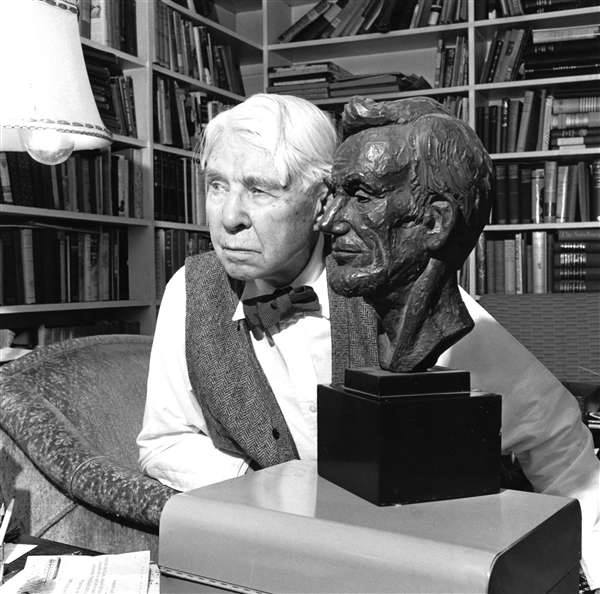
    Carl Sandburg was the recipient of three Pulitzer Prizes: two for his poetry, and a third for his biography of Abraham Lincoln. He was also known for his 1927 anthology “The American Songbag,” espousing our native folk song and anticipating the folksong revivals the 1940s and the 1960s. On top of everything else, he was awarded a Grammy for his recording of Aaron Copland’s “Lincoln Portrait.” When Sandburg died in 1967, at the age of 89, Lyndon Johnson observed that “Carl Sandburg was more than the voice of America, more than the poet of its strength and genius. He WAS America.”

    This Sunday night on “The Lost Chord,” we’ll hear music inspired by this popular – and populist – figure, with two works especially appropriate for Memorial Day and, in between, a piece after a poem evocative of the American heartland.

    Philadelphia composer Romeo Cascarino (1922-2002), who had served in the U.S. Army, composed a plaintive elegy, “Blades of Grass,” in 1945, just after World War II. He expressed a preference on several occasions that Sandburg’s poem “Grass” be read before performances. You’re probably familiar with it:

    Pile the bodies high at Austerlitz and Waterloo.
    Shovel them under and let me work—
    I am the grass; I cover all.

    And pile them high at Gettysburg
    And pile them high at Ypres and Verdun.
    Shovel them under and let me work.
    Two years, ten years, and passengers ask the conductor:
    What place is this?
    Where are we now?

                                          I am the grass. 
                                          Let me work.
    

    Leo Sowerby (1895-1968) was born in Grand Rapids, MI, and spent much of his career in the Midwest. Sometimes referred to as the “Dean of American church music,” he was the recipient of the Pulitzer Prize for Music in 1946 for his cantata, “The Canticle of the Sun.”

    The published score of his symphonic poem after Sandburg, titled “Prairie,” from 1929, bears the following lines:

    “Have you seen a red sunset drip over one of my cornfields, the shore of night stars, the wave lines of dawn up a wheat valley?

    “Have you heard my threshing crews yelling in the chaff of a strawpile and the running wheat of the wagonboards, my cornhuskers, my harvest hands hauling crops, singing dreams of women, worlds, horizons?”

    Last but certainly not least, Roy Harris, who shared Lincoln’s birthday (though born 89 years later), was born in a log cabin in Lincoln County, OK, only adding to his sense of destiny. Indeed he went on to become one of America’s greatest composers.

    Harris’ Symphony No. 6 is subtitled “Gettysburg.” It’s one of a number of works the composer wrote with a “Lincoln” connection. Each movement of the symphony bears a superscription taken from the Gettysburg Address: the first, “Awakening (‘Fourscore and seven years ago…’);” the second, “Conflict (‘Now we are engaged in a great civil war…’);” the third, “Dedication (“We are met on a great battlefield of that war…’);” and the fourth and final movement, “Affirmation (‘…that we here highly resolve that these dead shall not have died in vain…’).”

    Prior to composing the work, Harris read – you guessed it – Sandburg’s biography of Lincoln.

    I hope you’ll join me for “Lincoln Logger,” an hour of music inspired by Carl Sandburg, this Sunday night at 10 EDT, with a repeat Wednesday evening at 6; or that you’ll listen to it later as a webcast at wwfm.org.


    Although not on tonight’s show, here, as an added bonus, is Sandburg narrating Aaron Copland’s “Lincoln Portrait”:
  • Korngold Unleashed The Inner Pirate Composer

    Korngold Unleashed The Inner Pirate Composer

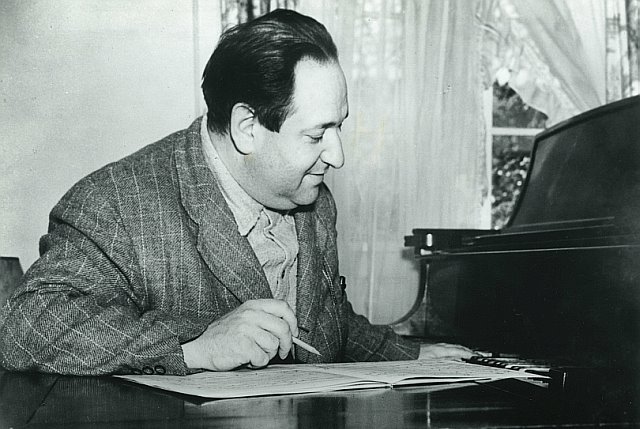
    Happy birthday, Erich Wolfgang Korngold (1897-1957). You unleashed my inner pirate and helped shepherd me into the wonderful world of orchestral music. Little did I realize at the time I was dueling my friends with my mother’s curtain rods that you wrote marvelous operas, too.

    Korngold conducts “The Adventures of Robin Hood”:

    The Sea Hawk:

    Renée Fleming sings from “Das Wunder der Heliane”
    https://www.youtube.com/watch?v=H2x5NgtGSx4

    His greatest operatic hit, Marietta’s Lied from “Die tote Stadt,” sung by Elisabeth Schwarzkopf:
    https://www.youtube.com/watch?v=ZoGQd1dsAlw

  • Korngold’s “Die Kathrin” on WPRB Sunday

    Korngold’s “Die Kathrin” on WPRB Sunday

    I know it’s so early that even the roosters will be brewing their coffee, but if you want to get a taste of the melodic fecundity and lush orchestrations of Erich Wolfgang Korngold as opera composer, you’ll want to tune in to WPRB tomorrow for “Sunday Morning Opera” with Sandy Steiglitz.

    Sandy will be celebrating Korngold’s birthday with a complete recording of the composer’s final opera “Die Kathrin.” The piece is gorgeous. It may not be his most profound work for the stage, but it contains one great melody after another. Also, it is the opera closest in style to his film scores. He completed it in 1937, the same year as his work on “The Prince and the Pauper.” By that time, he had already written his Academy Award winning music for “Anthony Adverse.” “Captain Blood” was two years in the past. The opening of the opera (set outside a cinema!) sounds like it could have been written for “The Adventures of Robin Hood.”

    Technically the show runs from 6 to 10 a.m., with the opera beginning at 7; but because of the length, the main attraction this week will begin at 6:45 EDT. It makes no difference to Sandy; she’s there at 5:30 anyway, cleaning the studio and sharing the music she loves. So tune in early. I don’t know anyone who knows as much about opera, in terms of both repertoire and its recorded history, as Sandy does. It’s worth your while getting to know her show.

    Hear “Sunday Morning Opera” tomorrow morning on WPRB 103.3 FM or at wprb.com. Korngold goes great with breakfast. Happy birthday, EWK!


    Renée Fleming sings the Letter Song from “Die Kathrin”:

    https://www.youtube.com/watch?v=VcNJRo4K7fs

    Korngold plays it (courtesy of Brendan Carroll):

    https://www.youtube.com/watch?v=KgLXGInLMpc

    In case you missed it, here’s an interview I did with Sandy in 2012 for the Trenton Times.

    http://www.nj.com/times-entertainment/index.ssf/2012/08/sunday_morning_opera_host_sand.html


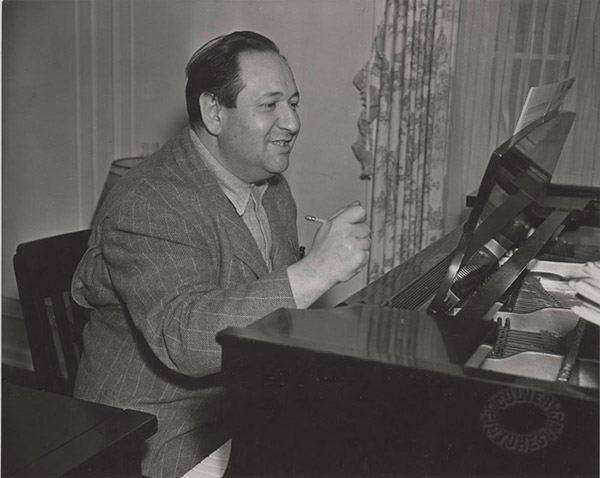
    PHOTO: Erich Wolfgang Korngold in 1937

  • Princeton Festival June Highlights

    Princeton Festival June Highlights

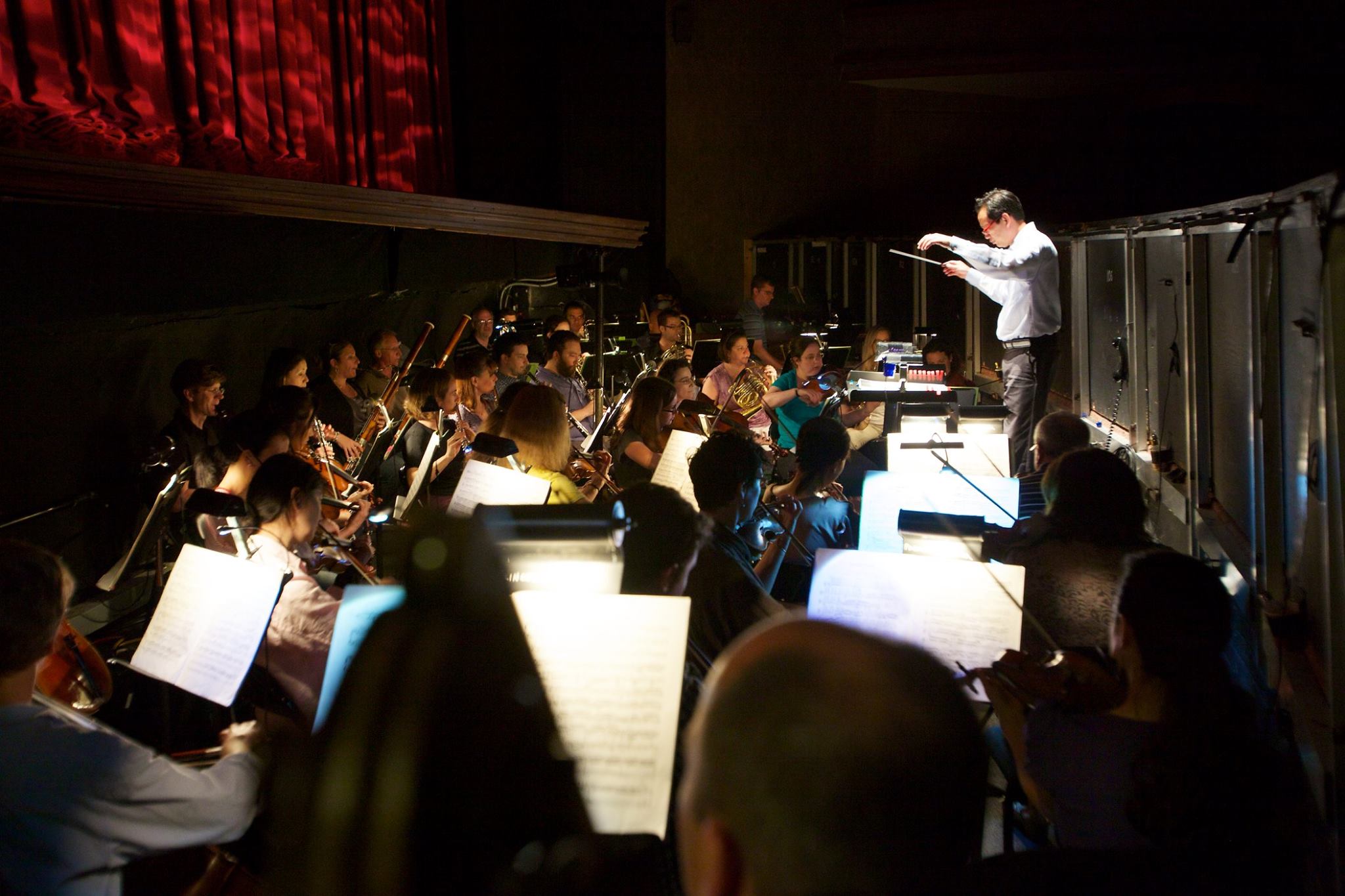
    Just as the 2015-2016 concert season becomes the stuff of memory, The Princeton Festival steps up for its 12th year to keep us contented for the month of June. The festival will present over three weeks of performances, lectures, previews and special events, beginning on June 1.

    Highlights will include three performances of Benjamin Britten’s opera, “Peter Grimes,” ten of Stephen Sondheim’s waltz musical “A Little Night Music,” a screening of the Carl Theodor Dreyer film, “The Passion of Joan of Arc,” with live accompaniment by the Princeton Symphony Orchestra, and an appearance by Grammy Award-winning jazz vocalist Cécile McLorin Salvant.

    I try to encompass what I can in today’s article in the Trenton Times.

    http://www.nj.com/times-entertainment/index.ssf/2016/05/classical_music_princeton_fest_2.html


    PHOTOS: (Top) Princeton Festival artistic director Richard Tang Yuk rehearses the opera orchestra; (left to right) Complexions Contemporary Ballet, Cécile McLorin Salvant, and “The Passion of Joan of Arc”

  • WWII Film Scores for Memorial Day

    WWII Film Scores for Memorial Day

    While you’re sitting in traffic heading into your three-day weekend, take a moment to consider that you’ve got it easy compared to what Allied soldiers went through in Europe, the Pacific and North Africa to keep the world free from tyranny.

    This week on “Picture Perfect,” we’ll have music from two films of the World War II era that exemplify Hollywood’s morale-boosting approach. “Sahara” (1943) pits Humphrey Bogart as a tank commander who defends a watering hole against a superior force of parched Nazis. “Objective: Burma!” (1945) drops Errol Flynn behind enemy lines to take out a Japanese radar station.

    Neither film shuns the reality that war is hell (with some particularly suggestive gruesomeness in the latter), yet the filmmakers rose above the kind of nihilistic edge that underscores so many movies made today. When all was said and done, war movies in the 1940s sold America on hope and sacrifice and the promise of final victory.

    The conflict cast a long shadow, and in the 1950s and ‘60s Hollywood continued to churn out WWII films at an impressive rate, selling tickets to the generation that had “been there.” “The Guns of Navarone” (1961) features Gregory Peck (exempt from service during the actual war because Martha Graham injured his back), David Niven (Lieutenant Colonel in the British Commandos at Normandy) and Anthony Quinn (born in Mexico and not naturalized until 1947) as a special unit of Allied military specialists on a mission to blow up some big Nazi guns trained over the Aegean Sea.

    Efforts to get “Patton” (1970) off the ground had been in motion since 1953! The filmmakers wanted access to Patton’s diaries, but displayed horrible timing in approaching the late general’s family the day after the death of his widow. Not surprisingly, the family was completely turned off and withheld its cooperation. In the end Franklin J. Schaffner directed from a script by Francis Ford Coppola and Edmund H. North. Patton’s colleague, Omar Bradley, served as an advisor on the film. (He’s played on screen by Karl Malden.)

    “Patton” likely would have been a knockout on any level (Rod Steiger turned down the lead, much to his later regret), but it is really George C. Scott that pushes it over the top. And how much more over the top can it get than that opening monologue, assembled from Patton’s speech to the Third Army, delivered in front of an enormous American flag? Only a larger-than-life actor such as Scott could have done it justice and not been dwarfed by both the subject and the iconography. Scott won a much-deserved Academy Award for his performance – which he famously refused to accept.

    I hope you can join me for equally outsized music by Miklós Rózsa (“Sahara”), Franz Waxman (“Objective: Burma!”), Dimitri Tiomkin (“The Guns of Navarone”) and Jerry Goldsmith (“Patton”), as we look forward to Memorial Day with classic films set during World War II, this Friday evening at 6 EDT, with a repeat Saturday morning at 6; or that you’ll listen to it later as a webcast at wwfm.org.

Tag Cloud

Aaron Copland (93) Beethoven (95) Composer (114) Film Music (139) Film Score (143) Film Scores (255) Halloween (94) John Williams (195) KWAX (229) Leonard Bernstein (103) Marlboro Music Festival (125) Movie Music (154) Mozart (89) Opera (210) Philadelphia Orchestra (89) Picture Perfect (174) Princeton Symphony Orchestra (108) Radio (88) Ross Amico (244) Roy's Tie-Dye Sci-Fi Corner (290) The Classical Network (101) The Lost Chord (268) Vaughan Williams (103) WPRB (396) WWFM (881)

DON’T MISS A BEAT

Receive a weekly digest every Sunday at noon by signing up here


RECENT POSTS