Category: Daily Dispatch

  • Save Our Radio Shows Funding Ideas Needed

    Save Our Radio Shows Funding Ideas Needed

    With the end of the fiscal year approaching, I thought I would reach out to you, my Facebook friends, for suggestions on how to solve a particular problem. You see, it’s all about raising dough. Isn’t it always?

    As of July 1, WWFM will no longer be able to afford to pay for its specialty shows. That means unless hosts are able to find their own funding, they will either have to (a) do their shows live at whatever time they are assigned, probably somewhere in the middle of the afternoon, (b) produce them on a volunteer basis, or (c) stop doing them.

    All three of these options are problematic. If a host were to do a show live, he or she would still have to record it and perform all sorts of touch up work on it, in order to get it in fighting trim for syndication. The host would not be compensated for that work, or for any script-writing. Essentially he or she would be paid for doing the equivalent of a one-hour live air shift. That’s unsustainable.

    Obviously, doing it for free would be even more so.

    “Picture Perfect” and “The Lost Chord” are on the line. In order to keep doing these shows, I would have to raise $5000 each for the coming year. I could do that through underwriting, or I could look into obtaining a grant. Either one would take time, but if it looked as if it were a realistic option, I would tough it out and do the shows for free until funding was secured.

    Underwriting may be from a corporate source, it could be from a small business, or it could come from a particularly generous individual listener with a surplus of moola burning a hole in his or her pocket. I had even considered perhaps trying to pull together a consortium of individual donors, with everyone kicking in what they could – which brings me to crowdfunding platforms such as Kickstarter. I haven’t really looked into these, but I know they are out there.

    It is not my aim to try to discourage anyone from supporting WWFM in general or to persuade listeners to shift their financial support from the station to one of my individual shows. This should not be an either/or proposition.

    I don’t think anyone who follows this page is a Rich Uncle Pennybags, but I know there are a lot of clever people out there. If anyone can think of a creative solution to the problem of keeping “Picture Perfect” and “The Lost Chord” alive in such a way that they can still be heard by the general population, and in a way that I can actually pay my rent, please post your suggestions below or feel free to message me. I am all eyes and ears.

    If only I could just have Moe inflate the budget using a makeshift hose to the gas pipe. Then again, we all know how well that worked out.

    Thank you for reading, and thank you in advance for your suggestions!
  • Classical Music: 90 is the New 70

    Classical Music: 90 is the New 70

    Does life begin at 90? I don’t know about that, but in today’s classical music world, it’s probably safe to say that 90 is the new 70. Two days after the 90th birthday of composer Carlisle Floyd, whose opera “Prince of Players” was given its premiere by Houston Grand Opera in March, I stumbled across this piece on classical-music.com:

    http://www.classical-music.com/article/does-life-begin-90

    Curiously the impetus was Queen Elizabeth II, rather than Floyd, whose birthday fell on the very day the article was posted. The composer is conspicuously absent from the list. You can read more about Floyd in my June 11 Facebook entry, which wasn’t ready until Saturday evening and therefore may have escaped your attention.

    Sadly, Phyllis Curtin, who created the title role of Floyd’s “Susannah” in 1956, propelling the 29 year-old composer to fame, died on June 5 at the age of 94.

    And then there’s this guy:

    The oldest active conductor in America

    As Arthur Fiedler always said, “To rest is to rot.”


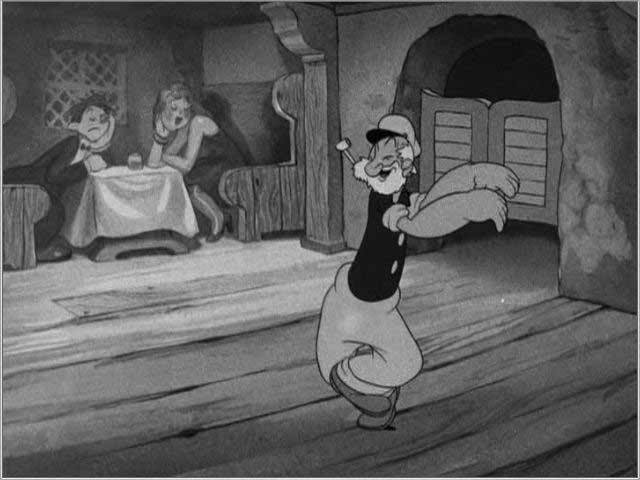
    PHOTO: “Listen, Pappy, you’re 99 years-old. You can’t be going out every night. You got to save your youth for your old age. ”

  • Hungarian Music on “The Lost Chord”

    Hungarian Music on “The Lost Chord”

    Have you a hunger for Hungarian music?

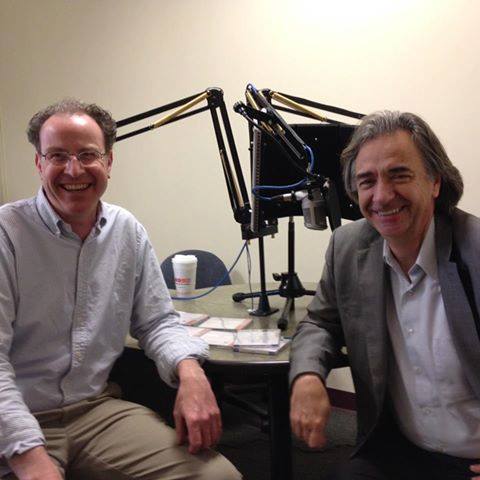
    This Sunday night on “The Lost Chord,” I’ll be joined by Mariusz Smolij for the first of a two-part series, in which we sample from his recording projects for the Naxos label, focusing on Eastern European composers.

    Smolij is known in the Greater Delaware Valley as the Music Director of the Riverside Symphonia, based in Lambertville, NJ, which he has directed for over 20 years. He is also music director of the Acadiana Symphony Orchestra and Conservatory of Music in Lafayette, LA, and formerly associated with the Houston Symphony Orchestra and the New Jersey Symphony Orchestra. He has taught conducting at the music school of Northwestern University in Chicago and was a founding violinist of the internationally acclaimed Penderecki String Quartet.

    We’ll hear selections from a concert work by celebrated film composer Miklós Rózsa (he of “Ben-Hur” fame), as well as several by his lesser-known friend and colleague Eugene Zador.

    That’s “Famished for Hungary” – Mariusz Smolij’s recordings of Hungarian music for the Naxos label – this Sunday night at 10 EDT, with a repeat Wednesday evening at 6, on WWFM – The Classical Network; or listen to it later as a webcast at wwfm.org.


    PHOTO: Mariusz Smolij (right), Ross Amico (left), conspicuous product placement (center)

  • OperaDelaware’s “Amleto” on WRTI Today

    OperaDelaware’s “Amleto” on WRTI Today

    Tune in to WRTI this afternoon at 1:00 EDT to enjoy a broadcast of OperaDelaware’s acclaimed production of Franco Faccio’s “Amleto.” The 1865 opera, on a libretto of Arrigo Boito after Shakespeare’s “Hamlet,” lay unheard for over 130 years after its only revival in 1871. Boito, of course, would go on to provide Shakespeare-inspired libretti for Giuseppe Verdi’s “Otello” (1887) and “Falstaff” (1893).

    Learn more about the opera and its remarkable reconstruction here:

    http://wrti.org/post/19th-century-opera-making-21st-century-comeback-june-11th-1-pm-wrti

    WRTI can be heard in Philadelphia at 90.1 FM. Find a complete list of frequencies here: http://wrti.org/wrti-coverage-map; or listen online at wrti.org.


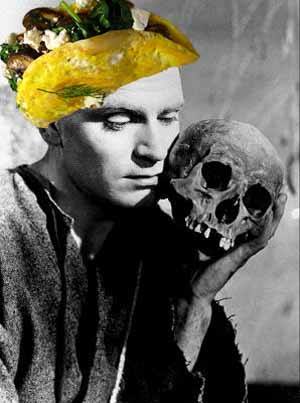
    PHOTO: Amleto with omelet

  • Carlisle Floyd: Celebrating 90 Years of Opera

    Carlisle Floyd: Celebrating 90 Years of Opera

    Today is the 90th birthday of one of the most successful opera composers this country has ever produced. Carlisle Floyd was not yet 30 when he lured Phyllis Curtin and Mack Harrell to Tallahassee to sing in the world premiere of “Susannah” in 1956. The opera takes the Apocryphal tale of Susannah and the Elders and transplants it to rural Tennessee.

    Floyd wrote the libretto and music while on the piano faculty at Florida State University. The work’s success soon spread to New York, and “Susannah” went on to become the most frequently performed American opera behind only Gershwin’s “Porgy and Bess.” It does feature two heart-melting arias that remain favorites of aspiring American sopranos, “Ain’t It a Pretty Night” and “The Trees on the Mountain.”

    The directness of the drama and the uncluttered musical language struck a chord with both performers and audiences. Emboldened by his success, Floyd went on to compose ten more operas, all of them on his own librettos, drawing inspiration from such diverse sources as Emily Bronte’s “Wuthering Heights,” Robert Louis Stevenson’s “Markheim,” John Steinbeck’s “Of Mice and Men” and Robert Penn Warren’s “All the King’s Men.”

    “Cold Sassy Tree,” based on the novel of Olive Ann Burns was given its premiere in 2000. It was intended to have been the composer’s swan song. Floyd had become too busy caring for his wife, who suffered from Alzheimer’s disease, to devote much further thought to composition. But following her passing, he found the inspiration for one last hurrah. The result was the recently completed opera “Prince of Players,” about 17th century actor Edward Kynaston, which was given its premiere at the Houston Grand Opera in March.

    To have a new opera premiered at the age of 90 should be an inspiration to all of us who not only care about music, but who have ever puzzled over finding meaning in our lives. Happy birthday, Carlisle Floyd!


    About Carlisle Floyd’s “Prince of Players”:

    http://www.houstonchronicle.com/entertainment/arts-theater/article/Composer-inspired-to-finish-one-more-opera-5358307.php

    A more in depth look (the first of three parts, if you’d like to dig deeper):

    http://www.houstonchronicle.com/entertainment/arts-theater/article/Carlisle-Floyd-s-operas-offer-traditional-music-6857032.php

    A teaser for the opera on YouTube:

    Carlisle Floyd speaks:

    Reception in The Classical Review:

    Floyd’s “Prince of Players” receives effective world premiere at Houston Grand Opera

    In Opera News:

    http://www.operanews.com/Opera_News_Magazine/2016/4/Reviews/HOUSTON__Prince_of_Players.html

    Dawn Upshaw breaks hearts with “Ain’t It a Pretty Night,” from “Susannah”:

    Cheryl Studer sings “The Trees on the Mountain,” from a complete recording of the work:


    “The thing that you have to guard against is just your own self-doubt about what you’ve done.”

    • Carlisle Floyd

Tag Cloud

Aaron Copland (94) Beethoven (95) Composer (114) Film Music (153) Film Score (143) Film Scores (255) Halloween (107) John Williams (198) KWAX (233) Leonard Bernstein (105) Marlboro Music Festival (125) Movie Music (168) Mozart (92) Opera (222) Philadelphia Orchestra (91) Picture Perfect (174) Princeton Symphony Orchestra (110) Radio (90) Ross Amico (244) Roy's Tie-Dye Sci-Fi Corner (290) The Classical Network (101) The Lost Chord (269) Vaughan Williams (107) WPRB (397) WWFM (881)

DON’T MISS A BEAT

Receive a weekly digest every Sunday at noon by signing up here


RECENT POSTS