Category: Daily Dispatch

  • Holy Week Music on WPRB

    Holy Week Music on WPRB

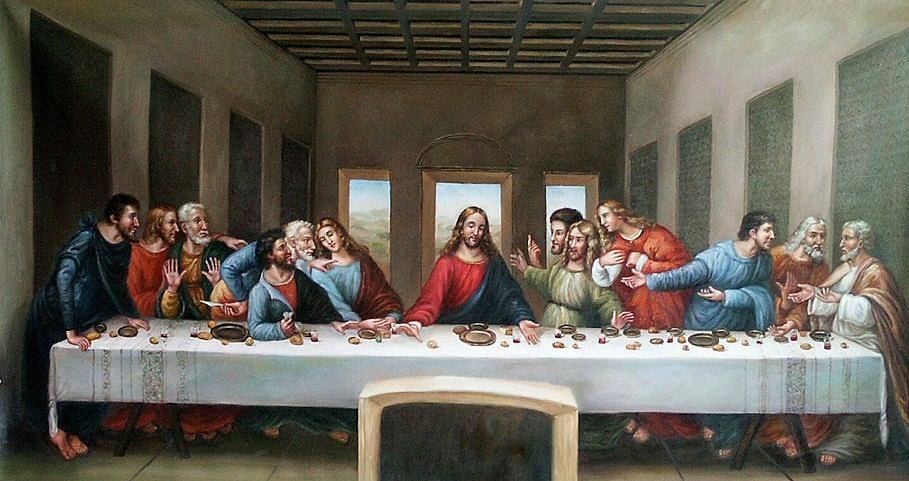
    Have you got a passion for Passions? Do you think Stabat Maters matter? Tune in to WPRB tomorrow morning for music for Holy Week. That’s right, it’s wholly music for Passiontide.

    Well, not wholly. We’ll have some selections of a broadly mystical nature (William Alwyn’s harp concerto, “Lyra Angelica,” for instance), works of a meditative bent (for example, John Tavener’s “Song of the Angel”), and perhaps a couple of pieces concerning hope and renewal (such as Edmund Rubbra’s “Resurgam Overture”).

    Otherwise, it will be music inspired by the Passion story, ranging roughly from Palm Sunday through, possibly, the observation of Russian Easter. Some of it will be purely orchestral (Paul Creston’s Symphony No. 3 “Three Mysteries,” Victor De Sabata’s “Gethsemani”) and some will include vocal soloists and chorus (Karol Szymanowski’s “Stabat Mater”).

    Also, a certain listener has been requesting Eugene Ormandy’s recording of Respighi’s “Church Windows” since June, probably. Now seems as good a time as any to blast that out. For my own edification, I may have to play Vaughan Williams’ “Five Mystical Songs,” with the great John Shirley-Quirk.

    This is a radio show, not a church service, so nobody freak out if an “Alleluia” or a “Gloria” slip into the mix, okay? We’re here to celebrate the music, not to scrupulously observe the minutiae of tradition. I’ll be lining the CD case with Easter grass, tomorrow morning from 6 to 11 EDT, on WPRB 103.3 FM and at wprb.com, and wishing you peace, hope, and happiness, on Classic Ross Amico.
  • Sibelius’s Great Grandson Rocks

    Sibelius’s Great Grandson Rocks

    Thank you, Kenneth Hutchins, for bringing this article to my attention the other day.

    The Sound of Silence

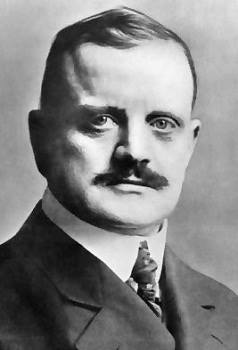
    Sibelius may not have been able to complete his Eighth Symphony, but his great grandson has composed this awesome electric guitar concerto.

    http://www.classiclive.com/porra-entropia-full-video

    Lauri Porra is a bassist in the Finnish metal band Stratovarius.

  • Celebrating Women Composers Kápralová and Smyth

    Celebrating Women Composers Kápralová and Smyth

    It’s the first day of spring – and Palm Sunday, to boot. With March already slipping away, on this week’s edition of WWFM’s “The Lost Chord,” I’ve opted to focus on contributions of two female composers in honor of Women’s History Month. Both were featured on my earlier, WPRB salute.

    However, I feel in some way that I could have made a stronger case for Vitězslava Kápralová (1915-1940). While I called her one of the great hopes of Czech music, a figure who undoubtedly would be much better known had she not died of tuberculosis at the age of 25, I opted to play her “Partita for Strings and Piano.” While impressive, the work was written very much under the influence of her teacher and lover, Bohuslav Martinu. Martinu’s fingerprints are all over the piece.

    Her String Quartet, on the other hand, was written while she was yet a student at the Prague Conservatory, where her teachers included Vitězslav Novák and Václav Talich. (She studied with Martinu later in Paris.) The work was completed in 1936, when Kápralová was about 21 years-old. In many ways it is a more distinctive and appealing creation. Judge for yourself tonight.

    More about Kápralová here, in this article written to mark her centenary in 2015:

    http://www.telegraph.co.uk/culture/music/classicalmusic/11365848/The-tragedy-of-Europes-great-forgotten-female-composer.html

    Then we’ll have a chance to enjoy a second hearing of Ethel Smyth’s “Serenade in D” – a symphony in all but name – which brought such a positive response when I played it a few weeks ago on WPRB. What I neglected to mention on that occasion was that the piece was Smyth’s first orchestral score, composed in 1890, when she was about 32 years-old.

    I did state that the “Serenade” is better than just about anything composed by her contemporary, Sir Hubert Parry, and much more compelling than the symphonies of Sir Charles Villiers Stanford, and I stand by those assessments. It’s a remarkably assured work, and one that deserves to be far better known.

    Smyth (later DAME Ethel Smyth, 1858-1944) was one of the most vocal advocates of the women’s suffrage movement in England. She overcame early opposition to a career in music on the part of her father to receive the praise of George Bernard Shaw, who called her Mass “magnificent.”

    However, her works were often better-appreciated abroad. Her operas, in particular, were embraced in Germany. One of them, “Der Wald,” was the only opera by a woman composer mounted by New York’s Metropolitan opera for over a century!

    Smyth served time in prison for putting out the windows of politicians who opposed a woman’s right to vote. She also wrote for the cause “The March of the Women.” When Sir Thomas Beecham went to visit her in jail, he witnessed her conducting through the bars of her window with a toothbrush as her associates gathered for exercise in the courtyard.

    More about Ethyl Smyth here, in this piece put together in connection with a revival of her opera, “The Wreckers,” by the great Leon Botstein:

    http://www.npr.org/sections/deceptivecadence/2015/07/23/410033088/one-feisty-victorian-womans-opera-revived

    I hope you’ll join me tonight on “The Lost Chord” for music by these two extraordinary women – “A Woman’s Place is in the Concert Hall” – this Sunday night at 10 ET, with a repeat Wednesday evening at 6; or that you’ll listen to it later as a webcast at wwfm.org.


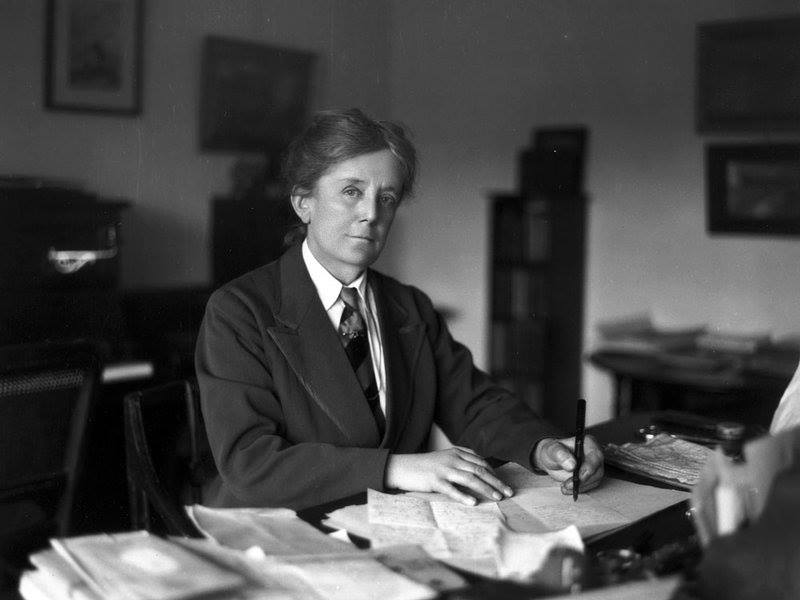
    PHOTOS: Ethel Smyth at her desk (top); Vitězslava Kápralová taking up the baton (she studied conducting in Prague with Václav Talich and in Paris with Charles Munch)

  • Rediscovering Max Reger: Genius or Sauerkraut?

    Rediscovering Max Reger: Genius or Sauerkraut?

    Like just about everyone else, I have missed doing something special for the centennial of Max Reger’s death. Not that I didn’t see it coming. I just plum forgot.

    Reger died on this date in 1916. Perhaps the craziest exemplar of crazy German contrapuntalism, Reger could write music of such density that the individual voices could get lost in a tangle, deep inside a knot, somewhere in an impenetrable thicket.

    He was mostly a composer of “abstract” music – mainly a lot of fugues and sets of variations – seeing himself as the heir of Beethoven and Brahms. But it is the Baroque masters Reger most closely resembles, in his own gargantuan, overcooked way, especially in his organ works, of which he composed many.

    Aside from his sporadically delightful (though occasionally borderline) “Variations and Fugue on a Theme by Mozart” and a handful of organ works, most of his prolific output is known mainly by specialists. For some reason or another, Rudolf Serkin remained a high profile torchbearer. Serkin recorded Reger’s Piano Concerto with the Philadelphia Orchestra and, later in life, the “Variations and Fugue on a Theme of Bach.”

    To me, Reger comes closest to being palatable – and even charming – when restricted to a single, non-keyboard instrument, as in his sonatas for solo violin and suites for solo cello.

    Also, it sounds like he may have actually had some fun composing his “Four Tone Poems after Arnold Böcklin.” Böcklin, you may recall, was the Swiss artist who painted “The Isle of the Dead,” which inspired the third of these. Surprisingly, the tone poems are late works. Did anyone see them coming? I guess after a lifetime of getting all tangled up, Reger just wanted to walk around with loose shoelaces for a change.

    Despite the fact that in most of his photos he looks like he’s got a mouth full of sauerkraut, Reger actually proved himself to have a sharp sense of humor. His most famous retort to a critic came in the form of a letter written in 1906. It reads: “I am sitting in the smallest room of my house. I have your review in front of me. Soon it will be behind me.”

    Reger, you rascal. Why couldn’t you get more of that into your music?

    Actually, somebody didn’t forget: Michael Kownacky will be celebrating Reger tonight on “A Little Night Music,” at 10 EDT on wwfm.org.


    “Variations and Fugue on a Theme by Mozart”:

    “Fantasy and Fugue on B-A-C-H”:

    Rudolf Serkin plays the “Variations and Fugue on a Theme by Bach”:

    Serkin plays the Piano Concerto:

    Sonata for Unaccompanied Violin in G Major, Op. 91, No. 6:
    Mov’t I https://www.youtube.com/watch?v=rW4Jk3zmbzg
    Mov’t II https://www.youtube.com/watch?v=SKfGFwQZgeg
    Mov’t III https://www.youtube.com/watch?v=8u_sWKiLc60
    Mov’t IV https://www.youtube.com/watch?v=yoaTz5mVuXg

    Suite for Unaccompanied Cello in G Major, Op. 131c, No. 1:

    “Four Tone Poems after Arnold Böcklin” (with the paintings that inspired them):


    PHOTOS: The many moods of Max Reger (1873-1916)

  • Early Music in Film Scores

    Early Music in Film Scores

    March is Early Music Month. While the concept may seem quite remote from the world of film music, this week on “Picture Perfect,” we’ll endeavor to tie in with four scores that employ melodies and modes of the Middle Ages.

    We’ll hear selections from “Becket” (1964), by Laurence Rosenthal. In the film, based on a play by Jean Anouilh, Richard Burton plays the Archbishop of Canterbury, and Peter O’Toole, King Henry II. The music is reliant on chant, with a quotation from the familiar Gregorian melody, “Dies Irae” (“Day of Wrath”), occurring fairly early in the action.

    Then we’ll hear music from “The Hunchback of Notre Dame” (1939), by Alfred Newman. This time based on a novel – “Notre Dame de Paris,” by Victor Hugo – the film features Maureen O’Hara as Esmeralda and Charles Laughton as Quasimodo, with Cedric Hardwicke, Thomas Mitchell, Edmond O’Brien, and Harry Davenport in the supporting cast. The project was one of nine scored by Newman that year, which many historians regard as Hollywood’s finest. Again, the composer evokes the era through sacred choral passages and secular dances.

    “The Warlord” (1965) starring Charlton Heston, Richard Boone and Rosemary Forsyth, is the tale a knight who falls in love with a peasant woman, and in order to keep her, claims his right of “droit du seigneur” – his prerogative to spend the first night with any new bride among his serfs. She falls in love with him, and all hell breaks loose.

    It was an unusual project for the composer, Jerome Moross, who is best-known for the kind of breezy Americana sound employed in his best-known score, that for “The Big Country.” Here, he evokes the 11th century with an underscore that, again, takes its inspiration from authentic music of the era.

    Finally, we’ll turn to “The Lion in Winter” (1965), adapted from a play by James Goldman, an historical drama set at the Christmas court of Henry II – again, as in “Becket,” played by Peter O’Toole. Henry spars with his estranged wife, the temporarily paroled Eleanor of Aquitaine (played by Katherine Hepburn), in a familial power struggle, which also involves their three sons, played by Anthony Hopkins, Timothy Dalton and Nigel Terry.

    The film was the winner of three Academy Awards, including one for Best Original Score. The composer was John Barry. Yet again the music is steeped in that of the Middle Ages, yet given a distinctly modern edge.

    I hope you’ll join me for these cinematic forays into Early Music, on “Picture Perfect,” this Friday evening at 6 EDT, with a repeat Saturday morning at 6; or that you’ll listen to it later as a webcast at wwfm.org.

    #EarlyMusicMonth
    Early Music America

    While you’re waiting, here’s the cast of SCTV in “The Man Who Would Be King of the Popes” – which employs music from “The Lion in Winter!”


    PHOTOS: Peter O’Toole as dueling Henrys, in “Becket” (left) and “The Lion in Winter”

Tag Cloud

Aaron Copland (93) Beethoven (95) Composer (114) Film Music (139) Film Score (143) Film Scores (255) Halloween (94) John Williams (195) KWAX (229) Leonard Bernstein (103) Marlboro Music Festival (125) Movie Music (154) Mozart (89) Opera (210) Philadelphia Orchestra (89) Picture Perfect (174) Princeton Symphony Orchestra (108) Radio (88) Ross Amico (244) Roy's Tie-Dye Sci-Fi Corner (290) The Classical Network (101) The Lost Chord (268) Vaughan Williams (103) WPRB (396) WWFM (881)

DON’T MISS A BEAT

Receive a weekly digest every Sunday at noon by signing up here


RECENT POSTS