Category: Daily Dispatch

  • Vaughan Williams Pastoral Symphony Ormandy 1972

    Vaughan Williams Pastoral Symphony Ormandy 1972

    On this, the day after Memorial Day, I’ve stumbled across a YouTube video of a concert broadcast of Eugene Ormandy conducting the Philadelphia Orchestra in Ralph Vaughan Williams’ “A Pastoral Symphony” (his Symphony No. 3), which was completed in 1922.

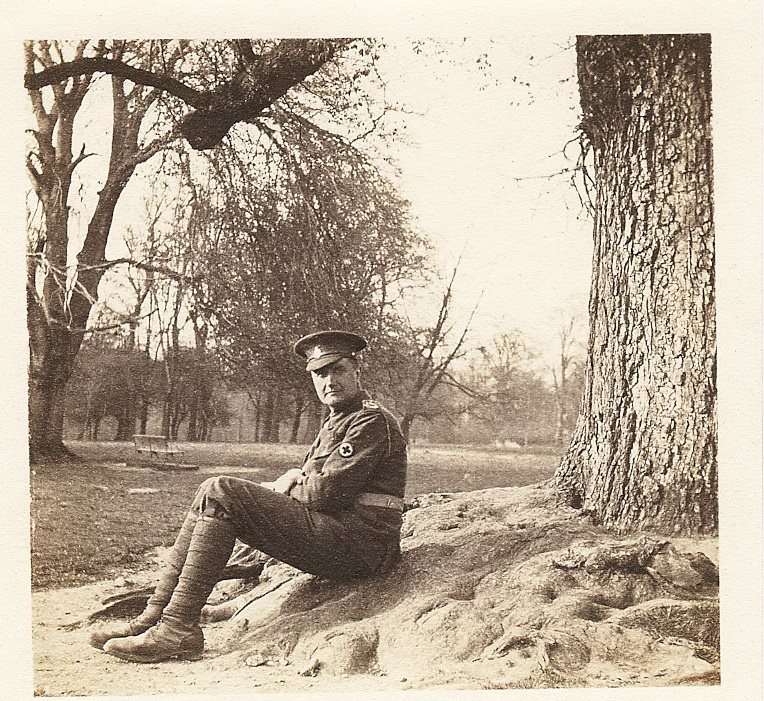
    While a good many of Vaughan Williams’ pieces are indeed pastoral, this one has something of a haunted undertow that belies its placid moniker. The composer was serving with the Royal Army Medical Corps in France during the First World War. At the end of the day, he would drive his ambulance up to the top of a hill and listen to a bugler practicing. On one occasion, the bugler accidentally played the interval of a seventh, as opposed to an octave. The trumpet solo in the second movement of the symphony enshrines this memory.

    It is pastoral, all right. As peaceful as the dead. The great Benita Valente sings the wordless soprano part in the final movement, like a distant milkmaid wandering the countryside. The contrast with the waste and destruction of the war leads to a moving and intense elegy that takes over, in this particular recording, around the 31 minute mark.

    Vaughan Williams’ next symphony, the Symphony No. 4, spilled over with rage and violence, clearing the air for one of the most hopeful utterances in all of music, his Symphony No. 5, composed, oddly enough, during the darkest days of World War II.

    Peter Warlock, who famously characterized Vaughan Williams’ music as “just a little too much like a cow looking over a gate,” called the Pastoral Symphony “a truly splendid work” and “the best English orchestral music of this century.”

    Ormandy and the Philadelphians performed the piece on October 12, 1972, to mark the centennial of Vaughan Williams’ birth. 1972 also happened to mark the semicentennial of “A Pastoral Symphony.”
  • John Foulds’ World Requiem A WWI Masterpiece

    John Foulds’ World Requiem A WWI Masterpiece

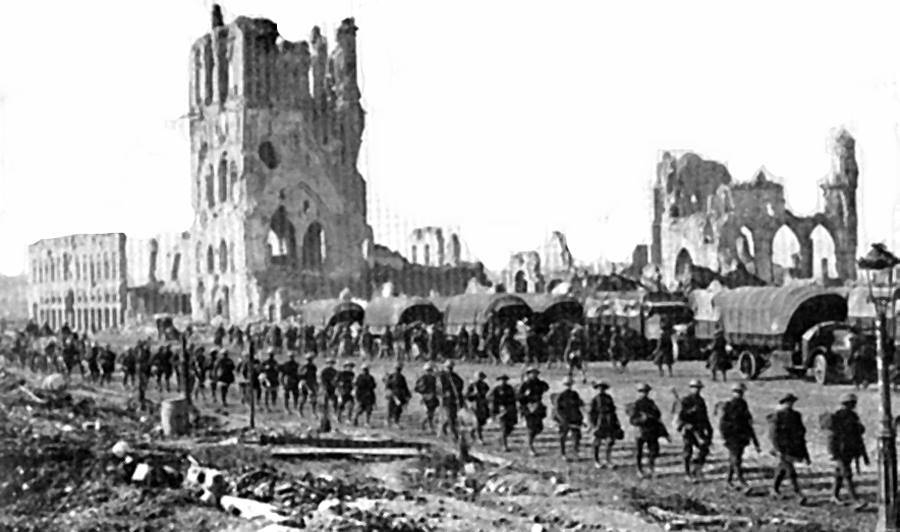
    John Foulds composed his massive oratorio, “A World Requiem,” between 1919 and 1921 to honor the memory of all those – of whatever nation – who fell during WWI. The text, in English, was assembled by his wife, Maud MacCarthy, the work’s dedicatee, who compiled it from the Requiem Mass, sundry Biblical passages, selections from John Bunyan’s “The Pilgrim’s Progress,” a poem by Kabir, and her own original material.

    The oratorio falls into 20 movements (in two parts of ten each) for soloists, massed choirs (including children’s choirs), large orchestra, offstage instrumentalists, and organ. A progressive tonal framework is spiced with quarter tones, cluster chords and certain repetitive sequences.

    It was first performed on Armistice Night, November 11, 1923, in Royal Albert Hall, by up to 1,250 musicians. The work was embraced by the public, though critical reaction was mixed. Subsequent performances took place from 1924 to 1926 as part of a Festival of Remembrance. Then the work lay neglected for some 80 years until revived in 2007 by the forces in this recording, under the direction of the indefatigable Leon Botstein.

      Part I
    

    1 I Requiem – 8:44
    2 II Pronuntiatio – 4:05
    3 III Confessio – 5:46
    4 IV Jubilatio – 5:06
    5 V Audite – 7:04
    6 VI Pax – 3:53
    7 VII Consolatio – 5:08
    8 XIII Refutatio – 0:38
    9 IX Lux Veritatis – 1:19
    10 X Requiem 3:25

      45:08
    
      Part II 
    

    1 XI Laudamus – 6:30
    2 XII Elysium – 6:24
    3 XIII In Pace – 3:17
    4 Hymn of the Redeemed – 4:37
    5 XIV Angeli – 3:27
    6 XV Vox Dei – 3:07
    7 XVI Adventus – 4:01
    8 XVII Vigilate – 2:03
    9 XVIII Promissio et Invocatio – 7:30
    10 XIX Benedictio – 1:41
    11 XX Consummatus 2:06

      44:50
    
  • Korngold Unleashed The Inner Pirate Composer

    Korngold Unleashed The Inner Pirate Composer

    Happy birthday, Erich Wolfgang Korngold (1897-1957). You unleashed my inner pirate and helped shepherd me into the wonderful world of orchestral music. Little did I realize at the time I was dueling my friends with my mother’s curtain rods that you wrote marvelous operas, too.

    Korngold conducts “The Adventures of Robin Hood”:

    The Sea Hawk:

    Renée Fleming sings from “Das Wunder der Heliane”
    https://www.youtube.com/watch?v=H2x5NgtGSx4

    His greatest operatic hit, Marietta’s Lied from “Die tote Stadt,” sung by Elisabeth Schwarzkopf:
    https://www.youtube.com/watch?v=ZoGQd1dsAlw

  • Sandburg’s America Music and Memorial Day

    Sandburg’s America Music and Memorial Day

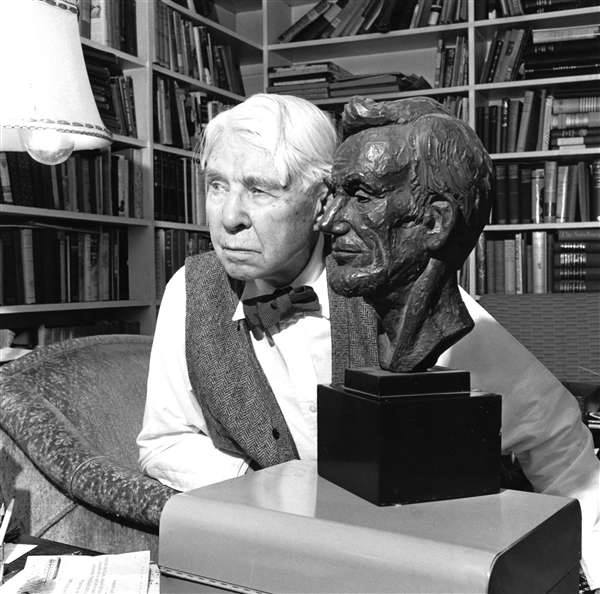
    Carl Sandburg was the recipient of three Pulitzer Prizes: two for his poetry, and a third for his biography of Abraham Lincoln. He was also known for his 1927 anthology “The American Songbag,” espousing our native folk song and anticipating the folksong revivals the 1940s and the 1960s. On top of everything else, he was awarded a Grammy for his recording of Aaron Copland’s “Lincoln Portrait.” When Sandburg died in 1967, at the age of 89, Lyndon Johnson observed that “Carl Sandburg was more than the voice of America, more than the poet of its strength and genius. He WAS America.”

    This Sunday night on “The Lost Chord,” we’ll hear music inspired by this popular – and populist – figure, with two works especially appropriate for Memorial Day and, in between, a piece after a poem evocative of the American heartland.

    Philadelphia composer Romeo Cascarino (1922-2002), who had served in the U.S. Army, composed a plaintive elegy, “Blades of Grass,” in 1945, just after World War II. He expressed a preference on several occasions that Sandburg’s poem “Grass” be read before performances. You’re probably familiar with it:

    Pile the bodies high at Austerlitz and Waterloo.
    Shovel them under and let me work—
    I am the grass; I cover all.

    And pile them high at Gettysburg
    And pile them high at Ypres and Verdun.
    Shovel them under and let me work.
    Two years, ten years, and passengers ask the conductor:
    What place is this?
    Where are we now?

                                          I am the grass. 
                                          Let me work.
    

    Leo Sowerby (1895-1968) was born in Grand Rapids, MI, and spent much of his career in the Midwest. Sometimes referred to as the “Dean of American church music,” he was the recipient of the Pulitzer Prize for Music in 1946 for his cantata, “The Canticle of the Sun.”

    The published score of his symphonic poem after Sandburg, titled “Prairie,” from 1929, bears the following lines:

    “Have you seen a red sunset drip over one of my cornfields, the shore of night stars, the wave lines of dawn up a wheat valley?

    “Have you heard my threshing crews yelling in the chaff of a strawpile and the running wheat of the wagonboards, my cornhuskers, my harvest hands hauling crops, singing dreams of women, worlds, horizons?”

    Last but certainly not least, Roy Harris, who shared Lincoln’s birthday (though born 89 years later), was born in a log cabin in Lincoln County, OK, only adding to his sense of destiny. Indeed he went on to become one of America’s greatest composers.

    Harris’ Symphony No. 6 is subtitled “Gettysburg.” It’s one of a number of works the composer wrote with a “Lincoln” connection. Each movement of the symphony bears a superscription taken from the Gettysburg Address: the first, “Awakening (‘Fourscore and seven years ago…’);” the second, “Conflict (‘Now we are engaged in a great civil war…’);” the third, “Dedication (“We are met on a great battlefield of that war…’);” and the fourth and final movement, “Affirmation (‘…that we here highly resolve that these dead shall not have died in vain…’).”

    Prior to composing the work, Harris read – you guessed it – Sandburg’s biography of Lincoln.

    I hope you’ll join me for “Lincoln Logger,” an hour of music inspired by Carl Sandburg, this Sunday night at 10 EDT, with a repeat Wednesday evening at 6; or that you’ll listen to it later as a webcast at wwfm.org.


    Although not on tonight’s show, here, as an added bonus, is Sandburg narrating Aaron Copland’s “Lincoln Portrait”:

  • Korngold’s “Die Kathrin” on WPRB Sunday

    Korngold’s “Die Kathrin” on WPRB Sunday

    I know it’s so early that even the roosters will be brewing their coffee, but if you want to get a taste of the melodic fecundity and lush orchestrations of Erich Wolfgang Korngold as opera composer, you’ll want to tune in to WPRB tomorrow for “Sunday Morning Opera” with Sandy Steiglitz.

    Sandy will be celebrating Korngold’s birthday with a complete recording of the composer’s final opera “Die Kathrin.” The piece is gorgeous. It may not be his most profound work for the stage, but it contains one great melody after another. Also, it is the opera closest in style to his film scores. He completed it in 1937, the same year as his work on “The Prince and the Pauper.” By that time, he had already written his Academy Award winning music for “Anthony Adverse.” “Captain Blood” was two years in the past. The opening of the opera (set outside a cinema!) sounds like it could have been written for “The Adventures of Robin Hood.”

    Technically the show runs from 6 to 10 a.m., with the opera beginning at 7; but because of the length, the main attraction this week will begin at 6:45 EDT. It makes no difference to Sandy; she’s there at 5:30 anyway, cleaning the studio and sharing the music she loves. So tune in early. I don’t know anyone who knows as much about opera, in terms of both repertoire and its recorded history, as Sandy does. It’s worth your while getting to know her show.

    Hear “Sunday Morning Opera” tomorrow morning on WPRB 103.3 FM or at wprb.com. Korngold goes great with breakfast. Happy birthday, EWK!


    Renée Fleming sings the Letter Song from “Die Kathrin”:

    https://www.youtube.com/watch?v=VcNJRo4K7fs

    Korngold plays it (courtesy of Brendan Carroll):

    https://www.youtube.com/watch?v=KgLXGInLMpc

    In case you missed it, here’s an interview I did with Sandy in 2012 for the Trenton Times.

    http://www.nj.com/times-entertainment/index.ssf/2012/08/sunday_morning_opera_host_sand.html


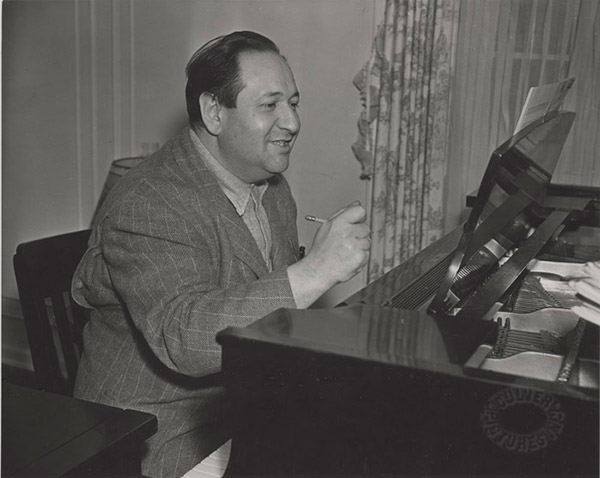
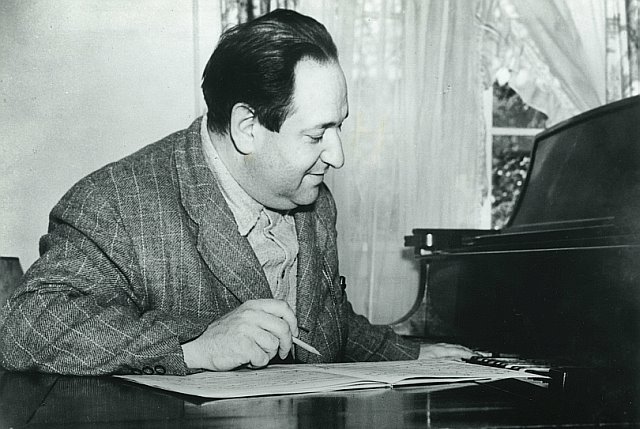
    PHOTO: Erich Wolfgang Korngold in 1937

Tag Cloud

Aaron Copland (94) Beethoven (95) Composer (114) Film Music (153) Film Score (143) Film Scores (255) Halloween (107) John Williams (198) KWAX (233) Leonard Bernstein (105) Marlboro Music Festival (125) Movie Music (168) Mozart (92) Opera (222) Philadelphia Orchestra (91) Picture Perfect (174) Princeton Symphony Orchestra (110) Radio (90) Ross Amico (244) Roy's Tie-Dye Sci-Fi Corner (290) The Classical Network (101) The Lost Chord (269) Vaughan Williams (107) WPRB (397) WWFM (881)

DON’T MISS A BEAT

Receive a weekly digest every Sunday at noon by signing up here


RECENT POSTS