Category: Daily Dispatch

  • English Nativity Settings: Parry & Vaughan Williams

    English Nativity Settings: Parry & Vaughan Williams

    This Sunday night on “The Lost Chord,” we’ll celebrate Christmas with an hour of English Nativity settings.

    Hubert Parry was part of the English Musical Renaissance – not the actual Renaissance, but rather that flowering of English music which took place at the close of the 19th century, after a nearly 200 year dearth of world class composers following the death of Henry Purcell in 1695.

    A professor at the Royal College of Music in London, Parry eventually became the school’s head. He influenced an entire generation of much better known composers, people like Ralph Vaughan Williams, Gustav Holst, John Ireland and Frank Bridge.

    We’ll be listening to Parry’s “Ode on the Nativity,” for soprano, chorus and orchestra, on a text by William Dunbar. The work was given its premiere in 1912 at the Hereford Three Choirs Festival, on the same day as Vaughan Williams’ “Fantasia on Christmas Carols.”

    Vaughan Williams wrote so much Christmas music. It’s remarkable that such a spiritual composer, who seemed particularly attracted to religious texts and Biblical subjects, was a self-proclaimed agnostic. At least by the end of his life he had softened his stance from atheism! He was particularly passionate about Christmas carols.

    We’ll be listening to the very last music he ever composed, “The First Nowell,” a nativity play arranged and adapted from medieval pageants by Simona Pakenham.

    Vaughan Williams worked diligently on the piece during his final month, but died before the work’s completion. Nonetheless, he had finished orchestrating two thirds of it and had mapped out the rest rather thoroughly. The finishing touches were applied by his assistant, Roy Douglas – he of “Les Sylphides” fame.

    By the way, Douglas just turned 107 on December 12! He is still listed on the board of the Ralph Vaughan Williams Society as its vice-president. Next to Douglas, Vaughan Williams was a mere lad while he was at work on the piece, at the age of 85.

    I hope you’ll join me for “A Play in a Manger,” this Sunday night at 10 ET, with a repeat Christmas Eve at 6; or that you’ll listen to it later as a webcast at http://www.wwfm.org.

    Merry Christmas!

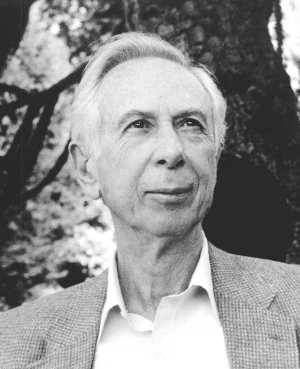
    PHOTOS: Vaughan Williams with fur on his clothes; Parry with fur on his face

  • Winter Solstice & Holiday Hope

    Winter Solstice & Holiday Hope

    ADVENT CALENDAR – DAY 22

    No matter what your personal creed, the real reason for the season is the Winter Solstice, the shortest day, which is why this time of year so many of the world’s cultures pull out all the stops with music, drink, evergreen, gifts and bizarre localized customs like the Yule goat (see my post of Dec. 3). It all goes back to man’s primordial desire to restore the sun and drive the cold winter away.

    So whether you set up a crèche, light candles or get liquored up and leap over bonfires, embrace life, family and community and look to the New Year with courage, optimism and appreciation. Christmas is about nothing if not hope. And love, I suppose. Remember that the next few days when you’re tempted to exchange scowls with the person who cuts you off on the way to Christmas shopping. We’re all only human. But sometimes that can be enough.

    Welcome Yule!

    One of my favorite Christmas traditions:

    One of my favorite Christmas albums (click “play all,” though you may have to be on guard to skip the occasional disruptive ad):

    https://www.youtube.com/playlist?list=PLAA2q_i2tCon6CepTgeL0n1UDUim8aueq

    This year, the original Revels runs through December 28. Search under “Revels Nationwide” at the top of the page (via the link below) to find the Revels nearest you.

    Home

    Unfortunately, the Philadelphia Revels, which used to be held in Bryn Mawr, appears to have gone belly-up. Back in the day, back in the day…

    http://articles.philly.com/1989-12-15/entertainment/26159564_1_holiday-tradition-dances-christmas

    It’s refreshing to see a Twelfth Night celebration scheduled for Boston. Contrary to what many believe (especially radio stations), Christmas does not end on December 25.

  • Liszt’s Christus A Christmas Weekend Listen

    Liszt’s Christus A Christmas Weekend Listen

    ADVENT CALENDAR – DAY 21

    I try to make it a point to listen to Franz Liszt’s oratorio, “Christus,” every year, whether I need it or not.

    It helps that I love Liszt, of course. Not all of his music – someone so prolific had to turn out a clunker now and then – but he was such a noble, well-intentioned guy. I’ve been a hardcore admirer ever since I read Alan Walker’s biography about 14 years ago. And hearing so many performances of his Piano Sonata certainly didn’t hurt.

    Liszt was one of the most original musical thinkers of the 19th century. In fact, I’d go so far as to say that, after Beethoven, Liszt was probably the most influential musician of the 1800s. There was likely no composer who didn’t at some point make a decision to follow or react against him. Liszt wrote a lot of wonderful music, and at least as much that might be construed as a little embarrassing. He was more successful as a musical thinker than he was a consistent executor of his ideas. But Wagner, to name just one, would have been a very different composer without Liszt. And we all know how influential Wagner was.

    Liszt’s flamboyance was legendary, but I think his reputation in that regard stemmed mostly from the overwhelming impressions he created in recital, and the crowds’ hysterical reactions to them. Liszt was also an introverted, thoughtful, pious man. He was so pious, in fact, that at one point he wound up taking minor orders and living in a cell in Rome, where he was known as the Abbé Liszt. So his religious works were not mere posturing.

    The incredible “Christus” is an oratorio in three parts that is really part oratorio, part loose collection of symphonic poems. Part I, the Christmas portion, contains two purely orchestral movements, which together comprise about half an hour. The concluding “March of the Three Holy Kings” is a corker. It’s also interesting in that one of the movement’s main themes is nearly identical to Wagner’s motif for Wotan. Which came first? Both “Christus” and “Das Rheingold” were written at just about the same time.

    I know it’s the last weekend before Christmas, so everyone is likely very busy, but if there is any time to listen to “Christus” it is on a weekend. Maybe you can block out three hours late on your Sunday afternoon. Kick back on the sofa with the Christmas lights on, enjoy the tree, and wallow in this ambitious, romantic music.

    Part I: https://www.youtube.com/watch?v=F_KWFIl_XR4
    Part II: https://www.youtube.com/watch?v=pcFd4m2wa1M
    Part III: https://www.youtube.com/watch?v=6hEdexzXqcI

    If you just can’t get enough, here’s Liszt’s “Christmas Tree Suite.”

    Some of the movements in the first half incorporate traditional carols (including “Adeste Fideles,” in yet another evocation of the Three Holy Kings). In the later movements, Liszt just kind of dreamily wanders into the future the way only Liszt can. All of the movement titles are listed on the page containing the video.

    PHOTOS: Liszt takes the cloth (left); Jesus gets frankincense and myrrh

  • Trenton Princeton Classical Music Holiday Concerts

    Trenton Princeton Classical Music Holiday Concerts

    ADVENT CALENDAR – DAY 20

    The concert calendar is nearly as frenzied as the last-minute holiday shoppers.

    Here are but four programs of interest, scheduled to take place in the Trenton-Princeton area over the course of this last weekend before Christmas. Hopefully you can find a few hours to enjoy.

    My article in today’s Trenton Times:

    http://www.nj.com/times-entertainment/index.ssf/2014/12/classical_music_its_not_christ.html

    PHOTOS: Bach or Handel for the holidays? Decisions, decisions…

  • Nutcracker’s Dark Side: Hoffmann’s Sinister Tale

    Nutcracker’s Dark Side: Hoffmann’s Sinister Tale

    ADVENT CALENDAR – DAY 18

    If you ever detected a sinister undertow in Tchaikovsky’s ballet “The Nutcracker,” the source material, by E.T.A. Hoffmann is much worse.

    Hoffmann’s 1816 story focuses on the Nutcracker’s battle with the evil Mouse King, filtered through the vivid imagination of a doomed dreamer with a perpetual mistrust of adults. It’s Herr Drosselmayer all the way, baby.

    It often puzzles me how so many adaptations of Hoffmann’s stories gloss over the sinister and the uncanny elements. “The Nutcracker” has its share of up-tempo numbers. They’re mostly the ones we hear in stores while we’re out Christmas shopping. However, there’s little doubt the composer grasped the inexorable undertow of Hoffmann, since his score conveys plenty of anxiety to counterbalance the twee sweets.

    Listen to the bass clarinet slither beneath that glittery celesta in the “Dance of the Sugar Plum Fairy.” And what’s all that creeping around, with the disturbing sforzandi? There’s something desperate and perhaps a little manic underpinning the magic.

    Maurice Sendak completely gets it:

    https://www.youtube.com/watch?v=crBAbuoytnA

Tag Cloud

Aaron Copland (92) Beethoven (95) Composer (114) Film Music (119) Film Score (143) Film Scores (255) Halloween (94) John Williams (185) KWAX (229) Leonard Bernstein (99) Marlboro Music Festival (125) Movie Music (134) Opera (198) Philadelphia Orchestra (87) Picture Perfect (174) Princeton Symphony Orchestra (106) Radio (87) Ralph Vaughan Williams (85) Ross Amico (244) Roy's Tie-Dye Sci-Fi Corner (290) The Classical Network (101) The Lost Chord (268) Vaughan Williams (102) WPRB (396) WWFM (881)

DON’T MISS A BEAT

Receive a weekly digest every Sunday at noon by signing up here


RECENT POSTS