
MERRY COPTIC CHRISTMAS!
Category: Daily Dispatch
-
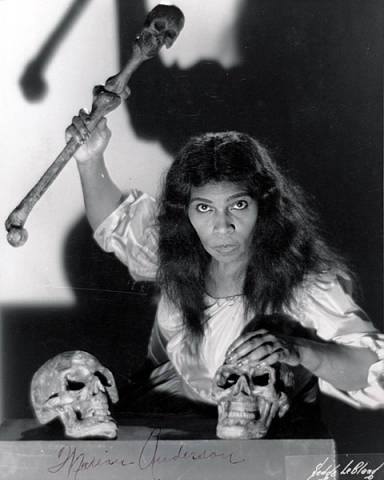
Marian Anderson’s Historic Met Debut
Philadelphia-born contralto Marian Anderson, famously lauded by Arturo Toscanini as having “a voice such as one hears once in a hundred years,” made her belated Metropolitan Opera debut on this date 60 years ago – January 7, 1955.
She was the first African American to be so permitted. Why anyone would keep so talented an individual from singing on any stage anywhere on account of her skin color defies comprehension. What were people thinking?
It’s great that she sang Ulrica and all, and I’m sure she was marvelous, if getting on in years (she was a month shy of her 58th birthday), but there’s always something about the stills that make me a little uncomfortable, as if they were trying to portray her as some sort of voodoo priestess, like she was Screamin’ Jay Hawkins or something.
Here’s a sample of Anderson as Ulrica: https://www.youtube.com/watch?v=oTUfEcTRzIY
Give that woman a drink from the Ezio Pinza fountain!
-
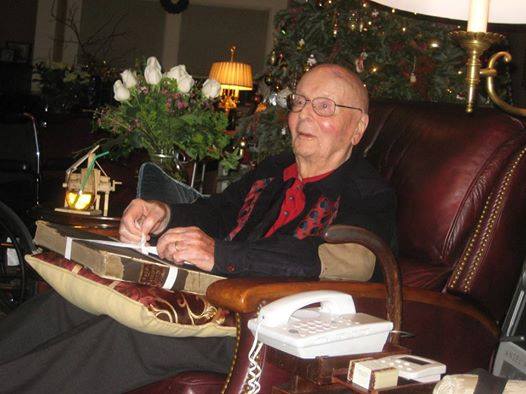
William Scheide Radio Tribute Princeton
If you just can’t get enough of William H. Scheide and the Bach Aria Group, tune in tomorrow morning to Princeton’s WPRB 103.3 FM (or listen online at http://www.wprb.com) for a belated birthday salute from Teri Noel Towe. Towe, host of Towe on Thursday, was an intimate friend of Scheide for over 40 years. The two shared the microphone on a number occasions, and Teri will revisit one of those. The program is bound to include some personal reminiscences. You can listen from 6 to 11 a.m. ET.
Of perhaps related interest, my WWFM tribute, “William H. Scheide: A Job Well-Done” (sporting a title ripped from a Towe quote), which originally aired yesterday (the 101st anniversary of Scheide’s birth), will be rebroadcast Friday evening at 8, at 89.1 FM or online at http://www.wwfm.org. I’ll be tweaking the files between now and then so that the rebroadcast will contain subtle differences, including a couple of alternate music files.
My thanks to Teri for his suggestions, and to Mark Laycock for sending me audio from the Scheide 100th birthday concert, which took place last year at Richardson Auditorium.
-

Twelfth Night Confusion Christmas Day Count?
Okay, as a lover of all things Christmas, I’m confused. What day of Christmas is it anyway?
I know it’s Epiphany, but isn’t it supposed to be the Twelfth Day of Christmas, as well? Did I miss my Twelfth Night revel? Was I supposed to start counting on Christmas Day, or the day after? My certainty of Christmas lore is shaken.
According to what I glean from Wikipedia (which is never wrong), nobody quite knows the correct answer – or they think they do and that everyone else is full of s***.
I’d better put on my yellow stockings and cross garters just in case.
http://en.wikipedia.org/wiki/Twelfth_Night_(holiday)
Perhaps that explains the Shakespearean subtitle, “What You Will.”
-

Remembering William Scheide Bach Scholar
Princeton philanthropist, humanitarian and Bach scholar William H. Scheide died on November 14, 2014.
To mark what would have been Scheide’s 101st birthday today, WWFM commissioned me to put together a two-hour tribute, complete with interviews with those who knew him best, including oboist and recorder virtuoso John Burkhalter, conductor Mark Laycock, pianist and associate director of the Scheide Fund Mariam Nazarian, former Scheide librarian Wlliam Stoneman, WPRB radio personality (with a capital “P”) Teri Noel Towe, Bach scholar Christoph Wolff, and of course his wife, Judith Scheide.
The program will also feature rare recordings of the Bach Aria Group, an ensemble Scheide founded in 1946 and directed for over 30 years. The Bach Aria Group included as regulars or guests such musical luminaries as Eileen Farrell, Carol Smith, Jan Peerce, Maureen Forrester, Jennie Tourel, Norman Farrow, Marian Anderson, Mack Harrell, William Warfield, Julius Baker, Robert Bloom, Maurice Wilk, Oscar Shumsky, Bernard Greenhouse, Yehudi Wyner, and so many others. Robert Shaw even conducts one of the recordings.
There’s also an excerpt from a rare radio broadcast which originally aired in 1948, with Scheide explaining the mission of the group, and a private recording of Scheide at the piano, playing Chopin, at the age of 92.
In addition to his Bach research and rare book collecting, for which he is justly celebrated, Scheide aided not only Princeton University and Westminster Choir College of Rider University, but any number of charitable organizations, to promote education, health, civil rights, relief from poverty and hunger, and the general welfare of mankind.
The next Scheide benefit concert, with Laycock conducting the English Chamber Orchestra at Philadelphia’s Kimmel Center for the Performing Arts on January 27, will benefit the music and education program, Musicopia.
The station has been promoting this tribute to an embarrassing degree, so it’s a good thing I finished editing it shortly before 8:00 this morning, after an all-nighter fueled by burritos and Dunkin’ Donuts tea.
It’s only seconds away. Tune in to http://www.wwfm.org at 12 ET for “William H. Scheide: A Job Well Done.” If you miss it, I’m told it will be posted on the station website. I wouldn’t be in the least bit surprised if it is also rerun at some point. The title is stolen from the eminently quotable Towe.
The opening is brilliant, if I do say so myself. It may get less so as the two hours grind on. It remains to be heard.
Priceless photos of the Bach Aria Group here:
Tag Cloud
Aaron Copland (93) Beethoven (95) Composer (114) Film Music (139) Film Score (143) Film Scores (255) Halloween (94) John Williams (195) KWAX (229) Leonard Bernstein (103) Marlboro Music Festival (125) Movie Music (154) Mozart (89) Opera (210) Philadelphia Orchestra (89) Picture Perfect (174) Princeton Symphony Orchestra (108) Radio (88) Ross Amico (244) Roy's Tie-Dye Sci-Fi Corner (290) The Classical Network (101) The Lost Chord (268) Vaughan Williams (103) WPRB (396) WWFM (881)