Black Pete has been in the news a lot the last few years. I guess it’s not surprising. White men in blackface just aren’t as acceptable as they were in the days of Al Jolson and Eddie Cantor. Except, that is, in the Netherlands.
According to Low Countries Christmas lore, Zwarte Piet is the companion of Saint Nicholas. (I guess Krampus has his talons full in the Alps.) He is therefore an integral part of the Dutch celebrations surrounding Saint Nicholas Day, December 6. Like Krampus, he goes into overdrive on December 5 (Saint Nicholas’ Eve).
Since the character is supposed to be of Moorish origin (in Dutch tradition Saint Nick arrives in a boat from Spain), Pete is depicted as a blackamoor – I mean, it’s right there in his name, isn’t it? – and in modern times this has been disturbing to some.
While at first glance, the character has some of the minstrel show trimmings – the curly wig, the red lipstick – Pete’s role is generally a benign one. He shows up in Renaissance garb and makes children happy by distributing sweets. There are far more uncomfortable depictions in that flawed abolitionist firebrand, “Uncle Tom’s Cabin.”
Again, his origin, like so many of the Christmas traditions, may be traced to the Norse myths, in which Odin was accompanied by two black companions (in his case, ravens). Like Black Pete, they would listen at people’s chimneys to find out who’s been naughty and who’s been nice.
Less innocuous, perhaps, is the tradition of Saint Nicholas being accompanied by an enslaved devil to do his bidding (à la Krampus), which I can see as being offensive if a direct line could be drawn to Pete (devil = blackamoor).
Before Zwarte Piet was popularized in the Netherlands in the 19th century, Saint Nicholas, or Sinterklaas, had quite a different disposition. He was terrifying and quite severe. The old Sinterklaas songs tell of presents for well-behaved children, while the naughty are hauled off to Spain (and what punishment is worse than that?). Undeserving children receive a birch bundle (suggestive of a good flogging) or a lump of coal.
If I may draw a parallel to Popeye lore, the whole thing reminds me of E.C. Segar’s introduction of Poopdeck Pappy, Popeye’s recalcitrant paterfamilias. Apparently the character of Popeye had gotten so edgy by the mid-‘30s that the newspapers were starting to get mail from readers appalled when the squint-eyed sailor punched out women and things of that sort. So Segar invented Poopdeck Pappy and transferred all the questionable (though admittedly cathartic) behavior to the old man.
So it was with Krampus, and then Black Pete. However, as the 19th century progressed both Pete and Nicholas got a lot fuzzier around the edges, so that now one is more beloved by children than the other.
Anyway, so as not to come across as insensitive, I can see how, to modern eyes, it might be disturbing to see a guy in a big white beard arrive on a ship full of black servants. Some of the traditions claim that Pete is black from his constant proximity to chimneys. It was only in the early 20th century that the slave narrative entered it. Even so, if we accept Pete as a slave, he is supposed to be a slave emancipated by Saint Nicholas and bound to him in lifelong friendship.
The accusations of racism and revisionism have become more prevalent in the 21st century. In response, there have been attempts to skirt the issue at some celebrations by presenting Pete in different colors or as evidently soot-swept.
I won’t smother you with links to articles about the controversy. All you need do is Google “Black Pete,” and you will find plenty of press.
Black Pete is also part of the Christmas traditions of Curaçao, Aruba, Belgium and Luxembourg.
Here are two informative minutes about Black Pete, evidently a teaser for a longer documentary – with some cameos by Krampus!
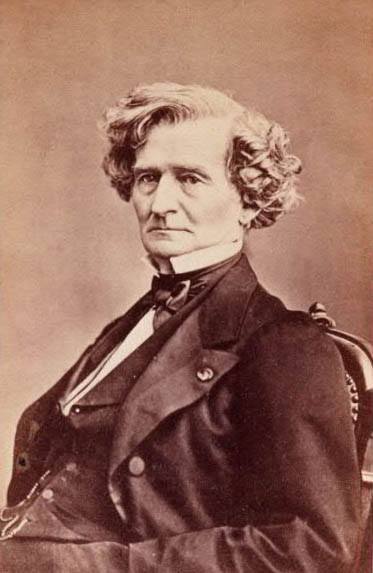
Today is the birthday of César Franck (1822-1890), French composer of Belgian birth. Since this, after all, is supposed to be a music page, I am appending Franck’s “Panis Angelicus” for the holidays.
And as a bonus, Joseph Jongen’s “Fantasy on Two Walloon Christmas Carols”:
Black Pete and Raaf sing a Sinterklaas song:
PHOTO: Soot or slavery? Sinterklaas and Black Pete.
I am so sorry to learn of the death of Lydia Mordkovitch, a fantastic violinist who undertook much interesting repertoire and interpreted it convincingly – and often thrillingly – on her recordings for the Chandos Records label. Mordkovitch, a student of David Oistrakh, died of cancer in London yesterday at the age of 70. She won a Grammy in 1990 for her superlative disc of the Shostakovich concertos.
Just as a “for instance,” here’s Mordkovitch playing William Alwyn:
Sibelius wrote five Christmas songs between 1897 and 1913. These were published as his Opus 1. This is the best known of the bunch, “En Etsi Valtaa Loistoa” (“I seek not power, glory or gold”), which he composed in 1909, on a text of Zacharias Topelius.
I seek not power, glory or gold,
I wish for the light of Heaven and peace on Earth.
Let Christmas bring happiness and put us in mind of heavenly things.
Neither power nor gold but peace on Earth.
May the wonder of Christmas come to both poor and rich;
Into Earth’s darkness bring the light of Heaven.
For you I yearn, you I await, Lord of Earth and Heaven,
Now bring sweet Christmas to poor and rich.
Since today is Sibelius’ birthday, I’m including it in my Advent calendar.
Also, one by contemporary Finnish composer Einojuhani Rautavaara:
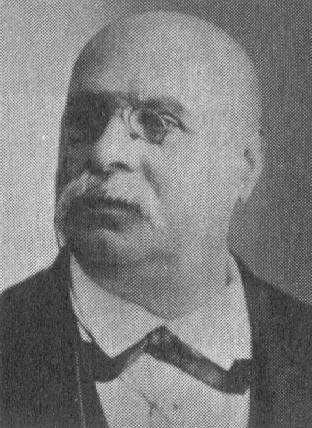
Today is the birthday of Emil Waldteufel (1837-1915).
Waldteufel was a graduate of the Paris Conservatory, who became a court pianist to Empress Eugénie. His orchestra played at state balls and, following the dissolution of the Second Empire, Presidential balls.
In 1874, he was heard by the Prince of Wales (the future King Edward VII), who introduced him to the London music scene. His success in London proved a springboard to world fame.
Here are two Waldteufel waltzes for the season. One is very well-known, one not so much so.
Les Patineurs (The Skaters):
Roses de Noël (Christmas Roses):
FUN FACT: Waldteufel’s surname is German for “Forest Devil.”