“La generazione dell’ottanta” is a label used to describe that group of Italian composers born around 1880. By and large, they are remembered for their contributions to orchestral and instrumental music, as opposed to opera, though their contributions to the latter form were not inconsiderable. The group included Franco Alfano, Alfredo Casella, Gian Francesco Malipiero, Ildebrando Pizzetti, and the best known of the bunch, Ottorino Respighi.
This Sunday night on “The Lost Chord,” we’ll enjoy seasonal works by three of them.
Respighi wrote his “Poema autunnale,” for violin and orchestra, in 1926. He prefaced his score with the following descriptive program:
“A sweet melancholy pervades the poet’s feelings, but a joyful vintner’s song and the rhythm of a Dionysiac dance disturb his reverie. Fauns and Bacchantes disperse at the appearance of Pan, who walks alone through the fields under a gentle rain of golden leaves.”
The work is meditative, lovely and uplifting in the manner of Vaughan Williams’ “The Lark Ascending.”
For a composer who disliked sonata form, Malipiero certainly wrote a lot of symphonies – 11 numbered symphonies, in all – though largely on his own terms. Two of these were inspired by the seasons.
In the case of the Symphony No. 1, composed in 1933, the connection might be said to be analogous, as opposed to strictly programmatic. His initial plan had been to set passages from Anton Maria Lamberti’s poem, “La stagione.” Ultimately, he abandoned that design, but the idea of an annual cycle remained.
The composer subtitled the work, “In Quattro tempi, come le quattro stagioni” (“In four movements, like the four seasons”). Indeed, the first has something of a vernal flavor, with the second, according to the composer, “strong and vehement like summer,” the third autumnal, and the fourth akin to “the winter carnival season and the gaiety of snow.”
The program will open with music by Pizzetti that, while not strictly seasonal, is clearly of an autumnal cast. His “Preludio a un altro giorno” (“Prelude to Another Day”) is a fairly late piece, and rather a world-weary one, composed in 1952.
Just before writing it, Pizzetti had received a painful letter from his former teacher, Giovanni Tebaldini, then 87 and praying for death after a series of strokes left him confined to a chair, terrified to stand for fear of falling. Not surprisingly, I thought it best to listen to this one first, so that we could relax and enjoy the leaves and snow.
I hope you’ll join me for “Italian Seasoning,” tonight at 10 ET, with a repeat Wednesday evening at 6; or that you’ll enjoy it later as a webcast at http://www.wwfm.org.
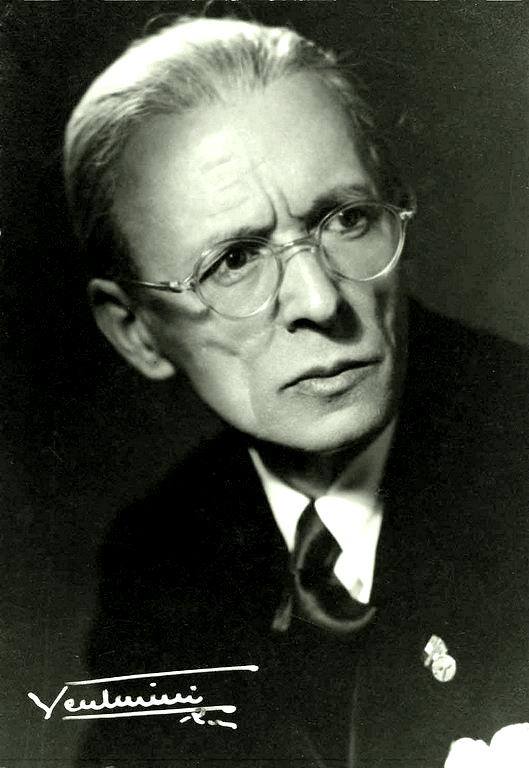
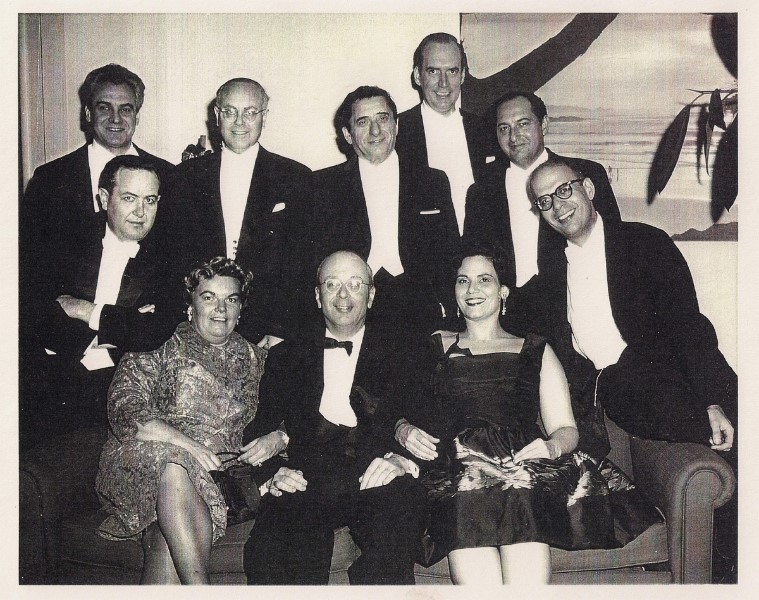
PHOTOS: Pizzetti looking severe; Malipiero and Respighi enjoying la dolce vita