Category: Daily Dispatch

  • Focus Like Mahler Build a Composing Hut

    Focus Like Mahler Build a Composing Hut

    Have a hard time focusing? Can’t seem to get your work done? Get yourself a composing hut!

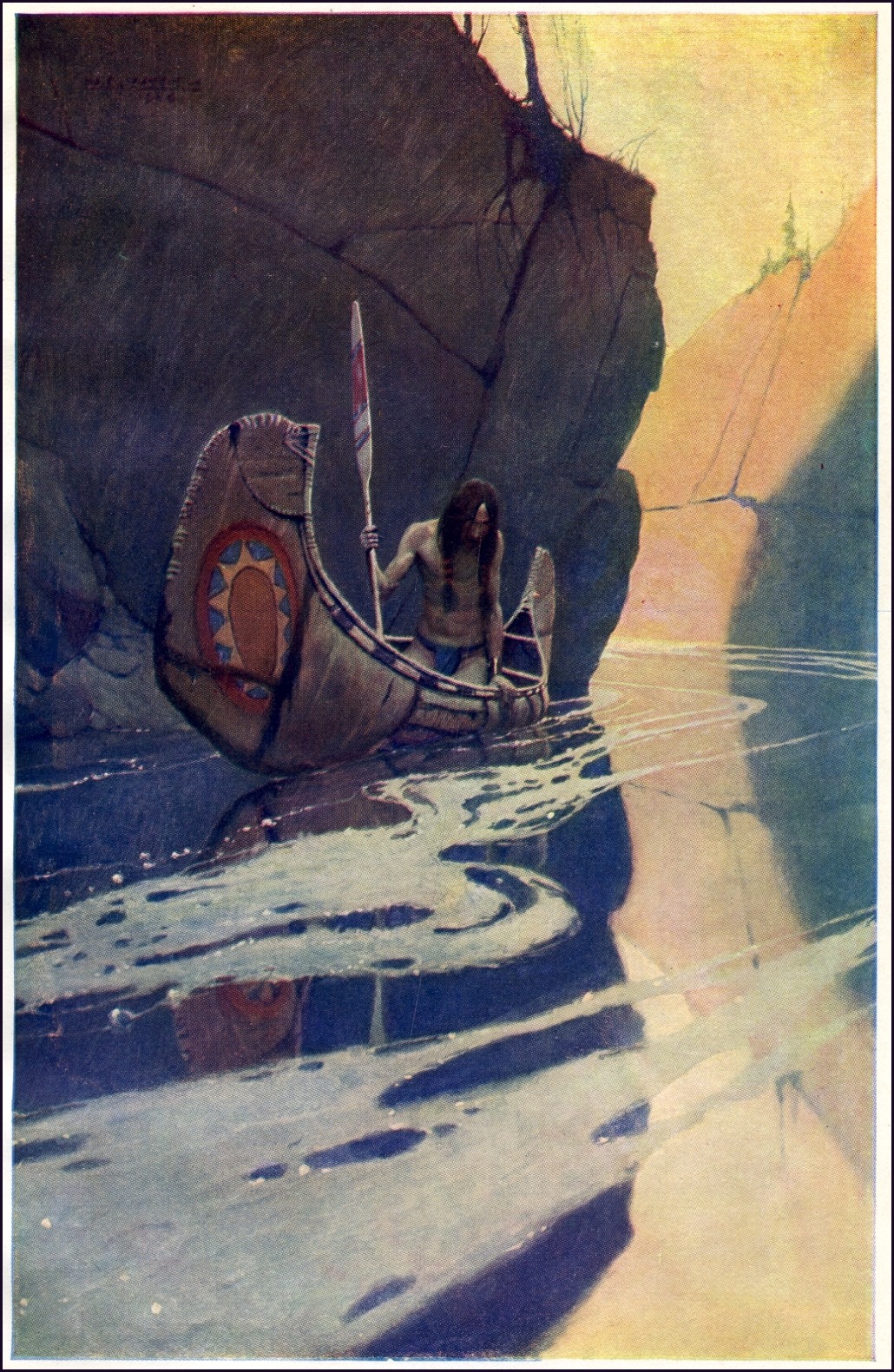
    Grieg had one. Mahler had several. Perhaps niftiest of all, George Bernard Shaw had a writer’s hut, which he could rotate with the sun.

    Yessiree. Get yourself a hut.

    Also, stay off the internet.

    Happy birthday, Gustav Mahler! Thank you for your productivity.

    Here’s a private video tour of Mahler’s Komponierhäuschen in Toblach, where he composed his 9th Symphony:

    And Leonard Bernstein conducting the 9th:

    PHOTOS: Huts belonging to Grieg (red), Shaw (pictured), and two used by Mahler

  • American Composers & Arthurian Legend

    American Composers & Arthurian Legend

    In the wake of Hurricane Arthur, while continuing to honor our native musical heritage on this Independence Day weekend, this Sunday night on “The Lost Chord,” the focus will be on treatments of the Arthurian legends by a couple of American Romantics.

    We’ll hear “Excalibur,” a symphonic poem after Arthur’s magic sword, by Louis Coerne (pronounced “Kern”). Coerne was born in Newark, NJ, in 1870. As was the custom at the time, he studied abroad, in France and Germany, then closer to home with John Knowles Paine. In Munich, he pursued organ and composition studies with Josef Rheinberger.

    After that, it was back and forth to Germany, between church and conducting appointments in the United States, and then the assumption of a series of academic posts throughout the American Northeast and Midwest. In his 52 years, despite all the worn shoe leather, he managed to produce 500 works.

    The remainder of the hour will be taken up by the Straussian tone poem “Le Roi Arthur,” a work in three movements, by George Templeton Strong, son of the famous Civil War diarist, born in 1856. Strong, Jr., studied at the Leipzig conservatory, where Joachim Raff was among his teachers. For a time, he played viola in the Gewandhaus Orchestra. He rubbed shoulders with Liszt and Wagner, then was lured back to the United States by the offer of a teaching position at the New England Conservatory (by former European transplant Edward MacDowell).

    However, in part because the work didn’t agree with him, and in part because of health issues, Strong soon took off for Switzerland, where he settled on the banks of Lake Geneva. There, he dedicated the remainder of his life to painting watercolors and composing, even after musical fashion had changed, playing an active role in Geneva’s musical life.

    That’s “Kinetic Yankees in King Arthur’s Court” – treatments of the Arthurian legends by peripatetic American composers. “The Lost Chord” can be heard tonight at 10 ET, with the repeat in its new slot, Friday at 3 a.m. If you’re not a vampire bat, you can listen to it later as a webcast, at http://www.wwfm.org.

  • George Rochberg A Birthday Celebration

    George Rochberg A Birthday Celebration

    Today is the birthday of George Rochberg (born in Paterson, NJ, in 1918; died in Bryn Mawr, PA, in 2005), for decades a staple of the University of Pennsylvania music department, which he chaired until 1968. He continued to teach there until 1983.

    Rochberg’s music underwent a compelling transformation, when, following the death of his teenage son in 1964, he suddenly found the serial palette he had up until then employed inadequate to express his grief. By the 1970s, he had begun incorporating tonal passages into his music, much to the dismay of his peers. Little did anyone realize at the time that this was the most avant garde approach Rochberg could have taken. His music heralded a return to tonality and the embrace of a new romanticism that has since become the norm.

    Here’s a selection from his Symphony No. 2 (1955-1956), which is serial but, contrary to his later concerns, still emotionally expressive:

    https://www.youtube.com/watch?v=qHf9VueIzG8

    Then the Pachelbel variations from his String Quartet No. 6 (1978):

    And finally, the opening of his lovely “Transcendental Variations” (1971-1972, the third movement of his String Quartet No. 3, transcribed for string orchestra in 1975):

    Happy birthday, George Rochberg!

    PHOTOS: Rochberg (left) and a bust by his friend, the sculptor Christopher Cairns

  • Fred Astaire’s 4th of July Dance in Holiday Inn

    Fred Astaire’s 4th of July Dance in Holiday Inn

    Happy Birthday, America! Here’s Fred Astaire doing his thing, from “Holiday Inn.”

    http://fan.tcm.com/_Holiday-Inn-Firecracker-dance/video/864017/66470.html?createPassive=true

    Unfortunately, I couldn’t find any clips of Bing as the Freedom Man (pictured top).

    As a footnote, here’s my article about this summer’s big goings-on in the Great Auditorium at Ocean Grove, in today’s Trenton Times:

    http://www.nj.com/times-entertainment/index.ssf/2014/07/musicians_to_fill_ocean_groves.html

    Be safe, everybody! Don’t do anything I would do.

  • Independence Day Movie Music

    Independence Day Movie Music

    Tomorrow is Independence Day, so it seems appropriate this week on “Picture Perfect” to treat the subject of music from movies related to the birth of our nation.

    We’ll hear selections from the 2000 Mel Gibson film, “The Patriot,” in which slow-burning pacifist Mel is pushed too far by ruthless British officer Jason Isaacs and reverts to his bloody French and Indian War ways. By the end of the film, he is literally waving the flag to John Williams’ triumphant score.

    Then we’ll hear a suite from the 1942 Jack Benny-Ann Sheridan fixer-up comedy, “George Washington Slept Here,” based on the play by Moss Hart and George S. Kaufman – not really about the Revolution, beyond the fact that the ramshackle Pennsylvania farm house purchased by a transplanted New York couple is alleged to have been the resting place of the Revolution’s most famous general. The music is by Adolph Deutsch.

    The 1985 film, “Revolution,” seemed to have everything going for it. The director was Hugh Hudson, whose “Chariots of Fire” was the big winner at the 1981 Academy Awards; its star was Al Pacino; and its composer was John Corigliano, who went on to win the Pulitzer Prize for Music for his Symphony No. 2 and an Academy Award for “The Red Violin.” Yet “Revolution” bombed horribly – so horribly that Pacino gave up making movies for the next four years. James Galway plays the flute and pennywhistle on the film’s soundtrack.

    Finally, we’ll hear music from the longest continuously-shown film in cinematic history, “Williamsburg: The Story of a Patriot,” created exclusively for the tourist attraction of Colonial Williamsburg. The film features future “Hawaii Five-O” star Jack Lord, and the score is by none other than Bernard Herrmann.

    Here’s a clip from “Williamsburg,” with some of Herrmann’s music:

    https://www.youtube.com/watch?v=A0VXfVhenXQ

    We celebrate Independence Day this week, on “Picture Perfect,” music for the movies. You can hear it this Friday evening at 6 ET, or enjoy it later as a webcast at http://www.wwfm.org.

Tag Cloud

Aaron Copland (92) Beethoven (95) Composer (114) Film Music (119) Film Score (143) Film Scores (255) Halloween (94) John Williams (185) KWAX (229) Leonard Bernstein (99) Marlboro Music Festival (125) Movie Music (134) Opera (198) Philadelphia Orchestra (86) Picture Perfect (174) Princeton Symphony Orchestra (106) Radio (87) Ralph Vaughan Williams (85) Ross Amico (244) Roy's Tie-Dye Sci-Fi Corner (290) The Classical Network (101) The Lost Chord (268) Vaughan Williams (102) WPRB (396) WWFM (881)

DON’T MISS A BEAT

Receive a weekly digest every Sunday at noon by signing up here


RECENT POSTS