I’m pretty much up to my eyeballs, so I’m borrowing this one from Norman Lebrecht. Here’s Anna-Maria Hefele to share her extraterrestrial mastery of polyphonic overtone singing:
More crazy stuff on her website as you scroll down the page.
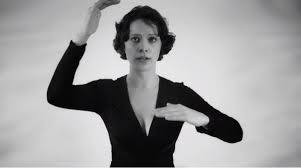
I’m pretty much up to my eyeballs, so I’m borrowing this one from Norman Lebrecht. Here’s Anna-Maria Hefele to share her extraterrestrial mastery of polyphonic overtone singing:
More crazy stuff on her website as you scroll down the page.
Personally I love this weather, but if the early morning autumn chill makes you long for summer nights that make your head feel like it is stuck in a pressure cooker, then maybe you should put on some Karol Szymanowski.
Szymanowski, probably the most celebrated Polish composer to have lived between Chopin and Lutoslawski, rode Hokusai’s wave of Impressionism clear into the Tatras highlands.
Strange, oriental dreams follow the exertion. The listener awakes in a languid, atonal nightscape, with an occasional, distant fiddle overheard from a brigands’ camp. Caddisflies and vampires flourish, but reason fails. It is the world of “The Manuscript Found in Saragasso.”
Happy birthday, Karol Szymanowski.
Szymanowski’s Violin Concerto No. 1 (1916):
His Symphony No. 4 “Song of the Night” (1914-1916):
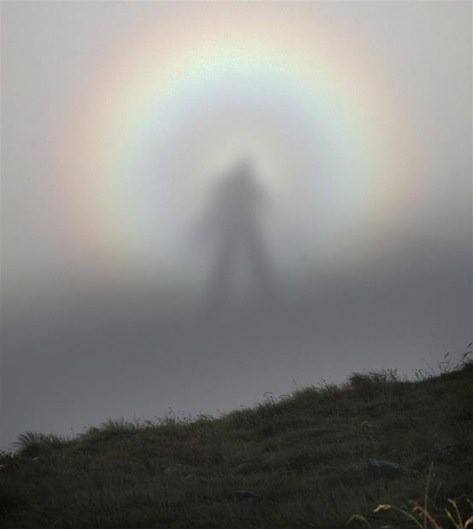
PHOTO: Optic phenomenon known as the “Brocken Spectre,” captured in the Tatra Mountains, which occurs when a person sees his shadow cast on a cloud at a lower altitude
Cello, da!
This Sunday night on “The Lost Chord,” we’ll hear two works for cello and orchestra, written by composers of Eastern European origin, both of whom attained fame in Russia.
Carl Davidoff (sometimes spelled Karl Davydov) was born in Latvia in 1838. He became head of the St. Petersburg Conservatory, where Tchaikovsky was a colleague. Tchaikovsky dubbed him “The Tsar of the Cello.” Davidoff wrote four cello concertos, all of which have been recorded on the CPO label. We’ll be listening to the first of these, performed by Wen-Sinn Wang.
Mieczyslaw Weinberg (also known as Moisei Vainberg) was of Polish-Jewish origin. Despite having suffered the loss of much of his family in the Holocaust and being singled out for persecution in the Soviet Union under Stalin, Weinberg was a dizzyingly productive composer. He wrote 22 symphonies, 7 operas, and an enormous amount of chamber and instrumental music, including 17 string quartets, 8 violin sonatas, 6 cello sonatas, and 6 piano sonatas, to say nothing of dozens of film scores. Yet Weinberg’s achievements were eclipsed by those of Shostakovich and Prokofiev.
Shostakovich took a special interest in the younger composer, frequently interceding on his behalf, and promoting him as “one of the most outstanding composers of the present day.”
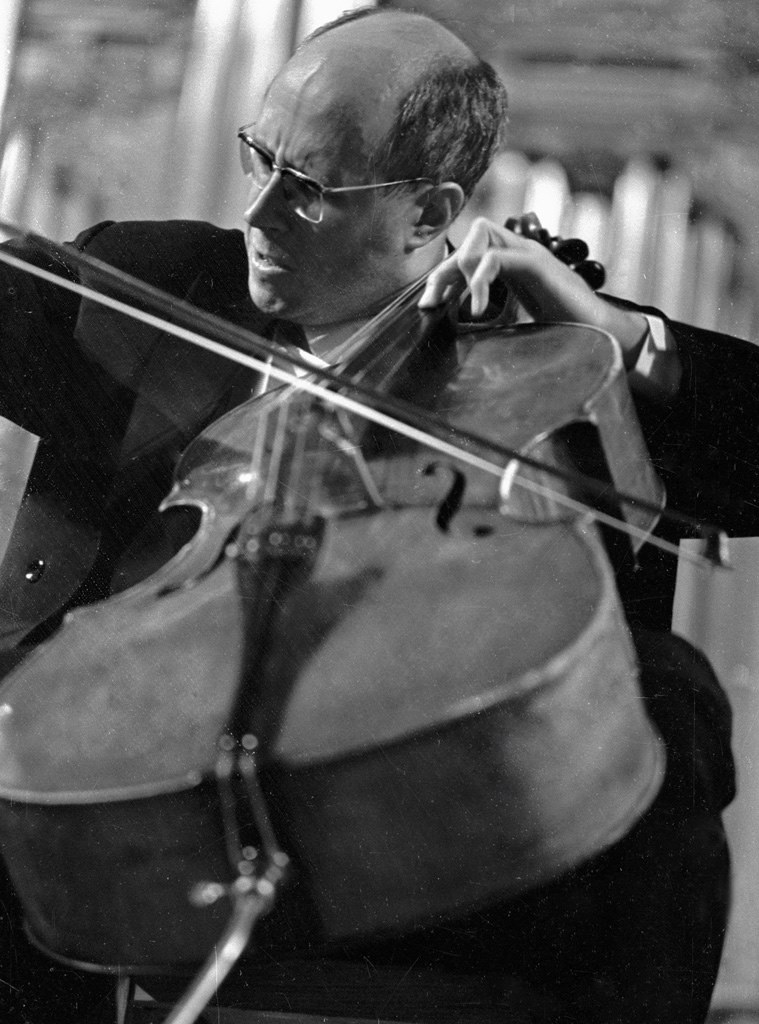
We’ll hear Weinberg’s Cello Concerto of 1948, performed by the work’s dedicatee, Mstislav Rostropovich.
Join me for “A Russian Cellobration,” tonight at 10 ET, with a repeat Friday morning at 3, or listen to it later as a webcast, at http://wwfm.org.
PHOTO: Slava rocks the cello

Perhaps you’re observing the holy day of Yom Kippur today (in which case you’re probably not on the computer), but if saints are your thing, you‘d be hard pressed to find one more beloved than St. Francis of Assisi – unless you’ve misplaced your car keys, in which case St. Anthony is your man. Today is the Feast Day of St. Francis, so be sure to take a moment to kiss your pet.
Here’s Franz Liszt’s “St. Francis of Assisi Preaching to the Birds,” as performed by Mieczyslaw Horszowski:
In his later years, Horszowski was a venerated piano pedagogue at the Curtis Institute of Music in Philadelphia. Although he was never a musical celebrity, I feel sheepish admitting that in my callow youth, at the time I saw him perform in the 1980s, I was unfamiliar with his estimable reputation among musicians. I did a double-take when I deduced his age from a program note. He was well into his 90s, but played with a hypnotic fluency that belied his years.
Sometime later, I was very much looking forward to his 100th birthday recital – scheduled to take place at the Church of the Holy Trinity on Rittenhouse Square, I seem to recall – but unfortunately he had to cancel due to ill health. Horszowski died in 1993, one month shy of his 101st birthday. Surely, Horszowski had one of the longest careers of any performer. He was already playing in public in 1901!
He was a pupil of Leschetizky, who was a pupil of Czerny, who was a pupil of Beethoven. Here’s his obituary in the New York Times:
He didn’t marry until the age of 89 (perhaps the secret to his longevity?).
All of his recordings are cherishable, but I have a special soft spot for three albums he recorded for Nonesuch records late in life, especially his Chopin, which is some of the most beautiful I have ever heard. His “Kinderszenen” is also excellent, and his Mozart. Okay, everything this man touched turned to gold.
Here he is at 95, playing Chopin in Tokyo:
PHOTO: Break the fast with St. Francis
Any excuse to get “The Wind and the Lion” and “The Leopard” in the same show…
This week on “Picture Perfect,” the focus will be on metaphorical big cats.
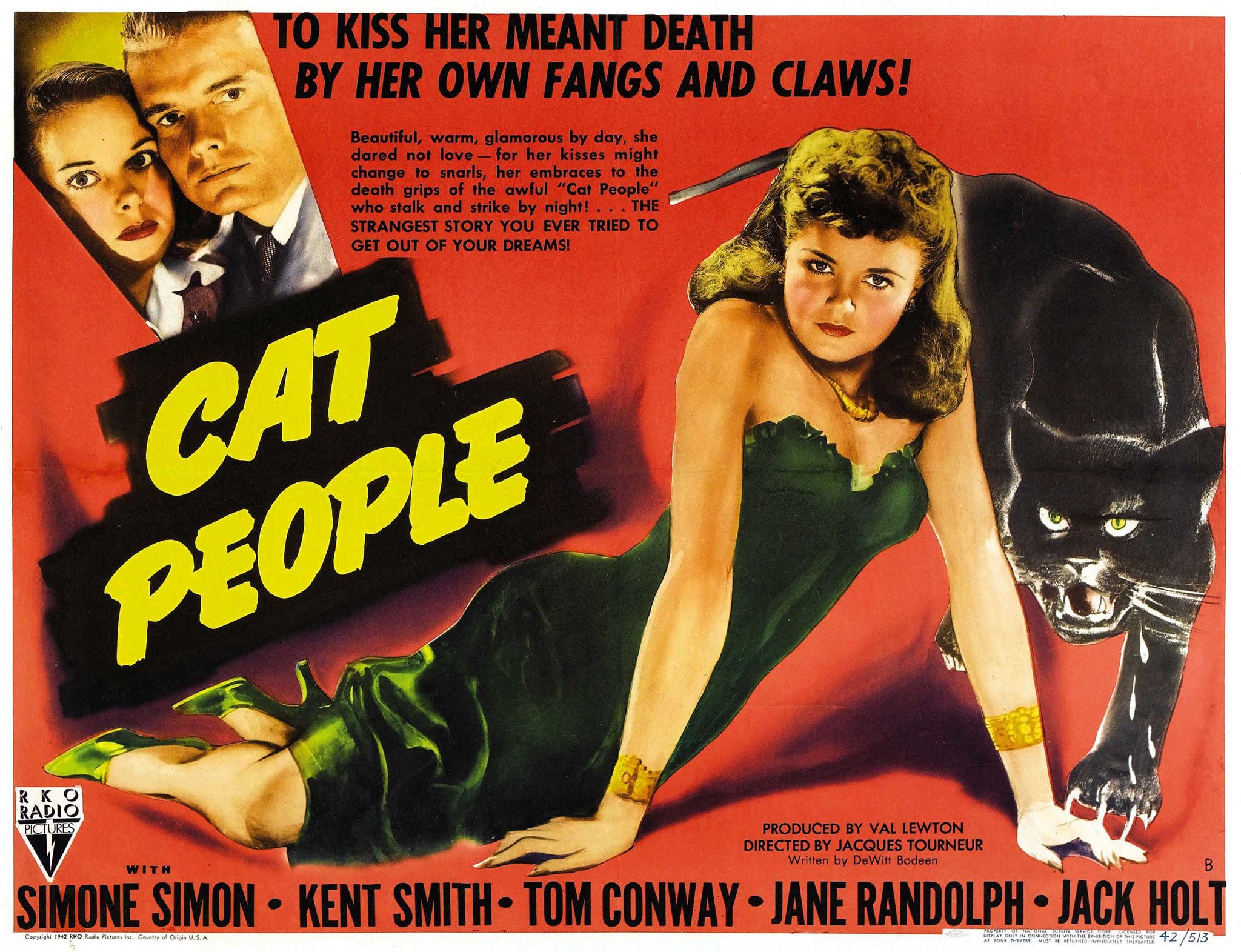
Simone Simon’s barely repressed desires are made manifest in Val Lewton’s “Cat People” (1942). Lewton was a master of suggestion, with a majority of the horrors in his films imagined, rather than seen. Part of the approach was practical, the result of shoestring budgets imposed by RKO. Whatever the case, the insinuating weirdness undeniably produced psychological chills. In fact, it was only as a concession to the studio that a literal big cat was included at all. The music was by RKO workhorse Roy Webb.
Sean Connery plays a Berber chieftain who faces off against Teddy Roosevelt in “The Wind and the Lion” (1975). In a letter to Roosevelt (played in the film by Brian Keith), Connery’s character writes, “I, like the lion, must stay in my place, while you, like the wind, will never know yours.” Jerry Goldsmith provided one of his best scores for the Moroccan adventure. In fact, he was fairly confident he finally had a lock on the Oscar. He experienced a harsh reality check when he went to see “Jaws.” (Goldsmith would win his only Academy Award the following year for his music to “The Omen.”)
Luchino Visconti’s epic telling of Giuseppe Tomasi di Lampedusa’s “The Leopard” (1963) is a melancholy exploration of the fading Sicilian aristocracy. A bewhiskered Burt Lancaster plays Prince Fabrizio, who feels himself slipping into obsolescence. Nino Rota gives the film a full-blooded, operatic soundtrack, full of lyricism and pathos.
Finally, Lyn Murray provides the breezy accompaniment for Alfred Hitchcock’s “To Catch a Thief” (1955), with Cary Grant a reformed burglar, known as The Cat, who attempts to clear himself of some “copycat” crimes while romancing Grace Kelly on the French Riviera.
Join me for an hour of metaphorical big cats this week, on “Picture Perfect” – music for the movies – this Friday evening at 6 ET, or listen later to the webcats – er, webcast – at http://www.wwfm.org.
Aaron Copland (93) Beethoven (95) Composer (114) Film Music (140) Film Score (143) Film Scores (255) Halloween (94) John Williams (195) KWAX (229) Leonard Bernstein (103) Marlboro Music Festival (125) Movie Music (155) Mozart (89) Opera (210) Philadelphia Orchestra (89) Picture Perfect (174) Princeton Symphony Orchestra (108) Radio (88) Ross Amico (244) Roy's Tie-Dye Sci-Fi Corner (290) The Classical Network (101) The Lost Chord (268) Vaughan Williams (103) WPRB (396) WWFM (881)