Category: Daily Dispatch

  • Classical Music Editor’s Frustration

    Classical Music Editor’s Frustration

    Like Howard the Duck, I am trapped in a world I never made.

    It’s frustrating to have people who don’t know classical music edit your classical music articles – hence, a sentence like “The repertoire on tomorrow’s program encompasses art music from the Renaissance to the present day, along with settings of an Aboriginal creation myth and an Iroquois peyote song” gets changed to “The repertoire on tomorrow’s program encompasses art music from the Renaissance to the present day, along with PIECES SET IN an aboriginal creation myth and an Iroquois peyote song” – but at least, as far as I can see, the entire article ran this week. I just hate being made to sound like an idiot.

    You can read about the Princeton Singers, as they celebrate 30 years, here:

    http://www.nj.com/times-entertainment/index.ssf/2014/09/princeton_singers_to_present_3.html

  • Hemingway on Film: Music for Stoic Manliness

    Hemingway on Film: Music for Stoic Manliness

    This week on “Picture Perfect,” we get in touch with our masculine side, with music from movies inspired by the writings of Ernest Hemingway.

    Seemingly at odds with Hemingway’s minimalist, “iceberg” style, big screen adaptations of the writer’s work show what the stories don’t tell. In the case of 1946’s “The Killers,” the screenwriters unapologetically just made stuff up, an entire back story explaining the motivations for the hit of boxer “Swede” Andreson. Fortunately those screenwriters happened to include an uncredited John Huston, who virtually codified noir with “The Maltese Falcon.”

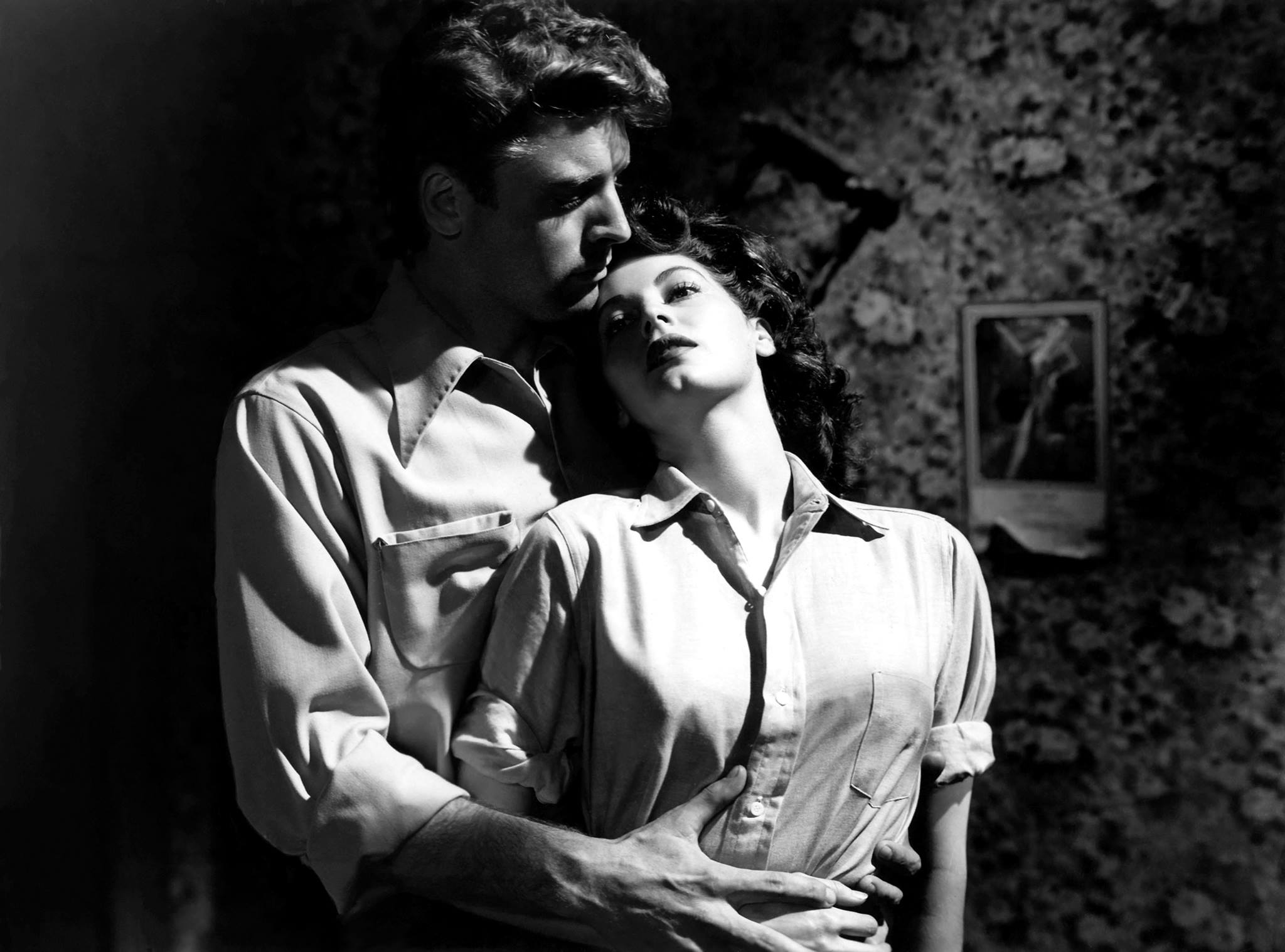
    “The Killers” provided Burt Lancaster with his break-out role. It also features a knock-out score by Miklós Rózsa, in which he uses the dum-dee-dum-dum theme later made famous by the television series “Dragnet.”

    In 1977, George C. Scott reunited with his “Patton” director, Franklin J. Schaffner, for an adaptation of Hemingway’s posthumously published novel, “Islands in the Stream.” Scott gives one of his best performances as a Hemingway-like figure living on a Caribbean island. “Patton” composer Jerry Goldsmith wrote the music. Goldsmith spoke of it often as his favorite score.

    Hemingway himself handpicked the leads for the 1943 adaptation of “For Whom the Bell Tolls,” with Gary Cooper and Ingrid Bergman falling in love against the backdrop of the Spanish Civil War. The music was by the prolific and versatile Victor Young.

    And finally, Spencer Tracy is the whole show, as he faces off against a large marlin, in the 1958 version of “The Old Man and the Sea.” Dimitri Tiomkin’s music earned him his fourth Academy Award.

    Join me for an hour of laconic grace and stoic manliness on “Picture Perfect,” music for the movies, this Friday evening at 6. Or listen to it later as a webcast, at http://www.wwfm.org.

    PHOTO: Burt Lancaster and Ava Gardner killing it in “The Killers”

  • Panufnik Centenary Warsaw Variations

    Panufnik Centenary Warsaw Variations

    Today is the centenary of the birth of Polish master Andrzej Panufnik, about whom I wrote a few days ago to promote last Sunday night’s “The Lost Chord,” which was devoted to two of his symphonies. (The show will be repeated Friday at 3 a.m. ET and then posted as a webcast at http://www.wwfm.org.)

    Here’s a fascinating audio documentary about Panufnik and his friend Witold Lutoslawski. You’ll remember that Lutoslawski and Panufnik formed a piano duo which performed in Warsaw cafes, since it was the only means through which to share music during the Nazi occupation, when there was a ban on organized gatherings.

    http://www.fallingtree.co.uk/listen/warsaw_variations

    “Warsaw Variations” aired several times on BBC radio and was awarded a Prix Europa for Best Radio Music Documentary. Lutoslawski’s “Variations on a Theme of Paganini,” which had its origins in the piano duo’s repertoire, features throughout.

    “I think they both had a sort of mission that people needed music, and they needed music more than any other time ever, almost, in order to keep their courage up.”

    – Camilla Jessel Panufnik, the composer’s widow

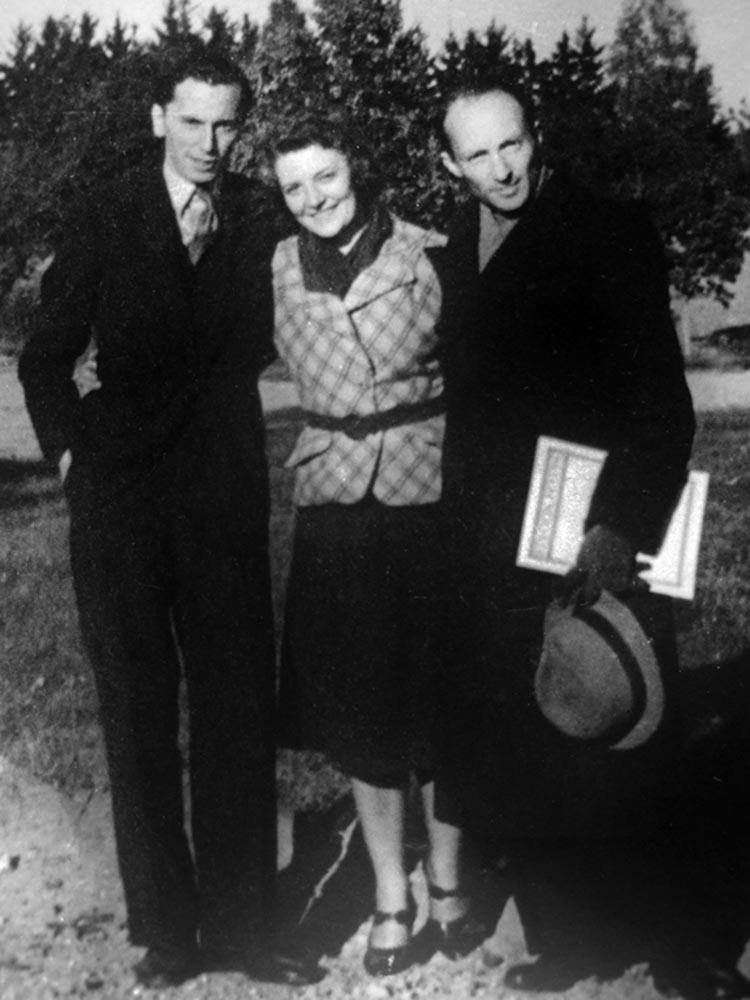
    PHOTO: Lutoslawski (left) and Panufnik (right), with violinist Eugenia Umińska. Umińska joined the Polish resistance, took part in the Polish Uprising, and survived capture to become a professor and later rector at the Academy of Music in Kraków. The photo was taken in 1942.

  • Remembering Christopher Hogwood

    Remembering Christopher Hogwood

    Somewhere I’ve got an uncashed check from Christopher Hogwood, from back in the days when I still had my book business. I remember he had ordered a book of facsimiles of a Purcell manuscript. I was probably about 30 and star struck, so I sent it to him gratis. He likely watched his bank account with a degree of annoyance for months after, as he waited for whatever the amount was to be deducted from his balance.

    I only just learned of Hogwood’s death from an unspecified illness lasting several months. He was 73 years-old.

    Hogwood, of course, was a pioneer of the early music movement. He was a founding member of the Early Music Consort of London. He also played the harpsichord on recordings of Sir Neville Marriner and the Academy of St. Martin-in-the-Fields. In 1973, he broke away to establish the Academy of Ancient Music. He directed the ensemble for some 30 years and produced more than 200 albums. For a time, he also directed Boston’s Handel and Haydn Society.

    By the 1990s, he began to branch out to produce memorable discs of Stravinsky, Sir Michael Tippett and especially Bohuslav Martinu. With the turn of the millennium, he tackled the complete symphonies of the Danish romantic Niels Wilhelm Gade.

    In the early days of compact disc, period instrument recordings struck me as metallic and strident. I don’t know if it was the evolution of performance practice, the technology or my ears (perhaps a bit of all three), but that all started to change. By the time I heard Hogwood’s recording of Haydn’s “The Creation,” I found it a revelation. In fact, I’m going to put it on right now.

    God bless you, Mr. Hogwood. Rest in peace.

  • Autumn Arrives Welcoming the Season’s Charm

    Autumn Arrives Welcoming the Season’s Charm

    After a sticky Sunday, Autumn crept in last night at 10:29 ET, riding a chill breeze like Cougar & Dark’s Pandemonium Shadow Show. Can’t wait for the change of color, the crunching underfoot, the classic horror movies, the sweaters, the infinite night skies, and Thanksgiving. Welcome, O Happy Season!

    “Valse Septembre” by Felix Godin (real name Henry Albert Brown), another British Light Music classic:

Tag Cloud

Aaron Copland (93) Beethoven (95) Composer (114) Film Music (140) Film Score (143) Film Scores (255) Halloween (94) John Williams (195) KWAX (229) Leonard Bernstein (103) Marlboro Music Festival (125) Movie Music (155) Mozart (89) Opera (210) Philadelphia Orchestra (89) Picture Perfect (174) Princeton Symphony Orchestra (108) Radio (88) Ross Amico (244) Roy's Tie-Dye Sci-Fi Corner (290) The Classical Network (101) The Lost Chord (268) Vaughan Williams (103) WPRB (396) WWFM (881)

DON’T MISS A BEAT

Receive a weekly digest every Sunday at noon by signing up here


RECENT POSTS