Category: Daily Dispatch

  • Strauss’s Scandalous Joseph Ballet Turns 100

    Strauss’s Scandalous Joseph Ballet Turns 100

    This one is over the top even by Strauss standards.

    Today marks the 100th anniversary of the premiere of Richard Strauss’ only full-length ballet, “Josephslegende” (“The Legend of Joseph”), which was first performed at the Paris Opera on this date in 1914.

    The biblical story of the attempted seduction of Joseph by Potiphar’s wife was suggested by frequent Strauss librettist Hugo von Hoffmansthal, between their work on “Ariadne auf Naxos” and “Die Frau ohne Schatten.”

    Strauss confessed in a letter, “The chaste Joseph himself isn’t all up my street, and if a thing bores me I find it difficult to set it to music. This God-seeker Joseph – he is going to be a hell of an effort!”

    Perhaps it was to alleviate his boredom that Strauss bolstered his orchestration with four harps, organ, celesta, glockenspiel, xylophone, large and small cymbals, four pairs of castanets and a double-bass clarinet.

    The composer himself conducted the premiere, which ran for seven performances. Vaslav Nijinsky choreographed and danced the lead. Sir Thomas Beecham conducted an additional seven performances in London. He had put up the money for the “Diaghilev” commission. However, with the war looming, Strauss never received his fee.

    Follow the link to listen to the rarely-heard complete ballet.

    The work also exists as a “symphonic fragment,” in reduced orchestration. But where’s the fun in that?

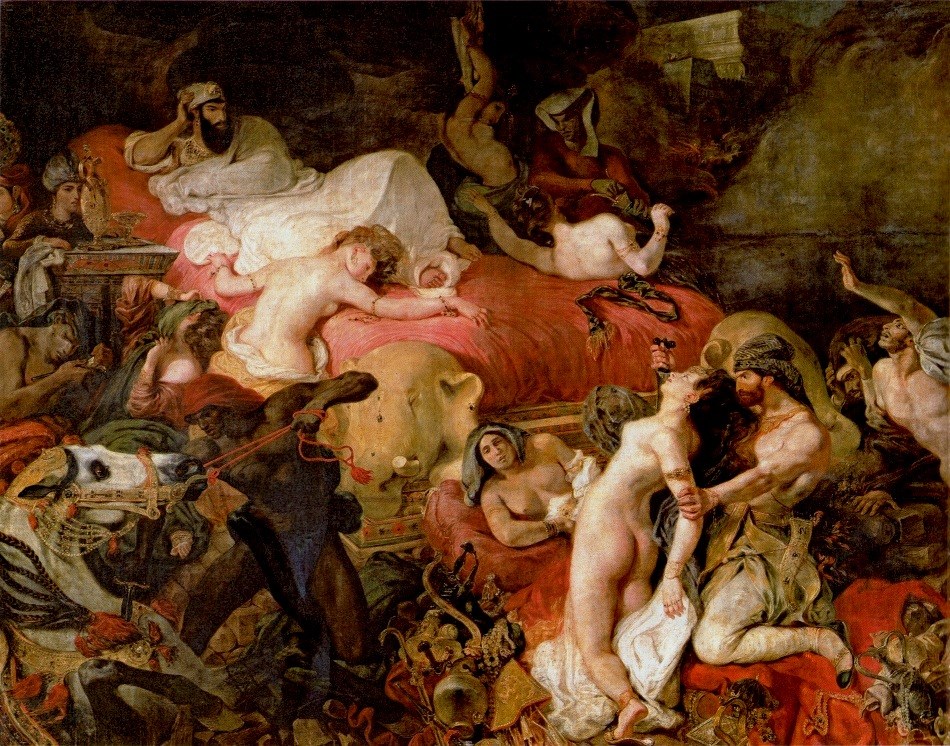
    I must say, I had a blast Google image-searching for paintings of this one. Seemingly everyone painted Joseph and Potiphar’s wife.

    PHOTO: “C’mere you!”

  • Happy Birthday Sullivan Celebrate Gilbert & Sullivan

    Happy Birthday Sullivan Celebrate Gilbert & Sullivan

    All right, Savoyards, it’s Sir Arthur Sullivan’s birthday. Let’s see those “likes.”

    Here’s the great John Reed. Why is this collection not on CD, in the form it was originally issued? Granted, all the numbers are drawn from complete recordings:

    Seasonal Sullivan:

    Sullivan without Gilbert – his “Irish Symphony” (though I still prefer Sir Charles Groves’ recording):
    https://www.youtube.com/watch?v=X9irmDpqDSs

  • Massenet & Fauré Birthday: French Opera & Reform

    Massenet & Fauré Birthday: French Opera & Reform

    Today is the birthday of two outstanding French composers: Jules Massenet (born 1842) and Gabriel Fauré (born 1845). Massenet’s fluency and emotionally direct style made him the most successful French opera composer of his generation. Fauré was the radical who blew the dust off the Paris Conservatory and ushered in an era of unprecedented reform.

    Here are two absorbing recordings by these very different French masters:

    Soprano Emma Calvé sings “Pendant un an je fus ta femme” from Massenet’s “Sapho,” a role she created (be advised, the recording doesn’t start until about 15 seconds in):

    https://www.youtube.com/watch?v=Dhs88jKmT08

    The elegant Samson François performs Fauré’s Nocturne in B Major, Op. 33, No. 2:

    Joyeux anniversaire, mes amis!

    PHOTOS: Fauré (left) and Massenet getting a little fresh air

  • Erben’s Dark Tales Inspiring Dvořák for Mother’s Day

    Erben’s Dark Tales Inspiring Dvořák for Mother’s Day

    Happy Mother’s Day! Perhaps it’s a good thing I am not a parent; otherwise I would scare the bejesus out of my kids with stories from Karel Jaromir Erben’s “Kytice,” or “Bouquet.”

    Like the Brothers Grimm in Germany, Erben synthesized native folk tales into often gruesome fairy stories. In doing so, he became an important figure in the establishment of a Czech national identity. His stories are recited by Czech schoolchildren and recalled proudly by the Czech people. Despite its influence, “Kytice” did not appear in a complete English translation until 2013.

    Antonin Dvořák was particularly fond of Erben’s tales. In 1896, he composed a series of symphonic poems after Erben ballads, including “The Water Goblin,” “The Noon Witch” and “The Wood Dove.” Erben’s influence also hangs over Dvořák’s most famous opera, “Rusalka.”

    This Sunday night on “The Lost Chord,” we salute Erben with two Dvořák works: the symphonic poem “The Golden Spinning Wheel,” and the final scene from the dramatic cantata “The Spectre’s Bride.”

    “The Golden Spinning Wheel” is a Cinderella story gone very, very wrong, as a wicked stepmother and stepsister not only murder but dismember an unfortunate maiden favored by the king. Not to give too much away, but the titular appliance proves their undoing.

    “The Spectre’s Bride” is another in the seemingly infinite variations on the tale of a young woman being swept off by the ghost of her lover. The climax of Dvořák’s cantata places the heroine in a cottage besieged by howling spirits, as a corpse on the table, prepared for burial, stirs to do their bidding.

    Forget Dvořák’s “Songs My Mother Taught Me.” Join me for “Erben Legends,” as we celebrate Karel Jaromir Erben, this Mother’s Day at 10 ET, with a repeat Thursday at 11, or listen to it later as a webcast at http://www.wwfm.org.

  • Scheherazade Sinfonietta Nova Closes Season

    Scheherazade Sinfonietta Nova Closes Season

    Tell me more!

    The story framing “One Thousand and One Nights” presents a sultan scarred by the unfaithfulness of his sultana. To guarantee their fidelity, he has had each of his subsequent wives executed on the day following their nuptials. The most recent in the line, Scheherazade, must use her wits to prolong her life and win the sultan’s love.

    If I were the sultan, she would have nothing to fear. I never get tired of listening to “Scheherazade.” Nikolai Rimsky-Korsakov’s oft-performed symphonic poem will bring Sinfonietta Nova’s 2013-2014 season to a colorful close. The program will open with another “Arabian Nights” inspiration, Carl Maria von Weber’s overture to the one-act farce, “Abu Hassan.”

    In between, soprano Lauren Athey-Janka will sing the “Song to the Moon,” from Antonín Dvořák’s “Rusalka.” Rusalka is a water spirit from Slavic mythology, whose tale bears more than a passing resemblance to Hans Christian Andersen’s “The Little Mermaid.”

    The program will also include a concerto for that unlikeliest of lyric instruments, the tuba, by an 82 year-old Ralph Vaughan Williams. Scott Mendoker will be the soloist.

    Scheherazade’s fascination is a tribute to the power of creative storytelling. Tonight’s performance will feature spoken narration, adapted from “One Thousand and One Nights” by Alton Thompson. The storyteller will be musician and former WWFM radio personality Bliss Michelson.

    The program will conclude Sinfonietta Nova’s “fairy tale” season. Music director Gail Lee will conduct.

    The concert will take place at 7:30 p.m., at Prince of Peace Lutheran Church, 177 Princeton-Hightstown Rd., West Windsor, NJ (some sources indicate Princeton Junction).

    Tickets and information are available at sinfoniettanova.org, or at 609-785-1812.

Tag Cloud

Aaron Copland (92) Beethoven (95) Composer (114) Film Music (118) Film Score (143) Film Scores (255) Halloween (94) John Williams (185) KWAX (229) Leonard Bernstein (99) Marlboro Music Festival (125) Movie Music (133) Opera (198) Philadelphia Orchestra (86) Picture Perfect (174) Princeton Symphony Orchestra (106) Radio (87) Ralph Vaughan Williams (85) Ross Amico (244) Roy's Tie-Dye Sci-Fi Corner (290) The Classical Network (101) The Lost Chord (268) Vaughan Williams (102) WPRB (396) WWFM (881)

DON’T MISS A BEAT

Receive a weekly digest every Sunday at noon by signing up here


RECENT POSTS