Spring is a time of rebirth – a renaissance, if you will – so I thought it might be fun this week on “Sweetness and Light” to round out Early Music Month with an hour of Renaissance dances.
Most of these will be reimagined by 20th century composers – though with a couple of notable exceptions – and in the case of Ralph Vaughan Williams, we’ll hear a wholly original work employing early instruments. (When’s the last time you heard RVW’s “Suite for Pipes?”)
It will be venison and peacock for breakfast. Put your hands up for a program of courtly and rustic dances on “Sweetness and Light,” this Saturday morning at 11:00 EDT/8:00 PDT, exclusively on KWAX Classical Oregon!
Stream it wherever you are at the link:
https://kwax.uoregon.edu/
Category: Daily Dispatch
-
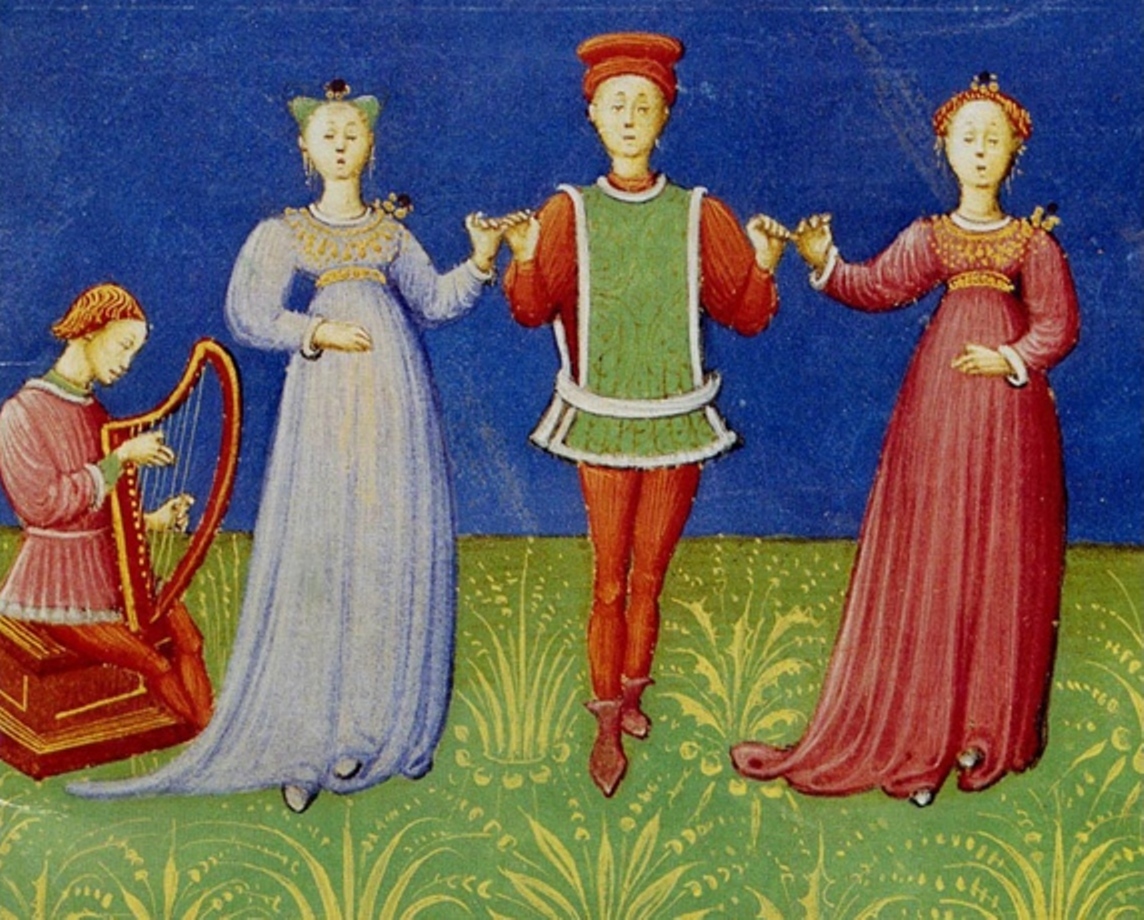
Put Your Hands Up for Renaissance Dances on “Sweetness and Light”
-
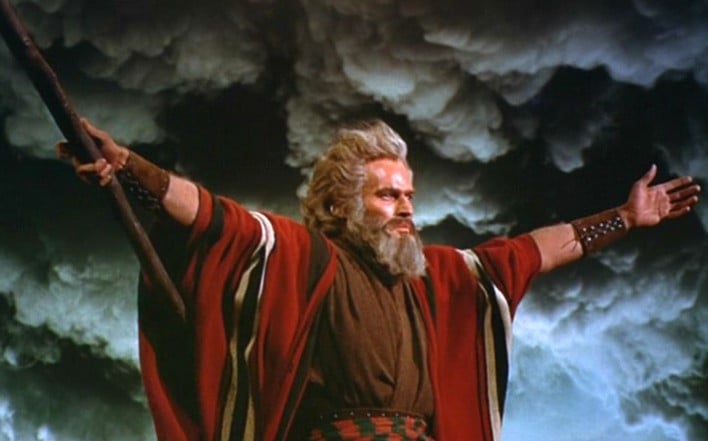
“The Ten Commandments” on “Picture Perfect”
This week on “Picture Perfect,” for the 70th anniversary of the release of Cecil B. DeMille’s “The Ten Commandments – and just in time for Passover – we’ll hear selections from Elmer Bernstein’s classic score.
From a 6-CD set on the Intrada label – that includes the complete 2 ½ hour score, three commercial soundtrack releases, and bonus material intriguing enough to curl Charlton Heston’s beard – we’ll hear lovingly remastered highlights from the 1960 Dot and 1966 United Artists soundtrack re-recordings, the Pillar of Fire and parting of the Red Sea sequence from the original score, as heard in the film, and rare demos, prepared for Mr. DeMille by the composer, who announces his themes as he plays them, from the piano.
So let it be written, so let it be done!
It’s the collector’s equivalent of stone tablets handed down from Mount Sinai. Join me for the definitive “The Ten Commandments,” on “Picture Perfect,” music for the movies, now in syndication on KWAX Classical Oregon!
——–
Clip and save the start times for all three of my recorded shows:
PICTURE PERFECT, the movie music show – Friday at 8:00 PM EDT/5:00 PM PDT
SWEETNESS AND LIGHT, the light music program – Saturday at 11:00 AM EDT/8:00 AM PDT
THE LOST CHORD, unusual and neglected rep – Saturday at 7:00 PM EDT/4:00 PM PDT
Stream them, wherever you are, at the link!
https://kwax.uoregon.edu -
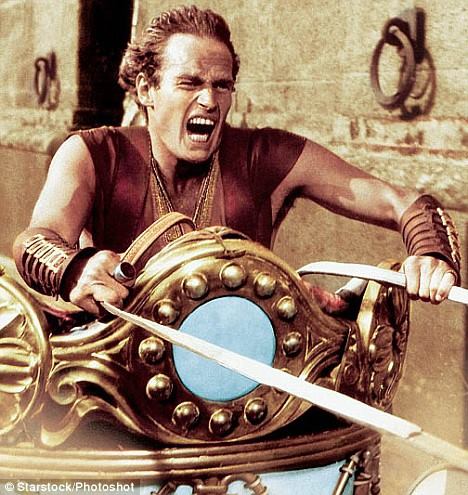
Ben-Hur: Bigger Than Jesus
When asked to name my favorite movies, my top-10 list is probably more like top-50 or 60. But one film I do love dearly is “Ben-Hur” (1959). So imagine my excitement when I saw the trailer – in an honest to goodness theater – this weekend when attending the Met “Live in HD” simulcast of Wagner’s “Tristan und Isolde.” It turns out it’s going to be given the Fathom Events treatment, shown in select theaters in a brand new 4K restoration, March 29 & 30 and April 1 & 2.
The winner of a record 11 Academy Awards, “Ben-Hur” was also a stunning popular success, at the time, becoming the second-highest grossing film in history, after “Gone with the Wind” (adjusting for inflation, STILL the all-time box office champ).
The score, by Miklós Rózsa, is a prime example of the kind of masterly music you rarely, if ever, encounter at the movies anymore. It was also the longest ever composed for film – and, before the soundtrack for “Star Wars” became a bestselling phenomenon, “Ben-Hur” found a home in record collections of folks who didn’t ordinarily seem to pay too much attention to film music. I love it. Surely, it’s in my top-10 film scores of all time. But there we go again.
In fact, I have nothing but superlatives to heap on this film. Its detractors might dismiss it as risible, histrionic, Hollywood religioso kitsch, but I’m glad I lack their cynicism. The film is actually beautifully acted, with Charlton Heston, often way over the top in everyman parts, perfect for this kind of grandiose canvas. He winds up giving one of his best performances. The tragedy of the soured friendship between Judah Ben-Hur, a Jewish prince, and his childhood friend Messala (played by Stephen Boyd), now an ambitious Roman tribune, is beautifully modulated.
Gore Vidal was fond of sharing an anecdote about their introductory scene, which, after many takes, just wasn’t working. As he told it, the director William Wyler grew increasingly frustrated, until Vidal suggested playing it with a gay subtext, an idea Boyd found fascinating. Wyler considered it for a few moments, before remarking, “Okay. But don’t tell Chuck!” Whether or not it’s true – and who cares? – the scene establishes the characters’ deep bond, soon to be dashed against the rocks of their political differences. The look Judah casts upon his friend at the end of the chariot race gets me every time. It conveys the humanity at the center of this big, big film, full of very big themes.Is it overdone? Did I mention, Jesus is in it too?
Regardless of your religious convictions, it’s a beautiful movie, with lots of painterly shots and the aforementioned chariot race, with a cast of thousands and an arena actually built, as opposed to computer generated (some of the sets were extended using matte paintings), and staged, with galloping horses and death-defying stuntmen. They just don’t make ‘em like this anymore!
For classic movie buffs, it’s also fun to spend time with Jack Hawkins, Sam Jaffe, Finlay Currie, and the always supercilious Frank Thring, who specialized in debauched rulers – and, okay, even Hugh Griffith in brown-face, ouch! (He plays an Arab sheik.)
William Wyler had an incredible batting average. Hardly any of his films rate less than four stars, and three of them – this one, “The Best Years of Our Lives,” and “The Big Country” – are among my all-time favorites.
“Ben-Hur” is a four-hour movie, presented in the grand ‘50s tradition, complete with overture and intermission music, but Fathom will be screening it at sensible hours – in most theaters, beginning at 6:00 for weekday showings and 2:00 on the weekend – but do double-check the listings for your area.
It won’t be projected from film, and you’re unlikely to be able to catch it in an old-fashioned movie palace, but for now, it’s the best we can hope for. The only other challenge is finding someone who will be willing to watch it with you!
Tickets and information available at https://www.fathomentertainment.com/releases/ben-hur-2026/ -
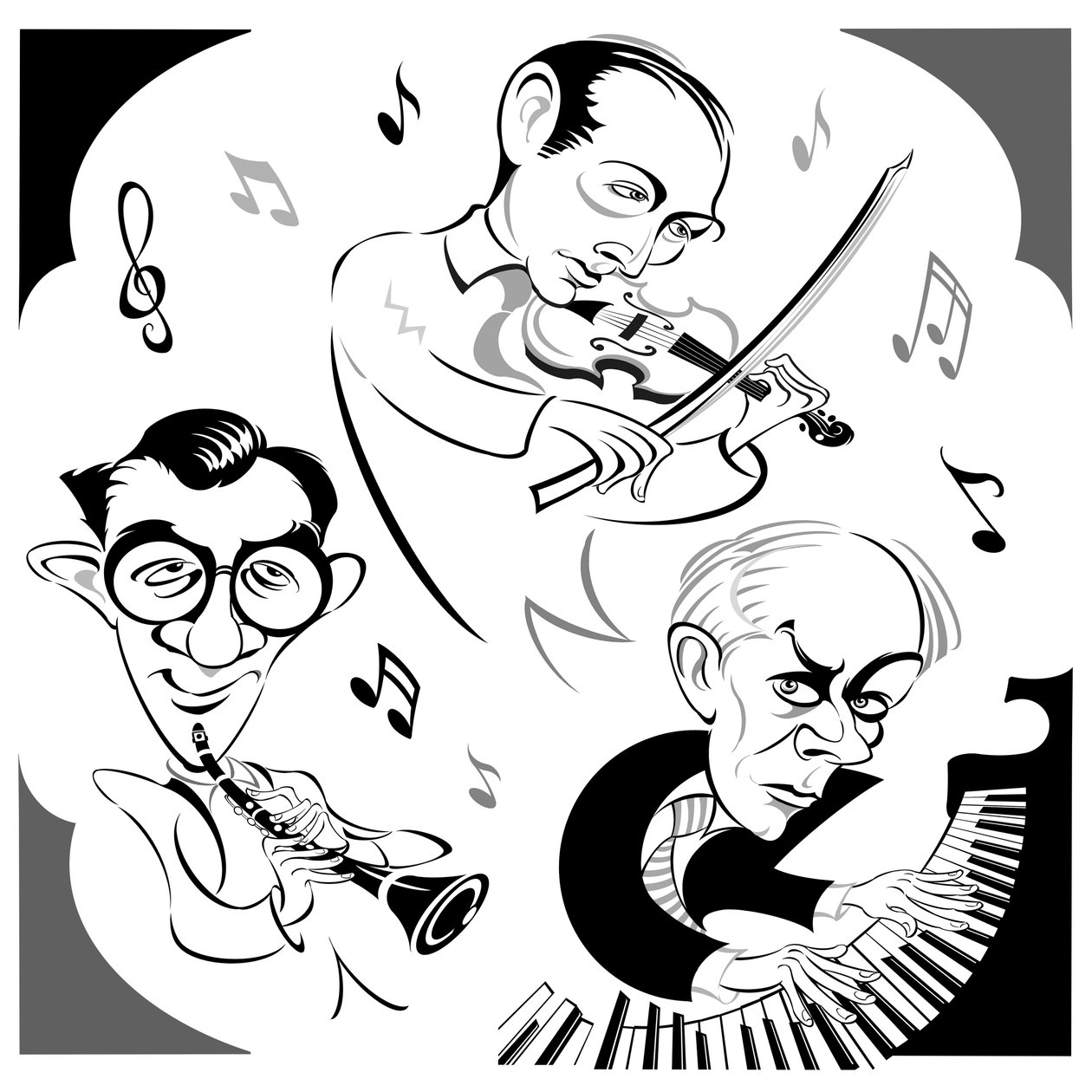
Contrasts: Béla Bartók and Benny Goodman
If you want to talk about a study in contrasts, how about Hungarian master Béla Bartók and America’s “King of Swing,” Benny Goodman?
Goodman’s musical training was classical (he took lessons at the local synagogue and with Chicago Symphony clarinetist Franz Schoepp). But he really caught fire when playing with dance bands. His early influences were New Orleans jazz clarinetists who worked in Chicago.
He shot to prominence during the Big Band era, but with the decline of swing, he decided to return to his formal studies, this time with English clarinetist Reginald Kell. Goodman developed a lot of bad habits in the intervening years, and he had to rebuild his technique basically from scratch.
Although a worldwide celebrity who had achieved enormous success, Goodman missed the classics and longed for a little mainstream respectability. Since he was by then in a position to do so, he took up performing and recording Mozart and Weber, and he commissioned or played new works by Copland, Bernstein, and Stravinsky, among others.
One of these was Béla Bartók, whose birthday it is today. Bartók composed “Contrasts” in 1938, on a Goodman commission. This trio for clarinet, violin, and piano is a raw, fascinating work, inspired by Hungarian and Romanian dance melodies. It contains passages of bitonality and frenzied scordatura (a deliberate mistuning, or alternate tuning, of the violin). Goodman recorded the work, with violinist Josef Szigeti and the composer at the piano.
Not your glass of pálinka? By way of “contrast,” check out Bartok’s ballet-pantomime “The Wooden Prince,” composed in 1914-17. Much less frequently performed than his subsequent succès de scandale, “The Miraculous Mandarin,” composed in 1918-24, this musical fairy tale for large orchestra bears the influences of Debussy and Strauss, and yes, Wagner too.
Never understood why it’s not heard more often. Just because it doesn’t have quite the bite of the composer’s mature masterworks doesn’t mean it isn’t worthwhile.
https://www.youtube.com/watch?v=vYEijXHFY1w
From the King of Swing to “The Wooden Prince,” happy birthday, Béla Bartók!
——–
IMAGE: 1940 illustration of Goodman, Szigeti, and Bartók by Neale Osborne -
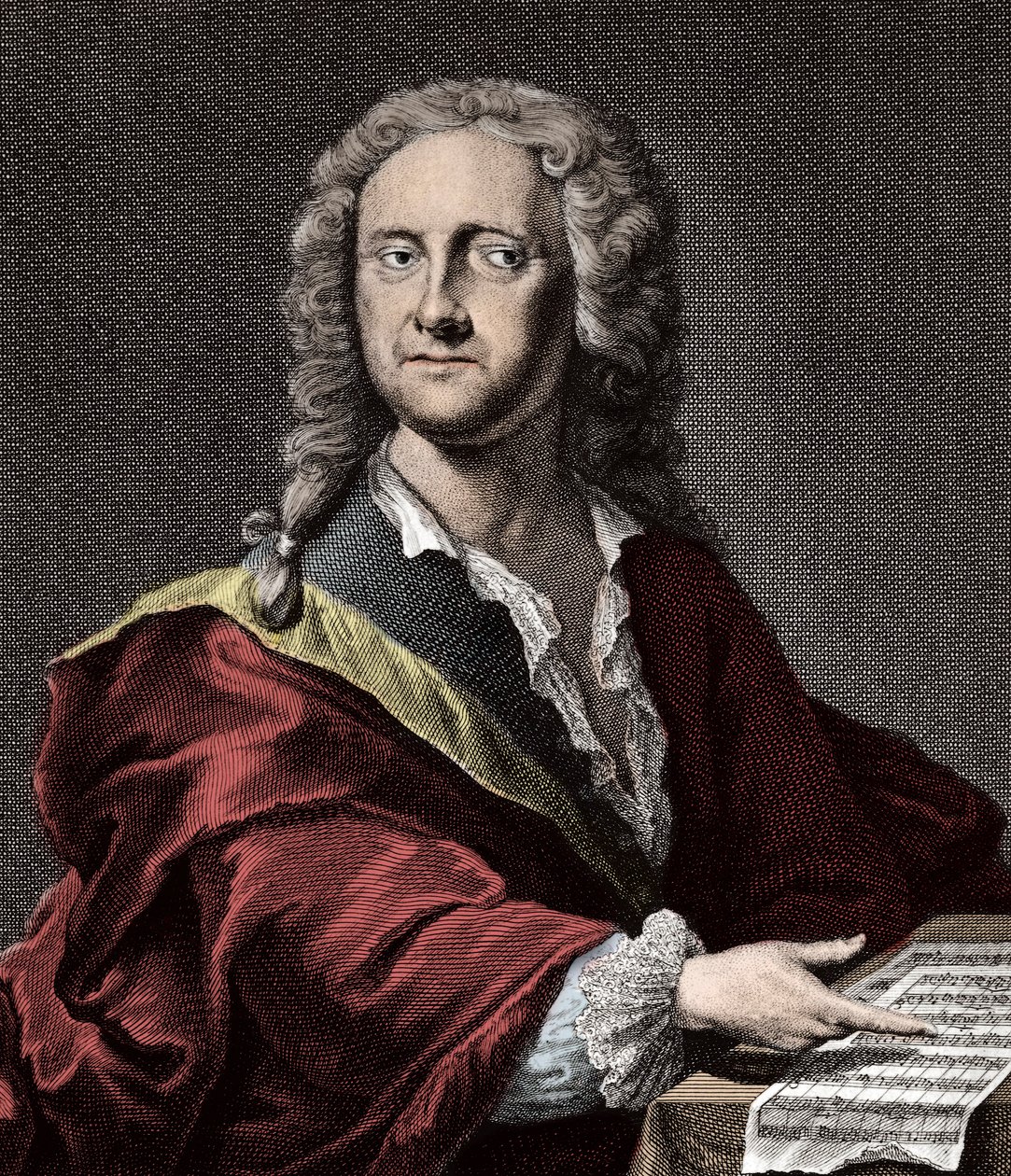
Telemann Has a Lot to Tell
Poor Telemann. Every year, if I write anything laudatory about him for his birthday anniversary, following as closely as it does on the heels of the March birthdays of his great colleagues and rivals, Handel (March 5) and Bach (March 21), it seems to bring the invective raining down upon him.
“He’s boring!” will write one.
“He’s a notespinner!” will opine another.
“How many times can you rewrite the same piece?” will grumble a third.
Could it be that he was a casualty of having done his job too well?
After all, Telemann wrote more music than Bach and Handel combined – over 3,000 works – making him one of the most prolific composers of all time. Yet nothing in his oeuvre has captured the public imagination quite like the “Brandenburg Concertos” or the “Water Music.”
Of course, Telemann wrote “Water Music” too. Keep in mind, this was not conceived for a king’s leisurely cruise down the Thames (à la Handel), but rather to celebrate the centennial of the Hamburg Admiralty. That’s a pretty dry commission.The work opens with an Ouverture in C, perhaps suggestive of the movement of the water itself. Then Telemann begins to gussy it up with music representative of various mythological figures (Thetis asleep and awake, Neptune in love, Naiads at play, Triton the jokester, stormy Aeolus, and pleasant Zephir, comprising movements 2-8). The penultimate movement is a gigue inspired by the tides, and the work concludes with a suggestion of some jolly sailors.
No one is going to argue against the fact that Handel had the more indelible tunes. As a classical music broadcaster, I’ve had more experience with this suite than most, but I still can’t say I could pick it out of a police line-up.
Nevertheless, Telemann was a significant talent, who was recognized in his own lifetime. He was an innovator, assimilating Italian and French influences into his own style, and his contemporaries bought and studied his scores. He was offered the cantorate of the Thomaskirche in Leipzig, ahead of Bach. He counted Bach among his friends, as well as Handel. Bach even requested that he be the godfather of his son, Carl Philipp Emanuel.
Telemann lived an unusually long life (86 years), though it was not without its miseries. His first wife died young. His second ran up gambling debts in amounts larger than his annual income. Ultimately, his friends had to bail him out. As he grew older, he suffered further indignities, including failing eyesight.
Celebrated in his own day, by the 19th century he was dismissed as a “polygraph,” someone who had simply composed too much. In a sense, he was a victim of his own success.
Today, he inspires renewed enthusiasm among early music specialists, who have done much to restore his reputation. At the very least, he deserves a little love on his birthday.
Happy Birthday, Georg Philipp Telemann!*
——————
One of my favorite Telemann moments, the “Air à l’Italien” from the Suite in A Minor for Flute and Orchestra:
Always been partial to this one, too:——————
*NOTE: By the Julian calendar, Telemann was born on March 14
Tag Cloud
Aaron Copland (92) Beethoven (94) Composer (114) Film Music (116) Film Score (143) Film Scores (255) Halloween (94) John Williams (185) KWAX (228) Leonard Bernstein (99) Marlboro Music Festival (125) Movie Music (131) Opera (197) Philadelphia Orchestra (86) Picture Perfect (174) Princeton Symphony Orchestra (106) Radio (86) Ralph Vaughan Williams (85) Ross Amico (244) Roy's Tie-Dye Sci-Fi Corner (290) The Classical Network (101) The Lost Chord (268) Vaughan Williams (99) WPRB (396) WWFM (881)