Category: Daily Dispatch

  • WWFM Swan Song Radio Silence After 29 Years

    WWFM Swan Song Radio Silence After 29 Years

    Four years ago today was the last time I set foot in the studios of WWFM The Classical Network. With the first wave of COVID-19 poised to break across central New Jersey, the plan had been for all of us hosts to get five weeks ahead on our recorded specialty shows, with the balance of the broadcast schedule to be filled with piped-in programming from Classical 24 out of Minnesota.

    Needless to say, the storehouse was rapidly depleted. When it became apparent we would be in for a longer haul, hosts were asked to select five more shows from the recorded archive. Eventually, and for the duration of the shutdown, this became the routine. Interestingly, every other radio station seemed to figure it out, with hosts either wiping everything down and doing their shifts in isolation or, in many cases, being equipped simply to broadcast from home.

    Trusting, naïve soul that I was, I actually believed what I wanted to hear: that local part-time staff would be brought back as soon as possible. Granted, communication from on-high was always minimal at best. One would think that there would have been at least a monthly update, if only to keep up morale. Instead, if any email was received (very, very seldom), you could count on it was because it had to be written, and it would always contain bad news.

    I could have moved on, of course, and tried to find a position elsewhere (I’d had a foot in the door at WRTI in Philadelphia, where I worked for several years, the last time WWFM went to automation), but WWFM was my home, and no matter how ridiculous things got there, at least I was largely allowed to do my own programming.

    Finally, last April, I received an email from management stating that my long-running weekly shows, “Picture Perfect” and “The Lost Chord,” would “sunset” (euphemism for “be cancelled”) – effective in ten days! However, if I would care to produce one new “Picture Perfect” a month, using the WWFM facilities, it could air in rotation with three other shows on a Friday afternoon. For this, I would receive no financial compensation — but I would have the privilege of maintaining a continued presence on the station.

    Thanks, but no thanks. (If I’m going to be exploited, at least offer me a weekly show!)

    And just so you don’t think I was let go out of financial necessity, by the end, WWFM was airing “Picture Perfect” and “The Lost Chord” for free, and I had even volunteered my services for pledge drives. The offers were ignored.

    I had worked there since 1995 and over the decades put out more fires than I could possibly catalogue. Before the station went 24 hours, I used to arrive by 4:45 in the morning (later 5:45) to actually turn on the transmitter. Before automation, I braved innumerable snowstorms and changed more than my share of flat tires, frequently in stygian darkness. I climbed up on the roof on an icy ladder to sweep snow out of the satellite dish. I fielded many, many – too many – unexpected sizzlers, either because of human or technical error, to all appearances always keeping the station chugging along smoothly for our listeners.

    But as a coworker remarked to me on her way to retirement, appreciation there has always been lacking. I guess I just expected more for 29 years of service. Having survived several mercurial regimes and precarious financial situations, it seemed like nothing would ever shake me loose. I fully anticipated continuing to broadcast there as long as I was physically able to do so. They could have gotten another 30 years out of me – likely longer than the station will actually last.

    Now, of course, my recorded shows can be heard on KWAX, the radio station of the University of Oregon. I’ve even added a third show, “Sweetness and Light,” which I’d actually pitched to the management of WWFM for the first time a couple of years before the pandemic. But the mills of God, they do grind slowly. The management at KWAX leaped at the idea.

    Of course, recording at home is not really what I want to do. Optimally, what I would like is to return to live broadcasting. That’s my passion. It’s where I shine. None of this sound file editing and manufactured “reality.” On-the-fly live programming and interviews has always been where it’s at.

    Although it’s been four years to the day that I was last inside the station, it was to finish loading all of my work into the computer against the impending arrival of COVID. My last air shift was actually two days earlier, on March 11, 2020. I thought I was just going on break.

    March 11 happened to be the birthday anniversaries of Carl Ruggles, Henry Cowell, Anthony Philip Heinrich, Astor Piazzolla, and Xavier Montsalvatge. Wednesday at 6:00 was always devoted to “Music from Marlboro,” which I also did live. For the record, that day the program consisted of Brahms’ String Sextet No. 2 and Bach’s Air from the Orchestral Suite No. 3, in performances from the archive of the Marlboro Music Festival.

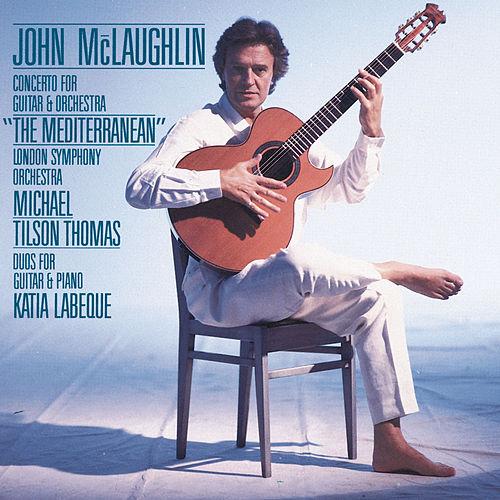
    You can click on the images below my photo to read the rest of the playlist for what turned out to be my WWFM live action swan song.

  • The Last Repair Shop A Must-See Oscar Winner

    The Last Repair Shop A Must-See Oscar Winner

    How a documentary short as steeped in music as The Last Repair Shop could have eluded me is mindboggling. In its 39 minutes it does more to convey the transformative power of music – not in some lofty, abstract way, but demonstrably life-changing – than Bradley Cooper’s “Maestro” attempts at over thrice the running time.

    Honored at Sunday’s Academy Awards ceremony as the best of its category, the film profiles four unassuming technicians who perform the heroic service of repairing worn and damaged instruments for students in the Los Angeles public school system. Each walks us through the engrossing details of their respective trades, which they’ve performed for decades with a real sense of purpose. Along the way, each reveals his or her own incredible life story. I won’t spoil anything by revealing the details, but some of them take us to some pretty unexpected places, with plenty of comedy and tragedy, levity and struggle. All of them express their personal sense of connection with the kids, many of whom they’ve never met.

    In fact, there is empathy and elevation in abundance. This is one very moving, very human film. What’s more, it is life-affirming, so very necessary at a time when everything, from our environmental, health and tech anxiety, to our political and social strife, to our nihilistic entertainment, can leave us feeling lost, broken and overwhelmed.

    A cross-section of students demonstrates just how important having access to these instruments has been to their lives. The concluding scene is pitch perfect, and you may find yourself shedding tears of joy.

    If this is indeed “the last repair shop” – quality music programs in public schools have become an endangered species – the tradition needs to be resurrected now! Too often quality of life issues are the first casualties of slashed budgets.

    The filmmakers exercise remarkable restraint in making no such pleas. Instead, they allow the beautiful results to speak for themselves.

    I confess it choked me up.

    The film streams free on YouTube. Watch it!

  • Oscars 2024 Bland Predictable

    Oscars 2024 Bland Predictable

    All in all, it was a fairly bland and predictable Oscars telecast.

    The Leonard Bernstein biopic, “Maestro,” a Bradley Cooper passion project that seemed increasingly to be viewed as a vanity project, was sent packing with zero awards. Don’t get me wrong, I want a good Leonard Bernstein movie as much as the next guy, but this one offered very little illumination as to what made Bernstein such a significant force, not only in classical music, but also in the wider culture. I understand this was not really the filmmakers’ objective, and they were aiming for something on a more intimate scale (easier than trying to pin down the ineffable), focusing instead on the much more mundane dramatic issues surrounding Bernstein’s complicated relationship with his wife, Felicia Montealegre (played in the film by the excellent Carey Mulligan). But pantomime-conducting Mahler’s “Resurrection” Symphony and dancing around in a sailor suit in a “Fancy Free” fantasy sequence isn’t enough even to suggest the scope of the man’s accomplishments. And you know how it is, unfortunately: one movie about anything underperforms, and those who greenlight such projects come to view the subject as box office poison. I guess for now our hopes ride on John Malkovich’s Sergiu Celibidache (!) project.

    If you’re looking for true passion, it’s the short features and documentary categories, the ones that few in the broader public seem to care about (to the extent that the Academy has tried to remove them from the broadcast), since they lack overt glamor, that are the Awards’ beating heart. These provide rare opportunities for blood-and-sweat filmmakers, often working with very limited resources, to be recognized on a world platform. So it makes me a little sad to see Wes Anderson’s “The Wonderful Story of Henry Sugar” snag the award for Live Action Short. I love Wes, and he’s hardly the most commercial filmmaker, but face it, he’s a celebrity director who still has years ahead of him putting together high-profile feature films.

    Be that as it may, “Maestro” may have tanked, but arguably the more important music film, “The Last Repair Shop,” was recognized for Best Documentary Short. The film, which I admit I have not seen (I will remedy that tonight), is about those unassuming technicians who perform the heroic service of restoring instruments in the Los Angeles Unified School District, thereby improving students’ lives and, presumably, by extension, quality of life in the broader community. I’ll know more about it tonight.

    There were a few upsets. “Barbie,” the pop cultural phenomenon of the year (especially taken in tandem with “Oppenheimer,” capturing the public imagination as “Barbenheimer”) and also the year’s box office champ, was honored with only one award, for Best Original Song (Billie Eilish’s “What Was I Made For?”). I had it pegged for a couple of design awards at least. But “Poor Things” mopped up Best Costume Design, Best Makeup and Hairstyling, and Best Production Design. At least “Barbie” enjoyed the night’s showstopper, when Ryan Gosling participated in a garish and amusing production number built around the Academy Award nominated song “I’m Just Ken.”

    In what was a pretty weak year for film music, Ludwig Göransson won his second Academy Award for Best Original Score, for his work on “Oppenheimer.” You could certainly hear it in the movie! Jerskin Fendrix’s quirky flourishes for “Poor Things” were more memorable, and John Williams wrote the single loveliest cue in the retro theme for the character of Helena in the otherwise godawful “Indiana Jones and the Dial of Destiny.” But the year belonged to “Oppenheimer.” Göransson’s previous win was for “Black Panther” in 2019.

    Andrea Bocelli anchored another unnecessarily busy “In Memoriam” segment, performing his signature song, “Time to Say Goodbye,” in duet with his son, Matteo. Dancers and superfluously showy camera work were employed for the attention deficit crowd, at the expense of those supposedly being honored. In an attempt to head off the inevitable criticism about omissions, a QR code (!) was appended to the segment, in case anyone was curious to see who else passed in the last year. At least composers Ryuichi Sakamoto (“The Last Emperor”) and Robbie Robertson (“Killers of the Flower Moon”) made the cut. And Tina Turner received the position of honor as the last to be shown, in her role as Aunty Entity in “Mad Max: Beyond Thunderdome.” Is it that hard just to keep it simple and exhibit some good taste for five minutes, Academy?

    More broadly, one of my pet peeves about the Oscars anymore is how little it seems to acknowledge the movies’ rich history. More film clips, I cry! Well, last night included a few, notably in a montage honoring stunt performers. And there were a couple of stills from “Cabaret” and of a young Barbra Streisand. But really, there was very little attempt to convey a sense of continuity or tradition. I suppose there was a nod to the 50th anniversary of the notorious streaker who photobombed David Niven.

    The honorary awards, which, again, used to be one of the highlights for film buffs, were relegated to a separate ceremony years ago, with acceptance speeches edited down to soundbites for lip-service exposure during the regular broadcast. This year, unless I missed it, there wasn’t even a mention of those awards. I can only assume the Academy believes nobody cares about Angela Bassett or Mel Brooks.

    Musically, there was little acknowledgment of the grand tradition of memorable film scores. There was an allusion to Henry Mancini’s “The Pink Panther” theme as a bumper leading into a commercial. “Schindler’s List” was played to introduce Steven Spielberg to mark the 30th anniversary of that film’s release. I realize we’ve a heightened sensitivity now about the kind of baggage that comes with “Gone with the Wind,” but it seems not too long ago that Max Steiner’s music was emblematic of Hollywood glamor. What happened to the medley of Oscars favorites that used to play over the end credits? “Gone with the Wind.” “Somewhere Over the Rainbow.” “Moon River.” “E.T.” Now it’s just some generic, neo-disco filler. On the other hand, surely this year was the first time Akira Ifukube’s “Godzilla” theme was heard on an Oscars broadcast!

    The big upset of the night, for me, was that Emma Stone was voted Best Actress, again for “Poor Things.” (The favorite, I believe, was Lily Gladstone, the first Native American nominee, for “Flowers of the Killer Moon.) Stone, with three previous nominations, already won in 2017 for her work in “La La Land.” Her performance in “Poor Things,” while certainly fine, seemed the most simplistic next to that of the other nominees in the category, who all had meatier, more nuanced roles. But Stone I’m sure is a great favorite of the ever-younger Academy electorate, and I can only assume as she spends so much of the film’s running time unadorned that, on top of any of its other merits, the performance was perceived as “brave.” If that be the case, somehow the voters didn’t walk away with the same impression of Mark Ruffalo. (Parenthetically, Stone was also a producer on the film.)

    The ceremony chugged along fairly innocuously, with no extraneous stunts like pulling in tourists off the streets or snapping group selfies. There was a brief bit featuring host Jimmy Kimmel’s sidekick, Guillermo, toasting Charlize Theron with tequila that got a pretty good laugh, from me anyway.

    Political statements were largely limited to what you would expect, given the continued war and bloodshed in Ukraine and the Middle East. When “20 Days in Mariupol” won Best Documentary Feature, it was unavoidable that the situation in Ukraine be addressed, and it was appropriate. When winning the award for Best International Feature, for “The Zone of Interest,” which chillingly conveys the banality of evil through a slow-burn portrayal of Nazi domestic life in the shadow of Auschwitz, director Jonathan Glazer warned about the persistent threat of dehumanization and projected the film’s lessons onto the current crisis between Israel and Gaza.

    A Trump tweet was acknowledged late in the show. Kimmel’s putdown was ace, but I’m still not sure it was the forum for it. But it was an easy laugh.

    I realize producing a satisfying Academy Awards broadcast is like walking a tightrope. And face it, every year, those responsible are going to put a foot wrong and plunge to their death. On the one hand, the Awards are about honoring the industry (a fact the trolls overlook when they complain about all the nauseating self-congratulation); on the other, they’re hoping to attract the unwashed masses, which on the whole are made up of people who just want to see Ryan Gosling do his production number. In televising the event, they’re setting themselves up to fail. Remember how, in the old days, they used to actually include segments highlighting the different disciplines, in an attempt to educate the public?

    Nobody but the least discerning viewer is ever going to be wholly satisfied with the Oscars telecast. At least this one ended early.

  • Oppenheimer Score Wins Oscar Göransson Honored

    Oppenheimer Score Wins Oscar Göransson Honored

    Ludwig Görannson wins his second Academy Award for Best Original Score, for his music for “Oppenheimer.” You can certainly hear it in the movie! Görannson acknowledges his wife, violinist Serena McKinney, who is featured on the film’s soundtrack. Görannson’s previous win was for “Black Panther” in 2019. Congratulations.

  • Last Repair Shop Wins Oscar Williams Inspired

    “The Last Repair Shop” wins Academy Award for Best Documentary Short. John Williams gets acknowledged as inspiration in acceptance speech. “John Williams inspired me to become a composer,” says co-director Kris Bowers. “Music education isn’t just about creating incredible musicians. It’s about creating incredible humans.” Watch the film here:

Tag Cloud

Aaron Copland (93) Beethoven (95) Composer (114) Film Music (124) Film Score (143) Film Scores (255) Halloween (94) John Williams (188) KWAX (229) Leonard Bernstein (101) Marlboro Music Festival (125) Movie Music (139) Opera (202) Philadelphia Orchestra (89) Picture Perfect (174) Princeton Symphony Orchestra (106) Radio (87) Ralph Vaughan Williams (85) Ross Amico (244) Roy's Tie-Dye Sci-Fi Corner (290) The Classical Network (101) The Lost Chord (268) Vaughan Williams (103) WPRB (396) WWFM (881)

DON’T MISS A BEAT

Receive a weekly digest every Sunday at noon by signing up here


RECENT POSTS