
Cartoon in this week’s The New Yorker. What’s the dealio with all the standing ovations the last number of years? You’d think we were watching a Franz Liszt-Niccolò Paganini smackdown every night of the week, with Farinelli grinding over a row of crush cars in his monster truck. Standing ovations for unexceptional performances – that is to say, performances that are absolutely fine, but not exactly life-altering – is the shadow pandemic nobody talks about. Worst of all is when the numbnuts in front of me stand, blocking my view of the stage, making me look like a numbnut, because now I have to stand too!
Category: Daily Dispatch
-

Juneteenth, Classical Music, and Cultural Change
Is Juneteenth poised to become the next Mardi Gras/St. Patrick’s Day/Cinco de Mayo? Well, at least it’s not a drinking holiday yet.
While I venture to guess it’s still all fairly new to most white folks (I was probably ahead of the curve, thanks to Ralph Ellison’s novel, “Juneteenth,” finally published in full, posthumously, in 1999), I can’t say its wider dissemination is altogether a bad thing. For classical music lovers, especially, there has been so much to discover – and yes, to celebrate – as the result of sweeping cultural changes and broader awareness over the past few years, and by no means restricted to June 19.
Some may roll their eyes at all the “over-exposure” of Florence Price, but come on, admit it, isn’t it a little invigorating to hear some American music other than the same old Gershwin and Copland? In the interest of full disclosure, I offer this as someone for whom Copland is probably one of my favorite composers. So much Black classical music, if it was known at all, was almost never heard, unless it was on that one, scrappily-played, often out-of-print and hard-to-find recording. For how many years was I hungry to hear the complete symphonies of William Grant Still? Now they’re getting played – in concert, no less!
For those of you tiring of George Walker’s “Lyric for Strings” (and how could you?), look at it as a corrective. At some point, the pendulum will swing back, and ideally this belated inundation of Black music will lead to the best of it taking its place in the active repertoire. It can’t happen unless people know it’s out there and are exposed to it.
I look forward to the day that we’ll be past the point of anyone grousing about quotas or “woke” or any of that nonsense. People are ridiculous creatures. It’s easy to deride and it’s tempting to mock – believe me, I can be as cynical as anyone, and in all things – but really, there are many sincere concert programmers out there who are just trying to do the best that they can. For anyone who happens merely to be paying lip-service to the zeitgeist, I’m sure there are many more who want to do the right thing.
For those for whom the holiday has always meant something (June 19 is the date in 1865 on which the federal enforcement of the Emancipation Proclamation guaranteed freedom to enslaved peoples in all Confederate states following the Civil War), I can imagine how, after a while, it could all get to be a little much for them, too. The more popular it becomes, the more corporate or Disneyfied it risks becoming. How long before Juneteenth is ruined by the Man?
Anyway, celebrate responsibly, everyone, and remember – keep the Juneteenth in Juneteenth!
Florence Price, “Juba” from the Symphony No. 1
George Walker, “Lyric for Strings”
William Grant Still, “Serenade”
Adolphus Hailstork, “Celebration!” (composed for the U.S. Bicentennial)
-

Paul Lansky: Wit, Music, and Radiohead’s Sample
Composer Paul Lansky has a sly sense of humor that he somehow manages to pass off, time and again, as unassumingly as a plate of dry toast. I love this description of his creative process:
“Generally I write for a group, and I think of what’s good for the group,” he says. “When you start a piece, it’s just flowing wildly, and at a certain point your ‘wild flowing’ tends to become a little more organized. Finally you know what you’re doing. Then you keep working, and it starts to get a little worse. Then you know you’ve finished the piece.”
It starts to get a little worse, and that’s when you know you’re done. I love that. So true!
It’s one of countless pearls Lansky’s strung over the past 80 years, 45 of which (from 1969 to 2014) he served on the faculty of Princeton University. For nine for those years (from 1991 to 2000), he chaired the university’s music department.
A French hornist who became a pioneering composer of computer music, Lansky caught the ear of the experimental rock band Radiohead (his 1973 computer piece “mild und leise” was sampled in the song “Idioteque,” released on the group’s 2000 album “Kid A”). More enduringly, he formed a fruitful association with guitarist David Starobin, whose Bridge Records, Inc. has documented and released just about Lansky’s entire output, with at least 17 CDs devoted exclusively to his music.
Of course, Lansky has long since evolved from his days as a trailblazer in the field of electronic music. Heading into the 1990s, he began to sense he had said all he had to say using computers and began to shift his focus back to the acoustic realm. Among his works for orchestra, his concerto for two pianos, “Shapeshifters,” was performed at Carnegie Hall in 2012.
I interviewed Lansky several times over the years, both on the radio and for the newspaper. Here’s an article I wrote for his impending 75th birthday concert at Richardson Auditorium in 2019. I’m pretty sure it’s the only time I ever used “armpit fart” in print.
Happy birthday, Paul Lansky!
One of Lansky’s favorite works, “Threads” (2005), written for Sō Percussion
And one of mine: “Partly Pavane” from the “Semi-Suite” (2001) for solo guitar
A classic with a sense of humor: “Table’s Clear” (1990) for utensils, kids and computer:
Radiohead favorite “mild und leise” (1973)
Wish I could add his Concerto for Two Pianos, “Shapeshifters” (2007-08), but I can’t find the audio posted online. From the same album, here’s “Imaginary Islands” (2010).
-
Quay Brothers, UArts Closure & Philly’s Arts Scene
When Philadelphia’s University of the Arts slammed its gates with only one week’s notice on June 7th, it was an abrupt conclusion to its 150-year history. Among the countless artists the school fostered were the Brothers Quay, Stephen and Timothy, the unnerving stop-motion animators, who, by coincidence, were born on this date in 1947.
The first film I ever saw by them, on the big screen, was “Street of Crocodiles” (1986) – moody, atmospheric, surreal, unsettling, claustrophobic, and even a little creepy. It’s like an animated cabinet of curiosities, or perhaps being locked overnight inside Philadelphia’s Mütter Museum. If you’re not familiar with it, the museum is home to a preserved nine-foot colon from 1892, a collection of syphilitic skulls, a two-headed fetus, a segment of Einstein’s brain, and a tumor removed from the jawbone of President Grover Cleveland. Book your reservation now! Having lived in Philadelphia for 32 years myself, I’d say, yes, the Quays pretty much nailed it. Philadelphia, after all, left its mark not only on the brothers, but also David Lynch. It’s a good introduction to their aesthetic sensibility. Experience “Street of Crocodiles” here:
The Quay Brothers have always been strongly influenced by literature and classical music. They’ve even expanded into stage design for live opera productions of works such as Prokofiev’s “The Love for Three Oranges” and Louis Andriessen’s “Theatre of the World.”
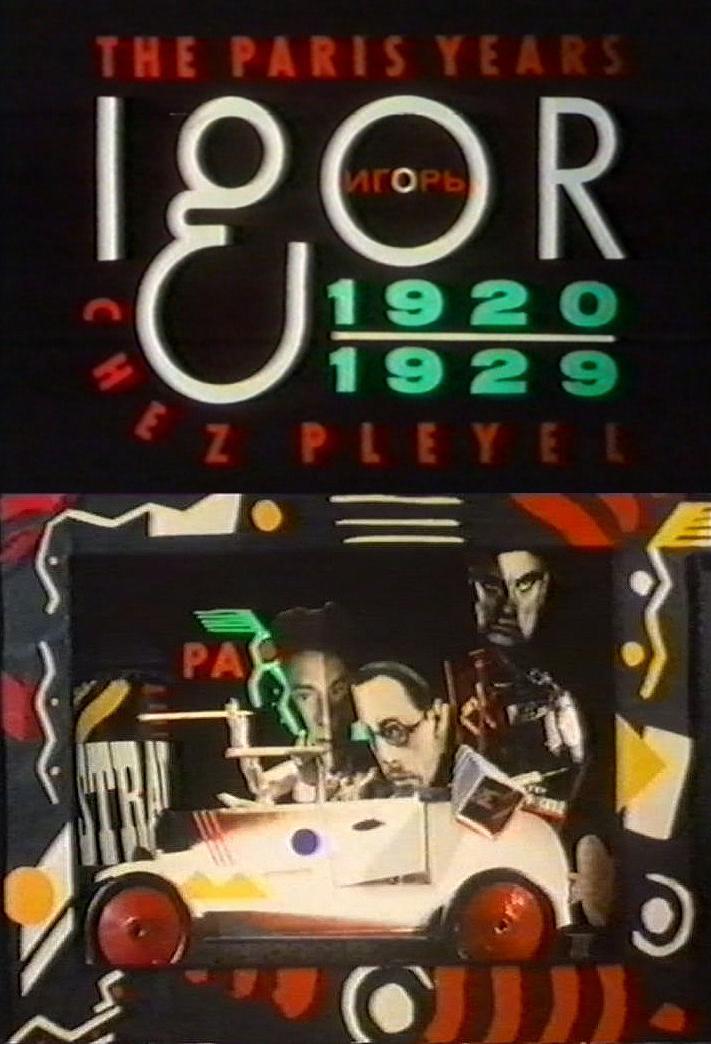
I say they were born on this date “by coincidence,” as today also happens to be the anniversary of the birth of Igor Stravinsky, and my original intention had been to share a link to the Quays’ 1983 short, “Igor, The Paris Years Chez Pleyel.” You can experience that here too:
The University of the Arts’ post-closure drama continues, with the most recent news announcing tentative agreements with six other schools now poised to try to help displaced students to pick up the pieces of their lives and continue their education. These include the already overburdened Moore College of Art and Design, Drexel University, Temple University, Montclair State University, Point Park in Pittsburgh, and The New School in New York City. In the meantime, there’s a gaping hole left in Center City, all around the Kimmel Center for the Performing Arts, home of the Philadelphia Orchestra.
With the announcement earlier this year of the discontinuation of the degree program at the Pennsylvania Academy of Fine Arts, a 200 year-old institution located at Broad and Cherry Streets, it’s a double black eye for Philadelphia’s so-called Avenue of the Arts.
And you thought “The Rite of Spring” was brutal.
Happy birthday, Igor Stravinsky – and the Brothers Quay!
https://believemedia.com/brothers-quay
Curious about visiting the Mütter?
160 years after its founding, the museum continues to stir controversy
https://www.phillymag.com/news/2023/09/23/mutter-museum-ethics-controversy/
-

Cosi fan tutte Last Chance Princeton
Mozart’s “Cosi fan tutte” is a farce with humanity. You have one more chance to see it at The Princeton Festival. The opera concludes its run at the performance pavilion on the grounds of historic Morven Museum & Garden, 55 Stockton St. (Route 206), on Tuesday at 7 p.m.
Did you know that originally Antonio Salieri took a crack at composing it? In 1994, two fragments in Salieri’s hand were discovered in the Austrian National Library. That was before Lorenzo Da Ponte’s libretto was taken up by “the creature.”
Of course, Mozart had an “in,” as he had already collaborated with Da Ponte on “The Marriage of Figaro” and “Don Giovanni.” And anyway, with all respect to Signor Salieri, the subject matter seems much more in line with Mozart’s saucy sensibility. While the Viennese of 1790 were worldly folk, “Cosi” would be given the side-eye in the 19th century, when the opera was deemed risqué or even immoral. If it was done at all, it was presented with tasteful alterations. It was only in the 20th century that the work’s reputation was restored.
Yeah, the characters are knuckleheads – flawed, irrational, and stupid – but they are also capable of great beauty. It’s all right there in the title, often translated, if anyone bothers, as “So Do They All.”
The festival’s final week will continue to embrace a variety of genres. A Juneteenth celebration will culminate in a concert of Black choral music, sung by the Capital Singers of Trenton and friends, under the direction of Westminster Choir College’s Vinroy D. Brown, at the pavilion on Wednesday at 7 p.m. The program will include Robert Ray’s “Gospel Mass.” Earlier, there will be a flag raising ceremony, food, reflection, and fun. For details, visit the festival website at the link below.
On Thursday at 7 p.m., The Sebastians will return for a program of Baroque favorites, with a selection of Bach’s Brandenburg Concertos, along with works by Telemann and Vivaldi. That concert will be held across the street at Trinity Church Princeton (33 Mercer St.).
On Friday at 7 p.m., back at the pavilion, the Juilliard-trained, genre-defying trio Empire Wild will unpack its signature mix of original music, inventive covers, and twists on the classical canon.
Finally, on Saturday at 7 p.m., Tony Award winning Santino Fontana, star of stage (“Tootsie,” “Cinderella”), film (Disney’s “Frozen”), and television (“Crazy Ex-Girlfriend,” “The Marvelous Ms. Maisel”), will bring the festival to an uplifting conclusion with an evening of pops, cabaret, and Broadway, accompanied by the Princeton Symphony Orchestra, again under the performance pavilion at Morven.
For tickets and information about parking, concessions, and more, visit the Princeton Festival website, at princetonsymphony.org/festival.
Video samples:
Behind the scenes of “Cosi fan tutte”
The Sebastians perform Bach’s Brandenburg Concerto No. 6
Empire Wild in 5 minutes
Santino Fontana
Tag Cloud
Aaron Copland (94) Beethoven (95) Composer (114) Film Music (150) Film Score (143) Film Scores (255) Halloween (102) John Williams (198) KWAX (233) Leonard Bernstein (105) Marlboro Music Festival (125) Movie Music (165) Mozart (91) Opera (215) Philadelphia Orchestra (90) Picture Perfect (174) Princeton Symphony Orchestra (110) Radio (90) Ross Amico (244) Roy's Tie-Dye Sci-Fi Corner (290) The Classical Network (101) The Lost Chord (269) Vaughan Williams (107) WPRB (397) WWFM (881)