Category: Daily Dispatch

  • Sweetness and Light Premiere on KWAX Radio

    Sweetness and Light Premiere on KWAX Radio

    Don’t miss the world premiere broadcast of my new show, “Sweetness and Light,” this morning on KWAX!

    Going forward, I’ll be adding a third show to my syndicated output, offering a weekly playlist of British Light Music, ballet, operetta, waltzes, marches, parlor music, and piano miniatures of a kind once familiar from Grandma’s piano bench – in short, undemanding fare calculated to charm and to cheer and to help you forget your worldly woes.

    It’s all holiday-oriented this week, so why not give it a whirl. And then be sure to drop back later in the day, when I share selections from Heinrich von Herzogenberg’s oratorio “Die Geburt Christi” (“The Birth of Christ”) on “The Lost Chord.”

    I’m dreaming of a light Christmas. Happy holidays to you!


    Remember, KWAX is on the West Coast (the radio station of the University of Oregon), so there’s a three-hour difference for those of you listening in the East. Here are the respective air-times for all three recorded shows (with East Coast conversions in parentheses):

    PICTURE PERFECT, the movie music show – Friday on KWAX at 5:00 PM PACIFIC TIME (8:00 PM EST)

    SWEETNESS AND LIGHT, the light music program – Saturday on KWAX at 8:00 AM PACIFIC TIME (11:00 AM EST)

    THE LOST CHORD, unusual and neglected rep – Saturday on KWAX at 4:00 PM PACIFIC TIME (7:00 PM EST)

    Stream all three, at the times indicated, at the link!

    https://kwax.uoregon.edu/


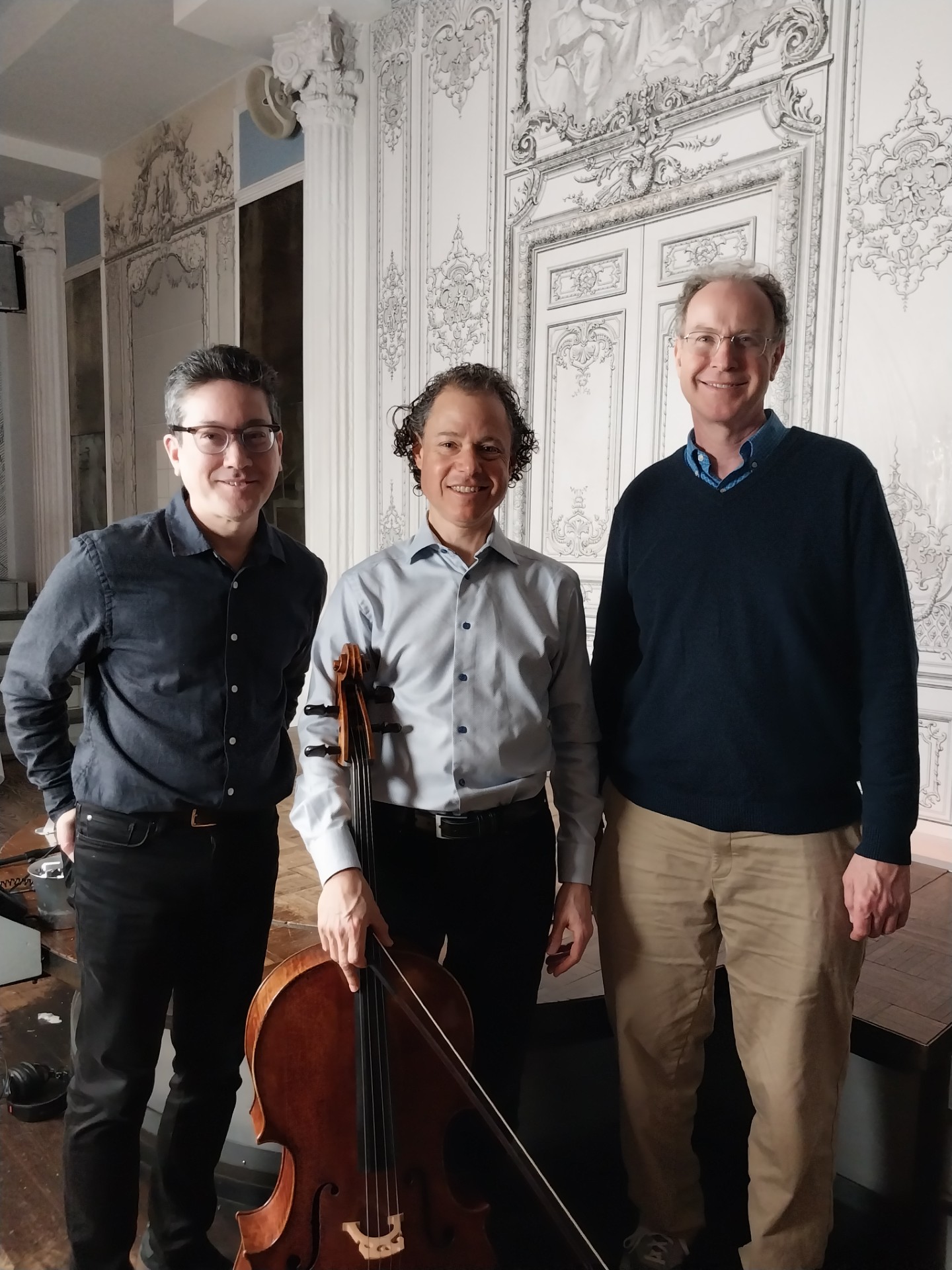
    PHOTO: Dangling a carrot, deer ones, for “Sweetness and Light”

  • Classic Christmas TV Specials Music

    Classic Christmas TV Specials Music

    This week on “Picture Perfect,” we’ll think inside the box, with music from classic Christmas television specials.

    “The Snowman” (1982), based on the picture book by Raymond Briggs, is about a boy whose snowman comes to life and whisks him away on a journey to the North Pole. The show became enormously popular in the UK and through occasional showings on U.S. television. It was nominated for an Academy Award for Best Animated Short. Like the book, the film is wordless, using animation and music to tell its story, with the exception of an enchanting interlude, known as “Walking in the Air,” which employs a boy treble. “Walking in the Air” is easily the best-known music by Howard Blake. Blake turned 85 in October. Happy belated birthday!

    The television film “The Homecoming” (1971) stars Patricia Neal and Richard Thomas in a heart-warming story about a rural family Christmas in 1933. Written by Earl Hamner, the film’s success spawned the television series “The Waltons.” Jerry Goldsmith wrote the music. He would return to work on “The Waltons” – though as of “The Homecoming,” he had yet to write the show’s indelible theme.

    An adaptation of Charles Dickens’ “A Christmas Carol” (1954) was the subject of a special episode of the anthology series “Shower of Stars.” Fredric March plays Ebenezer Scrooge, and Basil Rathbone is Jacob Marley’s ghost. But it is Ray Middleton, who appears as both Scrooge’s nephew and the Spirit of Christmas Present, who is given arguably the show’s most memorable tune, “A Very Merry Christmas.” The teleplay and lyrics are by Maxwell Anderson, and the music is by Bernard Herrmann!

    Finally, Christmas time is here, happiness and cheer, with “A Charlie Brown Christmas” (1965). We’ll hear the Vince Guaraldi Trio perform selections from this most beloved of Christmas classics.

    For once, the snow has nothing to do with your television reception. I hope you’ll join me for a cookie plate full of classic Christmas specials, on “Picture Perfect,” now in syndication on KWAX, the radio station of the University of Oregon!


    Remember, KWAX is on the West Coast, so there’s a three-hour difference for those of you listening in the East. Here are the respective air-times of my recorded shows (with East Coast conversions in parentheses):

    PICTURE PERFECT, the movie music show – Friday on KWAX at 5:00 PM PACIFIC TIME (8:00 PM EST)

    THE LOST CHORD, unusual and neglected rep – Saturday on KWAX at 4:00 PM PACIFIC TIME (7:00 PM EST)

    Also, a reminder that tomorrow morning I’LL BE ADDING A THIRD SHOW to the mix: SWEETNESS AND LIGHT will debut at 8:00 AM PACIFIC TIME (11:00 AM EST) with a seasonal playlist calculated to charm and to cheer. I hope you’ll be able to join me then.

    Stream all three shows, at the times indicated, at the link!

    https://kwax.uoregon.edu/

  • A Light Christmas with Sweetness and Light

    A Light Christmas with Sweetness and Light

    I’m dreaming of a “light” Christmas.

    It is with great excitement that I announce the impending launch of a brand-new show, to be broadcast weekly from my current home-away-from-home, KWAX, the radio station of the University of Oregon.

    As you may know, I’ve always had a soft spot for the confectionary genre known as British Light Music. This is a kind of music that was once widely enjoyed in theaters, at seaside resorts, on popular radio programs, and even as background to enhance the shopping experience. It was certainly a fertile field for anyone looking to pluck a memorable signature tune. (For a prominent example in the U.S., one need look no further than Captain Kangaroo, who poached Edward White’s “Puffin’ Billy.”) British Light Music will be well-represented, alongside light music from other sources, on “Sweetness and Light.”

    Depending on the week, we’ll also hear selections from ballet, highlights from operetta, dollops of film music, waltzes, marches, parlor music, and piano miniatures of a kind once familiar from Grandma’s piano bench. I suppose now GREAT-Grandma’s piano bench. In short, undemanding fare, calculated to charm and to cheer and to help you forget your worldly woes.

    With Christmas only days away, this week’s playlist will include several works evocative of wintry scenes (including the original version of “Jingle Bells,” published in 1857, and rendered as a hilarious parlor song), incidental music from a now-forgotten Christmas pageant (spearheaded by Reginald Owen, who went on to play Ebenezer Scrooge in a 1938 film version of “A Christmas Carol”), ingratiating selections by two composers associated with the movies (Erich Wolfgang Korngold and Henry Mancini), and some steaming bowls of keyboard wassail (courtesy of Billy Mayerl and Percy Grainger).

    This is the first show produced entirely in my home studio. Now that I’ve got it down, we can also expect fresh installments of “Picture Perfect” and “The Lost Chord” in the coming year.

    “Sweetness and Light,” my third syndicated show, will take its inaugural bow this Saturday, December 23, at 8 a.m. PST. (That’s 11 a.m. here on the East Coast.) Sweeten your morning and lighten your spirit by listening at the link.

    https://kwax.uoregon.edu/

    Stay positive, embrace beauty, and have a happy holiday!


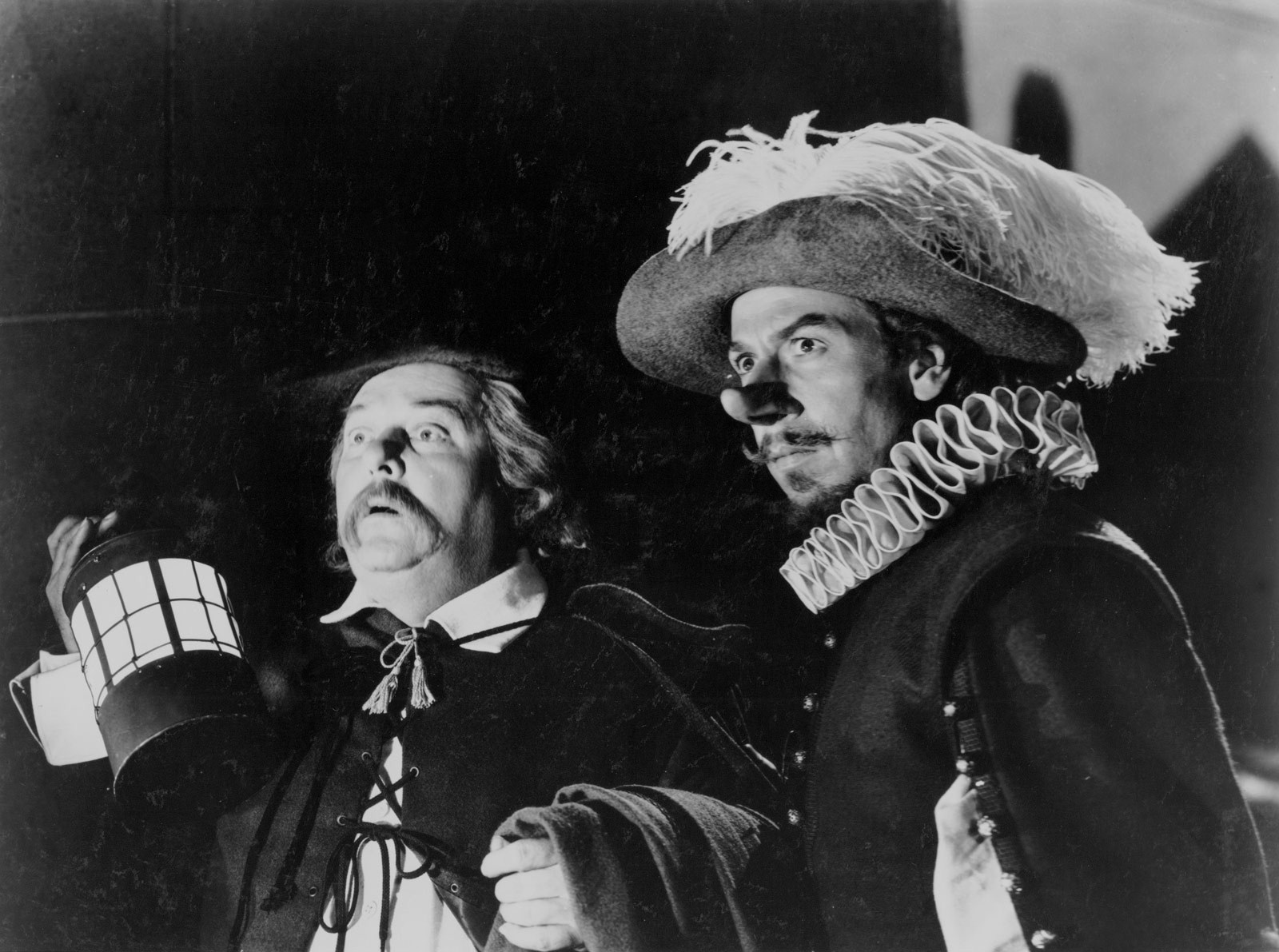
    Captain Kangaroo’s got some ’splainin’ to do

  • Liszt’s Christus: A Christmas Oratorio You Need to Hear

    Liszt’s Christus: A Christmas Oratorio You Need to Hear

    I try to make it a point to listen to Franz Liszt’s oratorio, “Christus,” every year, whether I need it or not.

    It helps that I love Liszt, of course. Not all of his music – anyone as prolific as he was had to turn out a clunker now and then – but he was such a noble, well-intentioned guy. I’ve been a hardcore admirer ever since I read Alan Walker’s biography, now probably 23 years ago. The years, they do fly by! And having heard so many performances of his Piano Sonata certainly hasn’t hurt.

    Liszt was one of the most original musical thinkers of the 19th century. In fact, I’d go as far as to say that, after Beethoven, he was possibly the most influential musician of the 1800s. There was likely no composer who didn’t at some point make a decision to follow or to react against him.

    He was, admittedly, hit-and-miss. Liszt wrote a lot of astonishingly wonderful music, but also a fair amount that might charitably be described as slightly embarrassing. Arguably, he was more successful as a philosopher and an innovator than he was as a consistent executor of his ideas. Richard Wagner (who became Liszt’s son-in-law), to name only one, would have been a very different composer without Liszt. And we all know how influential Wagner was.

    Liszt’s flamboyance was legendary, but his reputation in that regard stemmed mostly from the overwhelming sensations he conjured in recital, and his audiences’ hysterical responses to them. He could also be introverted, thoughtful, and pious. He was so pious, in fact, that at a point he wound up taking minor orders and living in a cell in Rome, where he was known as the Abbé Liszt. His sacred works were not mere posturing.

    The magnificent “Christus” is an oratorio in three parts – spanning some three hours in length – that is really part oratorio, part loose collection of symphonic poems. Part I, the Christmas portion, contains two purely orchestral movements, which together comprise about half an hour. The concluding “March of the Three Holy Kings” is a corker. It’s also interesting in that one of the movement’s main themes is nearly identical to Wagner’s motif for Wotan. Which came first? Both “Christus” and “Das Rheingold” were written at just about the same time.

    I know it’s an extraordinarily busy time of year, but do yourself a favor: send your regrets to the office holiday party, seclude yourself in a quiet place with no distractions (a sofa, with the Christmas lights on, would do nicely), and marvel at this ambitious, romantic music.

    I own three recordings of the piece, and this one, conducted by Antal Dorati, is far and away the most satisfying.

    If you find you just can’t get enough, there’s also Liszt’s “Christmas Tree Suite.” Liszt dedicated the work to his granddaughter, Daniela von Bülow. Some of the early movements are reflections on familiar carols (including “Adeste Fideles,” in yet another evocation of the Three Holy Kings), but as the suite progresses, Liszt just kind of dreamily wanders off into the future the way only Liszt can. The suite was first performed on Christmas Day, 1881. All the movement titles are listed below the video at the link.

    What else is there to say, but Merry Liszt-mas!


    Liszt takes the cloth (left); Jesus gets frankincense and myrrh

  • Fritz Reiner: Genius and Grinch

    Fritz Reiner: Genius and Grinch

    You’re a mean one, Mr. Reiner.

    Classical music has had its share of Grinches, but few were as cactus-cuddly as Fritz Reiner. From a musician’s standpoint, Reiner was one of the most dreaded conductors, in an era when tyrants of the podium still very much roamed the earth. With a glower that could make Karloff quake (though he resembled more Bela Lugosi), Reiner was forged in Hungary at the twilight of the Austro-Hungarian Empire. Hungary at the time had quite the reputation for churning out great conductors. George Szell, Eugene Ormandy, Antal Doráti, Ferenc Fricsay, Sir Georg Solti, and István Kertész all achieved considerable international success.

    Among Reiner’s own teachers was Béla Bartók, with whom he studied piano. Reiner would later repay the favor with what many consider to be the benchmark recording of Bartók’s “Concerto for Orchestra.” He also worked closely with Richard Strauss in Dresden, and his recordings of Strauss’ works are equally revered. All in all, the Chicago Symphony under Fritz Reiner was a surefire choice to give the ol’ hi-fi a good workout in the early days of stereo.

    In 1928, Reiner became a naturalized American citizen. He began to teach conducting at the Curtis Institute of Music in Philadelphia, where among his pupils was Leonard Bernstein. His first American post was as principal conductor of the Cincinnati Symphony. He took over the Pittsburgh Symphony for a decade, beginning in 1938. Then he spent several years at the Met. But it was as music director of the Chicago Symphony that he attained legendary status.

    For a master interpreter of some of the largest and most challenging works in the repertoire, his baton technique was notable for its precision and economy. Much of what he achieved, unfortunately, was through the brutality he exuded in rehearsals. Reiner emerged from an Old World steeped in aristocratic privilege. At the top of their profession, conductors then were regarded as gods-on-earth. When drive and ego were bolstered by absolute power, working conditions could become downright perilous. Before strong musicians’ unions, conductors exercised the authority to fire anyone on a whim. So when musicians played for Reiner, they played as if their lives depended on it – or at the very least their livelihoods.

    Did it make for better musicmaking? You can’t argue with the excellence of Reiner’s Chicago Symphony.

    Fritz Reiner: A Marriage of Talent and Terror

    https://drgeraldstein.wordpress.com/2013/10/12/fritz-reiner-a-marriage-of-talent-and-terror/?fbclid=IwAR1ylzD3gidbYGdYCgeUq7WF57_O1tzX1JqV6Nc0JNezy3DWwkc6R_bRob4

    His heart grew three times that day: Fritz Reiner’s perfect concert

    125 Moments: 101 Fritz Reiner’s “Perfect Concert”

    He found the strength of ten Reiners, plus two. I guess even autocrats have their cuddly moments. Happy birthday, Fritz Reiner.


    Reiner conducts Beethoven

    Big band Bach

    Benchmark Bartók

    Strauss’ “Salome”

    And, to keep it seasonal, “Waltz of the Flowers” from “The Nutcracker”

    https://www.youtube.com/watch?v=mgaS9CZ7KsQ

Tag Cloud

Aaron Copland (93) Beethoven (95) Composer (114) Film Music (124) Film Score (143) Film Scores (255) Halloween (94) John Williams (188) KWAX (229) Leonard Bernstein (101) Marlboro Music Festival (125) Movie Music (139) Opera (202) Philadelphia Orchestra (89) Picture Perfect (174) Princeton Symphony Orchestra (106) Radio (87) Ralph Vaughan Williams (85) Ross Amico (244) Roy's Tie-Dye Sci-Fi Corner (290) The Classical Network (101) The Lost Chord (268) Vaughan Williams (103) WPRB (396) WWFM (881)

DON’T MISS A BEAT

Receive a weekly digest every Sunday at noon by signing up here


RECENT POSTS