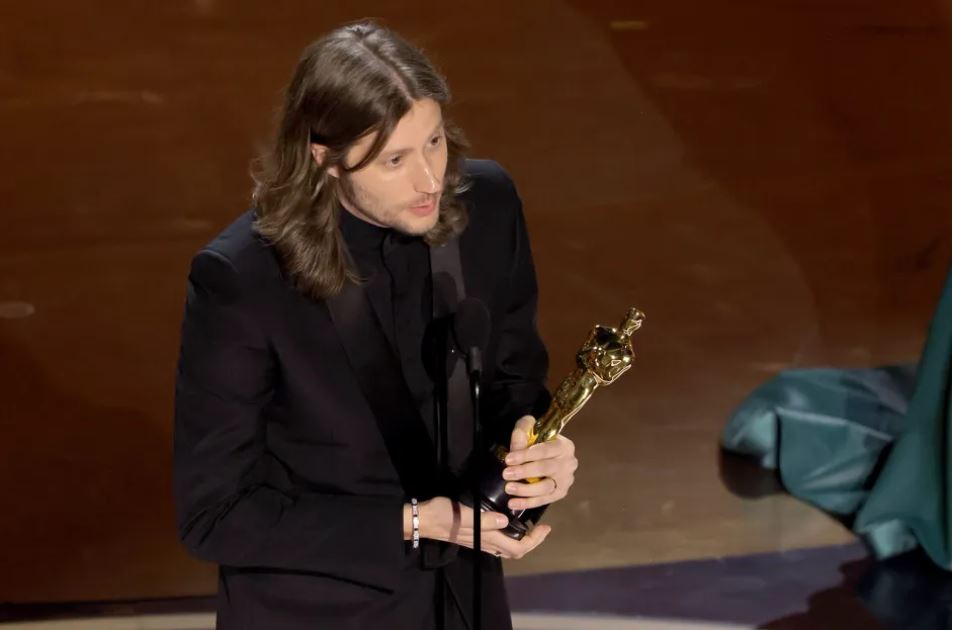
Ludwig Görannson wins his second Academy Award for Best Original Score, for his music for “Oppenheimer.” You can certainly hear it in the movie! Görannson acknowledges his wife, violinist Serena McKinney, who is featured on the film’s soundtrack. Görannson’s previous win was for “Black Panther” in 2019. Congratulations.
Category: Daily Dispatch
-
Last Repair Shop Wins Oscar Williams Inspired
“The Last Repair Shop” wins Academy Award for Best Documentary Short. John Williams gets acknowledged as inspiration in acceptance speech. “John Williams inspired me to become a composer,” says co-director Kris Bowers. “Music education isn’t just about creating incredible musicians. It’s about creating incredible humans.” Watch the film here:
-
Godzilla Wins Oscar Godzilla Minus One
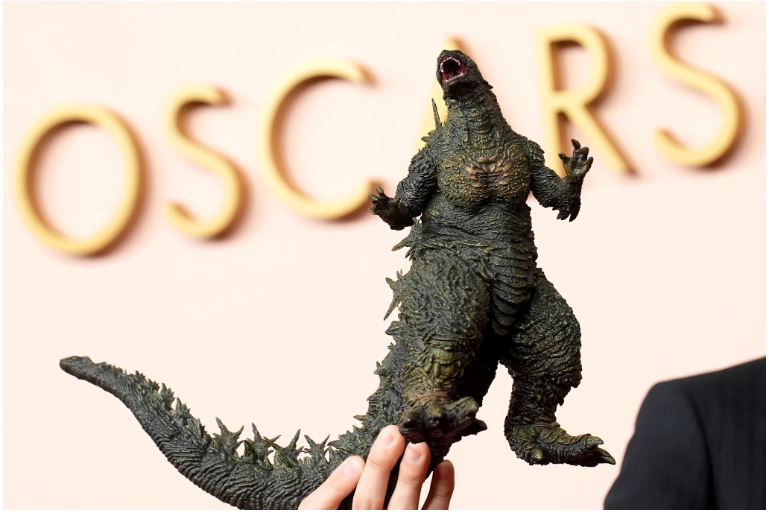
Godzilla gets his first Oscar! Congratulations to “Godzilla Minus One!” (With Akira Ifukube’s classic theme accompanying the visual effects team to the podium…)
-
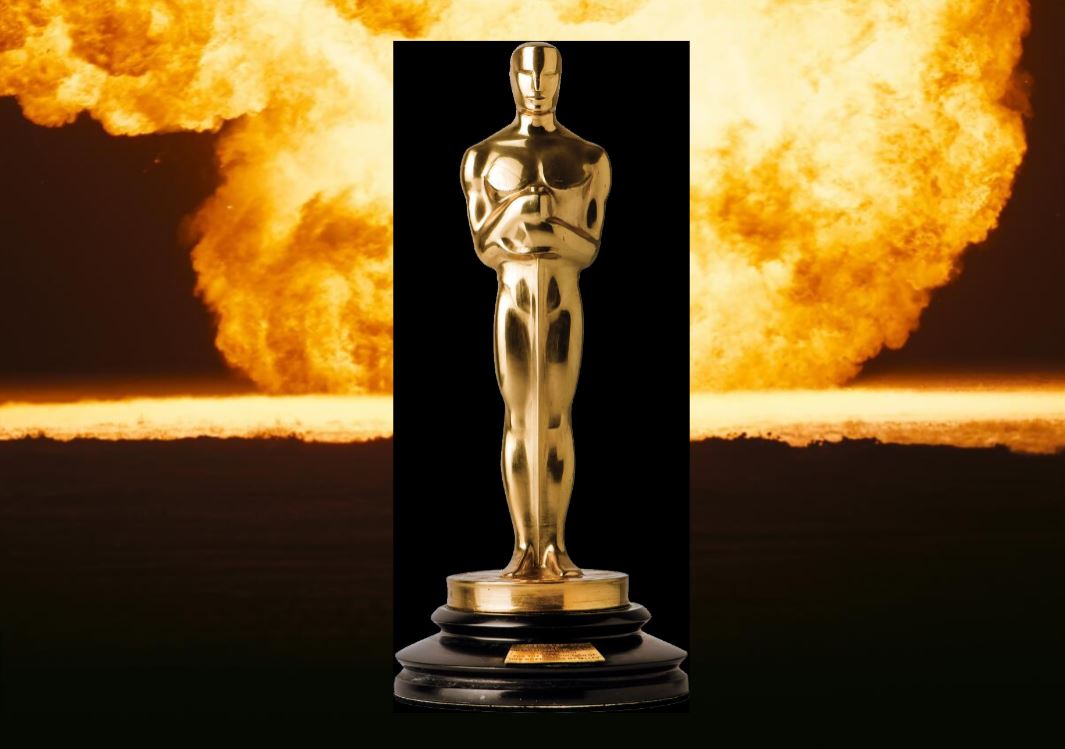
Oscars Predictions: Can’t Quit the Academy Awards
It’s the ceremony everyone loves to hate. In fact, it’s astonishing how many anonymous posters on the internet feel compelled to share their vitriol about, or more puzzlingly, their alleged indifference to, the Oscars. They couldn’t care less, they say, yet they must let everyone know in the comments sections of even the most innocuous online articles about the Academy Awards.
Yes, I’ve gone on a few seething tirades myself in recent years, but only on my Facebook page, lamenting the decline in the quality of the offerings and certainly of the ceremony itself. I boycotted the broadcast for at least two years, but then last year, what do you know, I sensed a little bit of an uptick. Even an Oscars cynic like me had to admit that most of the winners were very satisfying.
So, like Al Pacino, just when I thought I was out, they pull me back in. Or like a besotted cowboy in “Brokeback Mountain,” I just can’t quit Oscar.
I confess, for me, there’s a lot of baggage tied up with the Academy Awards. Watching the televised ceremony was always a happy time for my family when I was growing up, as we all gathered in the living room to chow down on shrimp and buffalo wings and cheese and veggies and dip in celebration of a medium we loved – the movies!
For years, I used to immerse myself in recordings of classic film scores from past Academy Award winners and view Oscar-winning movies in preparation for the main event.
But then the movies changed, the glamor evaporated, and the film scores got worse. It seems they can’t even get the “In Memoriam” segments right anymore.
But I have to say, on a whole, the nominees this year are the most interesting they have been in years, so I’m actually looking forward to watching tonight’s broadcast. Jimmy Kimmel is pretty much the best they can do for a host anymore. He’s witty and unobtrusive and he keeps the show rolling. Most of the hosts since Billy Crystal have been hideous, or at least not a good fit.
Needless to say, regardless of what occurs at the actual ceremony, there will be a constant, often wistful, running dialogue with my memories of Oscar, and of better, happier times at the movies. I’ll be sure to have plenty of Guinness and buffalo wings on hand to numb the pain.
Here are my predictions for a few of the major categories (with of course Best Original Score being one of them). Amazingly, I have seen every film listed this year, with the exception of “The Color Purple” and “May December.” There’s plenty of room for your unsolicited negativity in the comments section below.
Afterthought: What genius decided to schedule the interminable Oscars telecast for THE NIGHT AFTER EVERYONE’S LOST AN HOUR’S SLEEP?
BEST ACTOR
Nominees: Bradley Cooper, “Maestro”; Colman Domingo, “Rustin”; Paul Giamatti, “The Holdovers”; Cillian Murphy, “Oppenheimer”; Jeffrey Wright, “American Fiction”
WILL WIN: Cillian Murphy (“Oppenheimer”)
SHOULD WIN: Everyone else, except maybe Bradley Cooper
WHO DO I WANT TO WIN: Paul GiamattiBEST ACTRESS
Nominees: Annette Bening, “Nyad;” Lily Gladstone, “Killers of the Flower Moon;” Sandra Hüller, “Anatomy of a Fall;” Carey Mulligan, “Maestro;” Emma Stone, “Poor Things”
WILL WIN: Lily Gladstone (“Killers of the Flower Moon”)
SHOULD WIN: Everyone
WHO DO I WANT TO WIN: Everyone, but Emma leastBEST SUPPORTING ACTOR
Nominees: Sterling K. Brown, “American Fiction;” Robert De Niro, “Killers of the Flower Moon;” Robert Downey Jr., “Oppenheimer;” Ryan Gosling, “Barbie;” Mark Ruffalo, “Poor Things”
WILL WIN: Robert Downey Jr. (“Oppenheimer”)
SHOULD WIN: Robert Downey, Jr.
WHO DO I WANT TO WIN: Robert Downey, Jr.BEST SUPPORTING ACTRESS
Nominees: Emily Blunt, “Oppenheimer;” Danielle Brooks, “The Color Purple;” America Ferrera, “Barbie;” Jodie Foster, “Nyad;” Da’Vine Joy Randolph, “The Holdovers”
WILL WIN: Good buzz for Da’Vine Joy Randolph (“The Holdovers”)
SHOULD WIN: Probably Da’Vine Joy Randolph
WHO DO I WANT TO WIN: I love Jodie in anything she’s in, but probably Da’Vine Joy Randolph (who also appears as Mahalia Jackson in “Rustin”)
SIDE NOTE: Again, I did not see “The Color Purple”BEST ORIGINAL SCREENPLAY
Nominees: Justine Triet & Arthur Harari, “Anatomy of a Fall;” Celine Song, “Past Lives;” David Hemingson, “The Holdovers;” Samy Burch & Alex Mechanik, “May December;” Bradley Cooper & Josh Singer, “Maestro”
WILL WIN: “Anatomy of a Fall”
SHOULD WIN: “Past Lives”
WHO DO I WANT TO WIN: Either one of those is fine by me
SIDE NOTES: A disgruntled screenwriter just accused “The Holdovers” of plagiarism; I did not see “May December”BEST ADAPTED SCREENPLAY
Nominees: Cord Jefferson, “American Fiction;” Christopher Nolan, “Oppenheimer;” Greta Gerwig & Noah Baumbach, “Barbie;” Tony McNamara; “Poor Things,” Jonathan Glazer, “The Zone of Interest”
WILL WIN: “American Fiction” (and hopefully not “Barbenheimer”)
SHOULD WIN: “American Fiction” (it would have been even better if it had been a little edgier)
WHO DO I WANT TO WIN: “American Fiction”
SIDE NOTE: “Barbie” should not have been nominated in this category, but rather Best Original Screenplay, but because of its extraordinary success, they might be angling to reward it with something other than just Best Production DesignBEST DIRECTOR
Nominees: Jonathan Glazer, “The Zone of Interest;” Yorgos Lanthimos, “Poor Things;” Christopher Nolan, “Oppenheimer;” Martin Scorsese, “Killers of the Flower Moon;” Justine Triet, “Anatomy of a Fall”
WILL WIN: Christopher Nolan (“Oppenheimer”)
SHOULD WIN: Jonathan Glazer (“The Zone of Interest”)
WHO DO I WANT TO WIN: Martin Scorsese (“Killers of the Flower Moon”)BEST PICTURE
Nominees: “American Fiction,” “Anatomy of a Fall,” “Barbie,” “The Holdovers,” “Killers of the Flower Moon,” “Maestro,” “Oppenheimer,” “Past Lives,” “Poor Things,” “The Zone of Interest”
WILL WIN: “Oppenheimer”
SHOULD WIN: It’s Nolan’s year
WHO DO I WANT TO WIN: I have my favorites, and they are not “Maestro,” “Barbie,” or “Poor Things”BEST ORIGINAL SCORE
Nominees: Ludwig Göransson, “Oppenheimer;” Robbie Robertson, “Killers of the Flower Moon;” Laura Karpman, “American Fiction;” Jerskin Fendrix, “Poor Things;” John Williams, “Indiana Jones and the Dial of Destiny”
WILL WIN: Ludwig Göransson (“Oppenheimer”)
SHOULD WIN: No one!
WHO DO I WANT TO WIN: I love you, Johnny… but no one!
ROOTING AGAINST: Hans Zimmer (even though he’s not nominated) -
Princeton Symphony: Time for Three Shines
If you can find time to squeeze it in before your Oscar party, and if you’ve got the energy after losing an hour’s sleep due to the time change, it would be worth your while to try to catch the second performance of this weekend’s concerts of the Princeton Symphony Orchestra.
The program includes suites from the ballets “The Fire Dancer” (1938-40) by Bulgarian composer Marin Goleminov (in what music director Rossen Milanov claims is the work’s first U.S. performances) and “Romeo and Juliet” (1935-36) by Sergei Prokofiev.
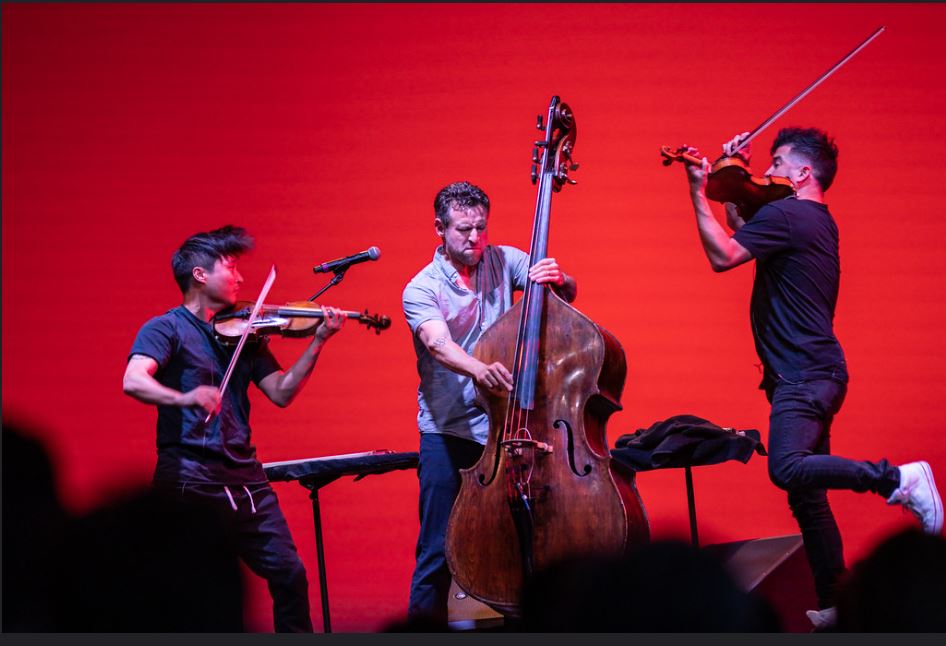
However, for as enticing as these offerings are, the real highlight is “Contact” (2022), a recent triple concerto by American composer Kevin Puts (Pulitzer Prize winner in 2012 for his opera “Silent Night”). The work, which is cinematic in the best possible sense, was written for the loosey-goosey, genre-hopping trio Time for Three (violinists Nick Kendall and Charles Yang and double-bassist Ranaan Meyer). These guys have been like overcaffeinated squirrels from the time I used to watch them improvising in Philadelphia’s Rittenhouse Square while still students at the Curtis Institute of Music. You won’t be able to take your eyes off the soloists, even as you’re alternately caressed, shaken and stirred by the music.
When “Romeo and Juliet” is the concert’s standard repertoire, you know the program has to be an exceptionally challenging one for the musicians, but last night you could see they were totally transfixed, charmed, and energized by their kinetic guests.
There was plenty of crackle in the hall for that piece and for the encore, as the trio presented a cover of the R&B classic “Stand by Me.” I don’t know that I’ve ever heard an audience react like that to a classical music concert in Richardson Auditorium. The level of energy was outstanding.
Today’s concert begins at 4 p.m. Admittedly, it is a long program, cresting two hours, but of course there is an intermission, and you’d be guaranteed to be out before 6:30. Grab a coffee ahead of time, have the fridge stocked in advance, and it’s possible you’ll be back in time for the start of the Oscars broadcast. You can always record the trashy red carpet prelude, if it means that much to you.
Or ditch the Prokofiev, if you must, and take off at intermission. Of course, you’d be missing some fantastic music. Also, if you love John Williams, it’s an added pleasure to be able to spend time with a composer who was clearly one of his biggest influences.
I apologize for not providing more advance notice for this extraordinary concert, but I had a lot of deadlines this week, and really, I didn’t think anything about it until yesterday! Do yourself a favor, if you can, and make time for Time for Three.
For tickets and information, visit princetonsymphony.org.
PHOTO: As seen at last summer’s The Princeton Festival
Tag Cloud
Aaron Copland (94) Beethoven (95) Composer (114) Film Music (150) Film Score (143) Film Scores (255) Halloween (102) John Williams (198) KWAX (233) Leonard Bernstein (105) Marlboro Music Festival (125) Movie Music (165) Mozart (91) Opera (215) Philadelphia Orchestra (90) Picture Perfect (174) Princeton Symphony Orchestra (110) Radio (90) Ross Amico (244) Roy's Tie-Dye Sci-Fi Corner (290) The Classical Network (101) The Lost Chord (269) Vaughan Williams (107) WPRB (397) WWFM (881)