It’s Presidents Day. Before you hit the white sales, I’ve got a few musical selections for you.
Here’s a melody called “Lincoln and Liberty” (originally “Rosin the Beau/Bow”), a tune Lincoln appropriated for his campaign song in 1860. If you note the pattern on the performer’s pants, you might deduce he is an escaped convict.
This is a concert overture titled “McKonkey’s Ferry (Washington at Trenton)” by Trenton’s own George Antheil. I think you’ll agree, Washington has never sounded so Soviet.
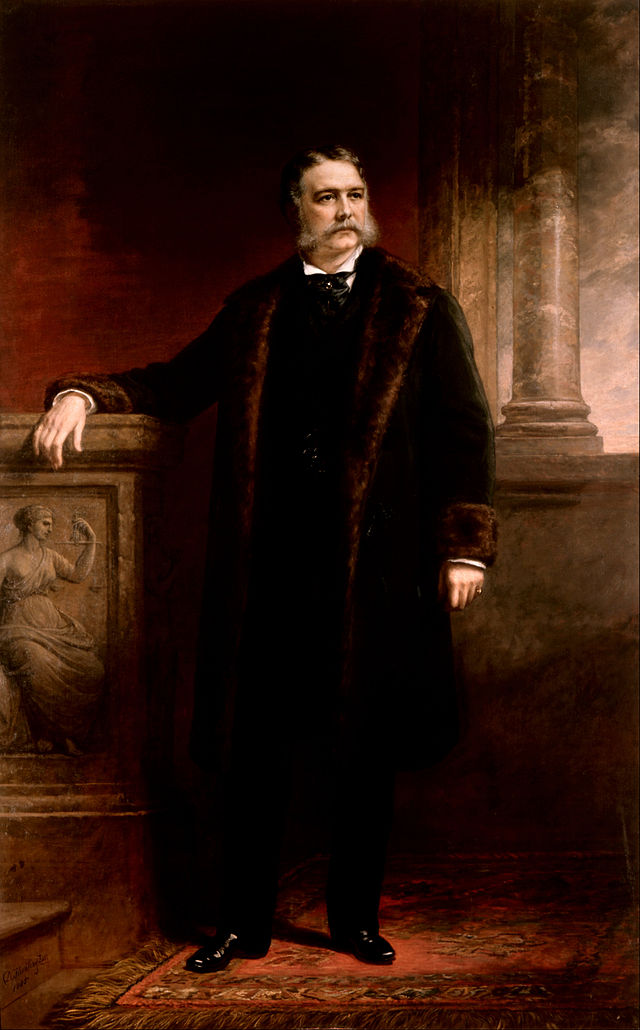
Chester A. Arthur, our 21st president, thought “Hail to the Chief” too undignified, so he requested a new piece from John Philip Sousa. The result was the “Presidential Polonaise” (1886).
I wonder if anyone ever thought to write a polka for Polk?
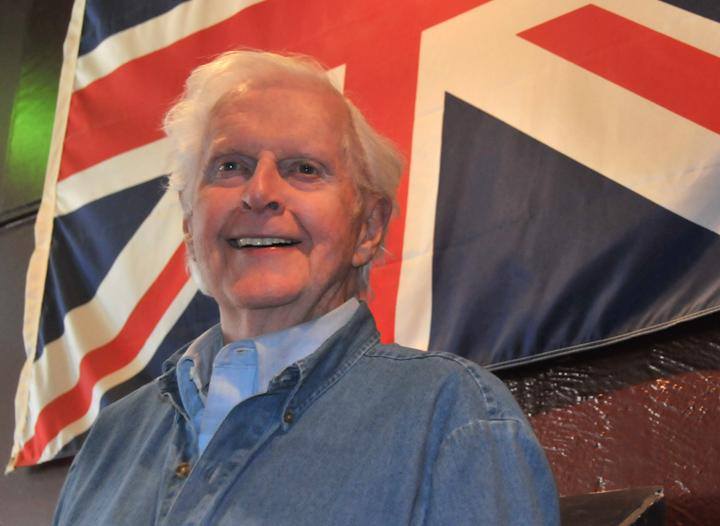
When you’ve lived for the better part of a century and spent over half your life in the entertainment industry, you get to know a few people. And David Frankham remembers every one of them.
Roy and I are honored to have hosted the veteran actor for his return to Roy’s Tie-Dye Sci-Fi Corner on Friday, Frankham’s 98th birthday, when once again he lit up the internet with a treasure trove of memories and his extraordinary ebullience.
In addition to revisiting his experiences on “Star Trek” and “The Outer Limits,” Frankham, who also costarred in the feature films “Return of the Fly,” “Master of the World,” “Tales of Terror,” and “One Hundred and One Dalmations,” shared anecdotes about Vincent Price, Charles Bronson, Basil Rathbone, Walt Disney, Rosemary Clooney, Alec Guinness, Miriam Hopkins, Gladys Cooper, Henry Hull, and many others.
Frankham was joined by filmmaker Ben Wickey, who was visiting him at his home in Santa Fe, NM. Wickey was on the team of animators responsible for the Academy Award-nominated feature film, “Marcel the Shell with Shoes On” (2021). A big fan of the Vincent Price gothics produced by American International Pictures in the 1960s, Wickey coaxed Frankham into employing his voice talent in a stop-motion adaptation of Nathaniel Hawthorne’s “The House of the Seven Gables” (2018). Not coincidentally, there are plenty of A.I.P. tributes in the film, which also sports a bit of an Edward Gorey/Rankin-Bass vibe. It’s an awful lot of fun. If you have 27 minutes to spare, here it is:
Frankham’s close friend, Jonathan David Dixon, was also on hand. Dixon voices the role of Mr. Holgrave in the film and provided its pitch-perfect score.
Finally, not to spoil it for anyone, but toward the end of the show, there was a surprise visit from Mimi Gibson, who costarred with Frankham in “One Hundred and One Dalmations.”
Frankham’s appearances are always priceless (or, given the source, perhaps Price-full), so do check out the show at the link.
And if you just can’t get enough, you’ll find another one archived here:
Of course, there’s plenty more in his memoir, “Which One Was David?”
Our next livestream will take place on Friday evening at 7:00 EST, when Roy and I will return, our pallid selves, to discuss another classic movie yet to be determined. Keep watching this space. And thank you, David Frankham!
Afro-British composer Samuel Coleridge-Taylor (1875-1912) achieved much in his comparatively short life, attracting the attention and advocacy of Sir Charles Villiers Stanford, Sir Edward Elgar, and Sir Malcolm Sargent.
His cantata “Hiawatha’s Wedding Feast” became a cultural phenomenon between the wars. Sargent conducted the piece annually, from 1928 to 1939, in a costumed, semi-ballet version, featuring close to a thousand performers. Unfortunately, this was among the works the composer had sold outright, his heirs thereby missing out on the royalties. By the time of Sargent’s advocacy, the short-lived Coleridge-Taylor had already been dead for 16 years.
This week on “The Lost Chord,” we’ll hear selections from a complete recording of “Scenes from ‘The Song of Hiawatha,’” one of the earliest to feature rising star Bryn Terfel, released on the Argo label back in 1991. We’ll also hear Sargent’s 1932 recording of Coleridge-Taylor’s “Othello Suite.” The hour will conclude with one of the composer’s musical explorations of his African heritage, the “Symphonic Variations on an African Air,” in a performance conducted by Grant Llewellyn, released on Argo in 1993.
I hope you’ll join me for “Taylor-Made,” music of Samuel Coleridge-Taylor, on “The Lost Chord,” now in syndication on KWAX, the radio station of the University of Oregon!
Remember, KWAX is on the West Coast, so there’s a three-hour difference for those of you listening in the East. Here are the respective air-times for all three of my recorded shows (with East Coast conversions in parentheses):
PICTURE PERFECT, the movie music show – Friday on KWAX at 5:00 PM PACIFIC TIME (8:00 PM EST)
SWEETNESS AND LIGHT, the light music program – ALL NEW! – Saturday on KWAX at 8:00 AM PACIFIC TIME (11:00 AM EST)
THE LOST CHORD, unusual and neglected rep – Saturday on KWAX at 4:00 PM PACIFIC TIME (7:00 PM EST)
Stream all three, at the times indicated, by following the link!
Snow falling here! I don’t know about you, but I plan to cozy in with some “Sweetness and Light.” For Black History Month, it will be the first of two newly-recorded light music programs featuring works by Black composers.
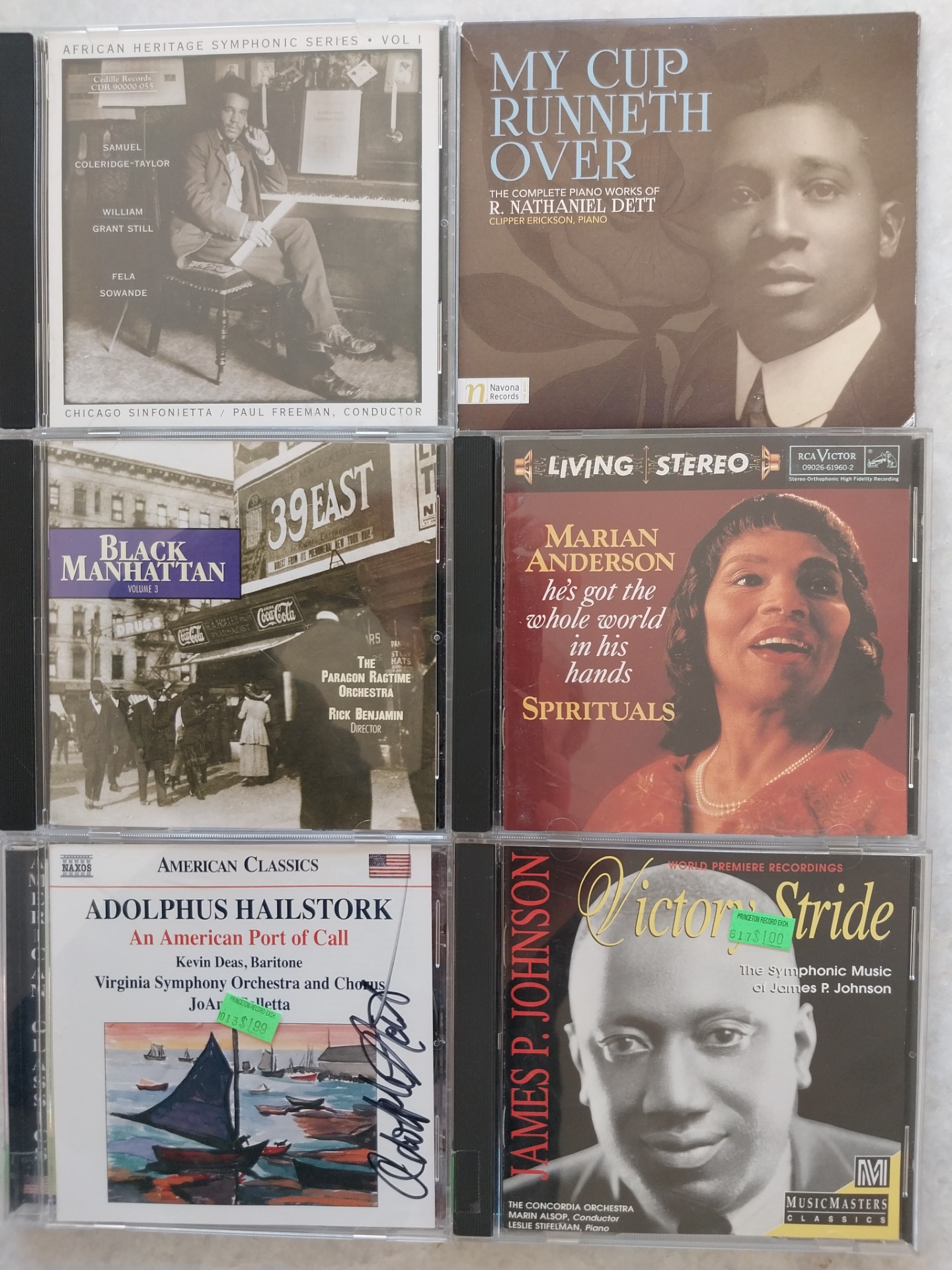
We’ll hear from Nigerian-born Fela Sowande (selections from his “African Suite”), Canadian-American composer R. Nathaniel Dett (“In the Bottoms,” played by one of his greatest champions, who lives and works locally, Clipper Erickson, piano), musical theater pioneer Eubie Blake (an oversimplification of his significance, I realize), contemporary composer and Nadia Boulanger pupil Adolphus Hailstork (some of his spiritual arrangements for orchestra), and stride giant James P. Johnson (born right up Route 1 in New Brunswick, NJ). In addition, we’ll get to enjoy an assortment of traditional spirituals interpreted by the great Marian Anderson.
Part 1 of “Black and Light” will air this Saturday morning at 11:00 EST/8:00 PST, with Part 2 to follow, next week.
As always on “Sweetness and Light,” it’s music calculated to charm and to cheer. We’ll be serving the coffee black, exclusively on KWAX, the radio station of the University of Oregon!
And then drop back later for a topper, as I’ll be paying tribute to Afro-English composer Samuel Coleridge-Taylor (1875-1912) on “The Lost Chord.” “Taylor-Made” will be broadcast on KWAX today at 7:00 pm EST/4:00 pm PST. More to come in a separate post!
Some of the artists that will be featured on tomorrow morning’s “Sweetness and Light,” complete with a couple of Princeton Record Exchange stickers (green price tags) and an Adolphus Hailstork autograph (obtained at the premiere of his Symphony No. 4)! It’s the first of two newly-recorded light music programs for Black History Month. Part 1 of “Black and Light” will air this Saturday morning at 11:00 EST/8:00 PST, with Part 2 to follow next week. It’s music calculated to charm and to cheer, exclusively on KWAX, the radio station of the University of Oregon!