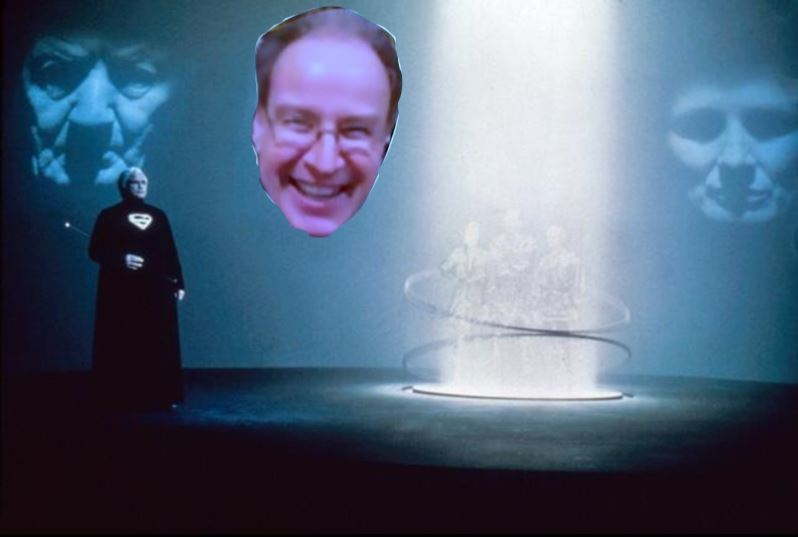
Summoned for jury duty this week.
Category: Daily Dispatch
-
Nostalgic Holiday Movies Roy’s Sci-Fi Corner
Anyone familiar with Roy’s Tie-Dye Sci-Fi Corner knows that our nostalgia runs deep. I was at a post-Thanksgiving gathering the other night, and what was streaming on a wall-set in the television room, clearly visible from the kitchen, but “Chitty Chitty Bang Bang.”
For those of us of a certain age, family movies were an essential part of the holidays, as the networks kept kids entertained so that the adults could catch-up after the meal. Roy and I have shared our fond recollections of those halcyon days with salutes in recent years to “Willy Wonka and the Chocolate Factory,” “Chitty Chitty Bang Bang,” “20,000 Leagues Under the Sea,” and (with apologies) the “Star Wars Holiday Special.”
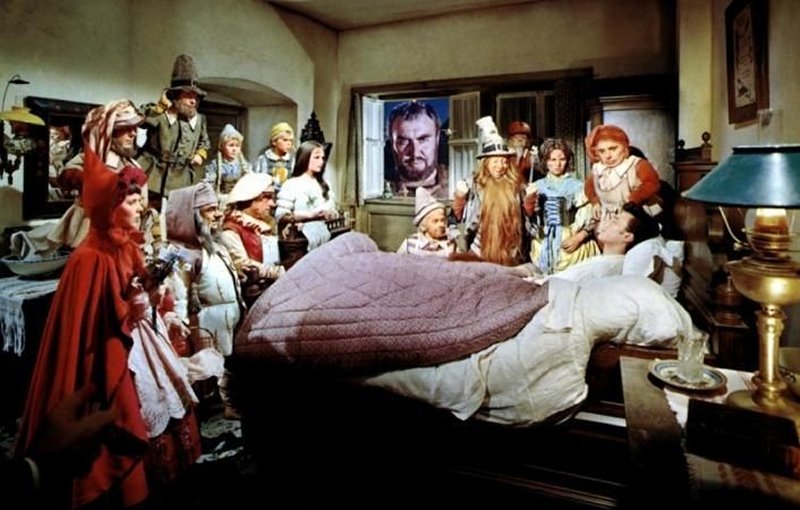
This weekend, we had planned to carry on the tradition with a nostalgic recollection of George Pal’s star-studded Cinerama classic “The Wonderful World of the Brothers Grimm” (1962). However, the conversation has been postponed, as I suspect at least one of us is still in the process of metabolizing his intake of Thanksgiving tryptophan.
Since one of the film’s chapters, the Puppetoon-laden “The Cobbler and the Elves,” is a Christmas segment, the delay will do nothing to diminish the timely nature of the discussion. We hope you’ll join us for a Grimm time in the comments section, when we livestream on Facebook, YouTube, etc., this Friday evening at 7:00 EST!
https://www.facebook.com/roystiedyescificorner
Thank you for your understanding, and enjoy the rest of your holiday weekend!
-
Ormandy’s All-American Philadelphia Sound
This week on “The Lost Chord,” it’s one more trip to the well, with well-played works of American composers rendered by Eugene Ormandy and the Philadelphia Orchestra.
Slake your thirst with selections from “Five Songs of William Blake” by Virgil Thomson (born on this date in 1896), the Symphony No. 7 by Roy Harris, and “Four Squares of Philadelphia” by Louis Gesensway.
Gesensway was born in Latvia in 1906. A violin prodigy, he was one of the founders of the Toronto Symphony Orchestra. He came to Philadelphia at the age of 19, where he played under both Stokowski and Ormandy.
In his mid-20s, he took a leave of absence to study composition with Zoltán Kodály. “Four Squares of Philadelphia” was described by the composer as a “symphonic poem for large orchestra, narrator and street criers.”
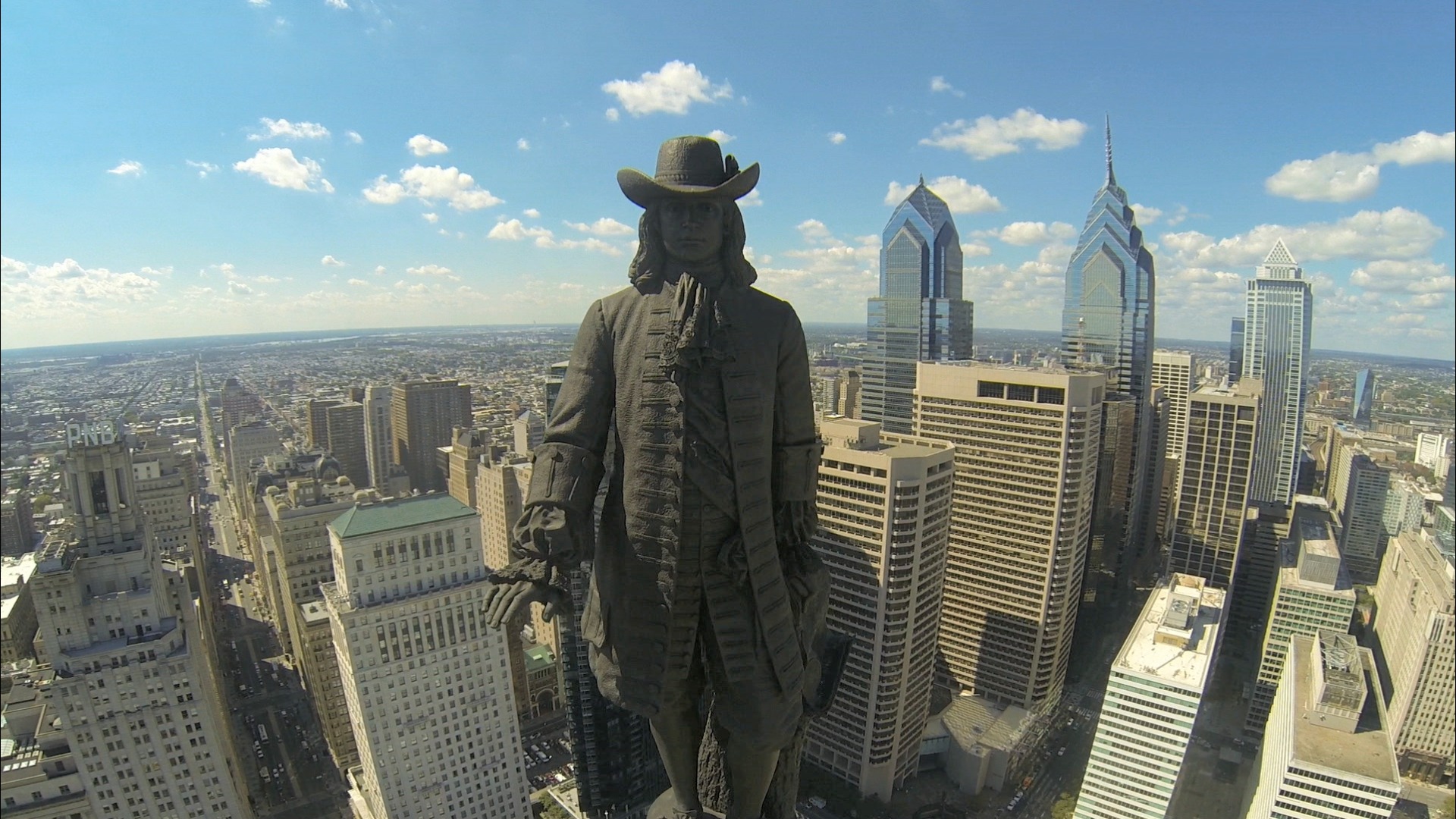
The piece opens with a recitation of William Penn’s prayer, then continues with musical evocations of Washington Square (in early morning, during Colonial times, with street criers hawking their wares), Rittenhouse Square (on a bright and cheerful afternoon), Logan Square (with its fountains at dusk), and Franklin Square (at night, evocative of noisy bridge traffic, a side excursion into Chinatown, and musical interjections from the honky tonk joints located around the square in the 1950s).
Be there or be square. Eugene Ormandy serves up the last of the Thanksgiving leftovers. I hope you’ll join me for “All-American Ormandy III,” now in syndication on KWAX, the radio station of the University of Oregon!
Remember, KWAX is on the West Coast, so there’s a three-hour difference for the Trenton-Princeton area. Here are the respective air-times of my recorded shows (with East Coast conversions in parentheses):
PICTURE PERFECT, the movie music show – Friday on KWAX at 5:00 PACIFIC TIME (8:00 PM EST)
THE LOST CHORD, unusual and neglected rep – Saturday on KWAX at 4:00 PACIFIC TIME (7:00 PM EST)
Stream them here!
PLEASE NOTE: This show was recorded in 2015 and employs material reissued on compact disc for the first time on the Albany and Bay Cities labels. All three of these performances have since been remastered (including the wholly restored “Five Blake Songs”), as part of Sony Classical’s 120-CD box set of Ormandy’s Philadelphia mono recordings, “Eugene Ormandy: The Columbia Legacy,” in 2021.
The first installment of Ormandy’s stereo recordings were released earlier this month in an 88-CD box, also from Sony, “Eugene Ormandy/The Philadelphia Orchestra: The Columbia Stereo Collection,” on November 17.
Both Sony sets sound fantastic (with the caveat that the first is in mono). Both are highly recommended.
PHOTO: Statue of Penn, high atop the city he founded
-
Fairy Tale Film Scores Childhood Magic
This week on “Picture Perfect,” we’ll play on the inherent nostalgia of the holidays by recalling the magic of childhood, by way of our collective and personal interactions with the world of fairy tales.
George Pal’s “The Wonderful World of the Brothers Grimm” (1962) was filmed in Cinerama and features the producer-director’s trademark stop motion effects. Its all-star cast includes Laurence Harvey, Claire Bloom, Barbara Eden, Russ Tamblyn, and Buddy Hackett. The narrative incorporates a number of familiar Grimm tales, while dealing with the brothers’ real-life struggles.*
The music is by Leigh Harline. Harline was an integral part of the Disney team that scored an earlier fairy tale adaptation, “Snow White and the Seven Dwarfs.” He would win two Academy Awards for his work on “Pinocchio,” including one for Best Original Song, for “When You Wish Upon a Star.”
“The Company of Wolves” (1984), one of Neil Jordan’s earlier films, explores the psychological underpinnings of the tale of “Little Red Riding Hood,” here presented as an allegory of adolescence and the loss of innocence. Angela Carter co-wrote the screenplay, based on a selection of her original short stories. The film features Angela Lansbury, any number of werewolves, and Terence Stamp as the Devil. The music is by George Fenton.
With the advent of computer animation, a snarkier, post-modern take on the fairy tale predominates, most notably with the “Shrek” series, beginning in 2001. The “Shrek” films were so successful, they led to a spin-off, centered on the character of “Puss in Boots” (2011).
Voiced by Antonio Banderas, Puss provides ample opportunity to vamp on the actor’s swashbuckler image, especially as portrayed in “The Mask of Zorro.” Likewise, the composer, Henry Jackman, chooses to rib James Horners’ “Zorro” score.
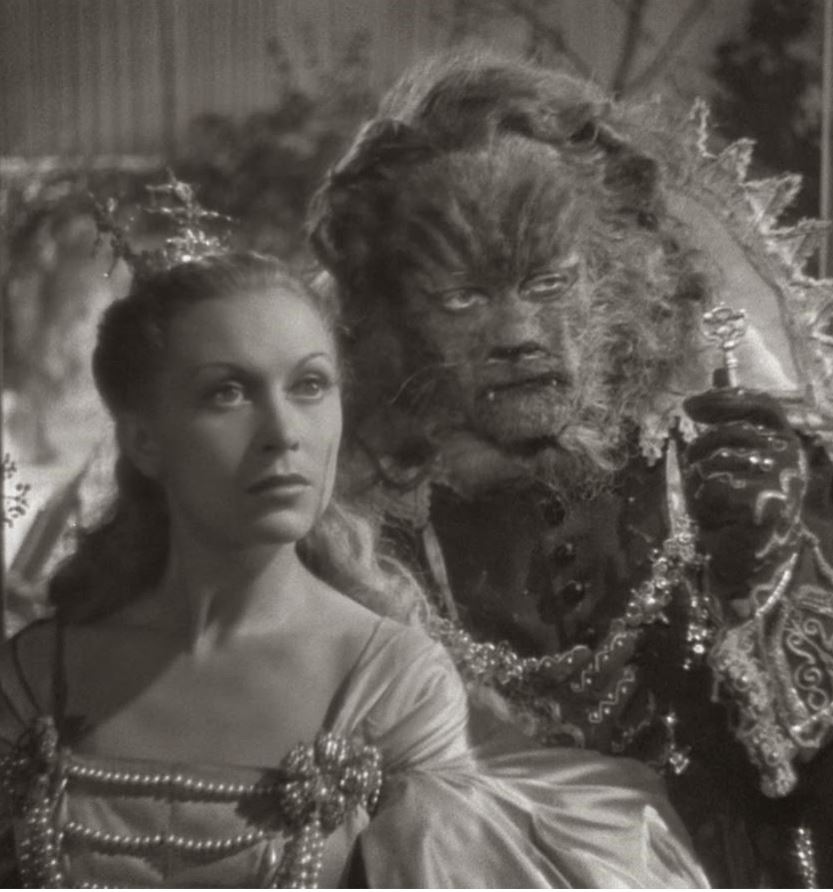
Finally, we’ll hear selections from perhaps the finest fairy tale ever committed to film, Jean Cocteau’s “La Belle et la Bête” – “Beauty and the Beast” (1946). Moody, atmospheric, dreamy, clever, hypnotic, funny, and romantic, and sporting production design that looks like something Gustav Doré might have dreamed up while poisoning himself on Dutch Masters cigars, Cocteau’s masterpiece stars Jean Marais and Josette Day.
The alternately mysterious and majestic score is by Georges Auric. Cocteau, you’ll recall, was the one-man publicity machine that propelled Auric and his composer-colleagues, Francis Poulenc, Darius Milhaud, Arthur Honegger, Germaine Tailleferre, and Louis Durey, to fame in Paris, circa 1920, dubbing them “Les Six.”
I hope you’ll join me for an hour of once-upon-a-time and happily-ever-after, on “Picture Perfect,” music for the movies, now in syndication on KWAX, the radio station of the University of Oregon!
Remember, KWAX is on the West Coast, so there’s a three-hour difference for the Trenton-Princeton area. Here are the respective air-times of my recorded shows (with East Coast conversions in parentheses):
PICTURE PERFECT, the movie music show – Friday on KWAX at 5:00 PACIFIC TIME (8:00 PM EST)
THE LOST CHORD, unusual and neglected rep – Saturday on KWAX at 4:00 PACIFIC TIME (7:00 PM EST)
Stream them here!
*PLEASE NOTE: By coincidence, Roy and I will also be discussing “The Wonderful World of the Brothers Grimm” on the next Roy’s Tie-Dye Sci-Fi Corner, to be livestreamed on Facebook, YouTube, etc., THIS WEEK AT A SPECIAL TIME, SUNDAY EVENING AT 7:00 EST!
-
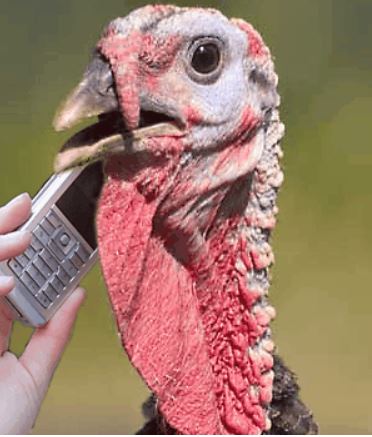
Thanksgiving Phone Fail Black Friday Upgrade
First thing’s first: Happy Thanksgiving!
Second thing’s second: If anyone tries to call me today, I am phoneless!
I dropped my flip last night, and the two halves are now wholly separated. It will ring, but if I press the answer button, I can’t hear anything. Don’t know if you’d be able to hear me. So I am phone-free for Thanksgiving.
Guess who might have to make the much-delayed migration to smartphone for Black Friday.
You might say my turkey is cooked. Give thanks if you are comfortable living in the 21st century.
Tag Cloud
Aaron Copland (94) Beethoven (95) Composer (114) Film Music (151) Film Score (143) Film Scores (255) Halloween (102) John Williams (198) KWAX (233) Leonard Bernstein (105) Marlboro Music Festival (125) Movie Music (166) Mozart (91) Opera (215) Philadelphia Orchestra (90) Picture Perfect (174) Princeton Symphony Orchestra (110) Radio (90) Ross Amico (244) Roy's Tie-Dye Sci-Fi Corner (290) The Classical Network (101) The Lost Chord (269) Vaughan Williams (107) WPRB (397) WWFM (881)