Category: Daily Dispatch

  • David Raksin Hollywood’s Golden Age Composer

    David Raksin Hollywood’s Golden Age Composer

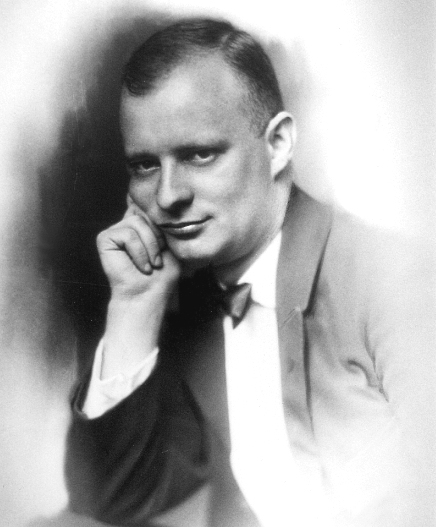
    Thanks to his unusual longevity and abundant wit, film composer David Raksin was, for years, the mouthpiece of a faded era, the man to whom historians and journalists would turn when seeking a well-turned quote or anecdote about his long-past contemporaries of the Golden Age of Hollywood.

    Raksin was born in Philadelphia on this date in 1912. This week on “Picture Perfect,” we’ll celebrate the occasion by revisiting some of his music written for the silver screen.

    Raksin received his early musical training from his father, who played in concert bands and theater orchestras, and was also a member of the Philadelphia Orchestra. The younger Raksin formed his own dance band, taught himself orchestration, and put himself through the University of Pennsylvania by playing gigs. After graduation, he went to New York, where he played and sang with a number of ensembles and worked as an arranger.

    It was pianist Oscar Levant who brought him to the attention of his friend, George Gershwin. Gershwin was so impressed with Raksin’s arrangement of “I Got Rhythm,” that it wasn’t long before the boy from Philadelphia was orchestrating for musical theater and receiving invitations to Hollywood.

    While Raksin would go on to compose all sorts of music, for the stage and concert hall, he is best recognized as a composer for film. He wrote over 100 film scores in all, and 300 scores for television. He was twice nominated for an Academy Award – for “Forever Amber,” in 1947, and “Separate Tables” in 1958.

    Raksin’s haunting theme for the noir classic “Laura” (1944), after lyrics were added by Johnny Mercer, became a sensation. It’s said that during the composer’s lifetime it was the second most-recorded song in history, behind only Hoagy Carmichael’s “Stardust.”

    Raksin’s first Hollywood job, believe it or not, was working for Charlie Chaplin. Chaplin hired Raksin to assist him on the score for his last silent film, and one of the most famous, “Modern Times” (1936). “Modern Times” had actually been conceived as a sound picture (it would have been Chaplin’s first), but he soon realized that his “Little Tramp” would lose his universal appeal, should the character be allowed to talk. So he reverted to his usual silent format, though punctuated by evocative sound effects and one notable gibberish song.

    Chaplin exercised close control over every aspect of his productions, right down to more-or-less composing the music. He had experience as a violinist and cellist, who had practiced sometimes four to six hours a day. He had good musical instincts and a certain melodic fecundity, which, with the help of his orchestrators, he would use to underscore his feature films.

    Raksin later revealed it was he who had essentially scored “Modern Times,” with Chaplin whistling tunes and asking him to make them fit the action.

    Such close and exacting supervision could be a challenge for Chaplin’s collaborators. Raksin was actually fired once, after only a week and a half, though quickly rehired. When the music director, Alfred Newman, stormed out of one of the recording sessions, Raksin refused to take up the baton in his stead, which led to further acrimony. The rift was eventually mended, and decades later Raksin would recollect his work on “Modern Times” as some of the happiest days of his life.

    The recording we’ll hear was conducted by none other than Carl Davis, who on occasion served a similar function, as when he collaborated with Paul McCartney on his “Liverpool Oratorio.” Davis, a prolific film composer himself, died yesterday at the age of 86.

    As was the case with “Laura,” the love theme from “Modern Times” was later outfitted with lyrics, and became a popular standard as “Smile,” attracting countless vocal artists, including Nat King Cole. Again, what cohesion there is to the film score is largely thanks to Raksin.

    Although Raksin had taught himself a great deal, he did receive instruction from Harl McDonald at the University of Pennsylvania, Isadore Freed in New York, and later Arnold Schoenberg in Los Angeles.

    At times he found himself frustrated when dealing with the musical ignorance of Hollywood producers. He was fond of relating a story about having finally found one that was musically literate. The producer claimed he didn’t want anything “Hollywood” for his film, but rather “something different, really powerful – like ‘Wozzeck.’”

    Raksin, elated, invited the producer to dinner at his home. As the two were conversing over drinks, the producer remarked suddenly, “What’s that crap you’re playing?” “That crap,” Raksin responded, “is ‘Wozzeck.’”

    For “The Man with a Cloak” (1951), a story influenced by elements drawn from the life and stories of Edgar Allan Poe, Raksin slyly worked twelve-tone elements into his score – one of the first instances of a composer having done so for a Hollywood film. A few years later, Leonard Rosenman would take modernistic techniques to a whole other level. Raksin employs the language of the Second Viennese School in scenes featuring the Poe character, who in the film goes by the name of his fictional creation, Dupin. The character is given a leitmotif consisting of a tone row made up of the notes E-D-G-A and D-flat (which could be read as “Re”), effectively revealing the identity of Dupin as Edgar, right in the music. For all that, the score retains its accessibility and manages to wed the language of Schoenberg to the necessities of Hollywood storytelling.

    The film, based on a novel of John Dickson Carr, had quite a cast: Joseph Cotten, Barbara Stanwyck, Louis Calhern, Leslie Caron, and even Jim Backus.

    We’ll conclude the hour with one of Raksin’s greatest scores, that for “The Bad and the Beautiful” (1952), Vincent Minelli’s extraordinarily cynical view of Hollywood. Kirk Douglas plays a character Raksin must have known well: a ruthless producer who uses and abuses everyone around him. The film, which also stars Lana Turner, Walter Pigeon, and Dick Powell, won a whole slew of Oscars, including one for Gloria Graham as Best Supporting Actress.

    Raksin died in 2004, at the age of 92. His music was beautiful, but never bad. I hope you’ll take an hour to sample some of it with me on Raksin’s birthday, on “Picture Perfect,” music for the movies, now in syndication on KWAX, the radio station of the University of Oregon!


    Keep in mind, KWAX is on the West Coast, so there’s a three-hour difference for the Trenton-Princeton area. Here are the respective air-times of my recorded shows (with East Coast conversions in parentheses):

    PICTURE PERFECT, the movie music show – Friday on KWAX at 5:00 PACIFIC TIME (8:00 PM EDT)

    THE LOST CHORD, unusual and neglected rep – Saturday on KWAX at 4:00 PACIFIC TIME (7:00 PM EDT)

    Stream them here!

    https://kwax.uoregon.edu/

  • Vaughan Williams Livestream from Bard College

    Vaughan Williams Livestream from Bard College

    Adore the music of Ralph Vaughan Williams but can’t make it to this year’s Bard Music Festival? Some of the concerts will be made available via livestream. The lark ascends at Bard College in Annandale-on-Hudson, NY, August 4 -13. If you’re trapped in the Antarctic, watch online for a modest fee.

    Please note the concerts can be viewed in real-time only, and not on demand. So reserve your tickets, and don’t be late!

    https://fishercenter.bard.edu/whats-on/programs/upstreaming/


    FRIDAY, AUGUST 4, at 7 PM
    PROGRAM ONE – VAUGHAN WILLIAMS: BECOMING AN ENGLISH COMPOSER

    Down Ampney (Come Down, O Love Divine) from “The English Hymnal” (1906)

    Quintet for piano and strings in C minor (1903)

    Fantasia on a Theme of Thomas Tallis (1910)

    Concerto in D minor for violin and strings (1925)

    Serenade to Music (1938)

    O taste and see (1953)

    Songs

    Selections from “Five English Folk Songs” (1913)

    Old Hundredth Psalm Tune (1953)

    Horszowski Trio and guests; William Ferguson, tenor; Theo Hoffman, baritone; Renée Anne Louprette, organ; Grace Park, violin; Sun-Ly Pierce, mezzo-soprano; Brandie Sutton, soprano; Bard Festival Chorale, James Bagwell, music director; The Orchestra Now (TŌN) conducted by Leon Botstein, music director


    SATURDAY, AUGUST 5, at 8 PM
    PROGRAM THREE: THE SYMPHONY AND COMPOSING FOR THE STAGE

    Job, A Masque for Dancing (1930)

    Concerto in C, for two pianos and orchestra (1931, rev. 1947)

    Symphony No. 4 in F Minor (1934)

    Danny Driver & Piers Lane, pianos; The Orchestra Now (TŌN) conducted by Leon Botstein


    SUNDAY, AUGUST 6 at 5 PM
    PROGRAM SIX: LONDON CALLING! FUN IN COCKAIGNE!

    A celebration of Music Hall and pop traditions from Gilbert and Sullivan to the Beatles, including works by Arthur Sullivan (1842–1900), Roger Quilter (1877–1953), Percy Grainger (1882–1961), Gerald Tyrwhitt-Wilson, Lord Berners (1883–1950), Eric Coates (1886–1957), Ivor Novello (1893–1951), Noël Coward (1899–1973), Arthur Benjamin (1893–1960), and others, with selections from Vaughan Williams’ “The Poisoned Kiss” (1927–29; rev.)

    Martin Luther Clark, tenor; Theo Hoffman, baritone; Sun-Ly Pierce, mezzo-soprano; Ann Toomey, soprano; Bard Festival Ensemble; and others


    FRIDAY, AUGUST 11, at 8 PM
    PROGRAM SEVEN – THE LARK ASCENDING: BRITISH MUSIC FOR SMALL ORCHESTRA

    Ralph Vaughan Williams (1872–1958)
    Five Variants of “Dives and Lazarus” (1939)

    Edward Elgar (1858–1934)
    Serenade for Strings, Op. 20 (1896)

    Ralph Vaughan Williams (1872–1958)
    Flos Campi (1925)

    Grace Williams (1906–77)
    Elegy for String Orchestra (1936, rev. 1940)

    Ralph Vaughan Williams (1872–1958)
    The Lark Ascending (1914, orch. 1921)

    Peter Warlock (1894–1930)
    Capriol Suite (1926)

    Frederick Delius (1862–1934)
    Two Aquarelles (1932)

    Gustav Holst (1874–1934)
    St. Paul’s Suite, Op. 29, No.2 (1913)

    Luosha Fang, viola; Bella Hristova, violin; members of the Bard Festival Chorale, James Bagwell, choral director; The Orchestra Now (TŌN) conducted by James Bagwell and Zachary Schwartzman


    SATURDAY, AUGUST 12, AT 8 PM
    PROGRAM NINE: A NEW ELIZABETHAN AGE

    Elizabeth Maconchy (1907–94)
    Proud Thames, coronation overture (1953)

    William Walton (1902–83)
    Partita for Orchestra (1957–58)

    Ralph Vaughan Williams (1872–1958)
    Symphony No. 8 in D Minor (1955)

    Jean Sibelius (1865–1957)
    Andante Festivo (1922/1938)

    Ralph Vaughan Williams (1872–1958)
    “Sinfonia Antartica” (Symphony No. 7) (1952)

    Brandie Sutton, soprano; members of the Bard Festival Chorale, James Bagwell, choral director; American Symphony Orchestra conducted by Leon Botstein, music director


    SUNDAY, AUGUST 13, at 3 PM
    PROGRAM ELEVEN – VAUGHAN WILLIAMS AND SHAKESPEARE

    “Sir John in Love” (1928), after Shakespeare’s “The Merry Wives of Windsor”

    Bard Festival Chorale, James Bagwell, choral director; American Symphony Orchestra conducted by Leon Botstein

    In order of vocal appearance:

    William Ferguson, tenor, as Robert Shallow
    Theo Hoffman, baritone, as Sir Hugh Evans
    Martin Luther Clark, tenor, as Master Slender
    Maximillian Jansen VAP ’21, tenor, as Peter Simple
    Troy Cook, baritone, as Page
    Craig Colclough, bass-baritone, as Sir John Falstaff
    Julius Ahn, tenor, as Bardolph
    Tyler Duncan, baritone, as Corporal Nym
    Kevin Thompson, bass, as Pistol
    Brandie Sutton, soprano, as Anne Page
    Ann Toomey, soprano, as Mrs. Page
    Sarah Saturnino, mezzo-soprano, as Mrs. Ford
    Joshua Blue, tenor, as Fenton
    John Brancy, baritone, as Dr. Caius
    Justin Hopkins, bass-baritone, as Rugby
    Lucy Schaufer, mezzo-soprano, as Mrs. Quickly
    Lucia Lucas, baritone, as Host of the Garter Inn
    William Socolof, bass-baritone, as Ford


    Pre-concert talks will be offered before some of the events. It’s unclear whether or not these will be included as part of the livestreams. It might be worthwhile to check-in a little early.

    Fisher Center at Bard

  • Carl Davis A Titan of Film Music Passes

    Carl Davis A Titan of Film Music Passes

    The sound of silents is dead.

    In addition to providing original music for countless silent classics, which he often conducted live with screenings of the films, and frequently recorded, Carl Davis wrote music for the television series “The World at War,” “Pride and Prejudice” (with Jennifer Ehle and Colin Firth), and countless others.

    Among his scores for contemporary film were those for “The French Lieutenant’s Woman” (with Meryl Streep and Jeremy Irons), which was honored with a BAFTA for Best Film Music, Ken Russell’s adaptation of D.H. Lawrence’s “The Rainbow,” and Roger Corman’s “Frankenstein Unbound.” Surely, his most ambitious undertaking on behalf of the silents was his work on a restoration of Abel Gance’s epic “Napoleon,” for which he composed and arranged nearly five hours of music.

    He assisted Paul McCartney in the composition of the “Liverpool Oratorio.” He also wrote orchestral concert works and music for the ballet.

    Though he made Britain his home since 1961, Davis was actually born in Brooklyn. He attended Bard College, where he studied composition with Paul Nordoff. He also studied with Hugo Kauder and later with Per Nørgard. Early on, he obtained valuable conducting experience with organizations such as the New York City Opera and the Robert Shaw Chorale. In 1959, his revue “Diversions” won an off-Broadway award.

    He traveled to the Edinburgh Festival in 1961. His success there led to an invitation to compose music for the BBC satirical series “That Was the Week That Was.” Other TV and radio commissions followed, and Davis made a healthy living for himself in the U.K. He enjoyed a close relationship with the London Philharmonic Orchestra, among others.

    At the time of his death, he was 86 years old.

    By coincidence, Carl Davis will conduct music by Charlie Chaplin for “Modern Times” on my syndicated film music show, “Picture Perfect,” tomorrow on KWAX, the radio station of the University of Oregon. Stream it on the East Coast this Friday at 8:00 PM EDT (5:00 PDT).

    https://kwax.uoregon.edu/

    R.I.P. Carl Davis.


    “The World at War”

    “Pride and Prejudice” (with Melvyn Tan on the fortepiano)

    On composing the score to “The French Lieutenant’s Woman”

    “Napoleon”

    Collaborating with Paul McCartney on “Liverpool Oratorio”

    “Liverpool Oratorio” (complete)

    An interview with Carl Davis

  • Bard Music Festival Book Preview Vaughan Williams

    Here’s a glimpse at this year’s tie-in volume to the Bard Music Festival, coming up at Bard College in Annandale-on-Hudson, NY, August 4-13. The Bard books offer scholarly perspectives on the highlighted composer’s life and works. Also included is Vaughan Williams’ lecture on the “St. Matthew Passion.” Looking forward to picking up my copy this weekend! More information on the book’s contents by following the link to @[100063452955898:2048:University of Chicago Press] in the @[100063807330266:2048:Fisher Center at Bard]’s post.

  • Vaughan Williams’ Amanuensis: The Invisible Hand of Roy Douglas

    Vaughan Williams’ Amanuensis: The Invisible Hand of Roy Douglas

    Massive respect to Roy Douglas.

    In preparation for this year’s Bard Music Festival, devoted to Ralph Vaughan Williams (finally!), I just burned through Douglas’ book of correspondence with the composer (“Working with Vaughan Williams,” 1988). From 1947 to 1958, Douglas served as Vaughan Williams’ closest associate, next perhaps to Ursula Vaughan Williams (née Wood), the composer’s wife. I forgot I’d even acquired it, so I’m happy I didn’t buy it twice!

    More on Douglas in a moment, but before I lose your attention, I hasten to add that the festival this year begins this Friday, August 4, and runs through Sunday, August 13, on the idyllic campus of Bard College in Annandale-on-Hudson, NY. Each summer, Bard, under the artistic directorship of Leon Botstein and Christopher H. Gibbs, presents two weekends of a specific composer’s music, in the context of his or her “world” – their contemporaries, those they were influenced by, and those they influenced. Vaughan Williams is the 33rd such composer to be so honored.

    Highlights will include performances of “Job, A Masque for Dancing,” the “Sinfonia Antartica” [sic], the Symphonies Nos. 4 & 8, the Concerto for Two Pianos, the Concerto Accademico for violin and orchestra, “Flos Campi” for viola, chorus and orchestra, and a concert performance of the Falstaff opera “Sir John in Love,” alongside old favorites like “The Lark Ascending,” the “Fantasia on a Theme by Thomas Tallis,” “Five Variants of Dives and Lazarus,” and the “Serenade to Music.”

    With the composer largely neglected in the United States during his sesquicentennial year, I am especially excited for this opportunity to hear so much of his music live.

    Of course, there will be works by many other composers, as well, though all of the music will be connected in one way or another with RVW.

    The Bard Music Festival is an intensive regimen of concerts, panels, and pre-concert talks. One basically gets out of it whatever one puts into it. If total immersion is what you desire, there’s no place like Bard for a scholarly crash course. But if you prefer to cherry-pick and just go and casually experience some worthwhile, often rarely-heard music, you can do that, too.

    Lots more to do at Bard all summer long, as the music festival is but the cultural diadem upon the brow of a larger Bard SummerScape that incorporates a number of other artistic disciplines.

    For tickets and information, visit here:

    https://fishercenter.bard.edu/whats-on/programs/summerscape/


    For a self-trained musician, Roy Douglas achieved a remarkable level of expertise as a composer himself, so much so that he was enlisted as not only the personal assistant of Vaughan Williams, but also that of William Walton. He served as a proofer and copiest for both composers – no mean feat in the case of RVW, who, as an aging leftie in a right-handed world rendered his scores in a near indecipherable scrawl (according to Douglas, sometimes worse!). The Douglas-RVW correspondence is full of questions and clarifications about the composer’s intentions, as Douglas serves as a second set of eyes, often pushing himself hard through long hours and holidays to meet impending deadlines for performances.

    A rumor began to circulate, thanks to Vaughan Williams’ frequent quip when introducing Douglas to others as “the man who writes my music,” that Douglas’ duties actually extended beyond that of amanuensis, but Douglas does his best to clear up any misunderstandings, asserting that in his entire 11 years’ service with the composer he could be said to have inserted only one note into any of his symphonies, in the “Sinfonia Antartica” [sic], and that to felicitate a less jarring transition after RVW made the cut of a few bars.

    He also completed the composer’s final work, the Christmas pageant “The First Nowell,” after Vaughan Williams’ death in 1958, right in the middle of his harmonization of “How Brightly Shines the Morning Star.” Since the piece was undertaken for charity (for the relief of refugee children), Douglas and Ursula felt Ralph would have wanted to fulfill the commission. As it was, the work was nearly finished, with the composer having already orchestrated three quarters of the piece. Even so, there was considerable ingenuity exhibited on Douglas’ part in his seamlessly matching the composer’s efforts. I must say, he did a fabulous job, and the work remains one of my favorite Christmas pieces, a delight for anyone who loves Vaughan Williams’ more frequently encountered “Fantasia on Christmas Carols.”

    Beyond that, Douglas was firm in his insistence not to complete any sketches left unfinished at the composer’s death, even first drafts of a Cello Concerto and an opera, “Thomas the Rhymer,” which exist in “fair copy” only, with piano accompaniment and no orchestration, as Douglas was familiar enough with RVW’s working methods to know that he continually revised throughout the process of creation, revision, and polishing, so that a finished work would be a very different piece from that of its initial conception.

    He did, however, continue, as he had when the composer was alive and with his authorization, to arrange some of Vaughan Williams’ more extravagantly scored pieces for more modest forces so that performances could be more easily undertaken by community ensembles.

    Douglas’ humility and selflessness and are not to be undersold. It’s remarkable for a composer to recognize his own limitations and to give himself over to the service of a greater one. Douglas continued to create original works when he could, but he had no illusions as to the music’s merit in the larger scheme.

    He is best known for his arrangement of Chopin keyboard works into the ballet “Les Sylphides,” from which he continued to draw some pretty sweet royalty checks for the rest of his life. He also assisted Richard Addinsell on many of his film scores. His was the invisible hand that crafted Addinsell’s music for “Dangerous Moonlight” (U.S. title “Suicide Squadron”) into the ever-popular “Warsaw Concerto.” All in all, he did pretty well for himself, though he certainly had to push himself very hard to keep up with the deadlines. One of the opportunities he was forced to decline was to work with Gerald Finzi, who hoped to enlist him to proof his own Cello Concerto.

    Douglas remained a invaluable resource for anyone with questions about RVW’s intentions in his music. Until the day of his death, he served as vice president of the Ralph Vaughan Williams Society. Douglas died in 2015 at the age of 107!

    Now… should I move on to Ursula Vaughan Williams’ biography of her husband or Eric Saylor’s recent book, both for Oxford University Press (RVW’s publisher)? I’m cramming hard for Bard!

    Fisher Center at Bard


    PHOTO: Roy Douglas (with pipe) and RVW in 1953

Tag Cloud

Aaron Copland (93) Beethoven (95) Composer (114) Film Music (124) Film Score (143) Film Scores (255) Halloween (94) John Williams (188) KWAX (229) Leonard Bernstein (101) Marlboro Music Festival (125) Movie Music (139) Opera (202) Philadelphia Orchestra (89) Picture Perfect (174) Princeton Symphony Orchestra (106) Radio (87) Ralph Vaughan Williams (85) Ross Amico (244) Roy's Tie-Dye Sci-Fi Corner (290) The Classical Network (101) The Lost Chord (268) Vaughan Williams (103) WPRB (396) WWFM (881)

DON’T MISS A BEAT

Receive a weekly digest every Sunday at noon by signing up here


RECENT POSTS