Category: Daily Dispatch

  • Pink Panther Strikes Again Funniest Clouseau?

    Pink Panther Strikes Again Funniest Clouseau?

    Is “The Pink Panther Strikes Again” (1976) the funniest of the Pink Panther movies? It’s certainly the most unhinged. At any rate, it will make for a lighthearted point of discussion tonight on “Roy’s Tie-Dye Sci-Fi Corner.”

    With its memorable set-pieces, slow-motion slapstick, ludicrous disguises, over-the-top accents, hoary punchlines, and old-school, telegraphed schtick, it’s a rib-tickling time capsule of a kind of comedy that had its roots in farce and burlesque but seemed to achieve its glorious apotheosis in the films of Blake Edwards, Mel Brooks, and early Woody Allen.

    This one also pokes fun at some of the Bond conventions, as long-suffering, now unhinged (former) Chief Inspector Dreyfus seeks revenge on (current) Chief Inspector Clouseau. He does so by metamorphosing into a Bondian supervillain, which seems both absurd and, thanks to Herbert Lom, who gives it his series-best, the most natural thing in the world.

    Peter Sellers, of course, is Clouseau. And how I miss breezy Henry Mancini.

    Contemporary audiences may find some of the humor a little questionable, but trust me, most of us did back then too. That’s part of what made it so damn funny.

    It’s the very thing for a summer evening, like a berries and crème crêpe. I hope you’ll join us for a conversation about Clouseau on the next Roy’s Tie-Dye Sci-Fi Corner. Does your dog bite? The comments section will be full of priceless Steinways when we livestream on Facebook, YouTube, etc., at a special day and time, this Sunday evening at 7:00 EDT!

    https://www.facebook.com/roystiedyescificorner

  • Villa-Lobos’ Rainforest Sound on KWAX

    Villa-Lobos’ Rainforest Sound on KWAX

    We’re having a heat waaaave… a tropical heat wave…

    What better conditions than these in which to enjoy some of the rainforest inspirations of Heitor Villa-Lobos?

    Happily, there will be no vaccinations or machetes required for this particular expedition, when you join me for “The Lost Chord” on KWAX.

    Heitor Villa-Lobos held a unique position in Brazilian music, blazing many trails, both figuratively and literally, to create a distinctive national sound, materials for which he found in the streets and jungles of his native land.

    He turned his back on European models, learning much of his craft through osmosis. Through experiment and exploration, he arrived at his own unique harmonic language.

    Around 1905, he began physically to explore the Brazilian rainforest, where he came into contact with and absorbed the traditions of its indigenous cultures. The expeditions continued for the better part of a decade. He was fond of relating a story about how he once escaped from a pack of hungry cannibals.

    He used this field work to form the basis of two works he wrote in 1916, which draw from Brazilian legends and so-called primitive folk material. Both have been variously described as ballets and symphonic poems: “Amazonas,” about an Indian maiden’s encounter with a metaphorical monster, and its companion piece of sorts, “Uirapuru,” about a legendary bird that sings its song in an enchanted forest. We’ll have a chance to hear both.

    In between, we’ll also listen to the “Danses Africaines” (or “Characteristic African Dances,” so-called), based on tribal music of the Caripunas Indians, in its original version for piano, from 1914-16, AND in its later orchestration, from 1953. The piano set was condemned by uptight critics as “degenerate” at its first performance in 1922.

    These formative “jungle pieces” all date from the same era of the composer’s development. Though their first performances took place over many years, collectively their exotic allure brought Villa-Lobos to international celebrity.

    Villas-Lobos once commented, “I don’t use folklore, I am folklore.” He remains Brazil’s most famous composer. For that matter, all of Latin America’s.

    It’s not much of a stretch to imagine ourselves in the forests of the Amazon this week, as we travel off the beaten path with Heitor Villa-Lobos. Join me for “A Night in the Tropics” on “The Lost Chord,” now in syndication on KWAX, the radio station of the University of Oregon!


    Keep in mind, KWAX is on the West Coast, so there’s a three-hour difference for the Trenton-Princeton area. Here are the respective air-times of my recorded shows (with East Coast conversions in parentheses):

    PICTURE PERFECT, the movie music show – Friday on KWAX at 5:00 PACIFIC TIME (8:00 PM EDT)

    THE LOST CHORD, unusual and neglected rep – Saturday on KWAX at 4:00 PACIFIC TIME (7:00 PM EDT)

    Stream them here!

    https://kwax.uoregon.edu/

  • Aquatic Trauma in Movie Music

    Aquatic Trauma in Movie Music

    When heat index values crest 100, nothing is as refreshing, it seems, as a nice swim. But spare a thought for what lurks beneath. This week on “Picture Perfect,” we’ll think twice about heading into the water with an hour of music from movies featuring aquatic traumas.

    “Beneath the 12-Mile Reef” (1953) stars Robert Wagner, Terry Moore, and Peter Graves in a Romeo and Juliet story about two families of competing fishermen along the Gulf coast of Florida, one working class and of Greek origin, and the other a family of privileged WASPs. Gilbert Roland is the Greek patriarch who runs afoul of an improbably large octopus. Bernard Herrmann wrote the music, which employs no fewer than nine harps (one for each arm, and a spare).

    A young Henry Mancini was one of three composers to work on “Creature from the Black Lagoon” (1954). Mancini, soon to be world famous for “Moon River,” “Baby Elephant Walk,” and “The Pink Panther,” was teamed with veteran film composer Hans J. Salter and Herman Stein. None of the three were credited on screen – typical of what was then considered just another low-budget B-movie.

    What can I say about John Williams’ masterful music for “Jaws” (1975)? It’s right up there with “Psycho” and “The Good, the Bad and the Ugly,” in terms of most recognized and most frequently parodied. Everyone remembers the primal shark theme, but what is sometimes overlooked is that “Jaws” is also one of the great adventure scores, the music effortlessly navigating the choppy waters of suspense, horror, and seafaring swashbuckler. The composer was recognized with a richly-deserved Academy Award (his second of five).

    The conflict in “The Swimmer” (1968) is not a giant octopus, nor a great white shark, nor a prehistoric gill man, but rather the progressive psychological breakdown of an upper middle class Connecticut man who believes he’s living the American Dream.

    Adapted from a short story by John Cheever, “The Swimmer” stars Burt Lancaster as the man, who acts on a quixotic impulse to travel all the way home, across county, by way of a network of suburban swimming pools. The adventure starts out well enough, with Lancaster and everyone he encounters full of optimism and fun; but the further he moves along his allegorical journey, the more the enterprise, the climate, and the people begin to grow cold.

    “The Swimmer” is a decidedly downbeat tale which could make the viewer as reluctant to dip a toe into a chlorinated in-ground swimming pool as the shark-infested waters of Peter Benchley’s Amity Beach. The score is by Marvin Hamlisch, of all people, and it suits the film brilliantly.

    Better stick to the bath. Dreams of aquatic refreshment are all wet this week, on “Picture Perfect,” music for the movies, now in syndication on KWAX, the radio station of the University of Oregon!


    Keep in mind, KWAX is on the West Coast, so there’s a three-hour difference for the Trenton-Princeton area. Here are the respective air-times of my recorded shows (with East Coast conversions in parentheses):

    PICTURE PERFECT, the movie music show – Friday on KWAX at 5:00 PACIFIC TIME (8:00 PM EDT)

    THE LOST CHORD, unusual and neglected rep – Saturday on KWAX at 4:00 PACIFIC TIME (7:00 PM EDT)

    Stream them here!

    https://kwax.uoregon.edu/


    PHOTO: “Farewell and adieu to you, fair Spanish ladies…”

  • Barbie Girl Piano Variations A Brilliant Take

    Continuing on the “Barbie” bandwagon…

    I’m not really a pop music guy, but this is brilliant: a series of piano variations on “Barbie Girl,” a song from 1997 by the Danish-Norwegian pop-dance group Aqua. It’s not only clever – the song presented in the styles of Mozart, Beethoven, Schumann, Schubert, Chopin, and Ravel – it’s a virtuosic demonstration of the concept of theme and variations, with plenty of musical in-jokes and on-screen commentary along the way.

    Also topical is the revelation about A.I. at the end.

    The song itself was inspired by an exhibit on kitsch culture in Denmark. Mattel was not amused. The lyrics, about Barbie and Ken, prompted legal action from the dolls’ creators. The songwriters argued that it was intended as social commentary.

    Interestingly, the opening of Aqua’s video alludes to “Also sprach Zarathustra,” which I understand also opens the “Barbie” movie. The song, “Barbie Girl,” is also referenced in the film.

    And while we all chuckle at the preposterous juxtaposition of “Barbie” and “Oppenheimer” – Christopher Nolan’s biopic about the father of the atomic bomb – here’s an interesting thought piece than ran in the Washington Post on July 19: “‘Barbie’ and ‘Oppenheimer’ tell the same terrifying story.”

    https://www.washingtonpost.com/opinions/2023/07/19/barbie-oppenheimer-movies-anthropocene/

    An even more imminent terror is that I’m going to be caught humming “I’m a Barbie Girl” at the grocery store.

  • Raymond Scott Looney Tunes And The Electronium

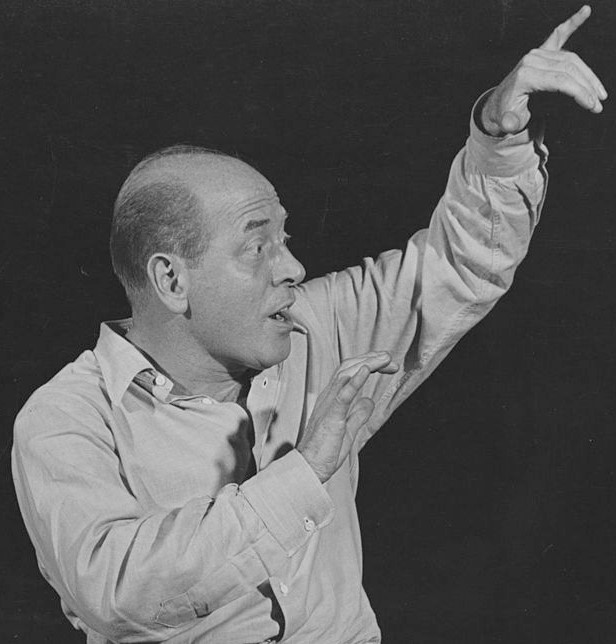
    Here’s an interesting piece on Raymond Scott. If you think you don’t know him, and you’re old enough to remember watching Looney Tunes on television, then you probably actually do, as one of his greatest hits, “Powerhouse,” was frequently appropriated for sequences of inexorable, especially mechanized, cartoon chaos.

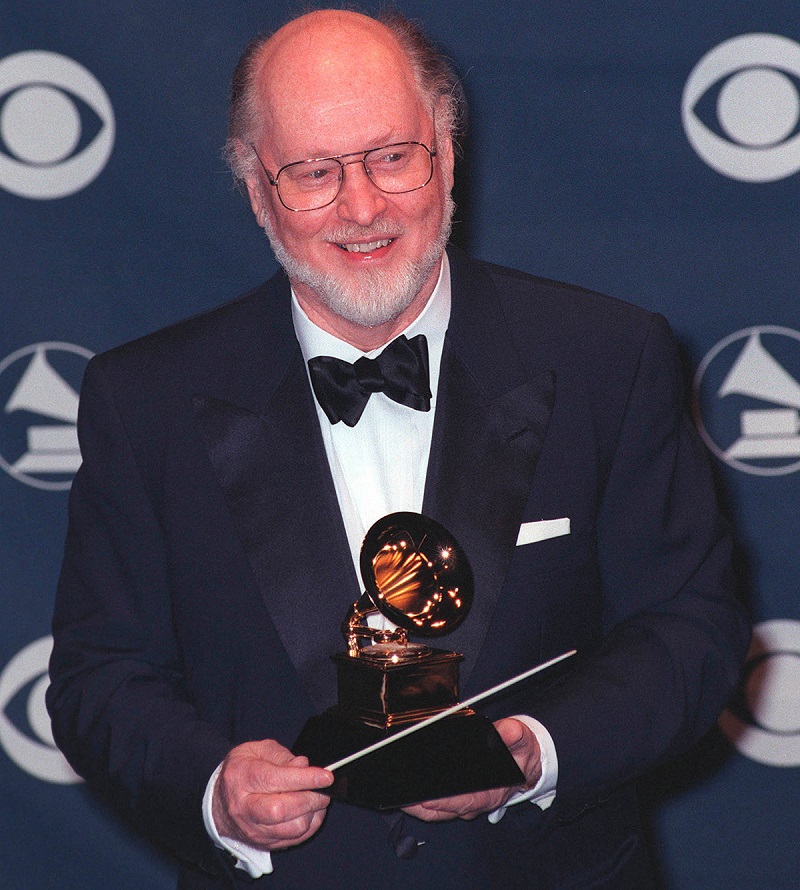
    I said it before and I’ll say it again: John Williams’ dad, Johnny Williams, was the drummer in the Raymond Scott Quintette – actually a six-piece group, but Scott quipped he thought “calling it a sextet might get your mind off music.”

    Apparently, Devo’s Mark Mothersbaugh (pictured) is now the proud owner of Scott’s Electronium.


    “Powerhouse”

    “Dinner Music for a Pack of Hungry Cannibals”

Tag Cloud

Aaron Copland (93) Beethoven (95) Composer (114) Film Music (124) Film Score (143) Film Scores (255) Halloween (94) John Williams (188) KWAX (229) Leonard Bernstein (101) Marlboro Music Festival (125) Movie Music (139) Opera (202) Philadelphia Orchestra (89) Picture Perfect (174) Princeton Symphony Orchestra (106) Radio (87) Ralph Vaughan Williams (85) Ross Amico (244) Roy's Tie-Dye Sci-Fi Corner (290) The Classical Network (101) The Lost Chord (268) Vaughan Williams (103) WPRB (396) WWFM (881)

DON’T MISS A BEAT

Receive a weekly digest every Sunday at noon by signing up here


RECENT POSTS