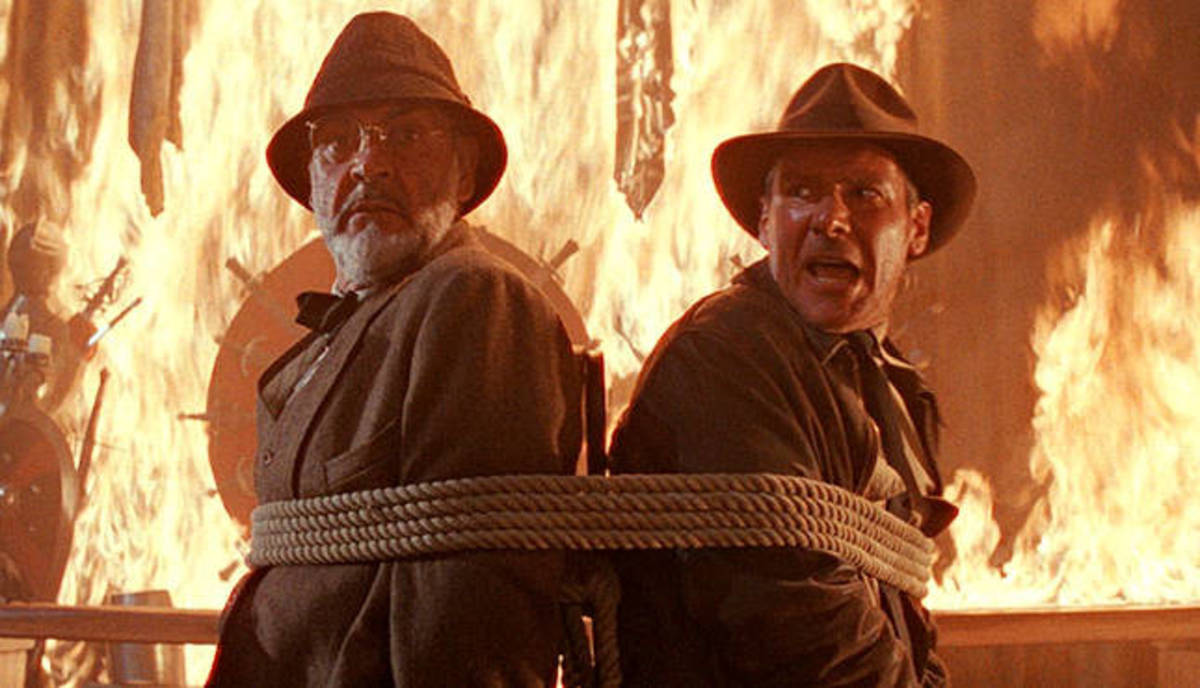
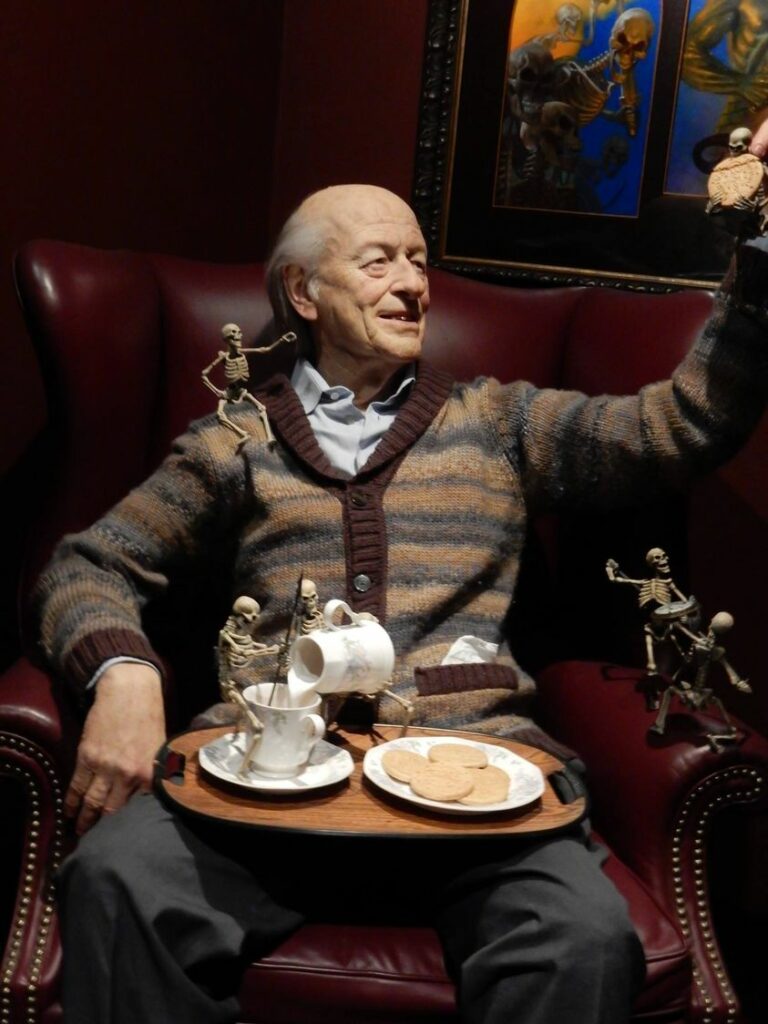
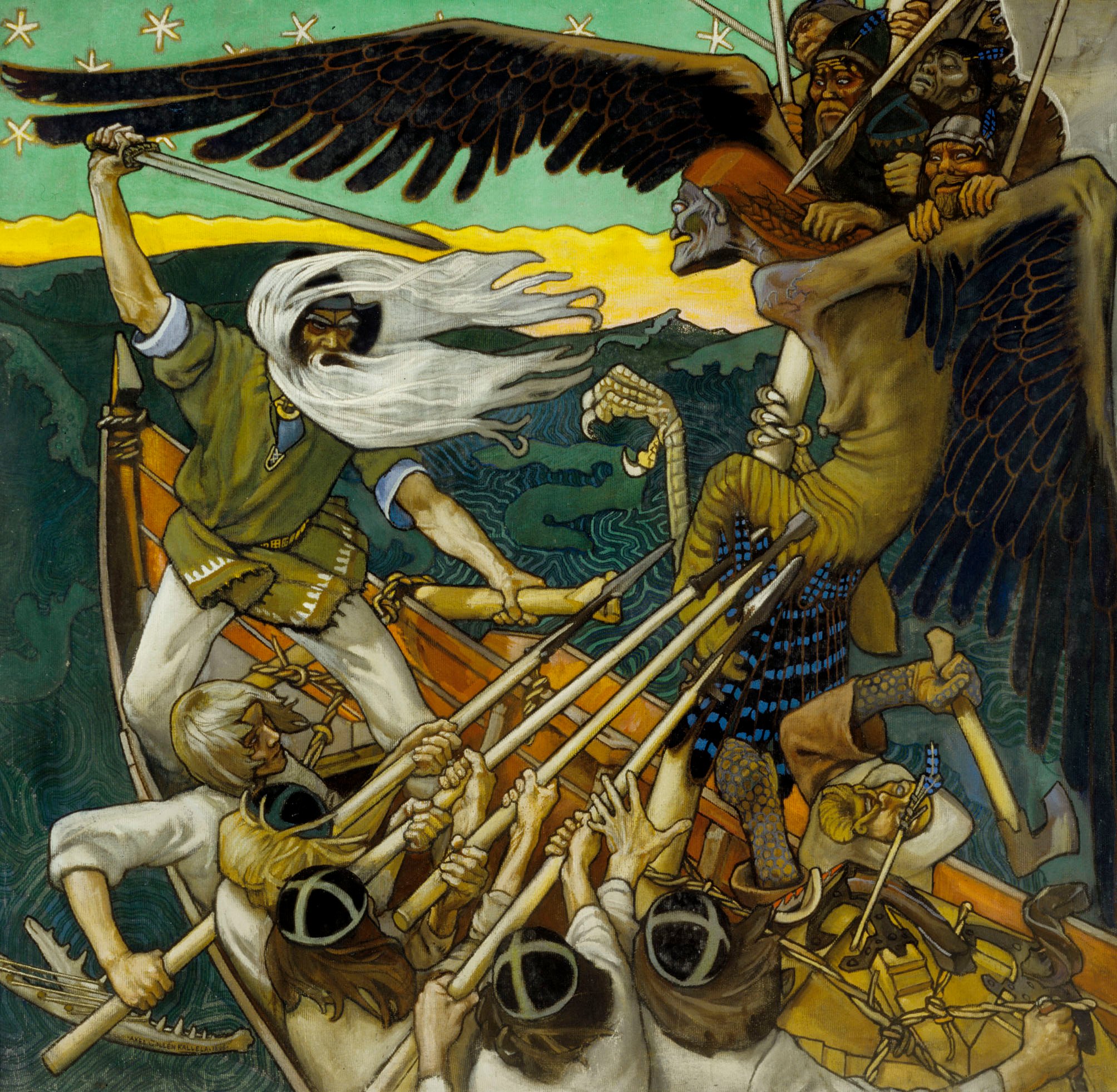
Our connection may have been bad last week, on Roy’s Tie-Dye Sci-Fi Corner, but we’ll make a second attempt tonight as raiders of the lost art. Roy and I will be cracking our whips and clanking our crystal skulls in a free-form discussion about the Indiana Jones series. THIS WILL BE A SPOILER-FREE CONVERSATION, SO PLEASE, NO STARTLING REVELATIONS ABOUT THE NEW FILM.
The razors won’t be the only things that are dull, as we ratchet up our dial of density. Leave your daddy issues in the comments section, when we livestream on Facebook, YouTube, etc., this Friday evening at 7:30 EDT!
Having had the seat of my radio shows shifted to the West Coast, I can assure you it is a big country. Thankfully, the distance is handily overcome through the miracle of online streaming, the transcontinental railroad of the digital age.
This week on “Picture Perfect,” we’ll hit the sundrenched plains and wide-open spaces, with music from outsized movies set in the American West. Live large with selections from “The Big Country” (Jerome Moross), “The Big Sky” (Dimitri Tiomkin), “Big Jake” (Elmer Bernstein), and “Silverado” (Bruce Broughton).
With independence thrust upon me, my declaration is that it’s all BIG, on “Picture Perfect,” music for the movies, now in syndication on KWAX, the radio station of the University of Oregon!
See below for streaming information.
Keep in mind, KWAX is on the West Coast, so there’s a three-hour difference for the Trenton-Princeton area. Here are the respective air-times of my recorded shows (with East Coast conversions in parentheses):
PICTURE PERFECT, the movie music show – Friday on KWAX at 5:00 PACIFIC TIME (8:00 PM EDT)
THE LOST CHORD, unusual and neglected rep – Saturday on KWAX at 4:00 PACIFIC TIME (7:00 PM EDT)
This was shared yesterday on the Bernard Herrmann Society page. At the link, you’ll find a couple of letters written by special effects legend Ray Harryhausen, in which he comments on the various composers he had the privilege to work with. He has especially high praise for Herrmann and Miklós Rózsa.
Interestingly, on his last film, “Clash of the Titans,” Harryhausen apparently rejected a score-in-progress by Academy Award winning composer John Barry (composer of “Born Free,” “Out of Africa,” “Dances with Wolves,” and the James Bond franchise). In a later interview, Barry, who had been hired because Harryhausen was impressed by his score for “The Lion in Winter,” claimed not to remember much about the experience, beyond the fact that he had provided a few demos.
Some of the music can actually be heard in this installment of the Ray Harryhausen Podcast.
The composer’s fragmentary contributions begin at the following times:
• 6:48, “Heroic 1”
• 1:27:10, “Andromeda”
• 1:28:43, “Persius Growing Up”
• 1:30:49, “Scorpion”
Barry was replaced by Laurence Rosenthal (composer of “A Raisin in the Sun,” “The Miracle Worker,” “Becket,” “The Return of a Man Called Horse,” “The Island of Dr. Moreau,” and “The Young Indiana Jones Chronicles”).
But don’t shed any tears for Barry. He wound up doing just fine.
For James Stewart in “The Man Who Knew Too Much” (1956), he races to foil an assassination attempt against the backdrop of a literal “Storm Clouds Cantata,” at a concert in Royal Albert Hall, no less. The conductor in the pit? None other than Alfred Hitchcock house composer Bernard Herrmann.
At long last, Herrmann’s complete score to the Hitchcock classic has been released on the Intrada label. And I have to say, it’s probably the film music release of the year. All newly-recorded in state-of-the-art digital sound, the presentation is glorious, and the performances are perfection. William T. Stromberg, who for decades has specialized in recording classic film scores (often in partnership with Jeff Morgan), has never been better. I have not been so eager to remove the shrink wrap from a new film music release in some time. That I do not at all feel let down by what followed speaks to the overall excellence of the production.
Alas, at the time of the CD’s release, on April 28, a little rain was falling in my life as well, as it was only nine days after WWFM notified me that, after 13 years, they would be “sunsetting” my film music show, “Picture Perfect,” at the end of the month. The timing was especially frustrating, as this is precisely the kind of event-release I would have built an entire show around.
Fortunately, “Picture Perfect” continues in syndication and hopefully soon I’ll be expanding into other markets. By then, I will have begun recording new episodes, so watch this page for an announcement of the CD’s inclusion on an upcoming episode sometime this fall.
As to its contents: the disc contains not only “The Man Who Knew Too Much,” but also the complete score to “On Dangerous Ground” (1951). More about that below.
What it does not contain is a cover of the Academy Award winning song “Que Sera, Sera” – introduced in “The Man Who Knew Too Much” by Doris Day – which, after all, is not by Herrmann, but rather by Jay Livingston & Ray Evans, and probably would have required an additional licensing fee .
Nor does it contain the “Storm Clouds Cantata,” composed by Arthur Benjamin for Hitchcock’s earlier take on the same material, released in 1934, with Peter Lorre as the villain.
Herrmann resurrected the music for the climactic sequence in a version he re-orchestrated himself. Its omission from the new recording is unfortunate – the cantata is only nine minutes long – but if something had to go, in order to fit the rest of the music onto a single disc and to keep the budget down by not employing a chorus, then I’m all right with it.
The cantata is available on an earlier album, “Bernard Herrmann Film Scores: From Citizen Kane to Taxi Driver,” recorded by Elmer Bernstein, the Royal Philharmonic Orchestra, and the Ambrosian Singers for the Milan label in 1993.
Back to the disc under consideration: for as enticing as “The Man Who Knew Too Much” is, the real draw for me personally is the companion piece: music for the lesser-known Nicholas Ray film noir “On Dangerous Ground.” I’ve always liked the film, and the score is terrific (also one of Herrmann’s favorites), especially the knockout cue, “Death Hunt,” replete with hammer blows and eight braying French horns.
Gritty city gives way to sinister snowscapes as no-fuse detective Robert Ryan teams up with country bumpkin Ward Bond to bring a killer a justice. Along the way, there are some stirrings of humanity in the unexpected tenderness between Ryan and Ida Lupino, the suspect’s sister, who happens to be blind.
I remember my excitement when I snapped up an earlier release of the score on FSM (Film Score Monthly) back in 2003, but in that instance, it was the original recording. The tracks were all in mono and the master tapes long gone, with the cues rescued and restored from acetate discs that had been in the possession of the composer himself. For somebody like me, who doesn’t mind listening past any aural imperfections, it’s a rewarding release, even if the sound quality is a little rough at times.
Sadly, this is especially evident in the love music, so beautiful performed on the viola d’amore by Virginia Majewski. Herrmann was so taken with her playing that he insisted she be listed in the film’s opening credits. On the new release, Huw Daniel again plays beautifully, but in pristine sound. I have included the older release on my film show in the past, but this one is much more listener-friendly.
Until now, the most thrilling performance of any of the music was the “Death Hunt” cue on the album “Citizen Kane: The Classic Film Scores of Bernard Herrmann,” part of the legendary Classic Film Scores series, with Charles Gerhardt and the National Philharmonic, released on RCA back in the 1970s, still stunningly visceral in its effect. But now we get to hear the entire score.
Keep in mind, the music is NOT presented in the form of perhaps more structurally-satisfying concert suites, but rather note-complete, meaning it is especially wonderful from a documentary standpoint and guaranteed to delight any hardcore Herrmann fan, but perhaps less optimal for those unaccustomed to the inclusion of all the shorter cues, some of them less than a minute in length. I guarantee you, though, it is very much worth having.
There are a couple of very short bonuses, notably an alternative finale for “The Man Who Knew Too Much.” It’s only about 20 seconds long, but it’s a great little cue! And the disc opens with Van Cleave’s evocative music for the VistaVision logo, so vibrantly recreated that it sets the tone for all the great things to come.
Interestingly, the project was financed largely with funds raised through Kickstarter, the third time Intrada has had success employing the tactic. “The Man Who Knew Too Much” was preceded by campaigns for new recordings of Dimitri Tiomkin’s “Dial M for Murder” and Jerry Goldsmith’s “Blue Patch” and “The Man.” If this is the new paradigm, I am down with it, especially if it yields such satisfying results.
As time passes and the population ages, these movies become more and more the province of classic movie buffs. There are only a handful of Golden Age film composers or scores that would merit an enterprise of this expense and magnitude. If you care about this kind of music, then please support it, and snap it up while you can!
I direct your attention to it now for Bernard Herrmann’s birthday. Happy birthday, Maestro!
PHOTOS: (left) Hitchcock and Herrmann horsing around; (top) the cover of the new CD booklet; and (bottom) the flip-side, with “On Dangerous Ground.” In between? That’s me introducing a showing of “The Man Who Knew Too Much,” talking about Herrmann at Princeton Garden Theatre. Note the WWFM logo. But what have I done for them lately?
At the root of the “Kalevala” is song. Not only were the myths and legends that comprise the Finnish national epic preserved and handed down by generations of peasant bards, song plays an important part in the actual narrative.
Everyone sings in this sorcerers’ tale. Objects, weather, and worlds are sung into existence. Duels are fought in song. Punishment is doled out. There is literally magic in song.
Little wonder, then, that this sparsely populated country would produce so many musicians. Every other Finn, it seems, is a conductor. So have Finland’s composers returned to the “Kalevala” as an enduring source of inspiration.
In the dim past of the far north, unlettered poets and songsmiths would entertain their listeners, through harsh weather and long evenings, with recitations of the exploits of steadfast wizard Väinämöinen, eternal blacksmith Ilmarinen, and rowdy and reckless Lemminkäinen.
Thus were these long narrative poems passed down, to be collected and compiled only in the early 19th century by Elias Lönnrot. Lönnrot, motivated by the cultural touchstones of Homer, traveled all over Finland and Karelia and into the northern reaches of Lapland in order to collate the tales from oral tradition. These relate the creation of the Earth, the loves, antagonisms, and retaliations of rival communities, and the forging, gifting, and attempted recovery of a mysterious invention called the Sampo, a machine that serves as both mill and mint.
With its belated publication, the epic resonated in Finland to an extent it may be difficult for foreigners to comprehend. Swedish had been the tongue of the country’s administration and education from time immemorial. Then Tsar Nicholas II attempted to instate Russian as the official language. The “Kalevala” affirmed a sense of Finnish identity. It became a lightning rod for Finnish nationalists, fundamentally formalizing the Finnish language and becoming a source of great national pride for a country that spent centuries under foreign domination. Cresting patriotic fervor led to Finland’s declaration of independence on the heels of the Russian Revolution in 1917.
The Finns hold the “Kalevala” in such high regard that every February 28 (the date on which Lonnrot signed his foreword to the work’s first edition in 1835) is celebrated as a national holiday. It has inspired the naming of cities and businesses and innumerable paintings, books, and pieces of music.
The composer Jean Sibelius was Kalevala-crazy. A significant portion of his output was influenced by this fount of Finnish lore, including “Four Legends from the Kalevala,” “Kullervo,” “Pohjola’s Daughter,” “Tapiola,” “The Origin of Fire,” and “Kyllikki.” Some of the symphonic poems had their roots in a projected opera, “The Building of the Boat,” which was never completed.
It’s interesting, having known this music intimately for so many years, to have finally experienced the source of inspiration in its entirety. I’d read passages of the “Kalevala” before, especially the part about Väinämöinen’s vain attempts to win the hand of Pohjola’s daughter. I have to say, Sibelius really had it down. I could totally feel the vibe, especially up through the first Väinämöinen tales. On the other hand, Sibelius clearly brought a lot of his own to Kullervo, whose story is lent a kind of tragic grandeur in the composer’s rendering that is absent from the matter-of-fact presentation in the original.
I’m also struck by how music makes this world seem so much more expansive and overflowing with adventure as compared to the actual telling, which to me seems more limited, especially as the bulk of the narrative, such that it is, concerns a repetitive cycle of retaliation between the people of the Kaleva District and those North Farm (Pohjola).
I was surprised to learn Pohjola’s daughter, who taunts Väinämöinen from atop her rainbow as he attempts to woo her, ultimately meets a gruesome end after crossing Kullervo! In between, we are made to feel genuine sympathy for her as she weds and leaves home for the first time, uncertain of what hardships await her in her husband’s household.
Of course, Ilmarinen, being an essentially nice guy, mourns her death. Then he attempts to mint a new wife out of gold and silver. He also forges a replacement sun and moon after they are stolen from the heavens and locked into a mountain by Louhi, the hag of North Farm. Come to think of it, Ilmarinen doesn’t have a great track record when it comes to forging things. He does, however, successfully construct a Sampo, a kind of horn of plenty that supplies unlimited food and wealth. So I suppose he’s entitled to a few misses.
In fact, one of the things I find so charming about the epic is that the characters are not infallible. They are heroic and often achieve amazing things, but they are also at times wrongheaded and prone to failure.
Previously, all the tales I’d known of Väinämöinen made him seem like something of a bumbler, always unlucky in love, and frequently unsuccessful in his quests. But frankly he is the most powerful and influential figure this side of the gods.
The other well-known hero is Lemminkäinen, who I always envisioned as a kind of swashbuckler. You can certainly hear it in Sibelius’ music. But what I didn’t realize is what a jerk and an ignoramus he is, often going out of his way to stir up trouble just because he’s bored. If Norway ever ran out of trolls, they surely could call on Lemminkäinen. He’s impetuous to a fault, and I have difficulty understanding his allure. I mean, he’s great in Sibelius, but I guess at this stage of my life, I’m much more of a Väinämöinen kind of guy. Especially as, in a pinch, Väinämöinen can swashbuckle with the best of them.
All the characters have personality, and with their foibles they are certainly memorable. You will also learn more than you will ever need to know about local wedding customs and charms against bears, charms against wizards, and charms against Jack Frost.
I don’t actually speak Finnish so, as is so often the case with these kinds of things, I did a lot of fretting beforehand over my choice of translation and between editorial practices. In this instance, I had two versions going.
One is a strict poetical translation by Keith Bosley for Oxford’s World’s Classics. Despite a noble attempt to closely mirror the original, I don’t think it’s very successful at conjuring the spirit of the piece.
By contrast, the translation by Francis Peabody Magoun, Jr., published by Harvard University Press – and which I’ve had in my possession now for 30 years – while sacrificing something in the way of slavish accuracy, to me much more successfully conveys what the “Kalevala” should be. It feels like a medieval epic, in the best possible sense, preserving the flavor of the original, without ever becoming stilted or sing-song. It’s a satisfying compromise between poetry and prose. And it manages to be quite readable, without being glaringly modern. There’s still some heft to it, which I prefer.
The tales themselves encompass a surprising array of moods: heroic, tragic, melancholy, humorous, bawdy. Realism and hyperbole exist side-by-side, nature and magic are siblings.
There’s no way Tolkien was not familiar with this. Väinämöinen is clearly one of the influences for Gandalf and the presentation has that archaic, song-laden feel of “The Lord of the Rings.” With a few notable lapses, Väinämöinen exudes wisdom and in the end leaves an almost Arthurian impression, as a kind of once and future king.
Väinämöinen is at the center of Sibelius’ symphonic poem “Pohjola’s Daughter” (1906), in which he attempts to woo the Daughter of the North, whom he espies seated atop a rainbow, weaving a cloth of gold. She agrees to marry him only if he is able to complete a series of impossible tasks. My favorite is tying an egg into invisible knots! Unfortunately, Väinämöinen wounds himself grievously with an axe while attempting to construct a boat from fragments of her distaff. You can hear Väinämöinen’s strivings in the work’s epic fanfares and perhaps the Daughter of the North’s mocking laughter in the slashing strings.
Equally evocative is Sibelius’ “Four Legends from the Kalevala” (1895-96, rev. 1897, 1900 & 1939). Its four movements are meant to evoke Lemminkäinen’s frollicking among the maidens of Saari; the “Swan of Tuonela” as it glides through the Realm of the Dead; the resurrection of Lemminkäinen, treacherously slain; and finally, Lemminkäinen’s homeward journey.
Early and epic, tragic-heroic “Kullervo” (1891-92): “Introduction;” “Kullervo’s Youth,” “Kullervo and His Sister;” “Kullervo Goes to War;” and “Kullervo’s Death.”